Stage 25: Ponferrado to Cacabelos

6 Oct 2019

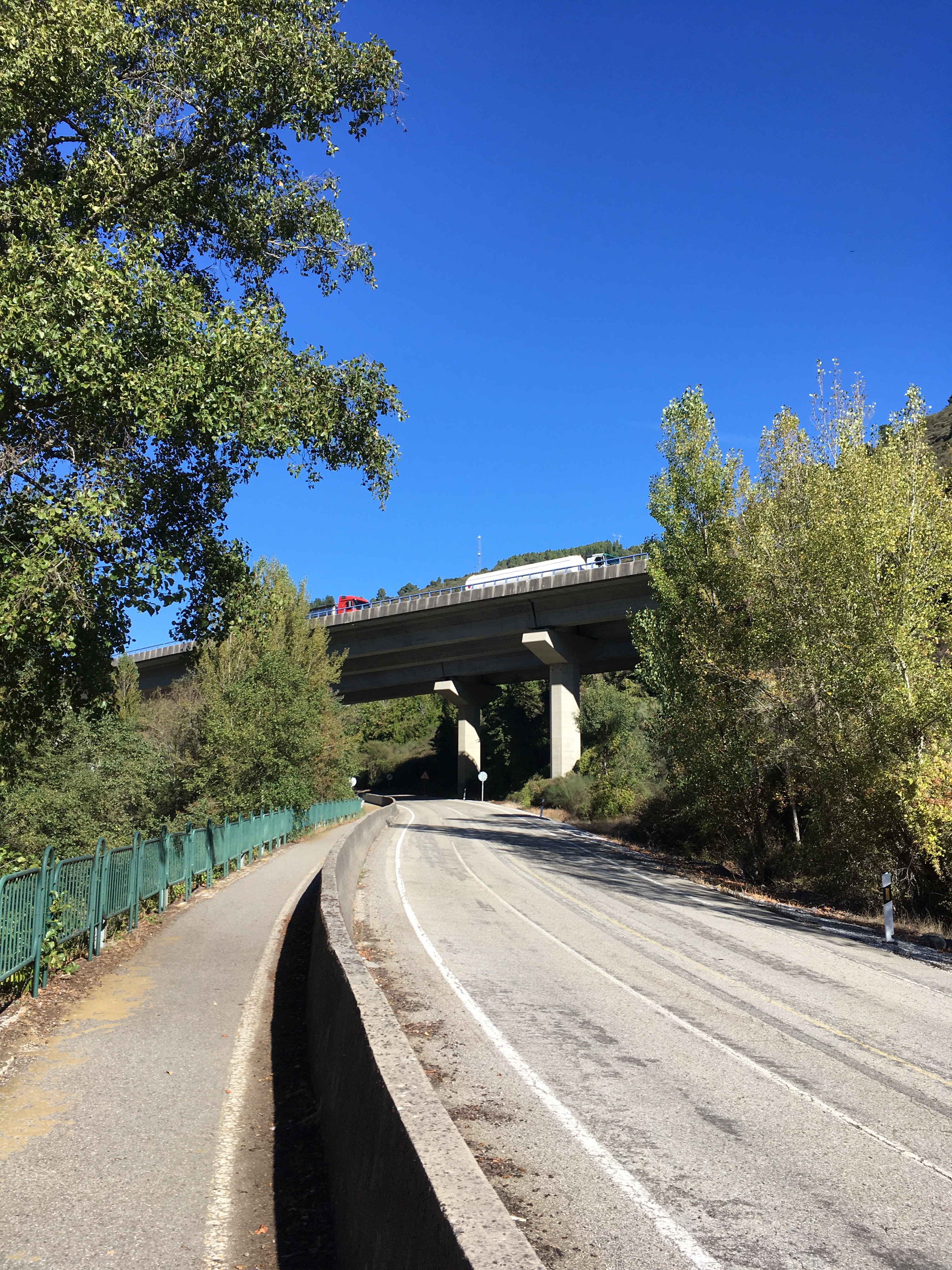
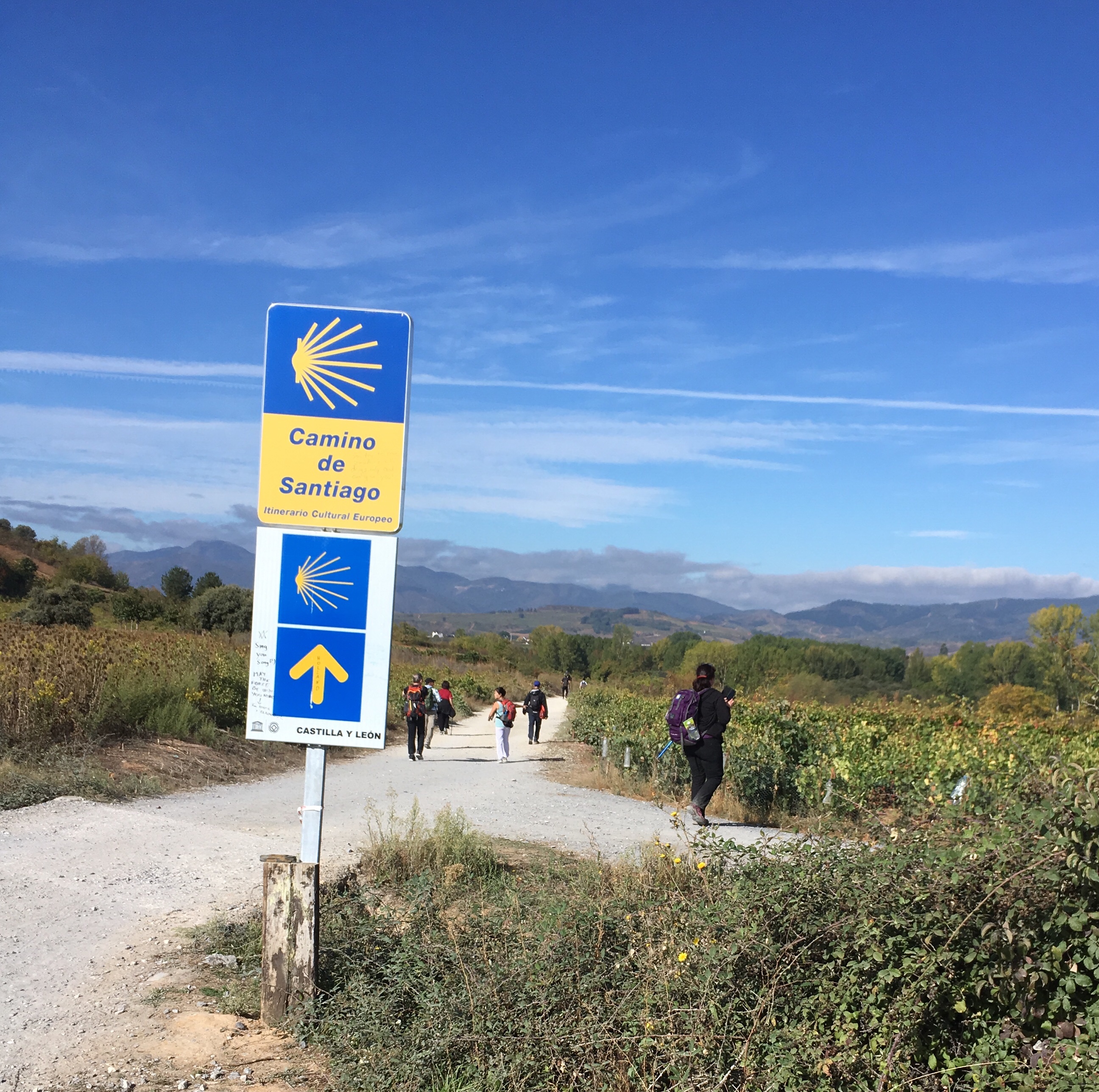
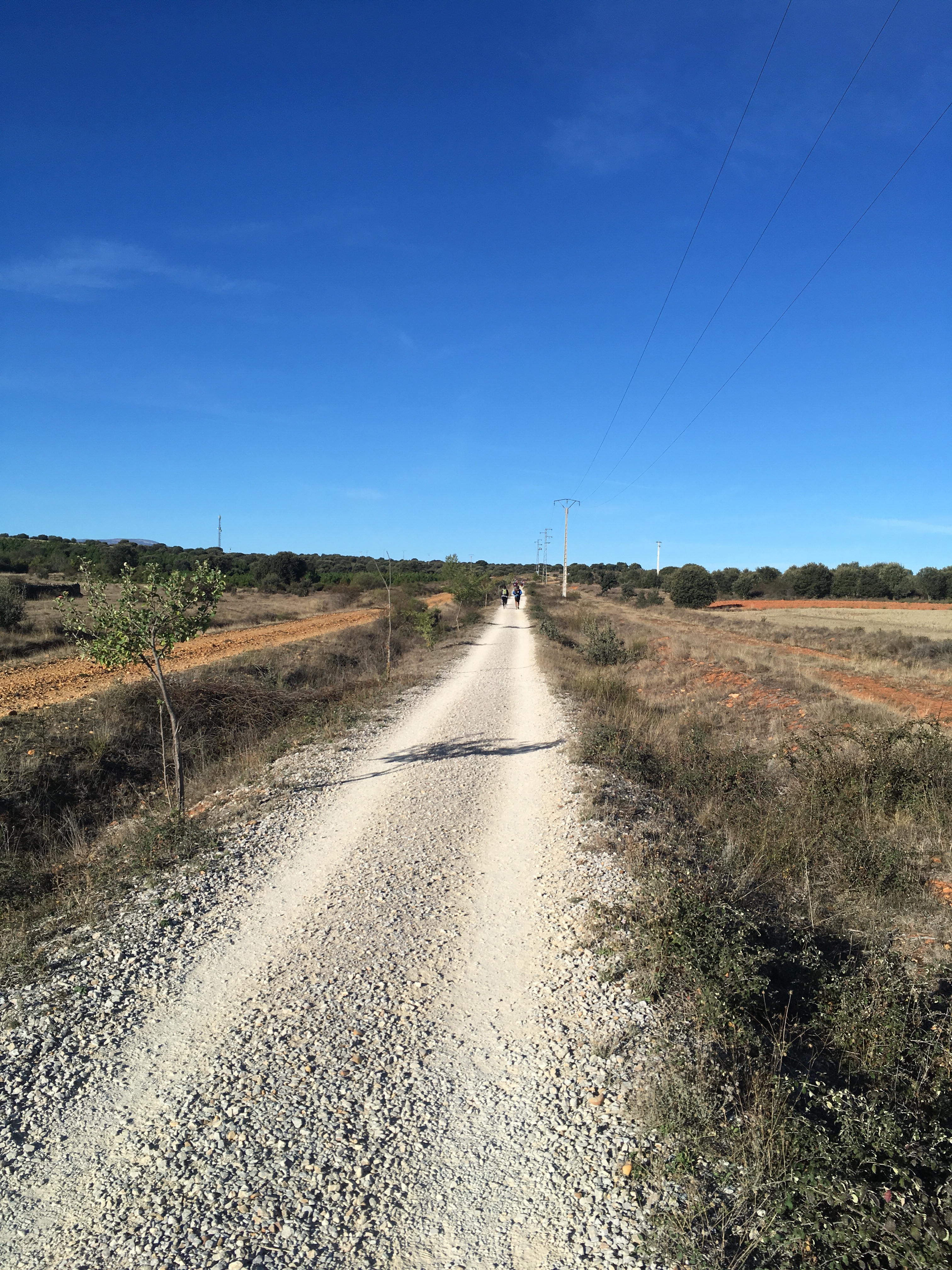
I set out from Ponferrado at my now-usual 8:30 in 52F for my 16 Km walk to Cacabelos. My route would be flat, with a forecast of sun and high clouds, which is what we got:

As we’ve seen before, some jurisdictions use their own Camino way markers along the path, and this one was pretty interesting:

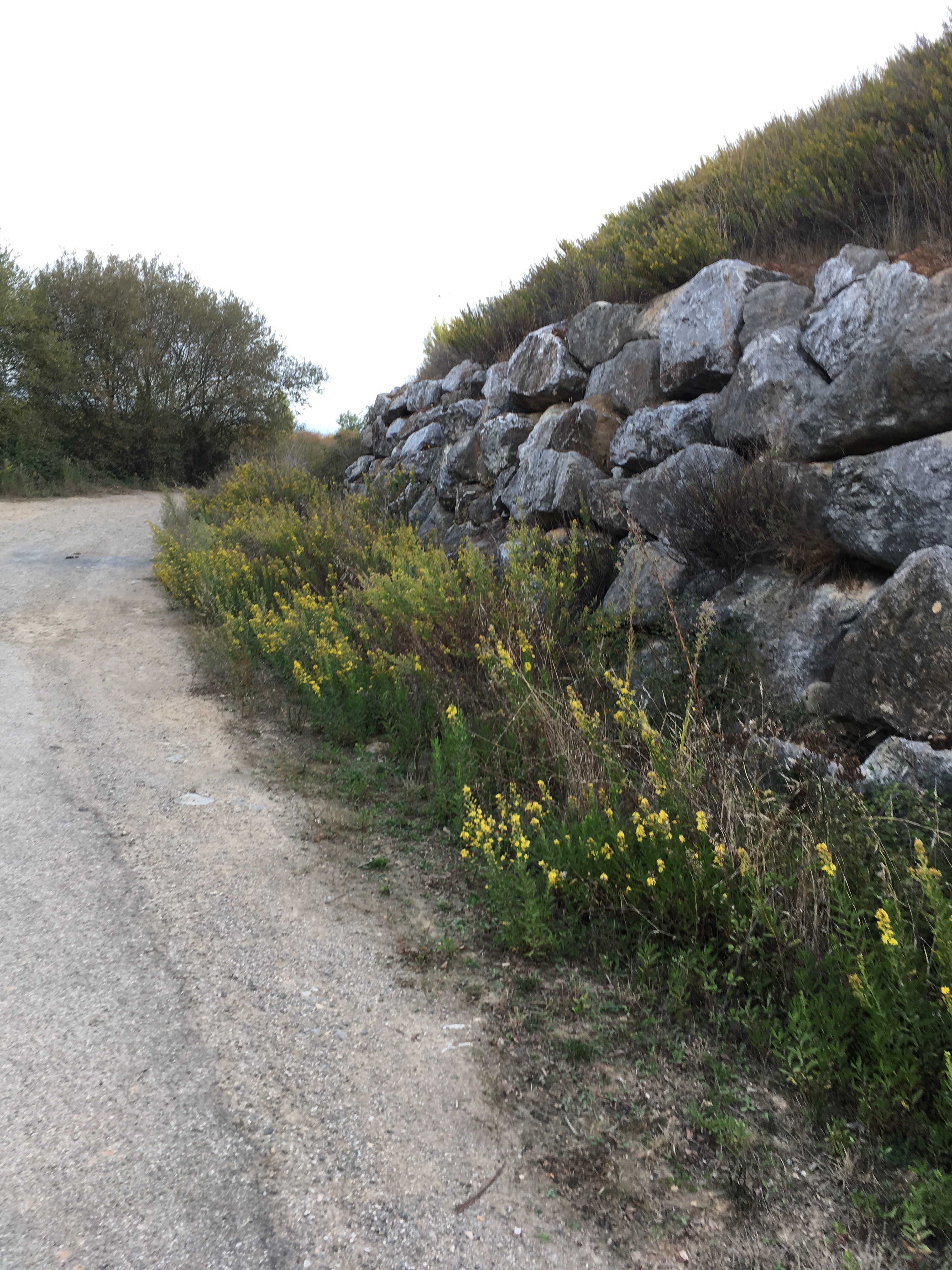
As were the Fall flowers and Roman-era embankment walls I passed along the way:

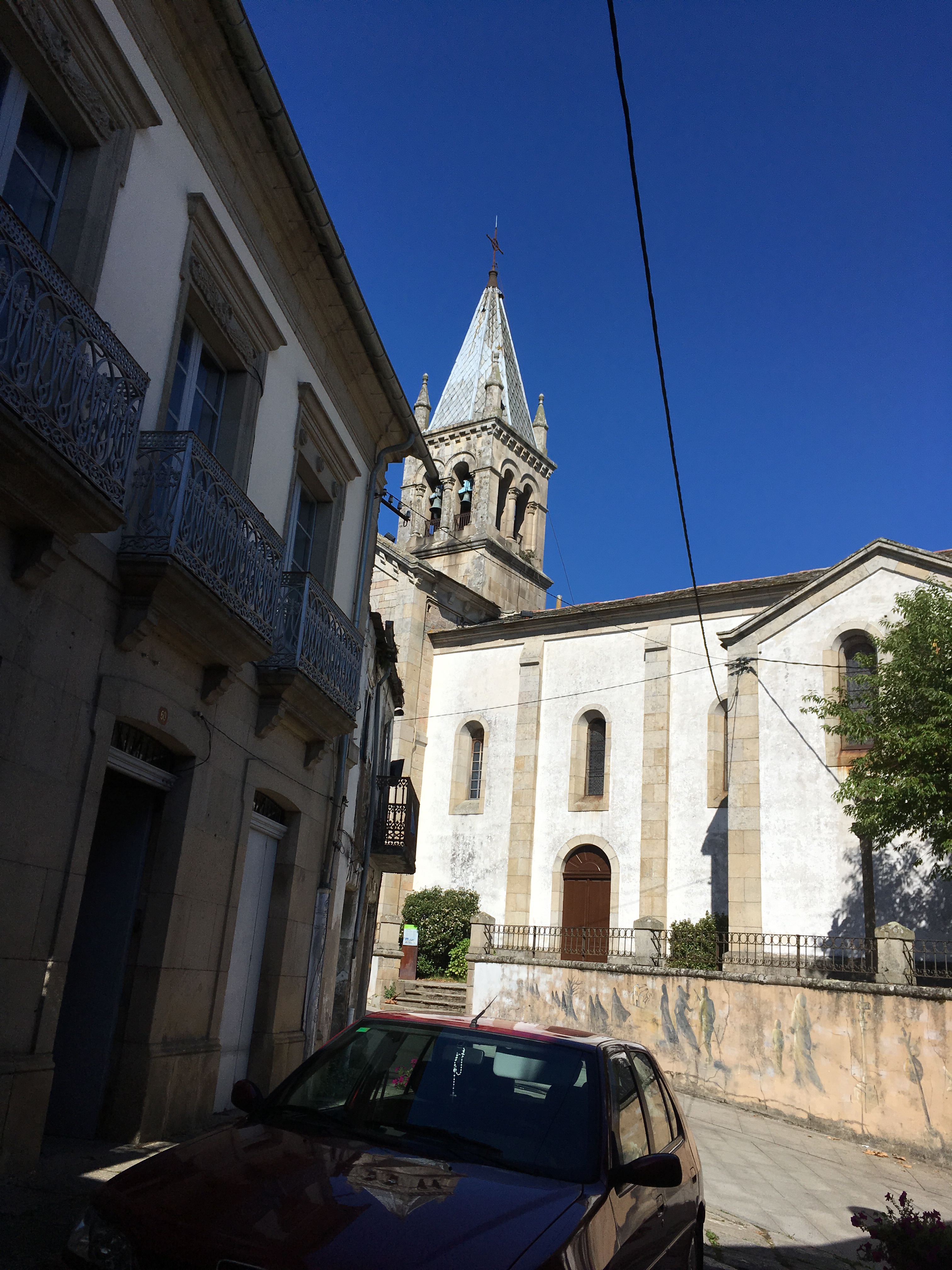
My walk was mercifully flat, letting my knees rest after yesterday’s hard descents. Cacabelos is an old town and a bit larger than I anticipated. They had a Sunday market going and a lot of townspeople strolling about, arm-in-arm, during the day.

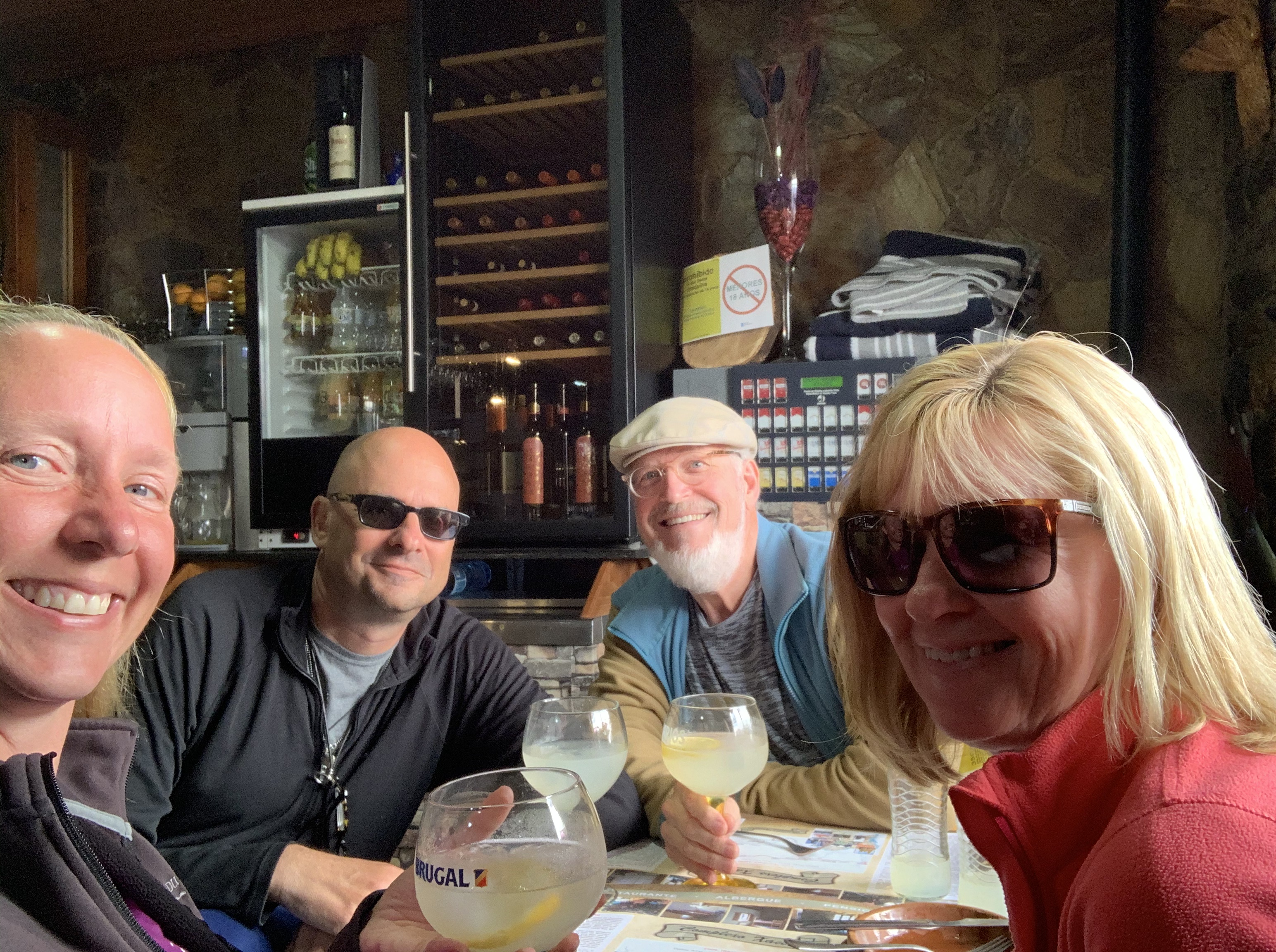
My hostel, La Gallega, was really basic and not much in comparison to the luxury of Albergue Guiana last night, but it was OK and half the price. I ran into two Australian ladies, Kerry and Christie, whom I’d met weeks ago and we had cocktails. That’s how it goes on the Camino: you meet people, don’t see them for a while, and then they reappear.

I couldn’t resist trying a Spanish-style Donner Kebab for dinner and, as it so often turns out, it was not what I expected, but it was good. It has a salad side, with some kind of Ranch dressing, and a meat side, with some kind of barbecue sauce. I was going to take a photo of this interesting culinary specimen, but suddenly it was all gone, and… I couldn’t.

Stage 24: El Acebo to Ponferrado

5 Oct 2019

The delightful morning the next day, which had me leaving El Acebo at 8:30 and 51F for a 17 Km walk to Ponferrado, was soon marred by the hellish descent into Molinaseca, a continuation of yesterday’s awful, steep, rock-strewn paths – my knees were feeling it, despite using my trekking poles assiduously.

I saved a few Kms early on by taking the older Camino route, and was glad to have the Wise Camino app to help me find the way. In Molinesca, I found this Camino-related statue:

Saint ACL, the patron saint of destroyed knees

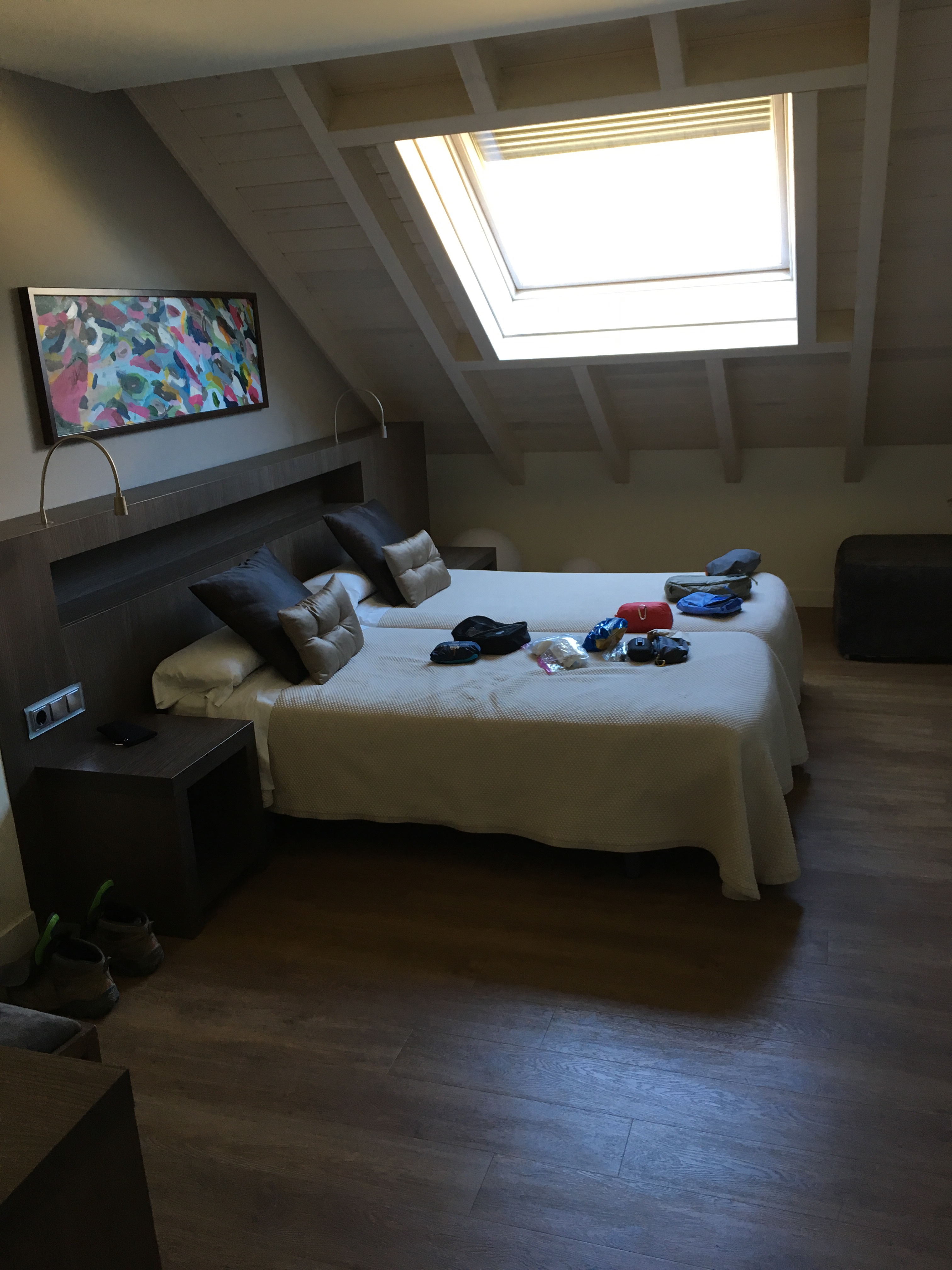
At 1:15, I made it to the Albergue Guiana in Ponferrado, where I had booked a private room, and found it to be a gem. It’s modern, spacious, and very well thought-out.

My awesome room!

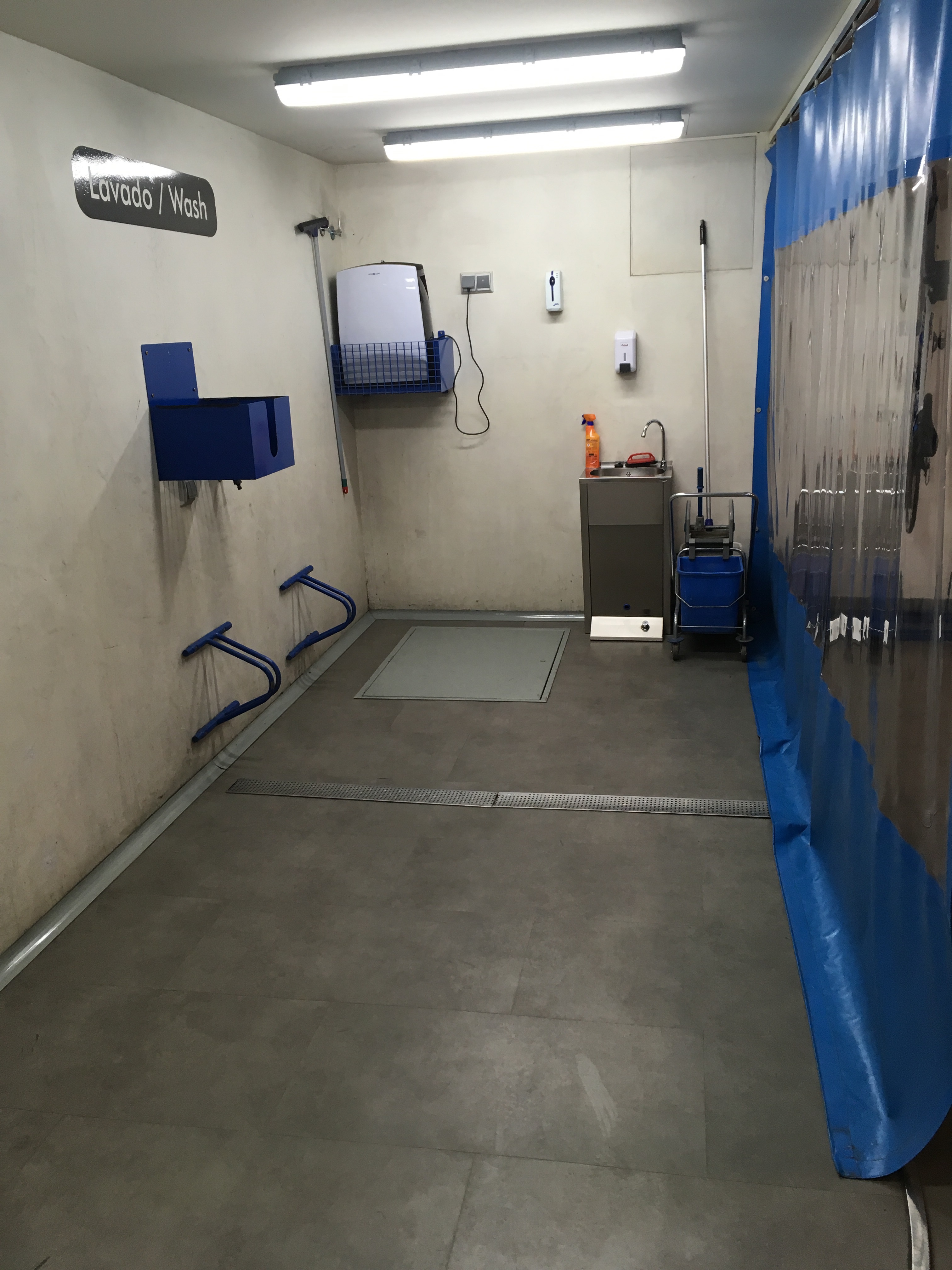
The place had all sorts of special facilities for bicycles, too. Including a dedicated back door and freight elevator to take bikes down to the basement, which featured:

The bike washing bay
Bike storage area
and bike workbench

The laundry facilities were similarly complete. What a great place! I slept like a baby,

Stage 23: Rabanal to El Acebo

4 Oct 2019

Today’s 17 Km route promises to be mostly uphill and to visit two key features: Cruz Ferro (“the Iron Cross”) and the highest point in the Camino Frances, at 1,532 meters (5,026 feet).

I left Rabanal del Camino at 8:30 in dry, partly cloudy conditions and 50F. Climbing out of town, I was treated to views of fog in lower valleys, and even a fog rainbow:

The weather then went steadily downhill as I went uphill. This is the kind of situation I dislike the most, wet weather and me climbing hard uphill. If I put on rain gear, I’ll most likely sweat enough to be just as wet as if I didn’t.

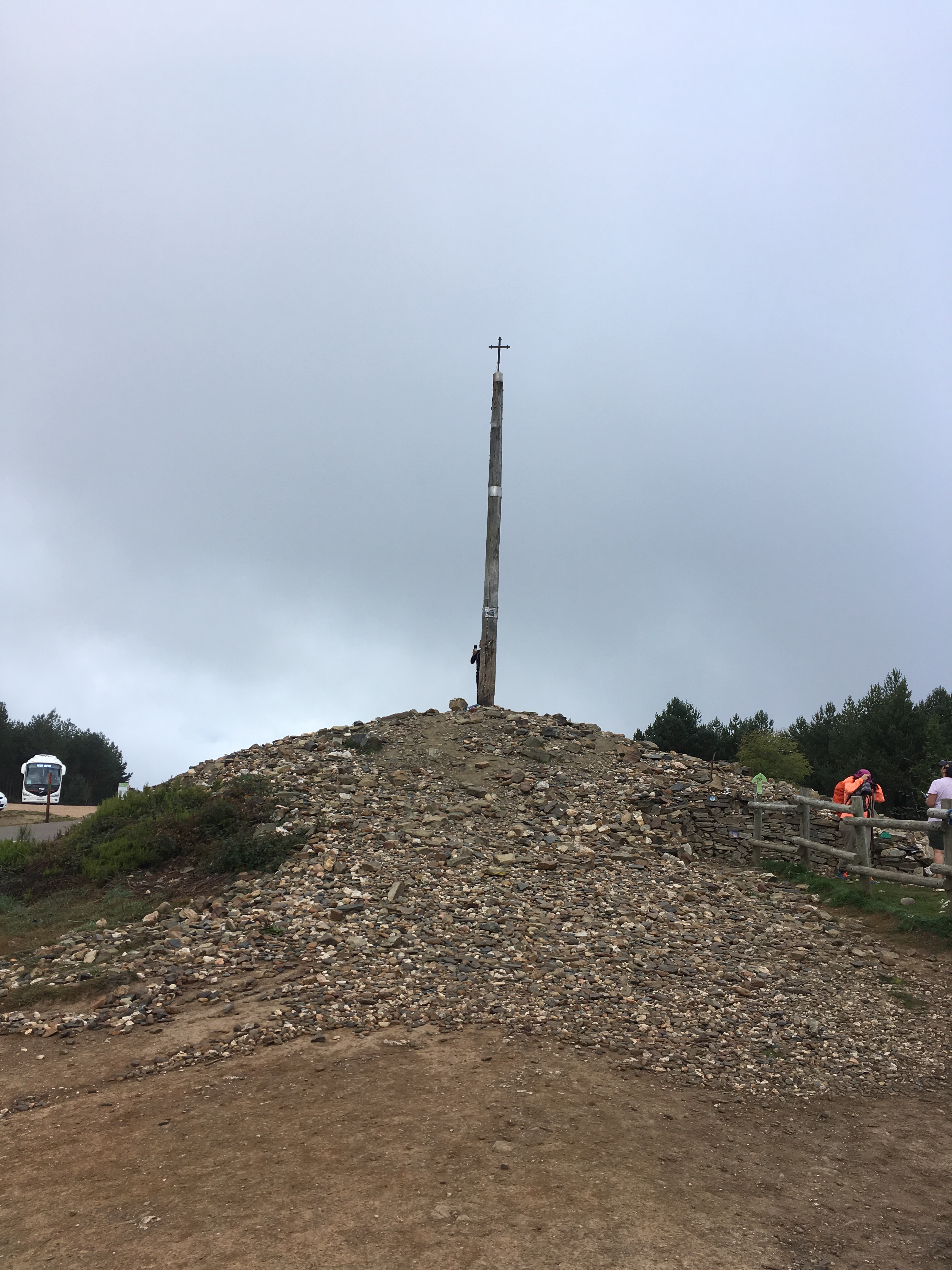
I soon reached Cruz Ferro, where tradition has it that pilgrims leave a stone, or similar object, perhaps with something written on it, to symbolize the casting-off of some personal burden. After decades of this practice, the hill that the pole and cross stick out of has become fairly high. I was sorry to be visiting it on such a dreary day:

The Iron Cross
I left this, given to me 40+ years ago by someone I loved

Then I walked on, and the rain held off. The path wandered through fern forests, wild grasses, and low evergreens, a rocky, slate surface.

Loose footing, anyone?

Then the fun began: long, long stretches of steep descents. Not only are descents especially hard the knees, but on rocky paths you have to concentrate on placing each foot safely, for every step – it’s grueling.

The Camino Provides: a by-donation refreshment stand appeared in the middle of nowhere

Finally, the clouds cleared and the Camino emerged into El Acebo, and my hostel was right there.

The descending Camino is in the background

El Rosa del Aqua hostel is a small, 200 yr-old building, with nicely updated rooms and facilities, run by Mike, a transplanted Texan who fled a career as Fortune 100 accountant, and began running the inn this year. What a great guy! He’s a top-notch host, loads of fun to talk to, and will be very successful in his new endeavor. And, there was Cherri, booked into the room next to mine and already sipping a refreshing beverage when I arrived.

Stage 22: Astorga to Rabanal de Camino

3 Oct 2019

Today I started a slow, steady climb to the high point of the Camino Frances, which I’ll reach tomorrow.

It was 8:30am when I left Astorga and 44F, the start of a dry, beautiful day, with temps rising to 72 and no humidity. My 20 Km walk would put me in Rabanal de Camino by 2:30. The route provided a perfect arrangement of a town every 5 Kms, ideal for resting the feet and meal breaks.

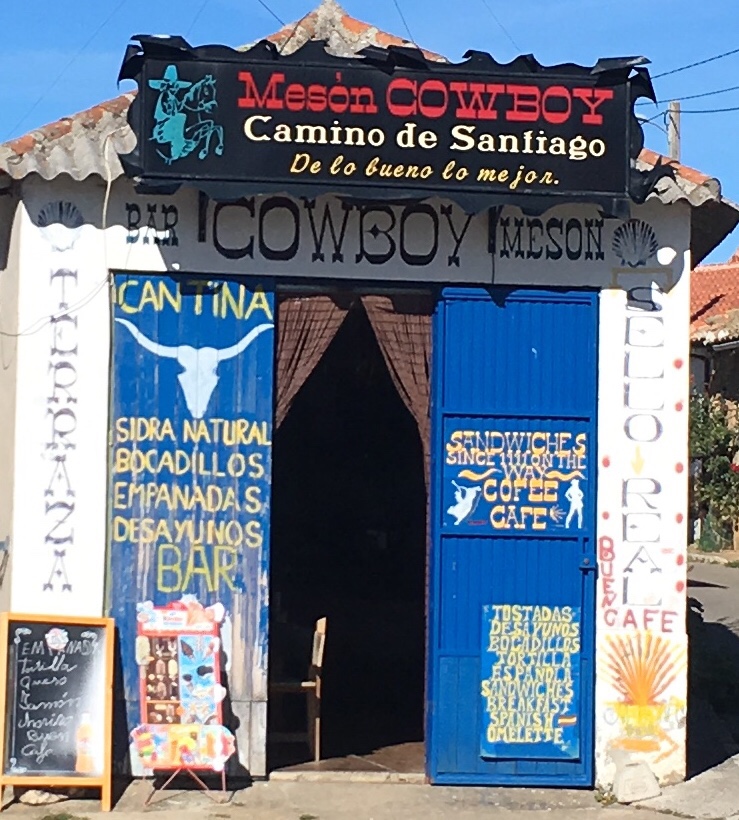
In El Gonso (not kidding), I came upon the famous Cowboy Meson (Bar). There wasn’t much else to the town, nor the bar. It was just a bar with outdoor seating. Even the decor inside was not the inspired Texas homage I hoped for, no steer horns on the wall, no Longhorn beer on tap. They did have Willie on the sound system.

I did meet the lovely Cherri there, a pilgrim from Portland and a retired RN, born and raised in Salem, OR (take note, Lindsay Ingram). She was using no digital assistance (no apps, no maps) during her Camino, highly unusual.

In one of those weird Camino coincidences, for the next few days Cherri and I kept running into each other, even staying at the same albergues. She was a fast walker and always left me in the dust, but it was fun to have spent a few days with her.

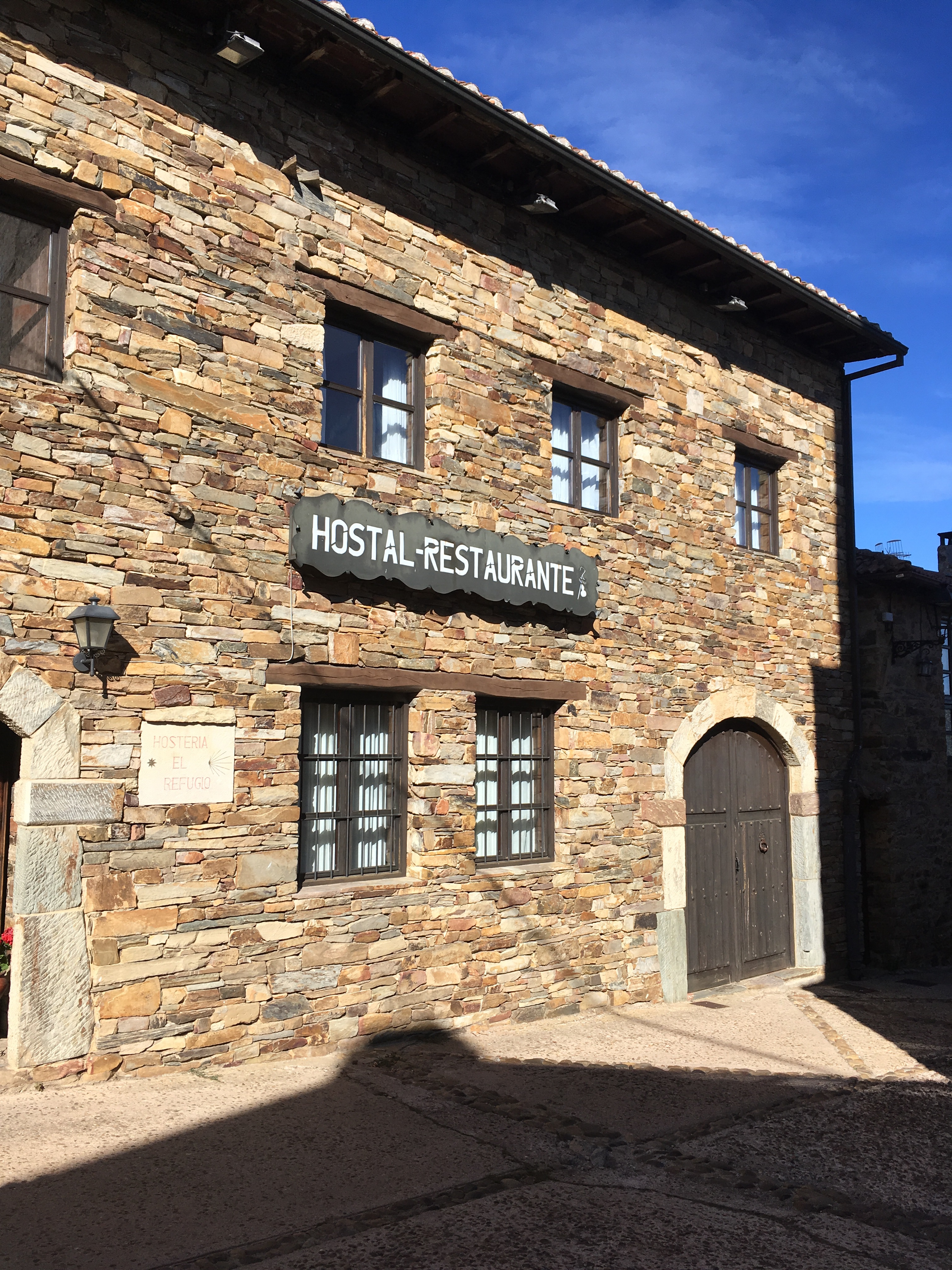
One place we stayed, El Refugio Hosteria in Rabanal, served up THE best Pilgrim Menu 3-course dinner, and all for 10eu:

Salade mixta, with spiced ice cream!
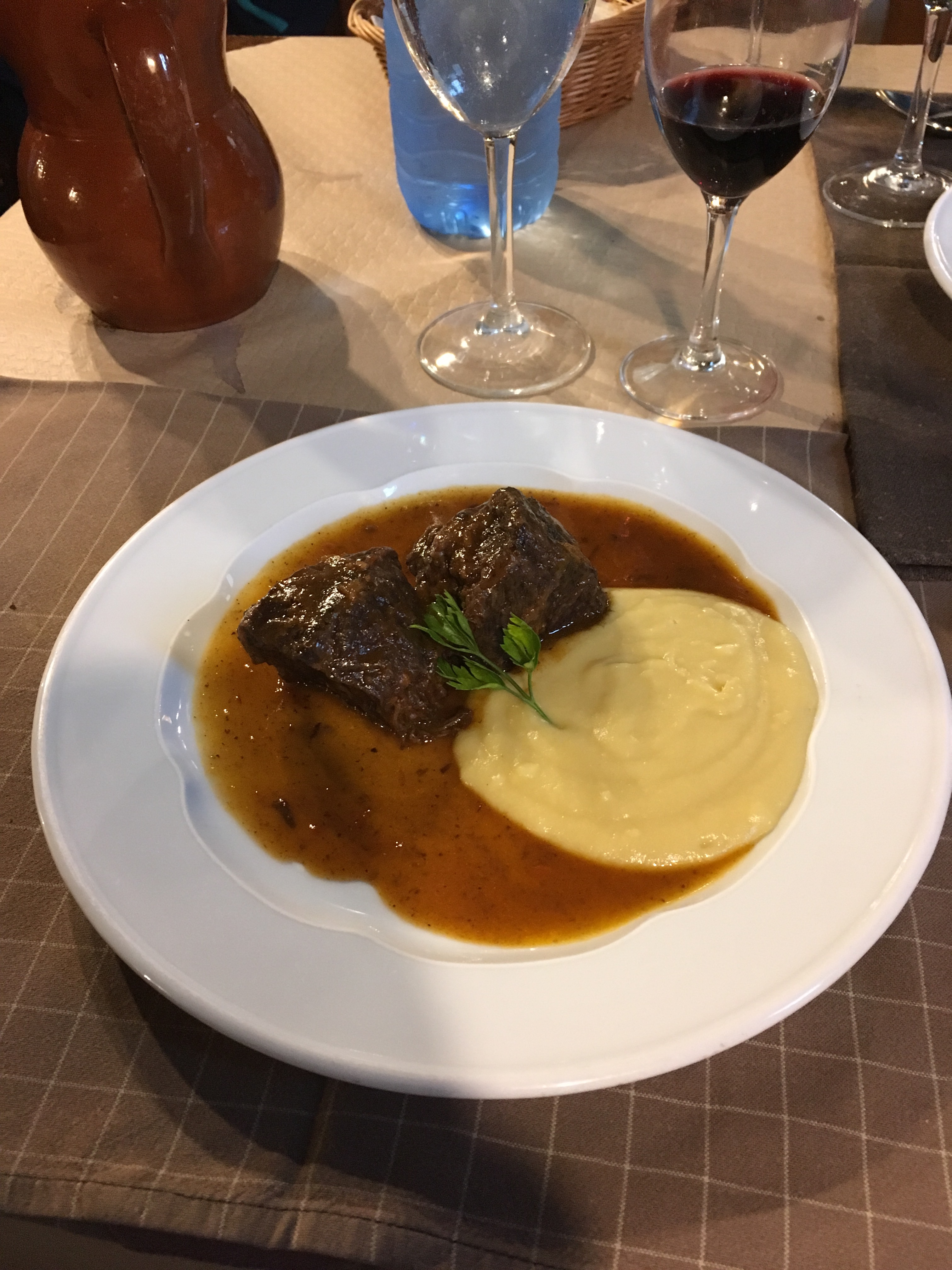
Beef cheeks in wine sauce, with mashed potatoes
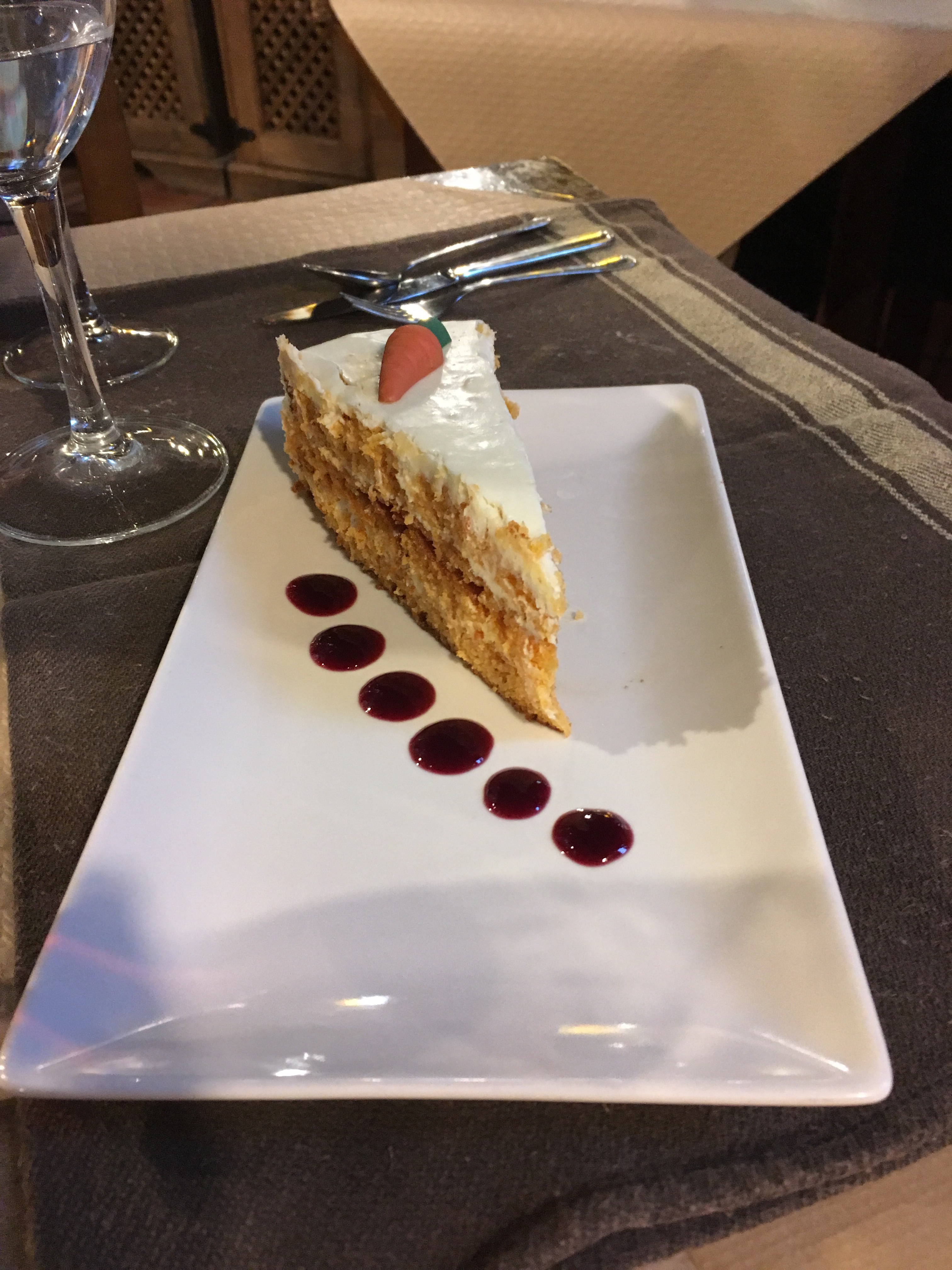
Carrot cake

Bread, wine, and water included. This one meal made up for many other crappy ones I’d had, and set a standard I didn’t expect to be reached again.

Stage 21: Hosp. de Orbigo to Astorga

2 Oct 2019

I had only 15 Kms planned today, so I decided not to rush out in the darkness with a headlamp and instead to sleep a little later, timing my departure to coincide with sun up (around 8:20). Much more civilized.

Later departure let me catch this in the sunlight

It turned out that that a lot of other pilgrims do the same, so it’s easy to find my way out of town on the Camino: just follow the crowd of backpacks. It was 44 F and dry, and a mostly sunny day was promised, going up to 72 F.

I stopped for my usual cafe con leche after a couple of hours and discovered a nice reminder of my college days in Charlottesville:

Within a couple of kilometers of starting to walk, I encountered an “alternate route” option. The Camino splits and the guide books and signage strongly urge you to take the new, alternate route, often because it’s “more scenic” or “rewarding”. I noticed that these new routes are also longer and harder (more ups and downs), and I wonder about the decision-making process leading to their creation. Safety is surely a concern: the classic or original routes are often next to (or sometimes, right on) busy highways. Not a problem for a single pilgrim like me, but I can imagine that a gaggle of pilgrims in the high season would be in danger.

And, of course, I’m sure there are political and economic reasons deciding for the Camino route; some little towns would simply die off without the flow of pilgrim euros. In general, I have chosen to take the shorter, easier original routes. Five or six extra Kms at the end of a long day is significant! I’ve found the original routes to be plenty scenic, too. Thank God for the Wise Camino app on my iPhone, though, which gives me real-time location positioning along the Camino; sometimes the way marking on the original routes has been neglected.

While I’m at it, I should mention that I’m also using the Camino de Santiago Maps book by Anna Dintaman and David Landis. While I sometimes disagree with their characterization of the trail sections, the maps are outstanding and the book is compact and lightweight compared to other guide books.

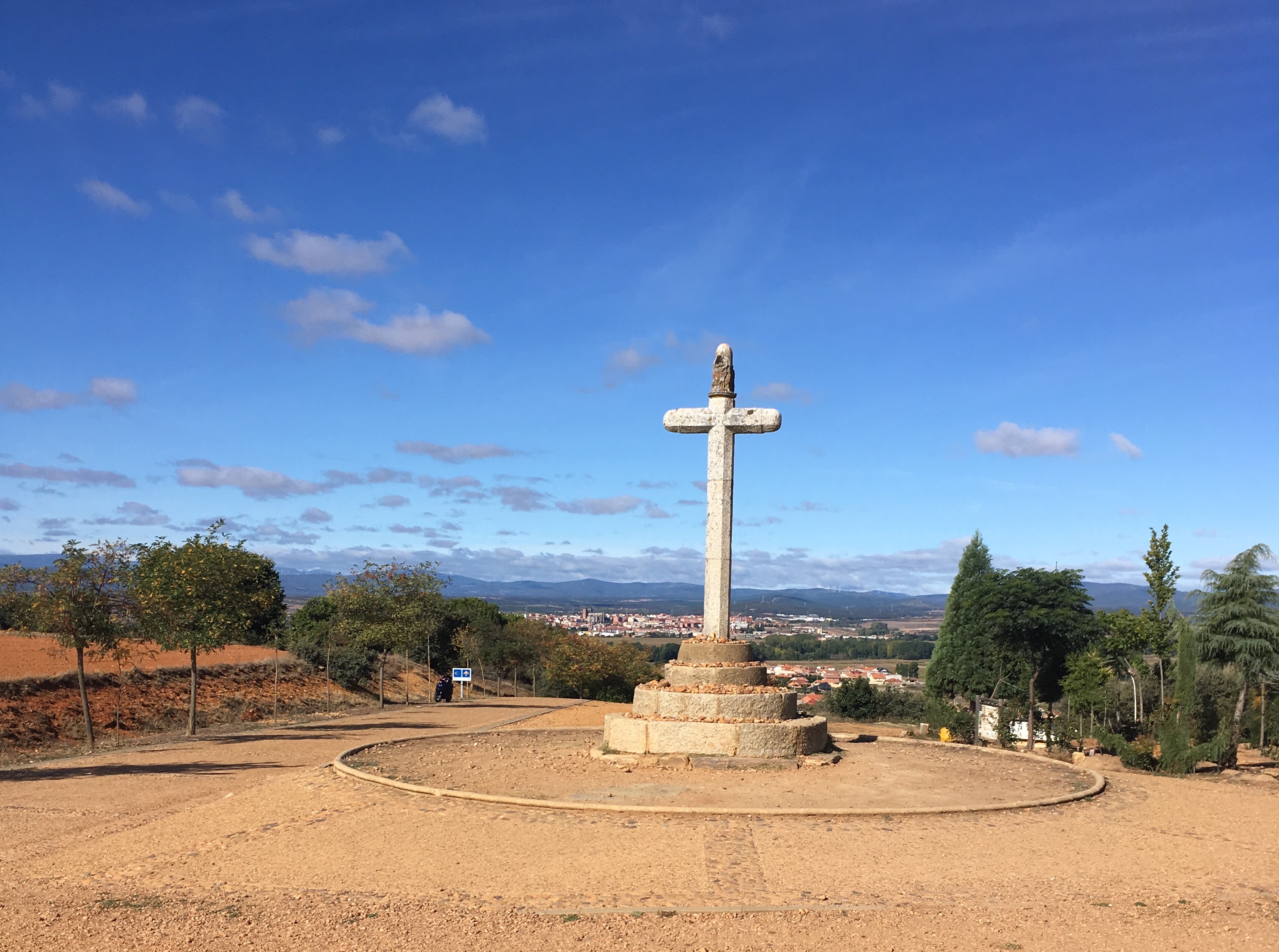
The morning passed by, along with many acres of grape vines, and I reached this cross (where an alternate route joined mine) and had a view down into Astorga. Heads up, Lauderdale brothers, nearby I saw this trashcan with its vandalized “Don’t Mess with Texas” sticker:

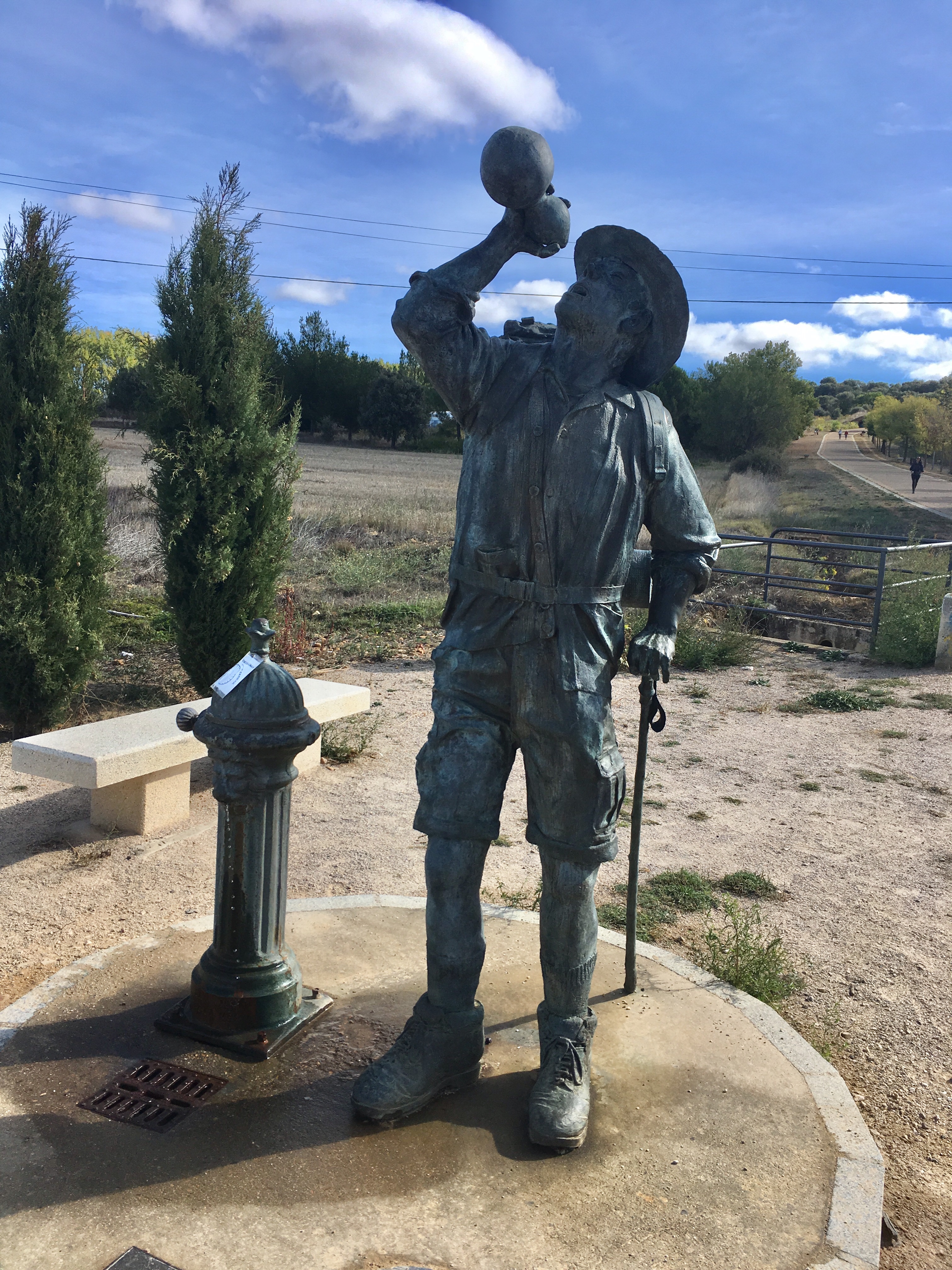
At the foot of the hill, I saw this statue celebrating the pilgrim and the region’s wine industry:

And, of course, someone’s always trying to horn in on the refreshments:

I wound my way into Astorga, got lost, had Google Maps tell me there was no way to get from where I was to my hotel, and eventually arrived by dead reckoning at the Hotel Spa Ciudad, a boutique, grossly overly-luxurious establishment for a pilgrim to stay at:

However, I did find a super deal on Booking.com for it, and it was right across the street from the big cathedral:

And the Camino souvenir shop:

Tomorrow I’m off on a 20 Km walk to Rabanal del Camino, as the towns and cities go by on the road to Santiago.

Stage 20: Villadangos to Hospital de Orbigo

1 Oct 2019

I left Villadangos around 8:30 and it was 55 F and dry, partly cloudy. No desayuno (breakfast) was available at The Fly Cafe. The forecast says there’s a chance of a t-storm at 11am, so I’m rigged for rain today (meaning my poncho is readily at hand).

I was soon walking past acres of corn fields, on a nice, smooth, flat path. It turned into a beautiful day with no rain. I’ve started to see the huge stork nests that appear on top of many structures, like this church bell tower.

I made really good time today and my walk was just 15 Kms so I arrived fairly early, 11:30am, in Hospital de Orbigo, a town with medieval origins.

The Camino path usually goes right through the heart of these towns and so, then, do the pilgrims, with their Euros to spend. This town has a magnificently restored bridge leading into it, but no one likes walking on cobblestones with tired feet.

Although this pilgrim, with his horse and pack horse, probably didn’t care:

Yes, riding pilgrims are allowed but it must be difficult finding albergues that will stable your horses!

Here are two interesting things about my room that night, at the Hostal Don Suero de Quinones: yes, ladies and gentlemen, that is window screening in my room = no flies.

And this is the world’s smallest bathroom (seemed like it). The shower was only 4-feet wide:

I can’t believe it’s October already. I often lose track of what day of the week it is, but it’s interesting to find out we’re in a new month. Only 16 more days to Santiago…

Stage 19: Leon to Villadangos del Paramo

30 Sep 2019

I departed Leon at day break into 48 F, dry, cloudy, on a 21 Km walk. Had to go through 8 Kms of Leon industrial zone just to get out of town; not sorry to see Leon in the rearview mirror (so to speak).

This realization struck me as I walked this morning: instead of thinking “I just have to get through three more weeks”, all of a sudden I was thinking “there are only three weeks left, how lucky I have been to be able to do this”. They say the second part of the Camino is mental.

Most the morning was overcast as the trail wandered through fields and alongside the N-120 two-laner.

Eventually, the sky cleared and large, puffy clouds remained, along with a view of the mountain range I’d be climbing through in the next week.

My general walking routine, if possible, is to walk for an hour or so, then stop, get coffee con leche and remove my boots, do a little foot massage, and start walking again after 10 minutes.

Then I try to go on until my halfway point, where I stop, stock up on a sandwich and fruit for lunch later (if necessary), get off my feet for 15-20 minutes, and change my socks. The sweaty socks are hung off the back of my pack to dry. At the 3/4 point, I rest again and get the boots off for 10 minutes. Seems to work well, but is dependent on the stage easily being broken into thirds or fourths and there being places to sit down. I’ve had to be creative at times.

At one albergue-cum-truck stop today they had a scale available. In my stocking feet, I weighed in at 95kg = 209lbs. Really!? It’s probably not that accurate, but if it is, I’ve lost around 25 pounds on my Camino.

Villadangos is a one-horse town with a lot of trucks barreling through it. I stayed in the Hostal Libertad, which featured a lot of older men in the bar, aka The Fly Cafe, for scheduled afternoon card games. Town population: 1100. The albergue facilities were OK, nothing special. I did manage to have my favorite late lunch:

You may remember that we pilgrims carry a credencial or “pilgrim passport” and we get it stamped along our walk. Here’s what my credencial looks like now:

My feet seem to be fully healed and it feels like my whole body has finally adjusted and become stronger, and is now ready to move ahead on my walk. The first few weeks, physically, were a shock, indeed, but it’s great to have rebounded and not have that as a concern now.

The concern tomorrow may be rain.

Stages 17 & 18: Atapuerca to Burgos to Leon

27-29 Sep 2019

I don’t want to give the archaeology work at Atapuerca short shrift – we went through the local museum and it was fascinating – so here’s a link to more information: Unesco Atapuerca

We stayed at the Albergue El Peregrino in Atapuerca, sharing a double room for 17.5 euros each. Over dinner, we met some interesting women in our age group who insisted I had to go to Bali. I’ve been getting lots of suggestions for future destinations and noting them down.

It was really dark during our pre-dawn climb (of course) out of Atapuerca, and we clambered over some really rocky trail sections by headlamp. After sun up, we passed through a few quaint villages and pine forests on our way to Burgos.

The last 8 Kms into Burgos go through an industrial area and it’s amazing that the guide books don’t mention that this means no food, no water, no bathrooms, and not even a place to sit down on a roadside bench. C’mon, don’t the people who work in these factories and warehouses have to eat? How about a bus stop with a bench?

This means I have no pictures of our entrance into Burgos. If you’ve seen one Volvo truck plant, you’ve seen ‘em all.

We finally made Burgos, found the Old Town, and got checked-in. After the usual Pilgrim Routine, we headed out for a late lunch:

Still my favorite: Ensalade Mixta

Claude and I are going our separate ways tomorrow; he with a day off in Burgos and then some Camino route variations, and I by catching the train to Leon. We decided to celebrate and found this “Irish pub” in the Old Town:

Note the Guinness sign

And we decided to have a Gin & Tonic. I was really surprised when the bar tender delivered this tasty monster:

We were both surprised and, of course, had to have another one to be sure the first one wasn’t just a fluke. It wasn’t. And, of course, that led to Claude suggesting we go to Burger King. Isn’t this how all these weird things start?

So, we Google Burger King and find one nearby. We go on over and examine the menu full of “Master Burgers” (not “Whoppers” but looked similar) and the touch-screen-only ordering. Cue the sensory dislocation due to cultural differences (plus G&Ts) and, after much dithering and screen-poking, we place our order and eventually we get our food and sit down.

It’s only then that we notice that 98% of the clientele consists of girls aged 10-14. The sound track was a dead giveaway: shrieking, OMGing, and loud cell-phone-on-speaker mania. It was spooky. Claude and I ate up and got out as quickly as we could. You think two old guys stood out in that crowd? And, no, the food was not that good.
The next morning, nursing a bit of a hangover, I packed up and went along to the train station and caught the 12:34 train to Leon. You may remember I have a full-size, 40-liter pack and a day pack. On the Camino path, I carry one or the other and ship the other one ahead. Not this time – I had to carry both and it was really awkward. I almost took a header down the steps getting off the train. The train trip itself was uneventful and there were a lot of pilgrims on board. We crossed the flat, hot, shadeless “Meseta” wheat fields and I was not unhappy about skipping the area.

Leon is a big, big city and I had a day off there the next day (Sunday – September 29th). There was a big parade of “Pendones” right past my hotel the next morning.

The Pendones are the big banners

I may not have this totally correct, but it looked as the banners were carried and accompanied by groups, social clubs perhaps, from different cities in the region. There’s some connection to military events in Spain’s past.

As you can see in the picture, one person carries the pole holding the banner by clipping it into a belt that’s much like a weight-lifter’s belt. As they march, they do a balancing act, sometimes aided by someone working a rope from the top of the pole. Other pole carriers, with their own belts, stand ready and jump in to switch off frequently, without lowering the pole. I saw no banners go down, which is remarkable because the tallest poles were about 50’ high.

Some groups had coordinated outfits, including women in very traditional dress, with castanets. Some had musicians with them:
This group included Spanish bagpipers!

The parade went on for hours and I finally decided to see where they were going. I followed the jammed sidewalks down to the huge cathedral, where the banners were being presented and displayed.

Picture doesn’t give a clear idea of how jammed the plaza was

Once you get into the Camino frame of mind, being in a big city is somewhat disconcerting. I was happy to leave Leon behind the next morning and get back on the Camino path.

Stage 16: Villafranca MdO to Atapuerca

26 Sep 2019

It’s rare, but every now and then a hotel, hostel, or albergue will offer a breakfast buffet, and we hit the jackpot before we left for Atapuerca:

All the usual Camino breakfast starches plus eggs, sausages, and bacon. Claude was in Protein Heaven. Our happiness lasted until we left the hotel side door and saw the stiff uphill ascent out of town that awaited us.

When the path finally, finally leveled off and I stopped seeing spots, and the sun was finally up, my walk took me through quiet forested lanes, dappled with sunlight. Claude fell back to chat with some fellow Canadians for a while.

The Camino seems to attract pilgrim-philosophers and some leave their wisdom behind for others:

Kathy Dunn, I think this was meant for you. Or WAS it you?

It’s not all fun and games, though. Periodically we see a path-side shrine to someone who has died on the Camino. The one above celebrates a Spanish cyclist. The Camino route for cyclists is often separate from the one for walking pilgrims, but sometimes they’re the same and cyclists come barreling by you on the path, without a hint of warning. The Spanish are great cycling enthusiasts and the Camino offers a great workout for mountain bikes, so add them to the traffic we walkers encounter.

We enjoyed the beautiful, clear weather and relatively good path surface all day. That’s Claude up ahead of my shadow.

We walked just 14 Kms today, through San Juan de Ortega, disciple of the legendary Santo Domingo, and here’s the town church:

Then through Ages, and on to Atapuerca, home to the famous archaeology sites that trace humanoids back 800,000 years.

No caveman behavior at our albergue, though.

Stage 15: Belorado to Villafranca Montes de Oca

25 Sep 2019

And we’re off to Villafranca Montes de Oca, with a dry 52 F starting out our 13 Km walk.

Apparently we’re making progress. Systems Check: Claude’s ankle is nearly 100%, my blisters are healing nicely, and neither of us is popping pain killers for a change. Yay!

Once again, we’re walking through rolling farmland with acres of wheat and dried sunflowers. The panorama is gorgeous.

Walking pace is a very personal thing and can vary a lot. When we want to talk and solve the world’s problems, Claude downshifts from his usual military pace to match my slower stroll. Other times he speeds ahead and we rendezvous at the next town.

We made it to Villafranca Montes de Oca and the heavily over-decorated Hotel San Anton Abad in good time. Here’s the view from our room of the local church

As I mentioned earlier, there are water faucets along the trail, like this one in town:

However, we usually prefer a different beverage after checking in and getting the pilgrim routine out of the way:

Speaking of which: “Craft” beer, as we know it, on tap is non-existent on the Camino. The Estrella and Ambar found everywhere on draft is basically a pale lager around 4-5% ABV and 25 IBUs. In larger cities, there are bottled beers and some may be craft but I haven’t tried any. In smaller towns, there’s this, and a non-alcoholic version, and a radler (beer + lemonade) on tap and that’s it. Slim pickin’s, indeed.

Some of our walk today was beside the N-120 highway, a busy two-laner with a lot of trucks. Most of the time, we’re on a path, separated from the highway but not always.

Tomorrow: historic Atapuerca.