Ready to Set Off

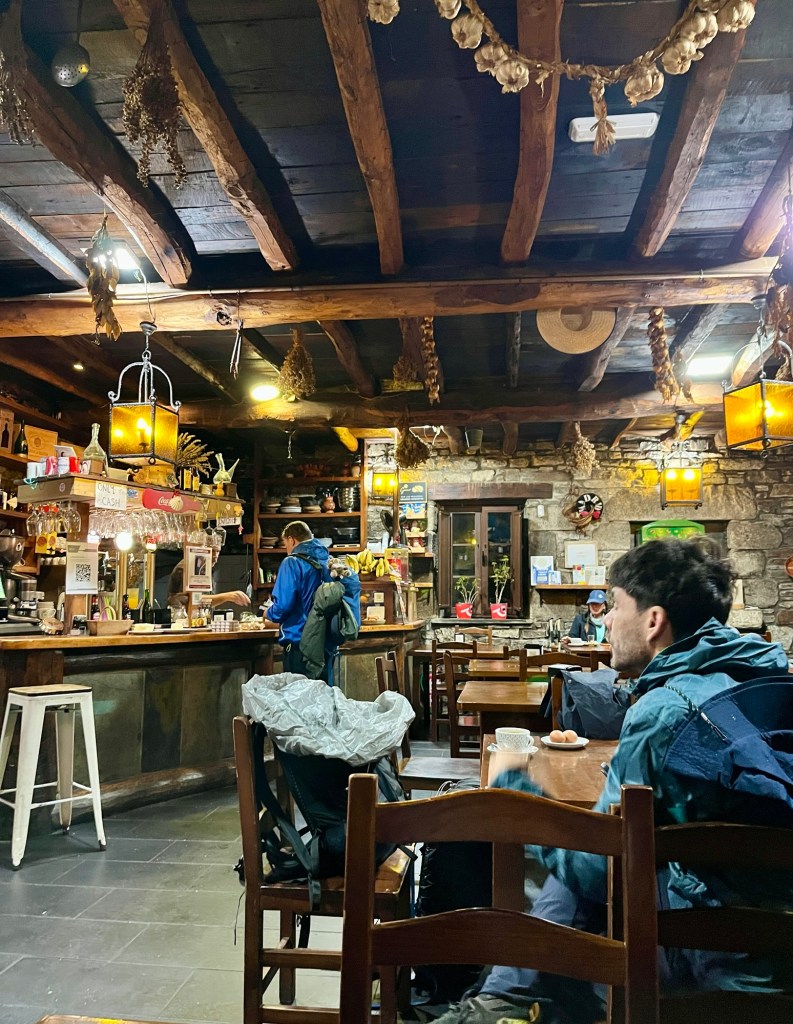
I’m writing from my hostel room in Saint Jean Pied-de-Port, on the eve of my trek. It’s nice to be back in this tourist town and to mingle with the other pilgrims from all over the world.

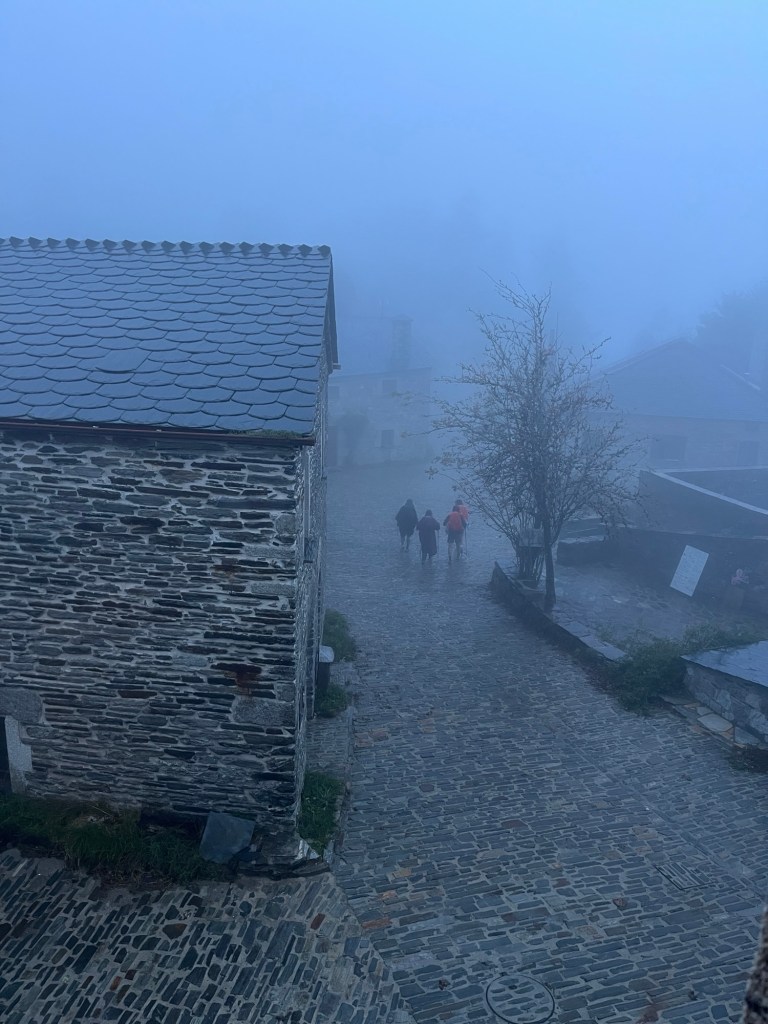
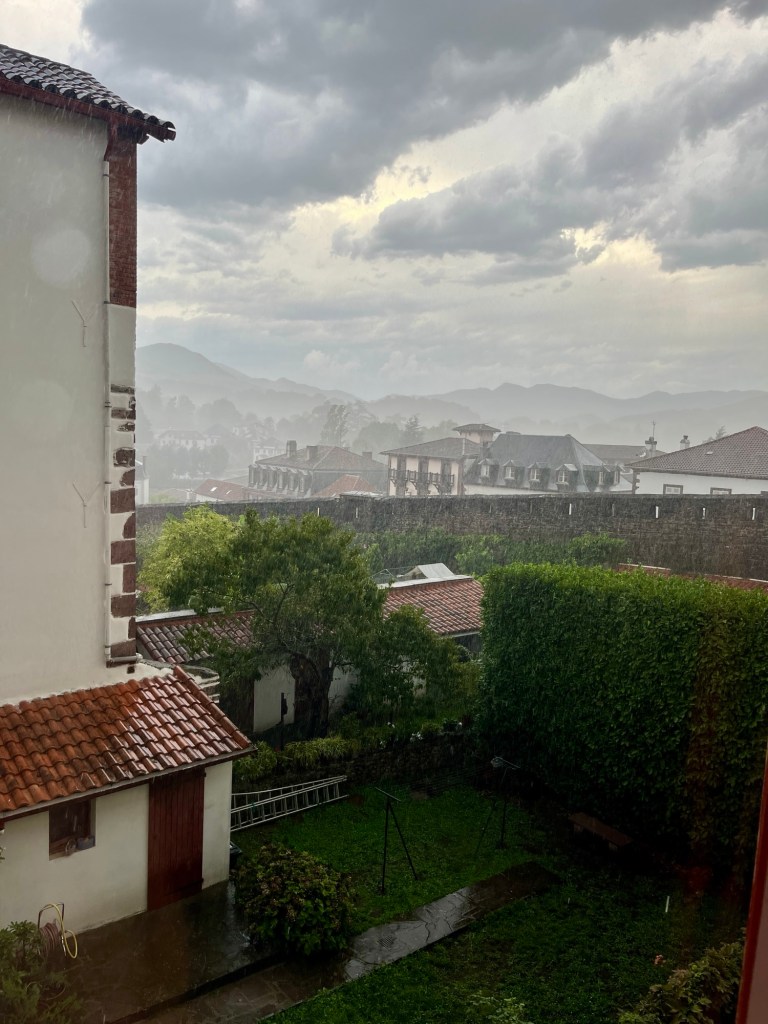
I’m glad I was just a spectator to this downpour this morning

After breakfast I stood, coffee cup in hand, outside my hostel and wished those pilgrims setting off a buen camino as they trooped by. Some of them were carrying everything but the kitchen sink, even one guy I swear had a portable typewriter lashed to his pack. There’s a rule about not carrying more than 20 percent of your body weight and I’m sure these folks were over that. Well, they’ll likely be finding the local post or DHL office soon, to ship stuff they haven’t abandoned home. That’s what I did back in 2019.

I do love good writing and, as much as I try to do that here, I often find others who have put the Camino experience into words so much more eloquently than I. With that in mind, I’d like to direct you to this, from the Wall Street Journal of all places:

https://www.wsj.com/lifestyle/travel/camino-de-santiago-pilgrimage-walk-6f611461?st=gDxJch&reflink=article_email_share

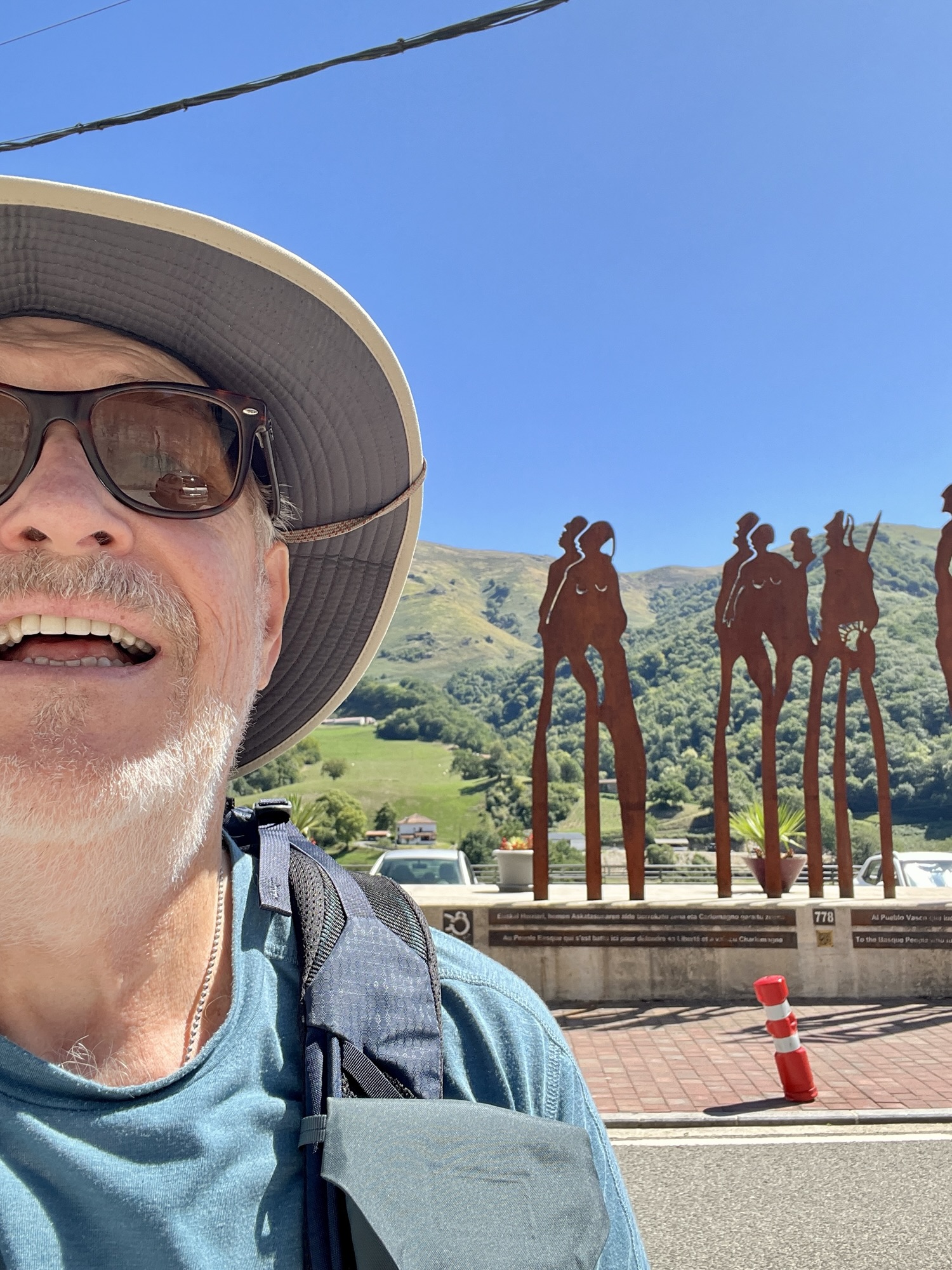
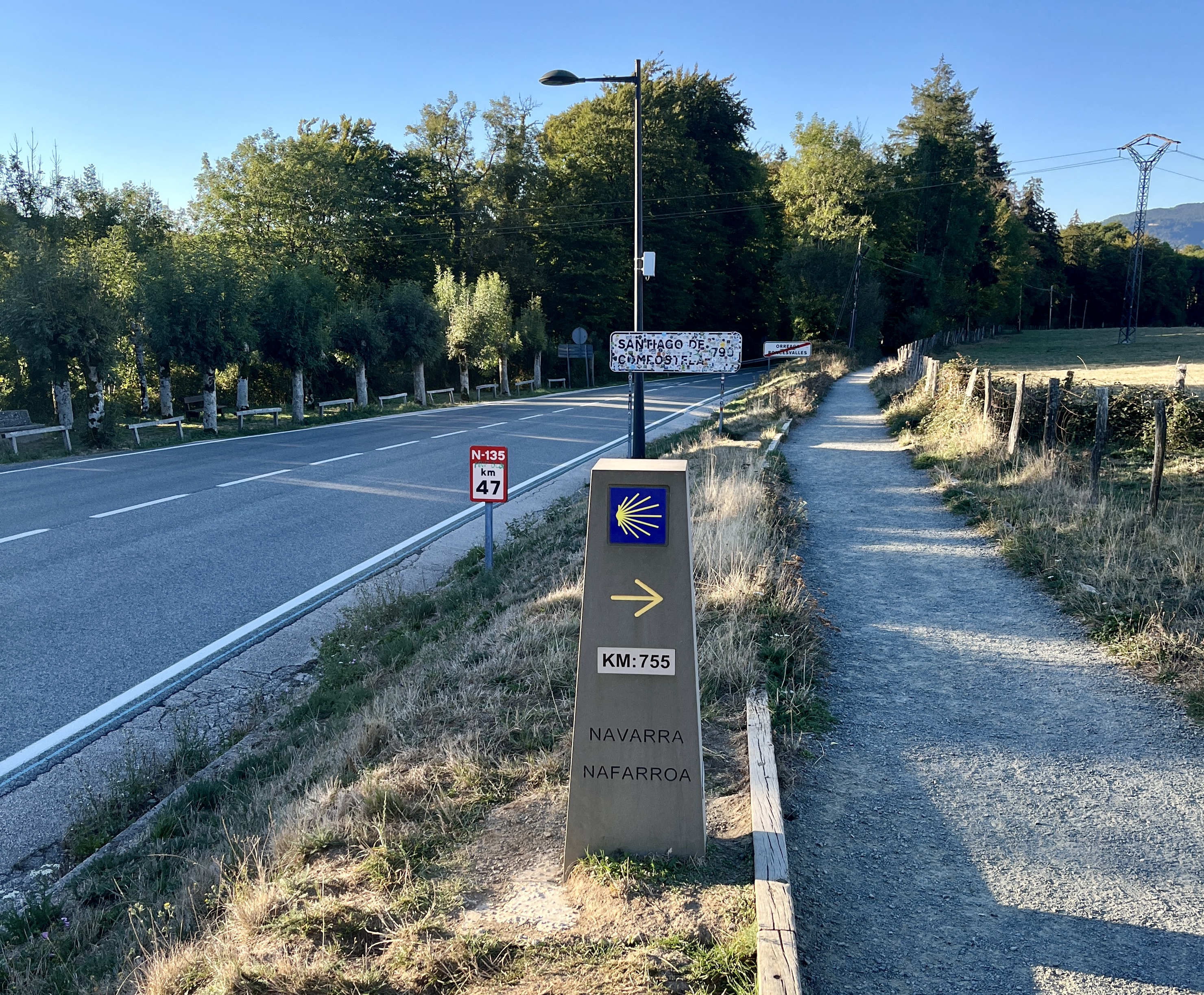
So tomorrow I set off, and instead of the Napoleon route over the Pyrenees I’ll be taking the lower Valcarlos route though the surrounding valleys. This is the only route open in the Winter and is said to be “easier but not easy” compared to going over the top. Having done the top route three times, I chose the lower one this time for completeness sake; something new.

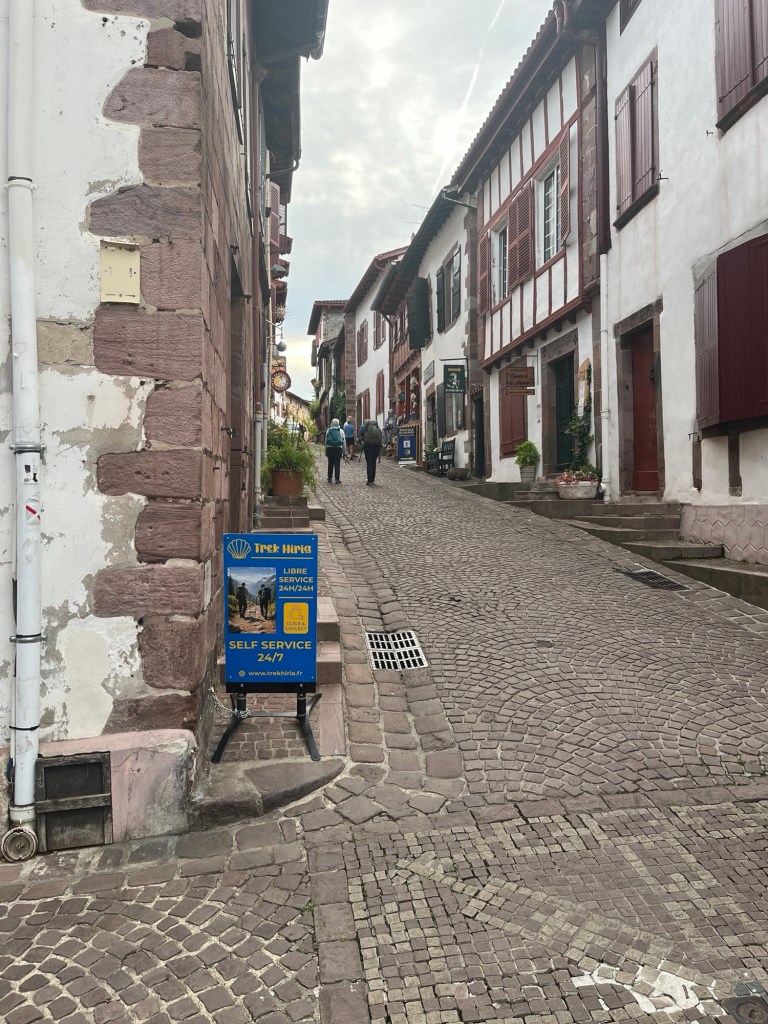
My morning station, where I wish departing pilgrims a good walk

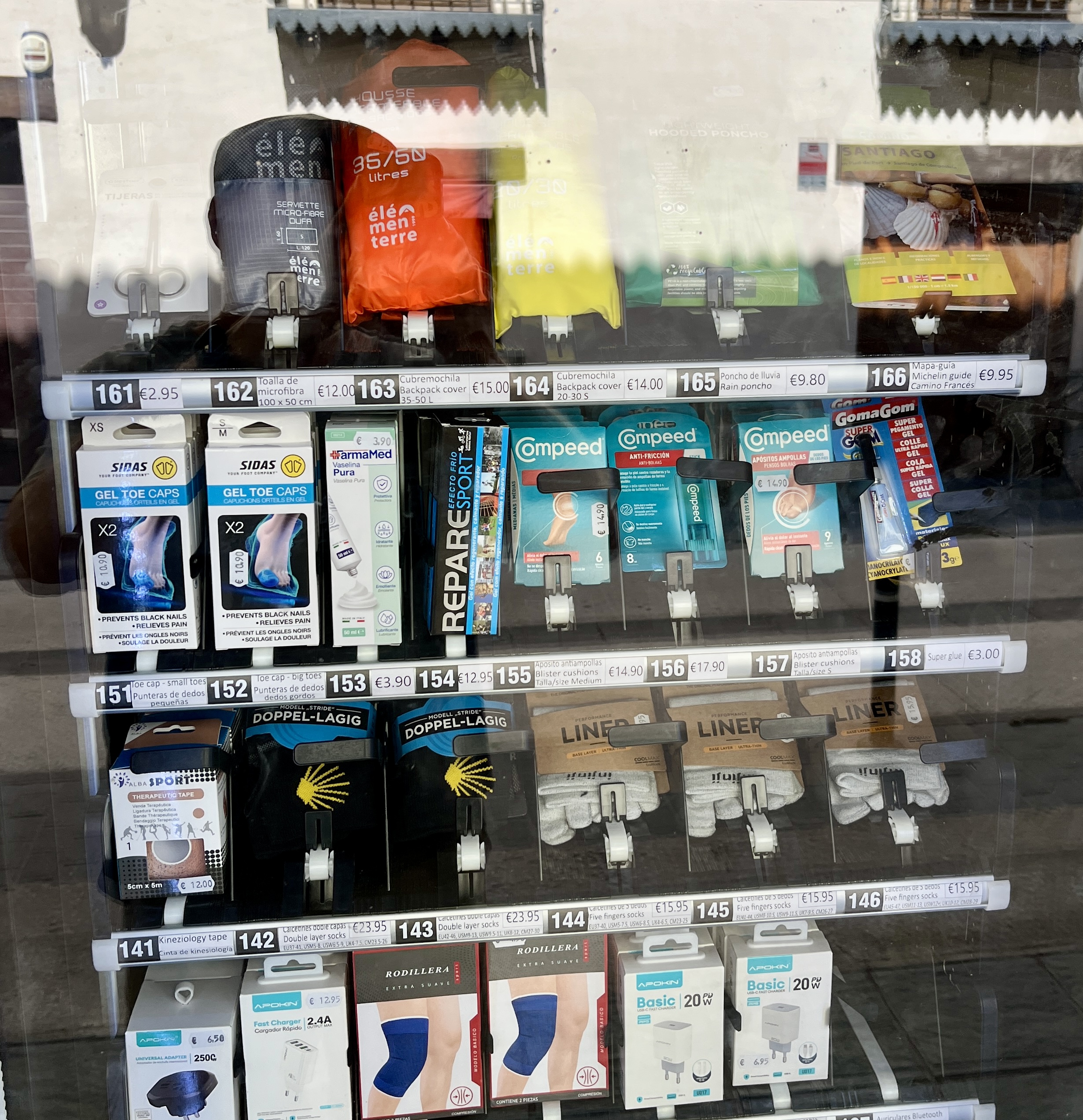
Saint Jean PdP remains a touristy place and there are now three hiking outfitter stores on the main drag, where there had been only one – a reflection of the large increase in the number of pilgrims in recent years.

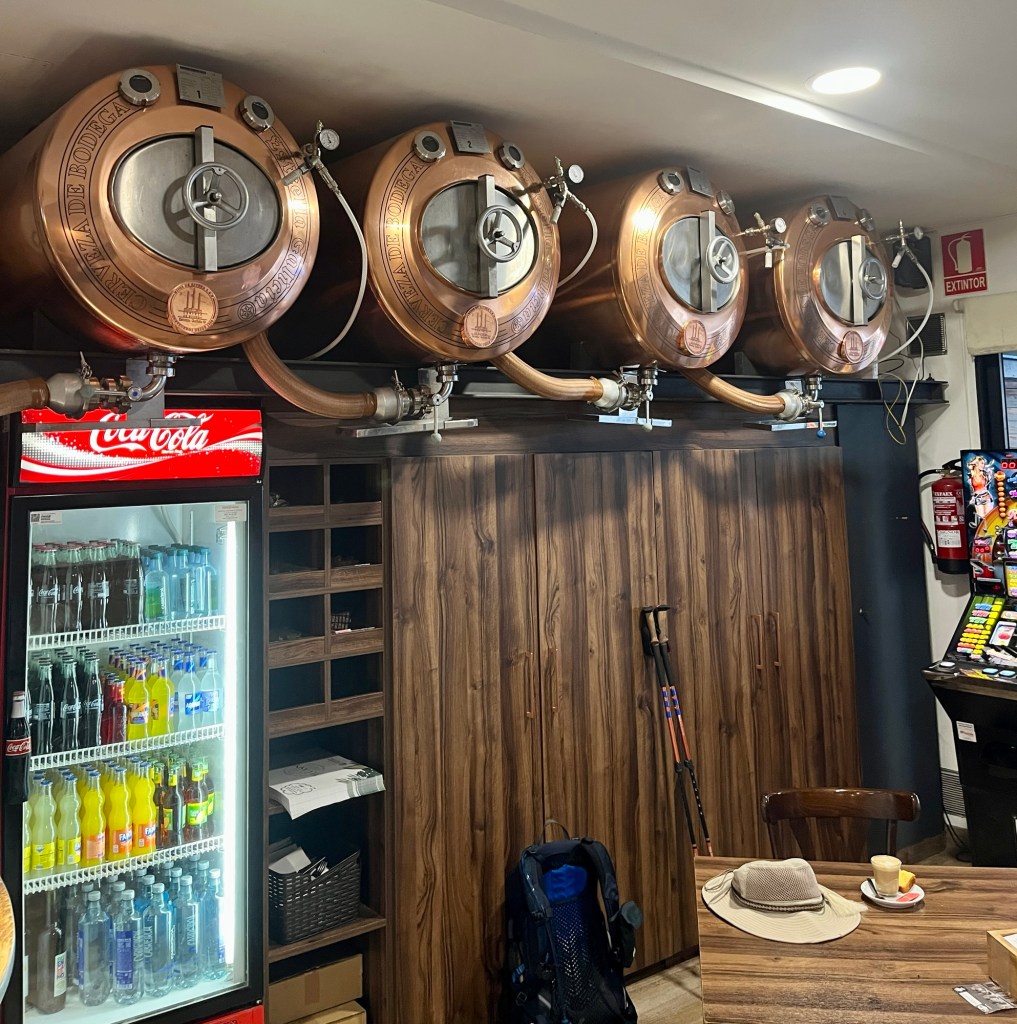
Espelette pepper beer! Happy days!

Tonight I will pack my backpack and review my plans and tomorrow I’ll head off after breakfast. Pray for dry weather, please, and good company. I already have that in you; thanks for coming along.

Now THAT Is A Pilgrimage

In an earlier post I inaccurately said that the Via Francigena pilgrimage starts in Canterbury. That was wrong; it actually starts in London. I was reminded of this one day when I was halfway to Chartham on a training walk, all decked out in my Camino gear, and I encountered a dozen people hiking to Canterbury, from London. They were a group of young Via Francigena Goodwill Ambassadors, mostly Italians, and they were delighted to meet a fellow pilgrim (even if I was heading in the opposite direction). We had a nice trailside chat and several of them had been on Caminos in Spain. Based on the videos two of them were taking, I’m pretty sure I now appear in someone’s Italian blog.

Here’s the brochure they gave me. You can see that this is a very long hike! In fact, it’s about 2,000 miles through four countries and takes three or four months. That’s a commitment. Someone else I talked to a few years ago who walked it said that it doesn’t really have the level of supportive infrastructure found on the Caminos in Spain and is quite difficult. Let’s not forget we’re talking about crossing The Alps, too. The ambassadors were very nice but I’m not inclined to do this one. How about you?

However, meeting them put my measly upcoming Camino into perspective. Now I’m raring to go.

I’m in Paris as I write this and I’ll be heading south in two days. I’m passing the time between coffee, croissants, and cafes by engaging in the time-honored, pre-hike practices: tweaking my gear and generally overthinking all my plans. Yes, everything fits in my pack. Yes, I have all the required documents. Yes, I’ll probably be able to carry it all even if I do include that Swiss Army knife. And, as I’ve reminded myself several times, they probably, almost certainly, sell whatever else I might need, in Spain. Sound familiar?

I’m lucky that the wildfires in southwestern France that temporary shut down the trains out of Paris have been tamed. And, at the risk of jinxing myself, the weather forecast for my first hiking day is very pleasant – sunny and dry. One can only hope. I look forward to my ride to Saint Jean Pied-de-Port because the train is full of pilgrims and there’s a festive and excited vibe. I confess I’m getting a little of that right now.

Thanks for coming along and carry on.

It’s Probably Best to Start with a Plan

Since you asked, planning for my Camino started last year and is fairly complicated. Let’s look at what’s involved.

One begins by deciding which Camino you’re going to walk. I’ve always walked the Camino Frances, one of the longest and hardest routes, but there are over a dozen recognized routes to Santiago from all over Spain, France, and Portugal. Naturally, the time of year when you plan to walk and the amount of time you have to do so are also factors. Many routes include optional side trips to nearby historic or scenic sites (which can add multiple kilometers/days of walking). Luckily, as a retiree, I’ve always had as much time as I’ve needed and I prefer to walk in September and October.

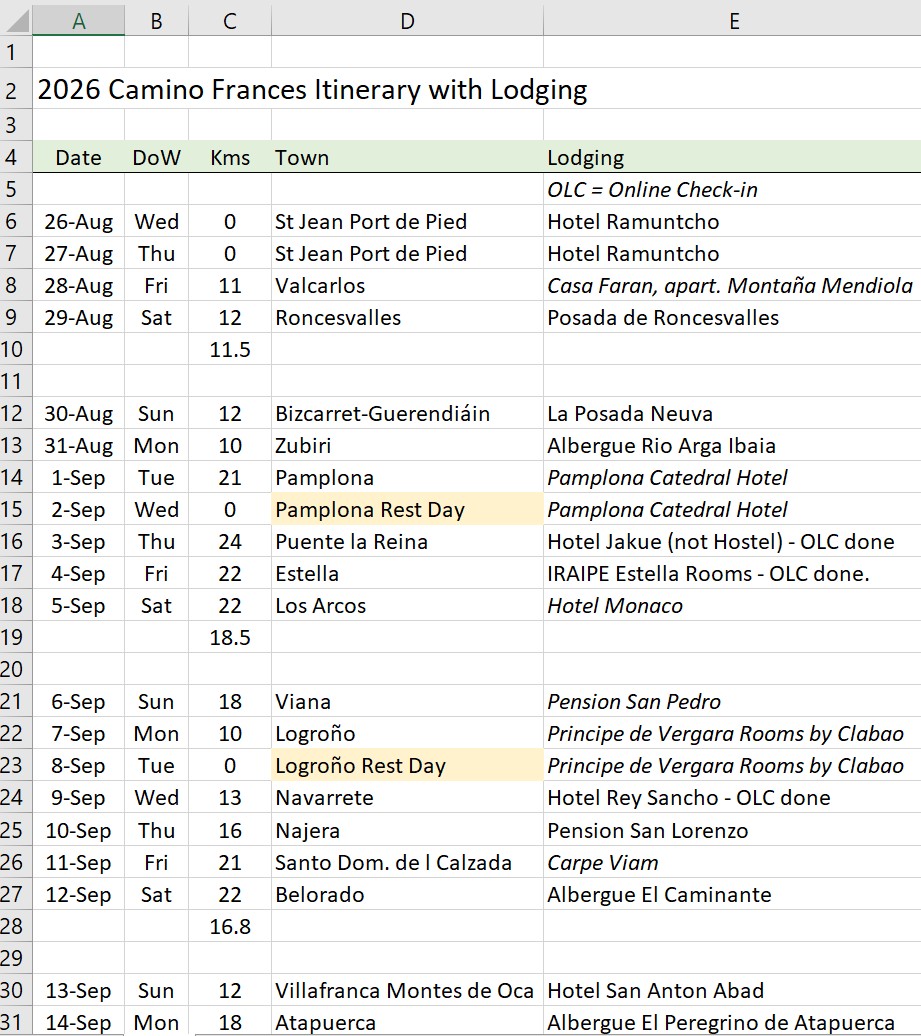
Once I know where I’m going and when, I create a plan that breaks the walk into manageable segments or stages, based on my personal preferences and fitness level. As you can see below, Excel spreadsheets are very useful for this.

Like many pilgrims on the Camino Frances route, I work with the Brierley Pilgrim’s Guide, the classic guidebook now in its 23rd edition. Its maps and other pages provide a wealth of information. I ask myself how far will I walk on any given day? Can I mix up short and long days? Can I take a day off periodically? This year’s walk averages around 18 kms (12 miles) per day, with a max of 24 kms. Before you pooh-pooh that mileage, consider that three mountain ranges are involved and there are many ascents and descents. For example, one day in 2024 I walked almost 40,000 steps.


I prefer to be very organized about all this; but many pilgrims are not; they take a far less structured approach, walking as far as they want/can on a daily basis and getting lodging wherever they can when they arrive at a stopping point. This gives them a lot of flexibility but no security – they may arrive in a town to find all the beds/bunks are taken and they must continue on to the next town to (hopefully) find a bed. The weather can also be a factor when winging it. Still, the capriciousness and freedom of it all are part of the lure of the Camino for many (and was for me, the first time).

Camino lodging choices range from hostels (bunk rooms) to B&Bs and hotels (private rooms). Some folks mix it up, getting the occasional private room to take a break from the bunk rooms. I’ve tried them all over the years and now stay in private rooms. Reserving private rooms is an organizing extravaganza involving online bookings, and emails and phone calls in Spanish (which I speak, luckily).

Once all that is in hand, I turn to the Brierley Guide and markup its stages to show my route, as shown in the example from 2024 above.

I keep notes year-to-year, so I know where there are good cafes and food trucks, where the necessary pit stops are, and which are the tough sections. I also break each long day into 3-4 parts, so that I can take rest breaks and possibly change socks. Once again, all this planning assumes lovely weather but can be (and often is) disrupted by storms, heat, torrential rain, wildfires, etc. (just the usual Camino events). One downside of my strict planning means I have to get to my destination each day to use my reservation.

And so it goes, in just two weeks from tomorrow we’ll see how well my planning serves me. Thanks for coming along!

Cheers!
It’s Camino Season

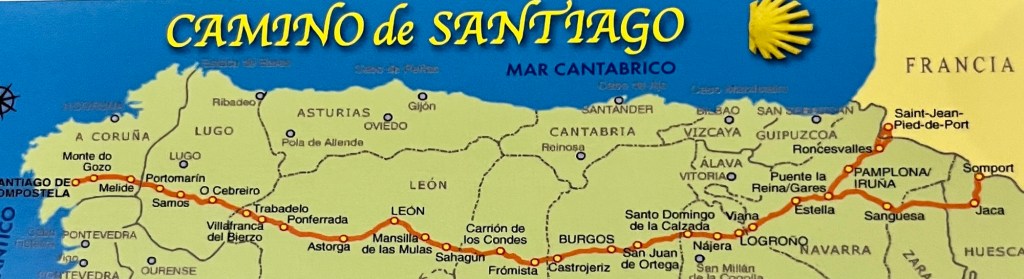
In three weeks I’ll be stepping off on another ~800 Kms (~480 miles) walk across Northern Spain, along the Camino de Santiago 13th century pilgrimage trail. This will be the fourth time for me, once again (hopefully) completing the entire “Camino Frances” route, from southwest France to the northwestern Spanish city of Santiago.

I’m in southeastern England right now, in Canterbury, home of the famous medieval cathedral. The climate here in the summer is generally very pleasant and conducive to long training walks. The area is home to many scenic foot and bicycle paths, which are ideal for nice, long walks.

Canterbury itself has long been a pilgrimage destination and is also the starting point for the “Via Francigena”, a 1200-mile walk to Rome, so the whole pilgrimage thing is well-understood here.

If it says so on the backpack, it must be so!
My training involves going to a gym for weight work three days a week, an 8-mile plus walk to nearby Chartham and back five days a week, and one extra long walk each weekend. Slowly, sometimes painfully, I’m whipping the old bod into the kind of shape needed to tackle the Camino.

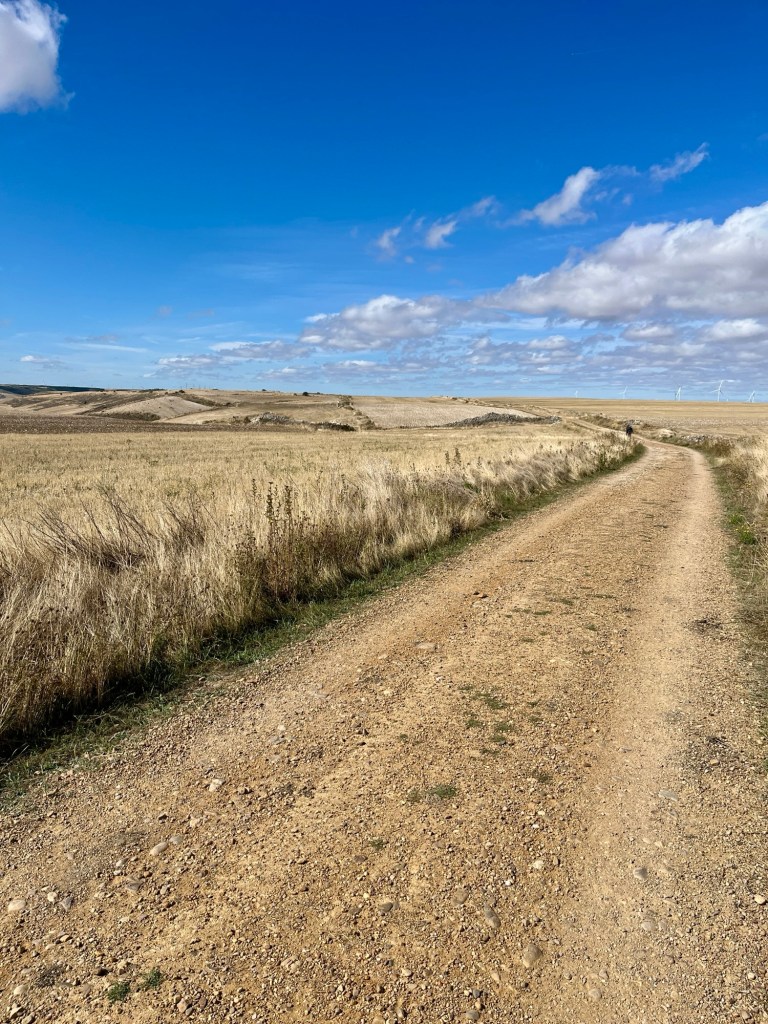
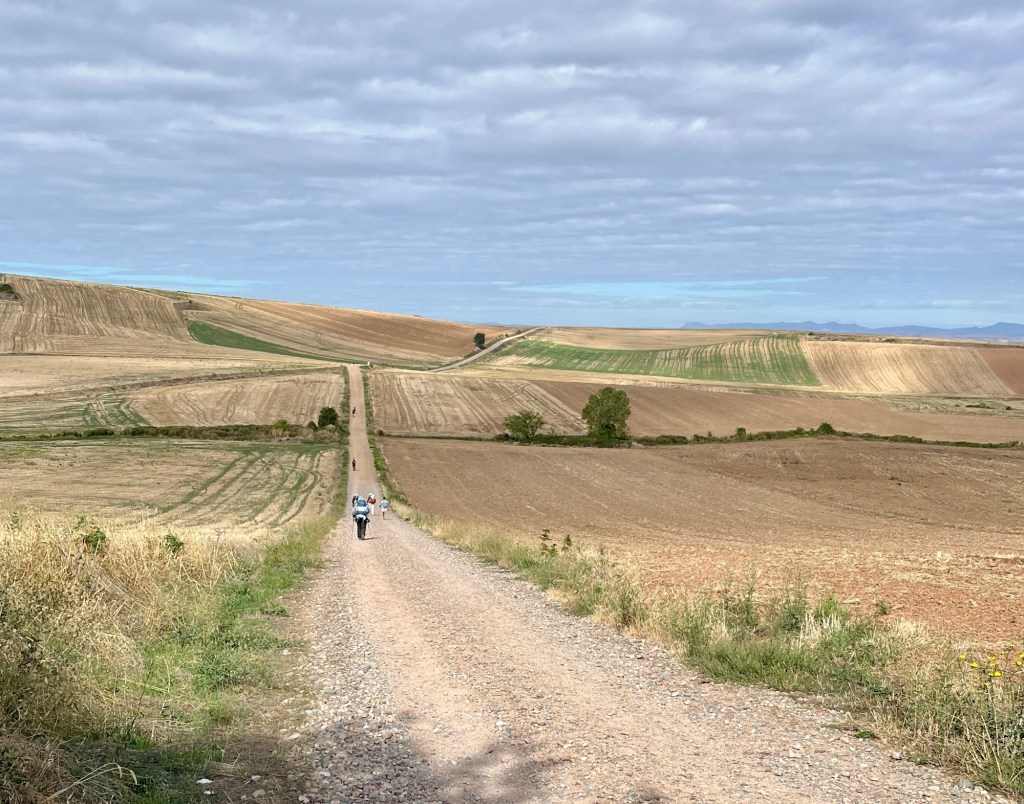
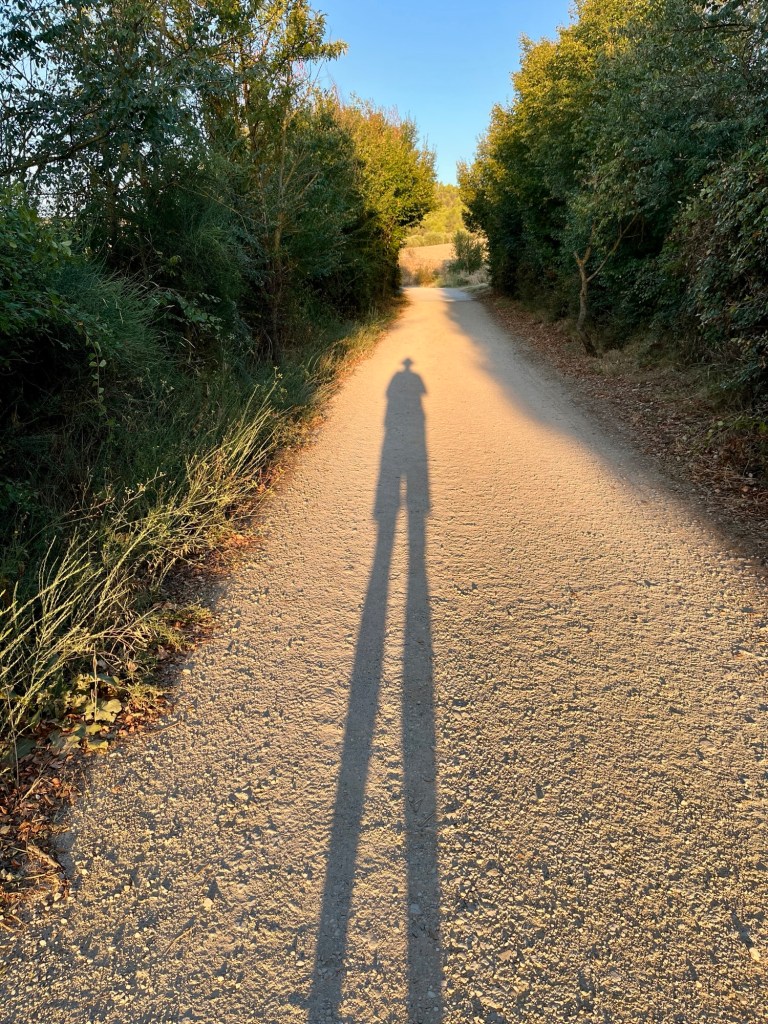
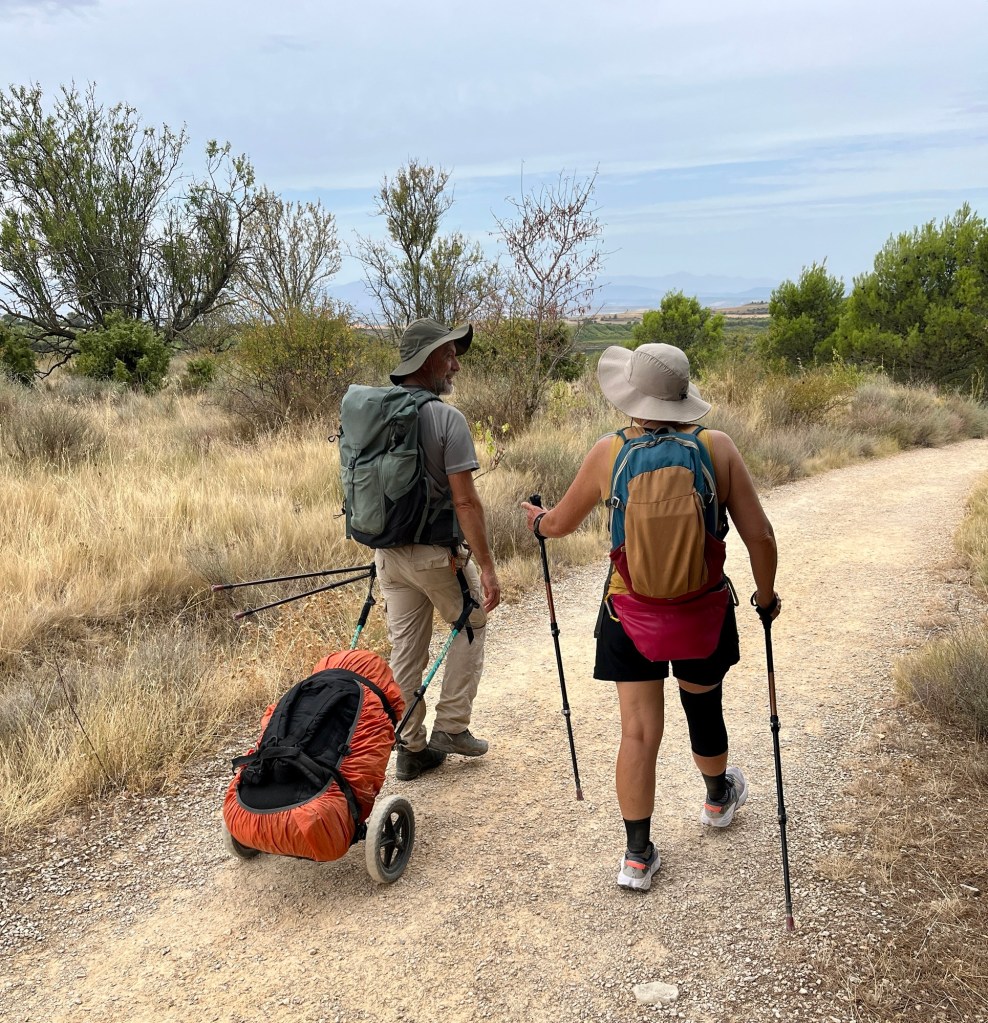
Leaving Los Arcos in 2024

I’m also using all my Camino gear in order to ensure that it all still works. My planning attempted to incorporate all of the “lessons learned” from last time (but, no, I didn’t add a snorkel – I’m praying for drier weather than last time).

I’ll make a few more posts in the next few weeks, to give you a better idea of the area and my preparations. Once I launch on the camino, I’ll make regular posts. Thanks for following along.

Cheers.