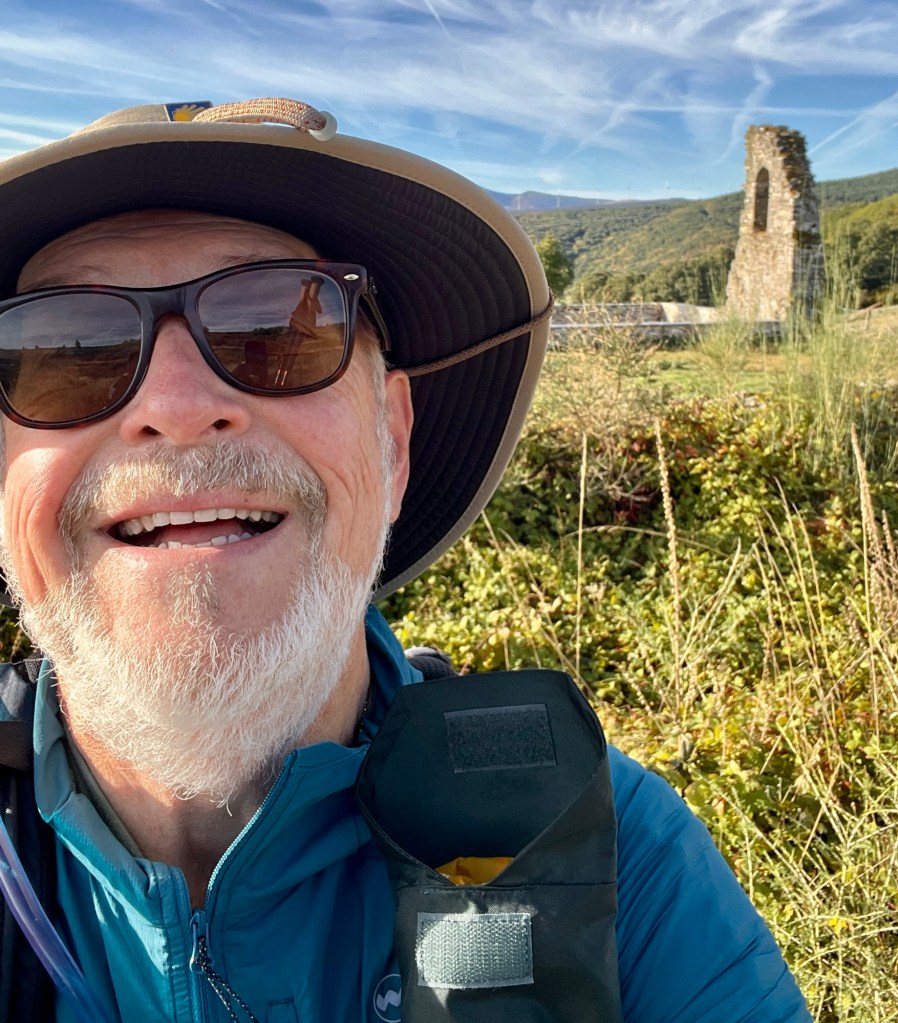
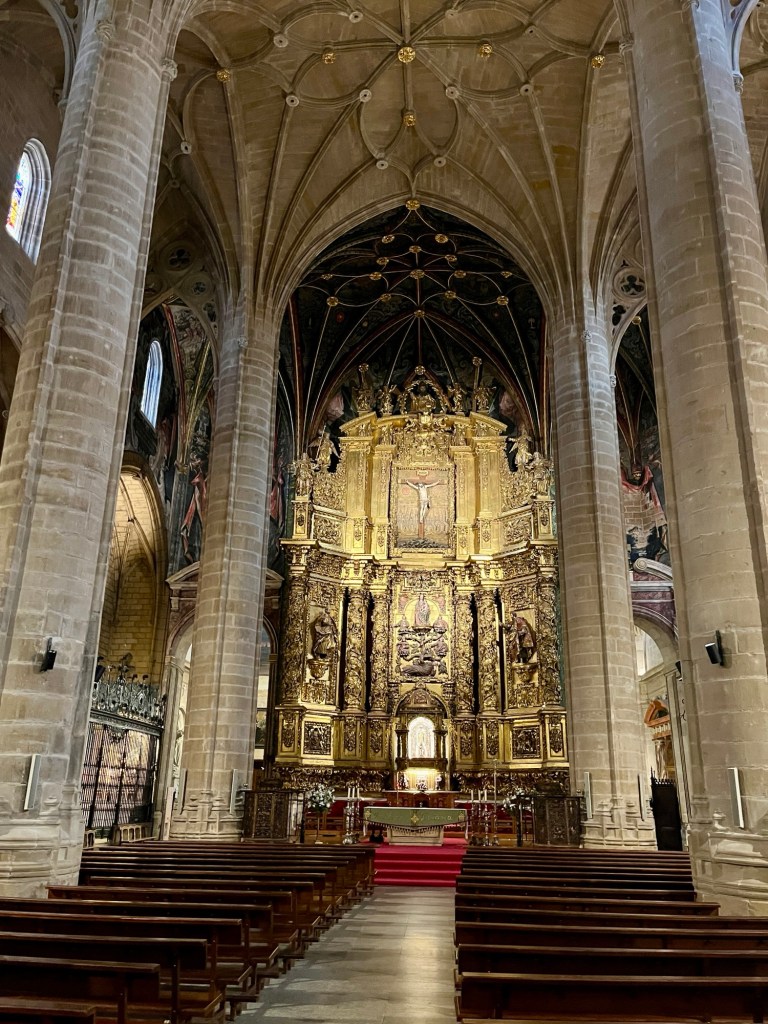
I’m writing today from Portomarin, a Camino town that features a Romanesque, fortified church that dates back to the 12th/13th Century. In 1963, the entire town was moved to avoid flooding when the nearby river was dammed. The church was moved, stone by stone, to its current central location.
From superhighway flyover bridges to church relocation, you have to give the Spanish credit for being superb engineers.
I have just five days left on my walk, and I’ll arrive in Santiago on Thursday. It’s been an interesting hike, but far less rewarding than my previous caminos. Maybe it’s just lost its luster for me, maybe it’s that I’m older now and it’s taken more out of me this time, maybe my status as a multi-Camino pilgrim is not that unique anymore. But whatever, I’m quite certain that this is my last Camino. Yeah, I know, I ‘ve said that before.
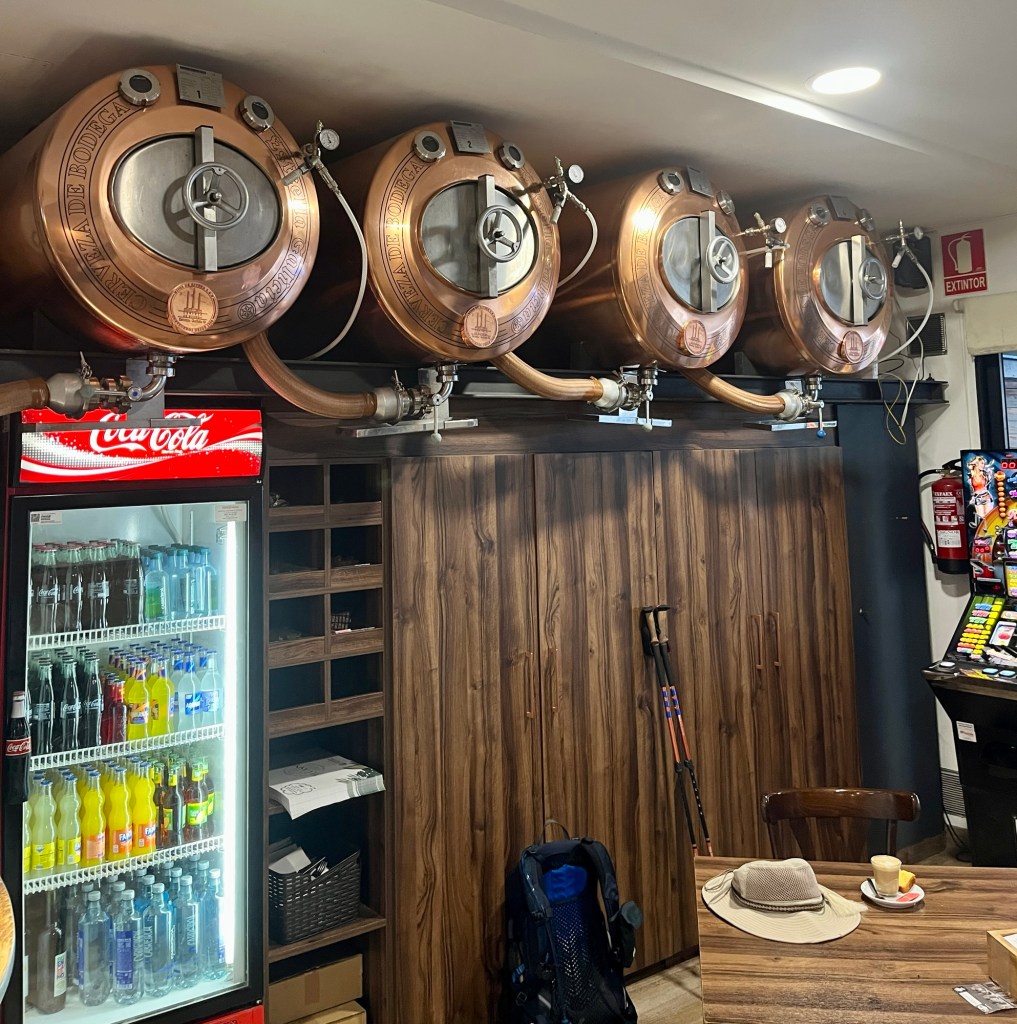
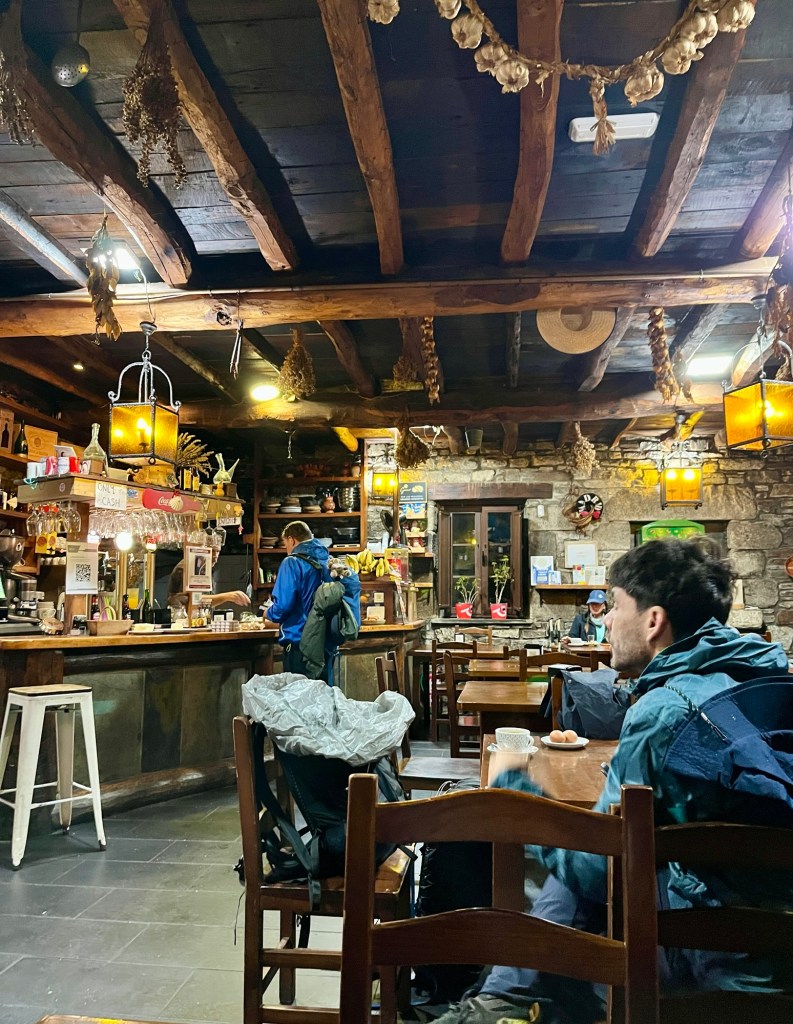
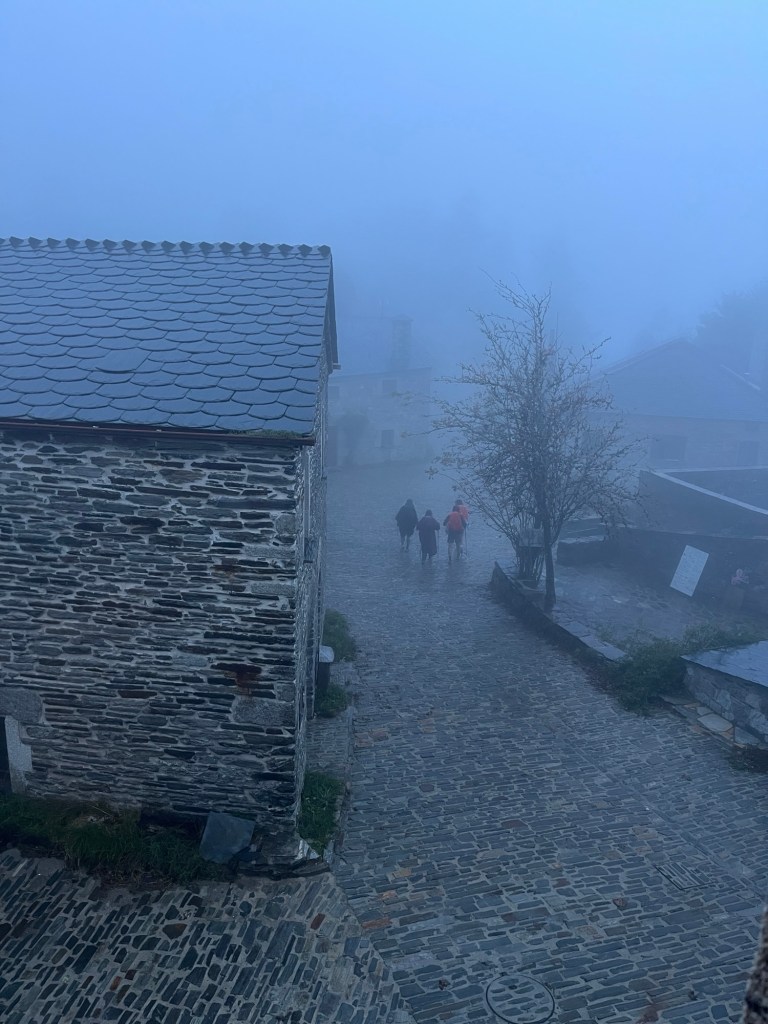
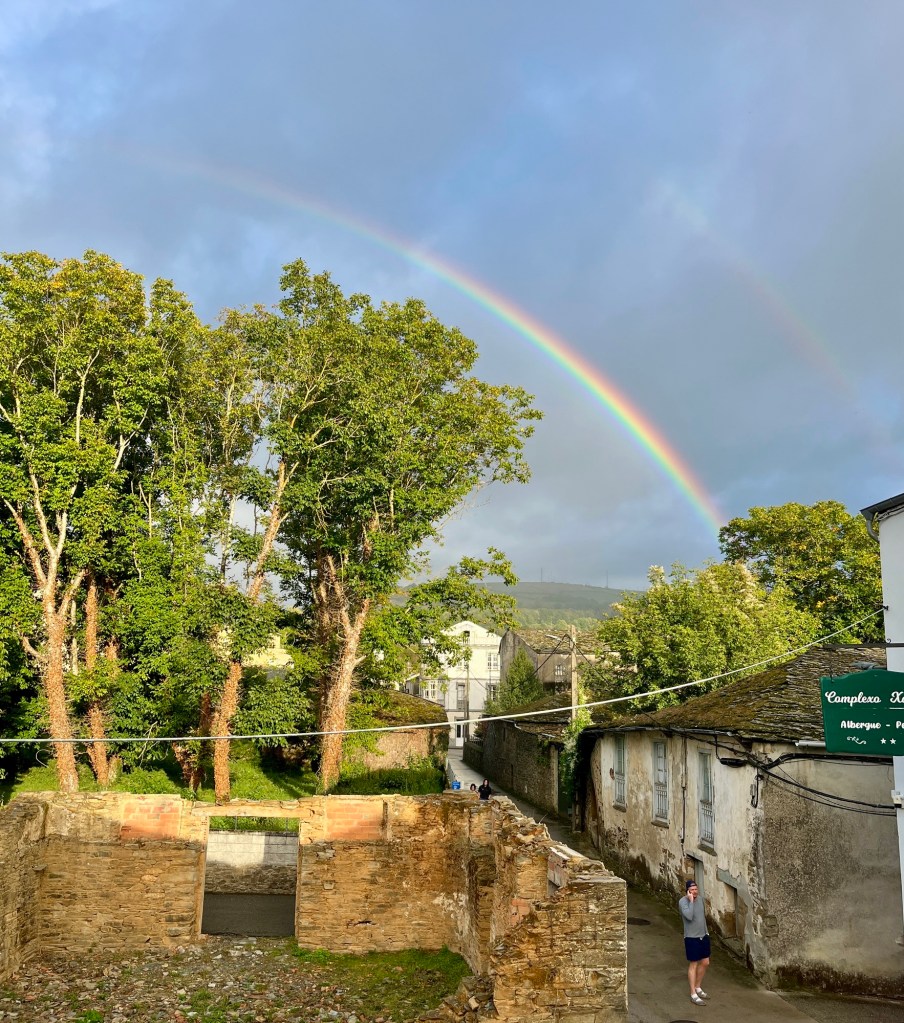
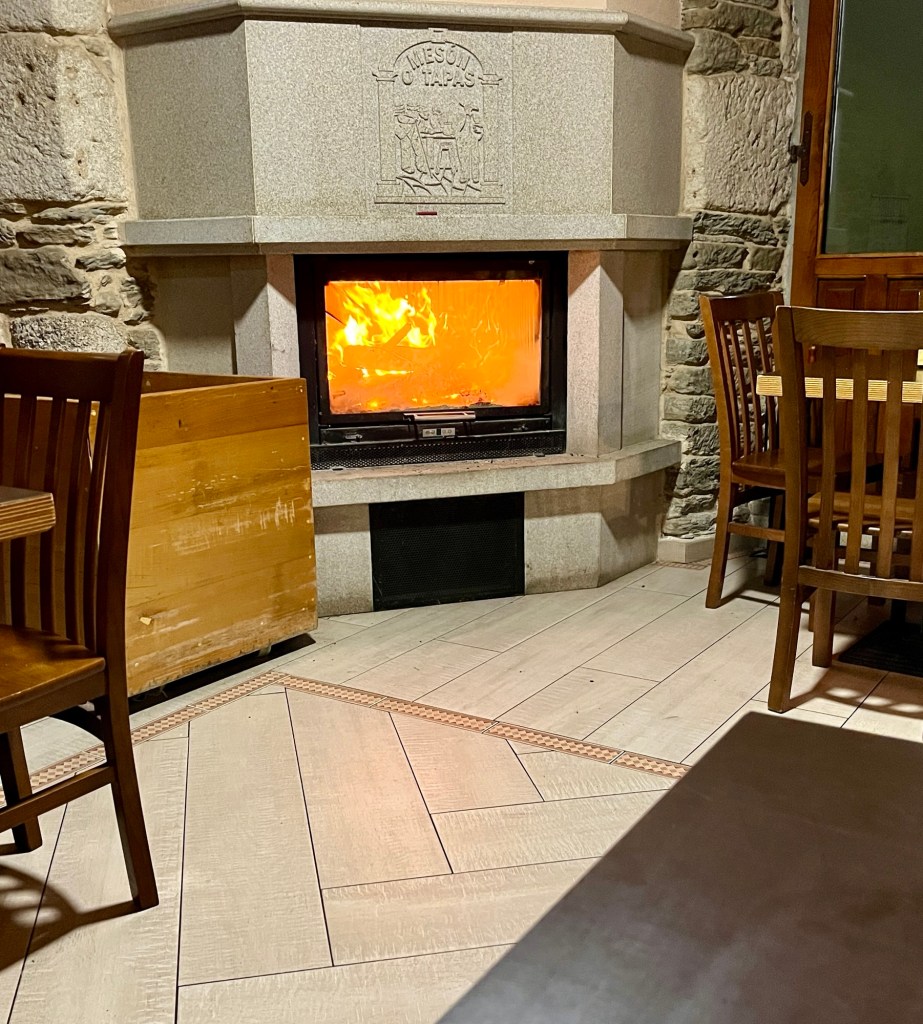
Love the beer kegsWarm inside…… but awful outside in O Cebriero Triacastela rainbows
Right about now, putting my feet up for a while before traveling again looks pretty damn good.
In the course of this walk, I’ve had hot (90s) and cold (low 40s) weather, I’ve been in downpours and fog, and I’ve probably lost 10-15 lbs. All my shoe research and preparations didn’t keep me from losing both big toe nails and getting some big blisters. So it goes.
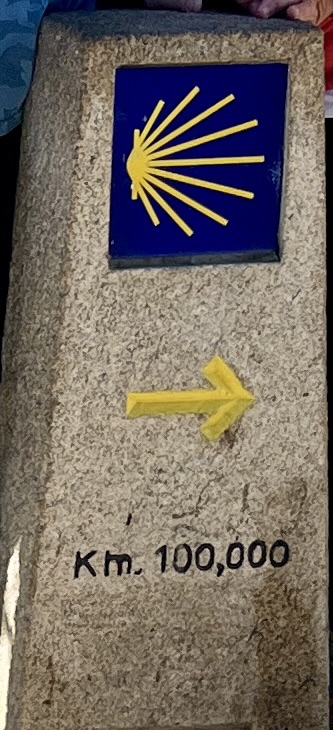
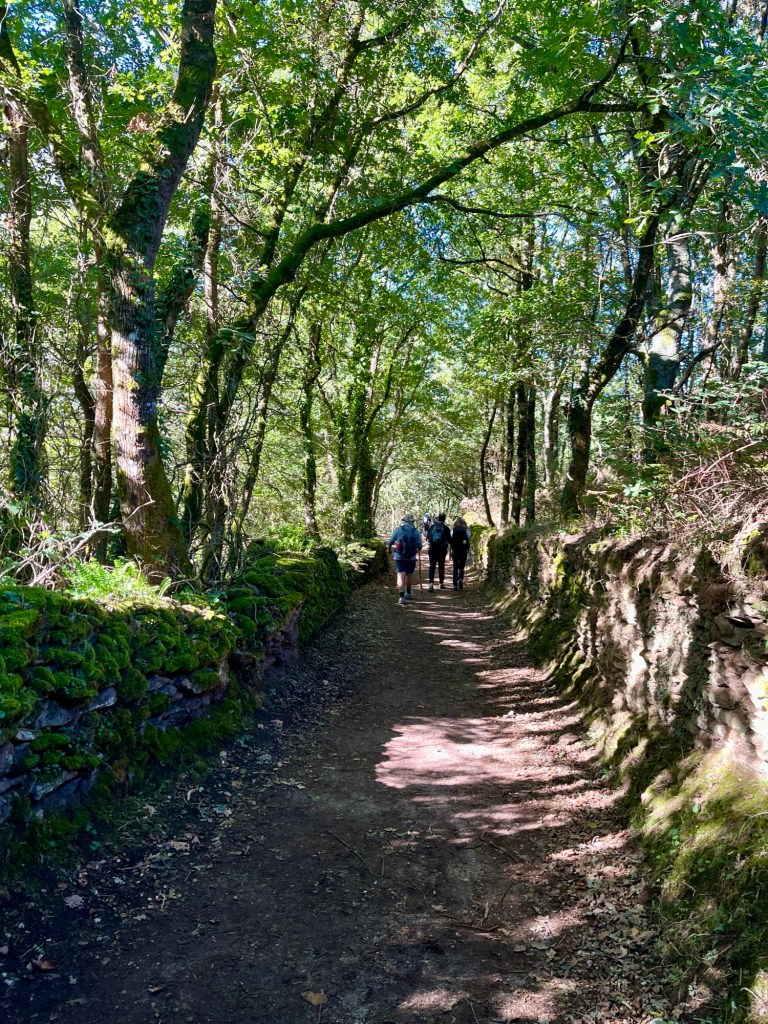
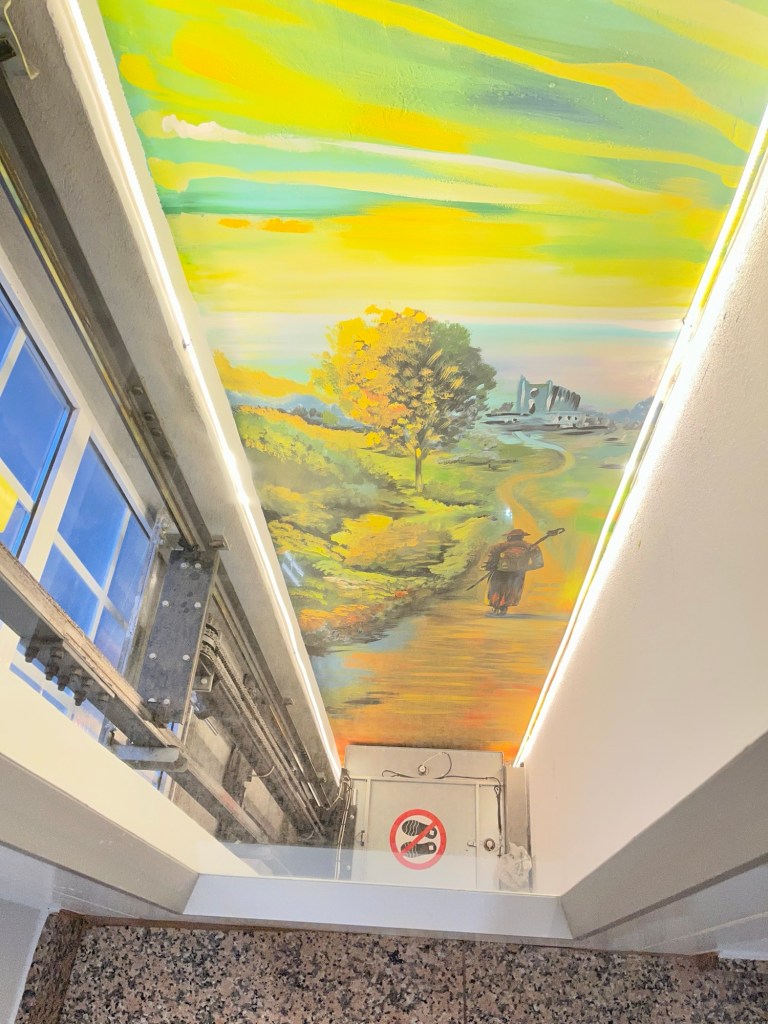
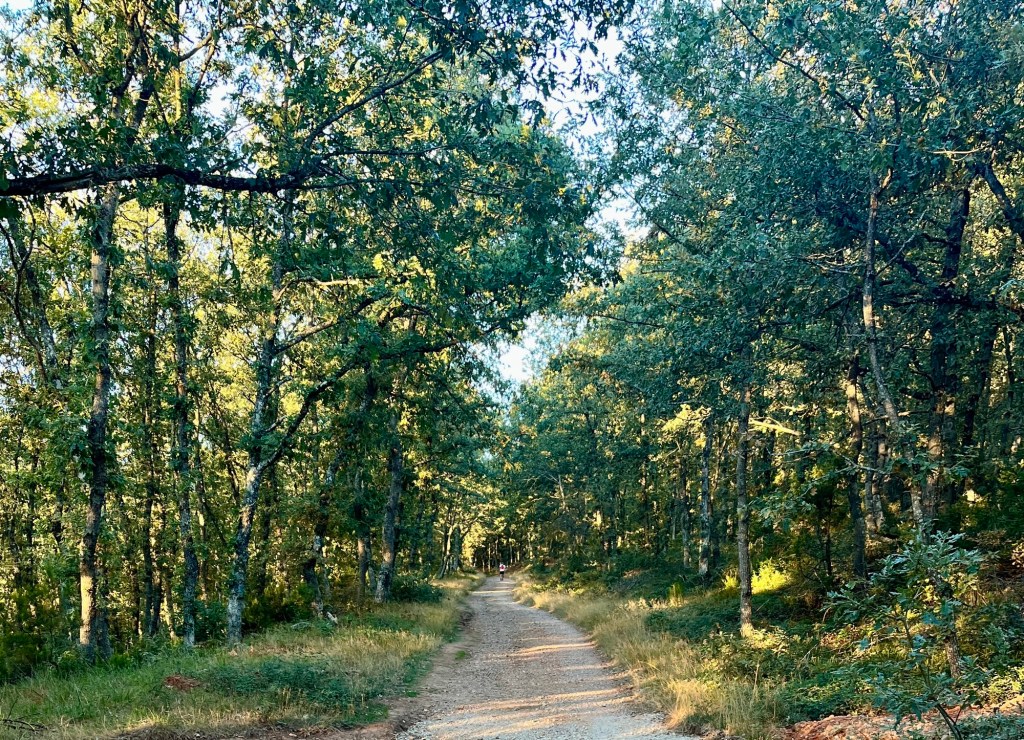
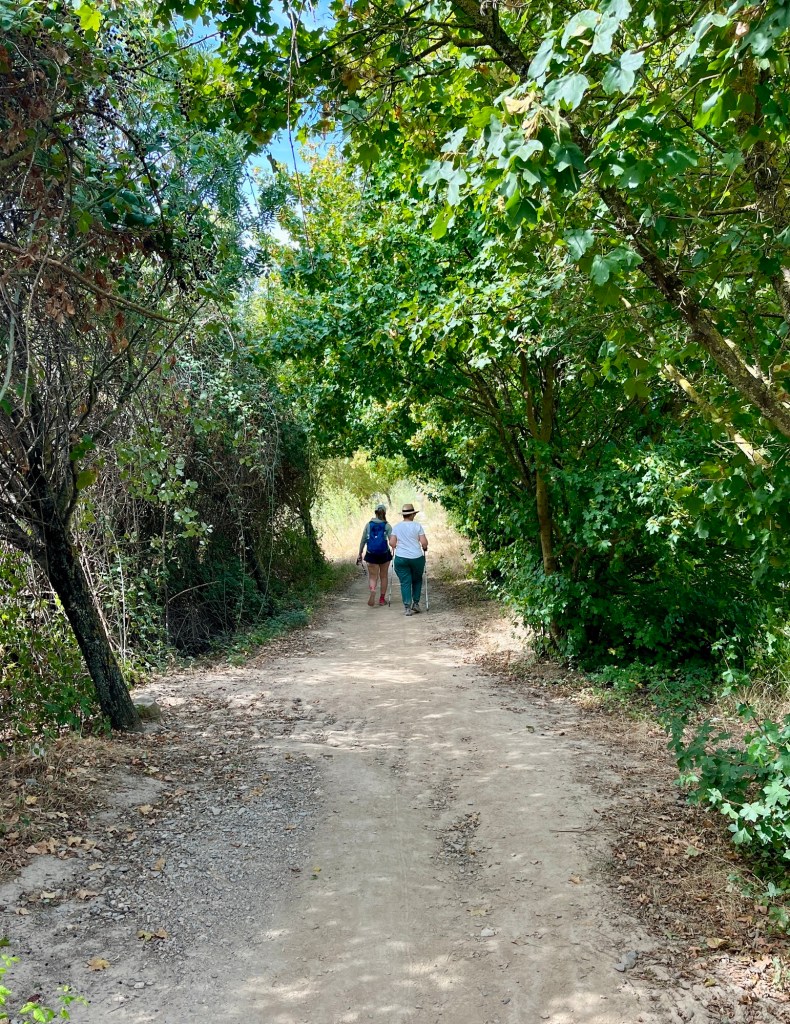
Cold enough for this100 kms leftBeautiful trail to Portomarin Artwork inside elevator shaft
But that’s the challenge isn’t it? Persevering when the going gets tough? I’m proud of myself for, whatever the situation, continuing to put one foot ahead of the other. And I look around me and see all the others, many in far worse physical shape, doing it, too. It lifts the spirits, my friends.
As does your encouragement and continued support. Thanks for coming along. Cheers!
I’m writing from Ponferada, a nice, large city with a famous castle, which is the scene of a rest day for me. And one that’s very needed!
Since my last post and my departure from Leon, I’ve been through Villadangos del Paramo, Hospital del Orbigo, Astorga, Rabanal del Camino, and El Acebo. The Cafe Los Angeles, in Hospital, which I had looked forward to for its great cafe and wonderful pilgrim’s menu lunch, was sadly permanently closed. The proprietor put in his 25 years and retired, and no one has bought the place to reopen it.
Coming out of there, I had a choice to go 10 unbroken kms along the highway (very boring) or take a slightly longer route through farm fields and two small towns. I chose the latter and it was a bad idea. I know I’ve taken it before but I’d forgotten it how bad it is, Not only were the rocky farm roads awful, but the Camino wound around hilltops, with lots of ascents and decents, and halfway through it started to rain. My arrival in Astorga was wet, soggy, and I managed to find just the right spot in my new sandals that produced a blister. That’s the Camino for you.
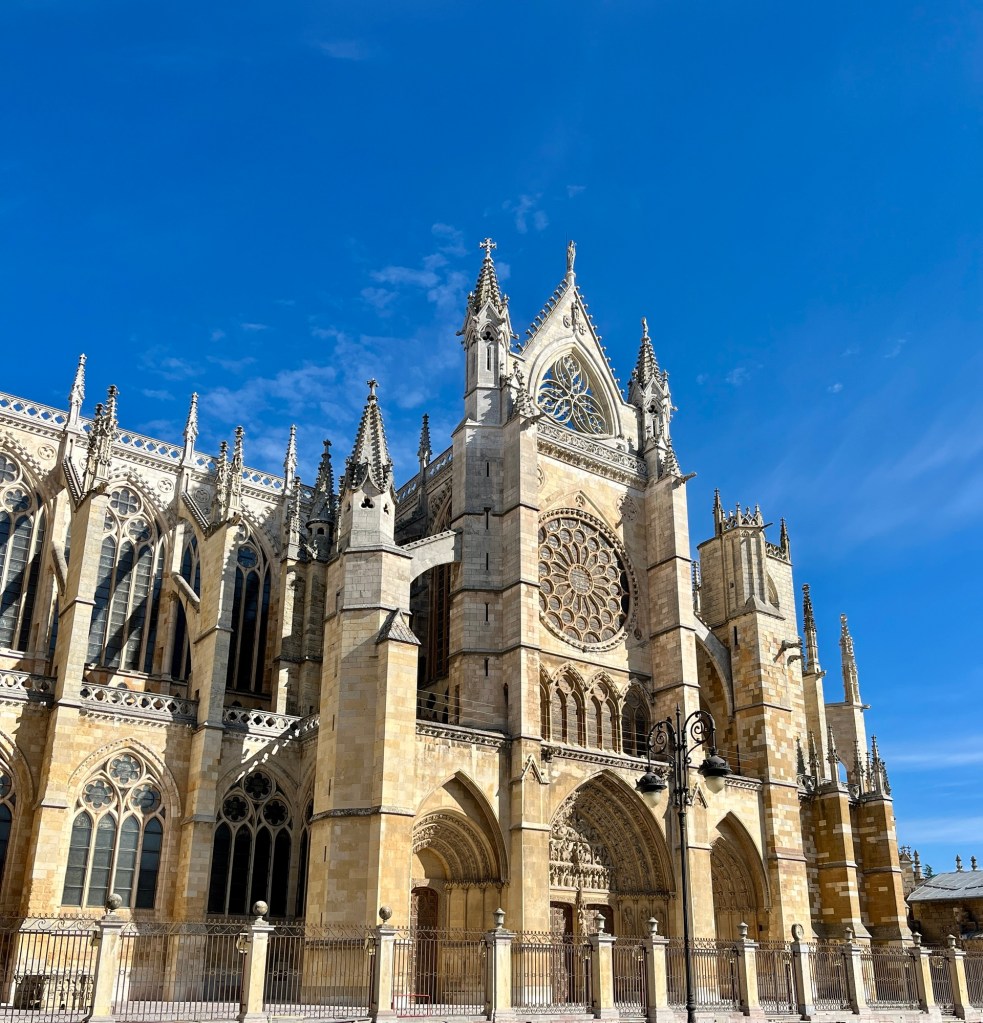
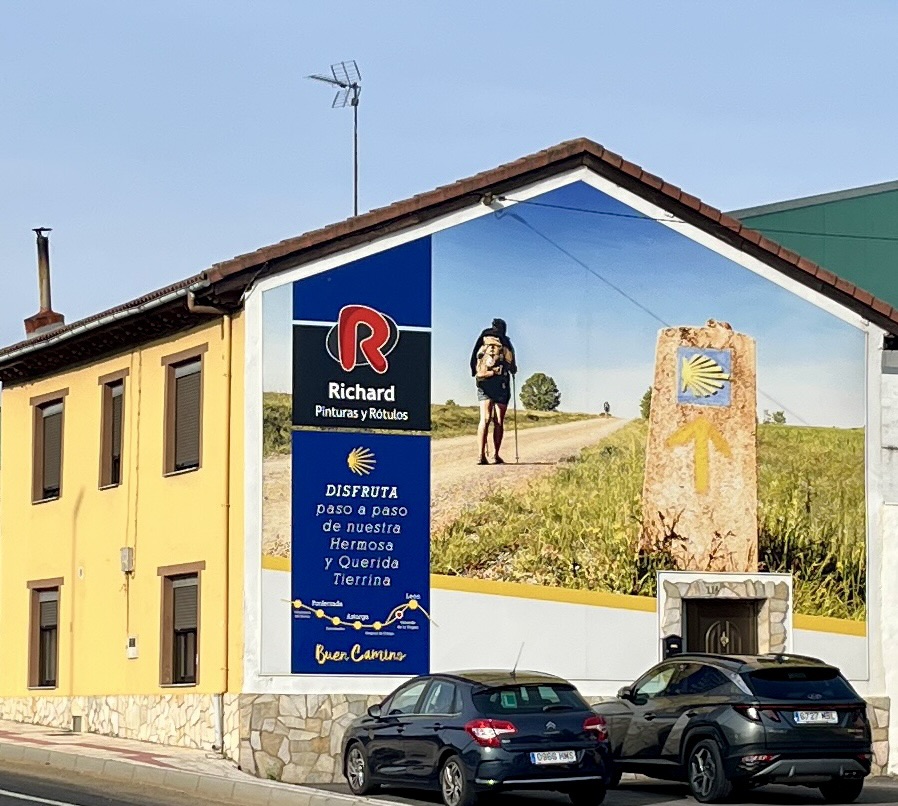
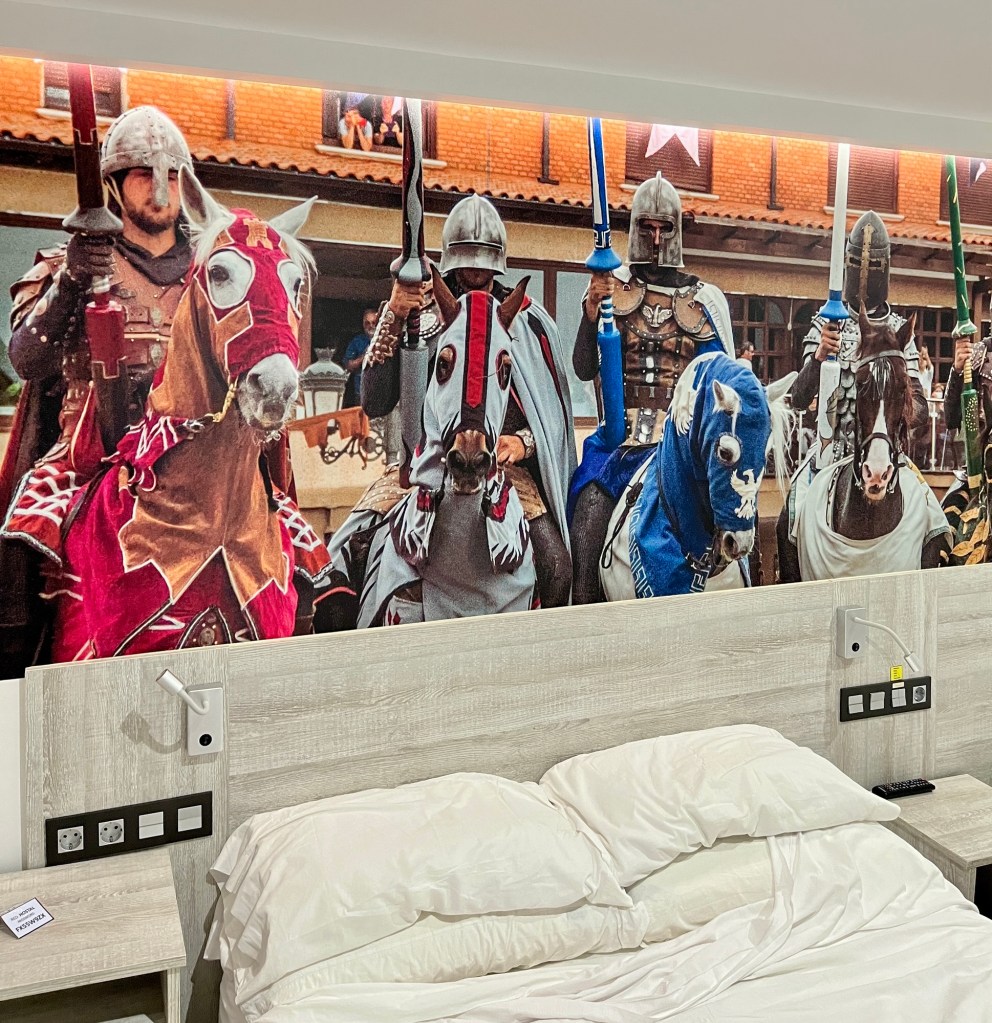
The cathedal in LeonMore path side artAlbergue host’s ugly hairless catsI had weird dreams that night, can you guess why?
I also forgot that the route out of El Acebo to Molinaseca features some god awful long descents down rock-strewn paths, including clambering over sheets of eroded slate and granite. Oy! The knees and legs took a beating, which I’m still feeling today. Yep, that’s the Camino.
I met two ladies at breakfast in El Acebo, Desiree from Madrid and Carolina from San Antonio (hello, ladies) and we walked together for part of the morning. Desiree is doing the Camino in multi-year stretches (as many working Spaniards do) and ended her walk for this year here in Ponferada. Carolina, a retiree, is going the whole way to Santiago, so we may meet again.
The weather has turned ugly and the forecast is for rain for the next week or so, usually at night with little chance of it in the prime morning walking hours. Nonetheless, wet and muddy paths are no treat.
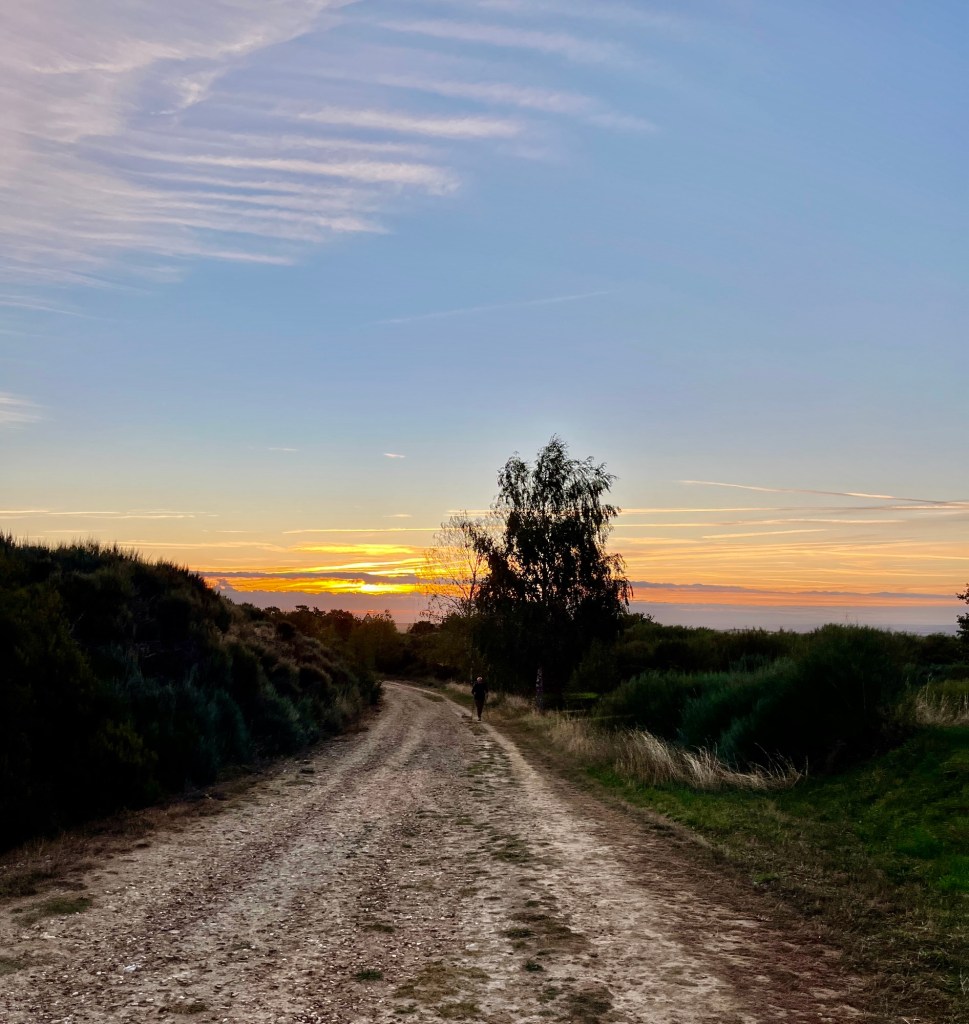
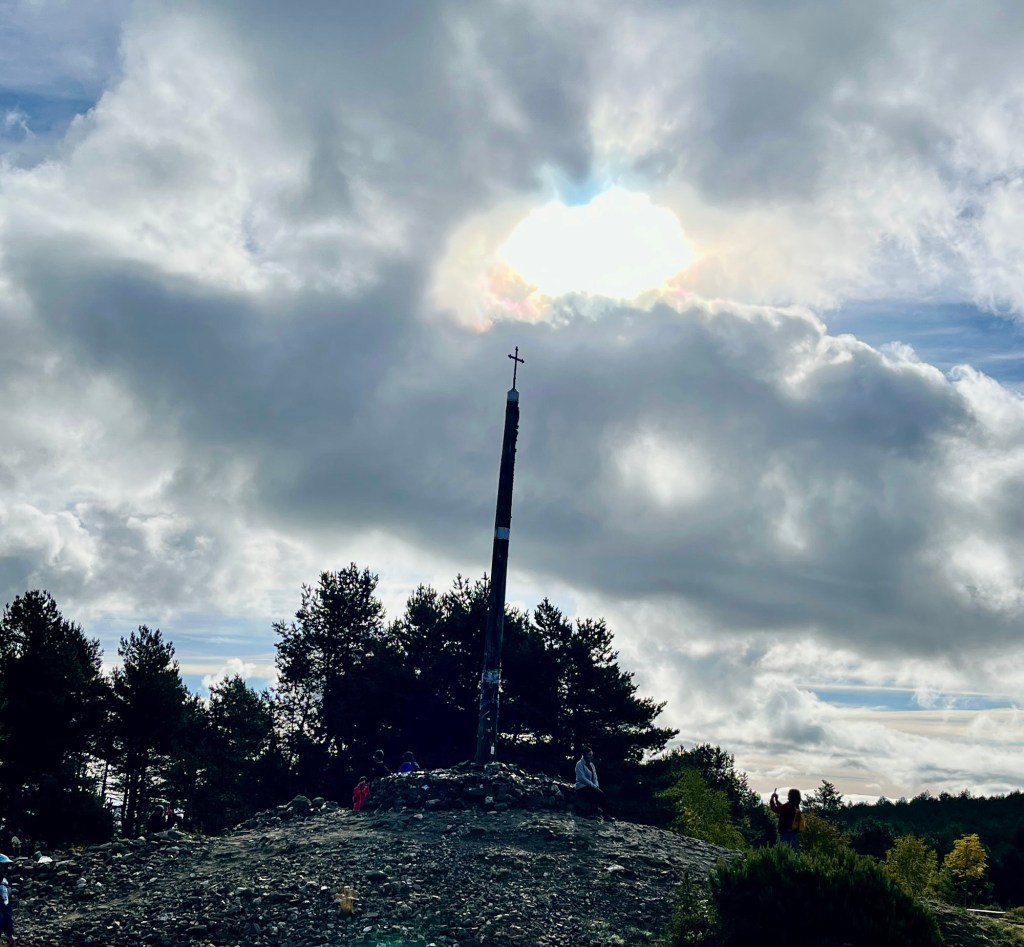
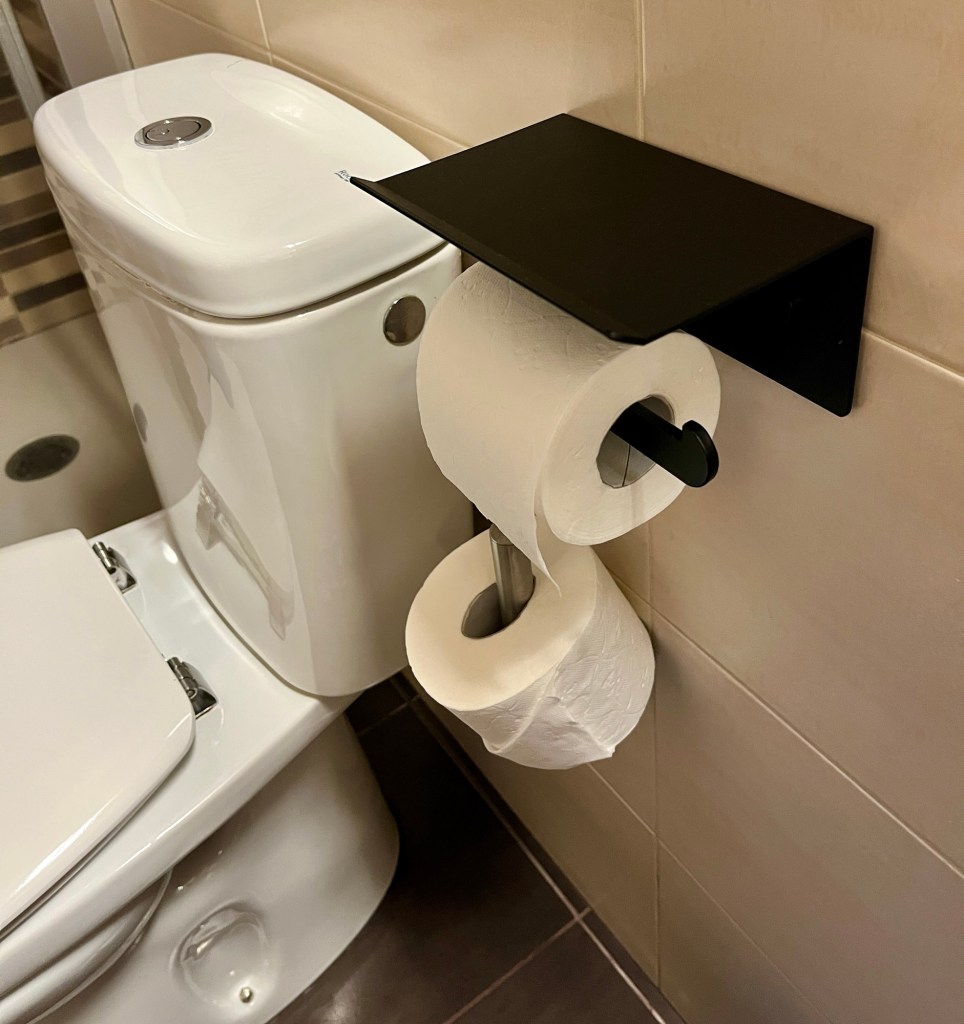
Dawn over El AceboTwo Camino relicsDivine appearace at Cruz de Ferro?The latest in bathroom fixtures: toilet roll holder with cell phone shelf
The end of the traditional Camino season is approaching and I’m seeing evidence of cafe- and hotel-owner fatigue. Burnt out lights, broken fixtures, etc. abound. Most of these places will be closed for 4-5 months during the winter and I guess repairs are being deferred to just before next season.
I have 13 days to Santiago, including a rest day in Portomarin. Time for the big personal revelations to appear, but so far I got nothing. So it goes. My lovely wife will be joining me in Santiago and seeing her is always a revelation.
I did ship my absentee ballot to the U.S. and DHL (aka “Day and a Half Late”) says it was delivered, so I’m very glad to have done my duty as a U.S. citizen. Are you getting ready to do yours?
I’m off to Cacabelos tomorrow morning and hoping for good lodging and no rain on the way. Thanks for coming along and for all your encouragement. Cheers!
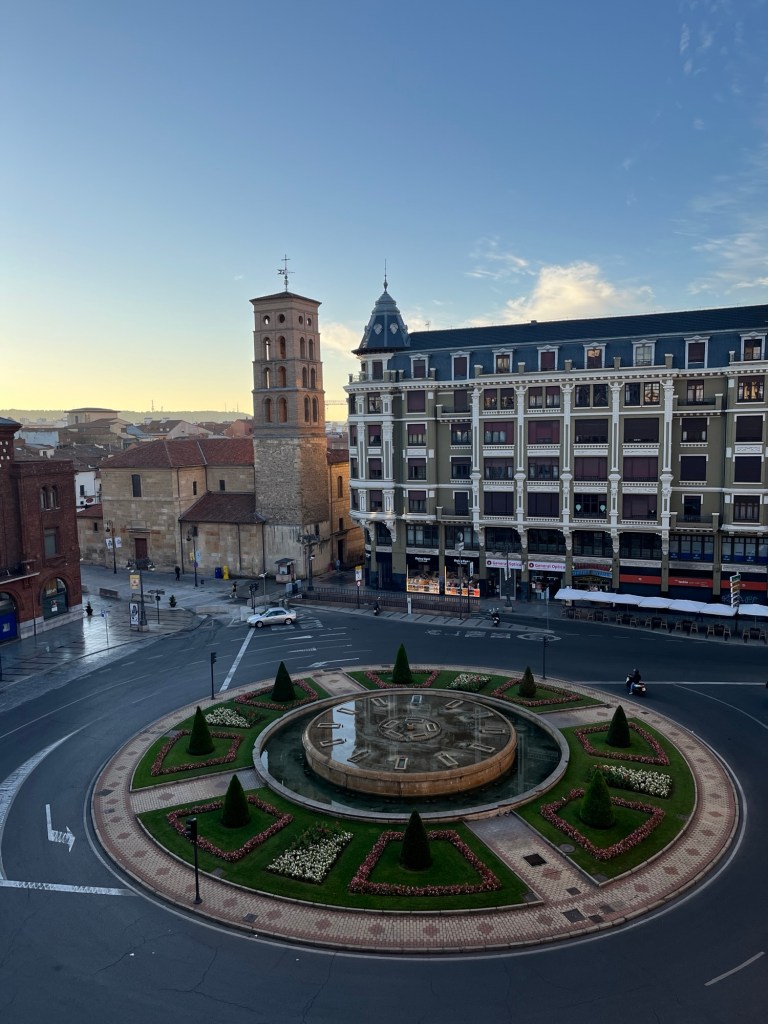
I’m writing today from Leon, having put the entirety of the Meseta behind me. It’s a beautiful day, as they have been for the last week: cool starts, sunny, warming up nicely, and only hitting the mid-70s by the time my daily walk is done.
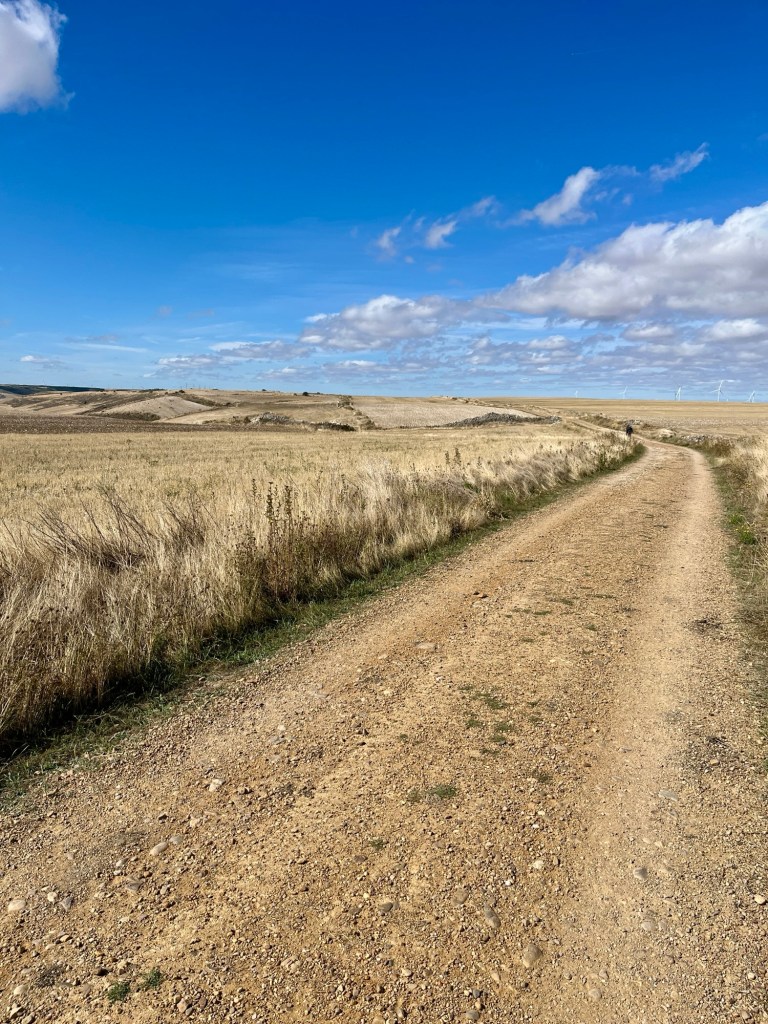
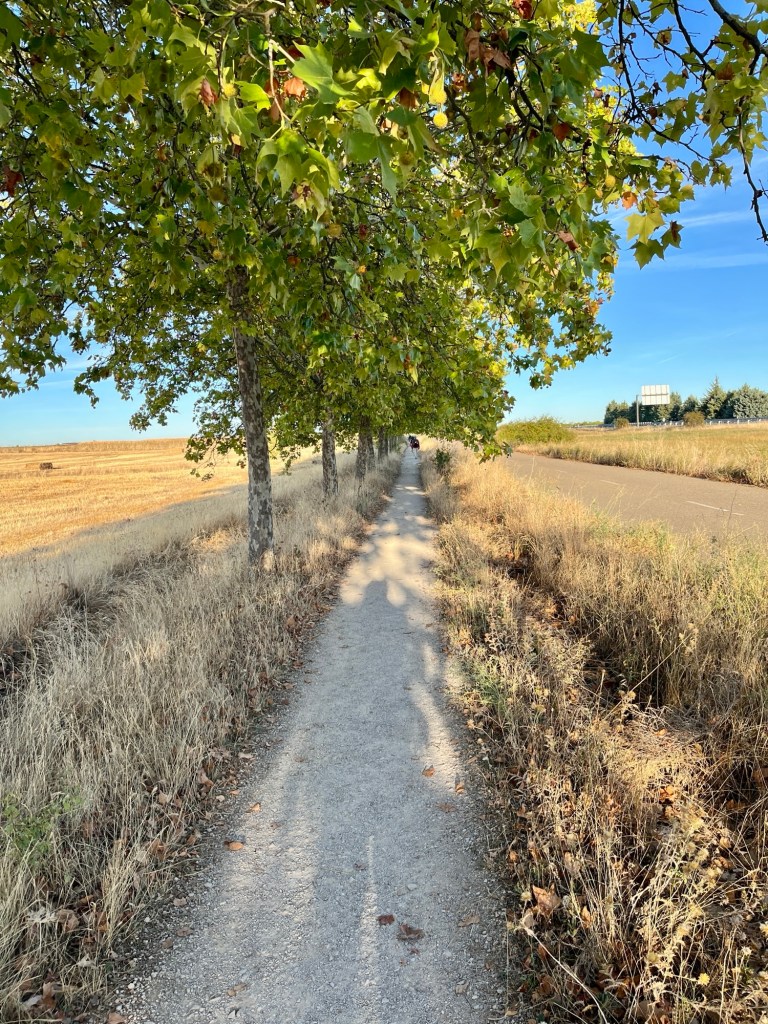
The Meseta is certainly devoid of much but farm fields and the Camino. In some areas, the Camino path is nicely shaded by hundreds of plane trees, one every 25 feet. From above it must look strange, this green ribbon cutting through vast corn and wheat fields.
The walking suface has changed over the last few weeks, from rough, rocky farm roads to a dedicated path, with a fine grit surface. In many places, this senda runs alongside serious highways, the better for me to see motorcyclists and camper vans buzzing by. I sometimes think it would be nice to be in one of them, but they would never be able to go where we pilgrims do.
Since my last post, I’ve passed through (actually, got lost going to) Atapuerca, then Burgos, Hornillos del Camino, Castrojeriz, Boadillo del Camino, Carrion de los Condes, Cazadilla del la Calzada, Sahagun, El Burgo Ranero, and Mansilla de la Mulas. What a mouthful these names are.
With regard to Atapuerca, I made two classic mistakes that resulted in my easy 18 Km walk turning into a tough 25 Km walk. First, I failed to check my route before leaving from a coffee stop; and second, I fixated on two pilgrims walking ahead of me and followed them, assuming they were headed to Atapuerca like I was. They were not. I missed a marker where the Camino branches and followed this pair for 3.5 kms before realizing they were bypassing Atapuerca and heading directly to Burgos. So, cursing a blue streak, I had to walk back 3.5 kms and cut across on a side road to get back to the Camino path I needed. Which proves, regardless of the number of Caminos one may walk, failure to be alert can still result in failure to succeed.
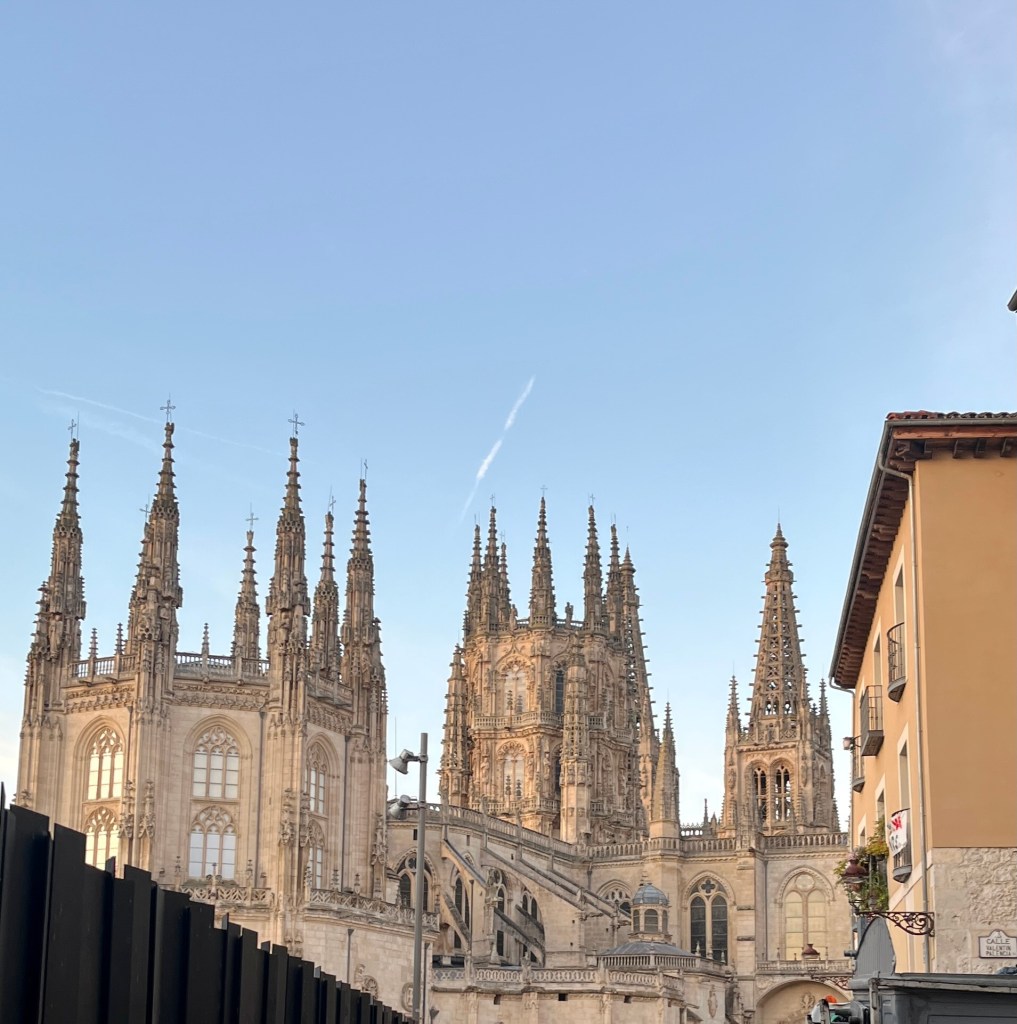
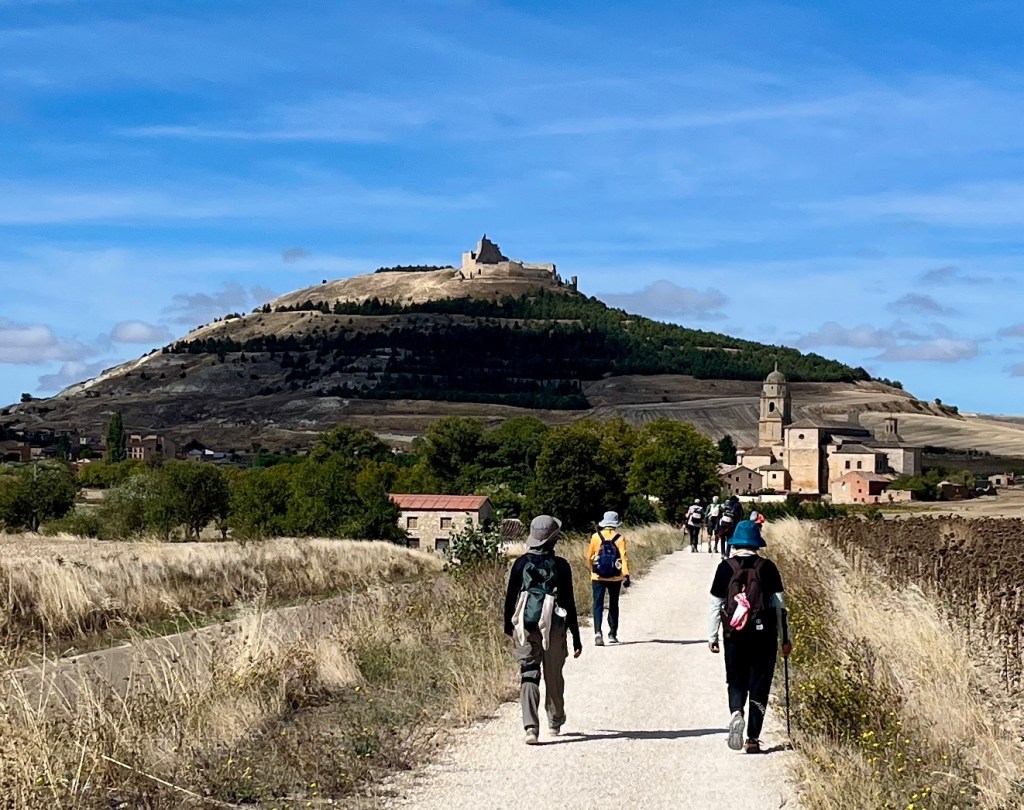
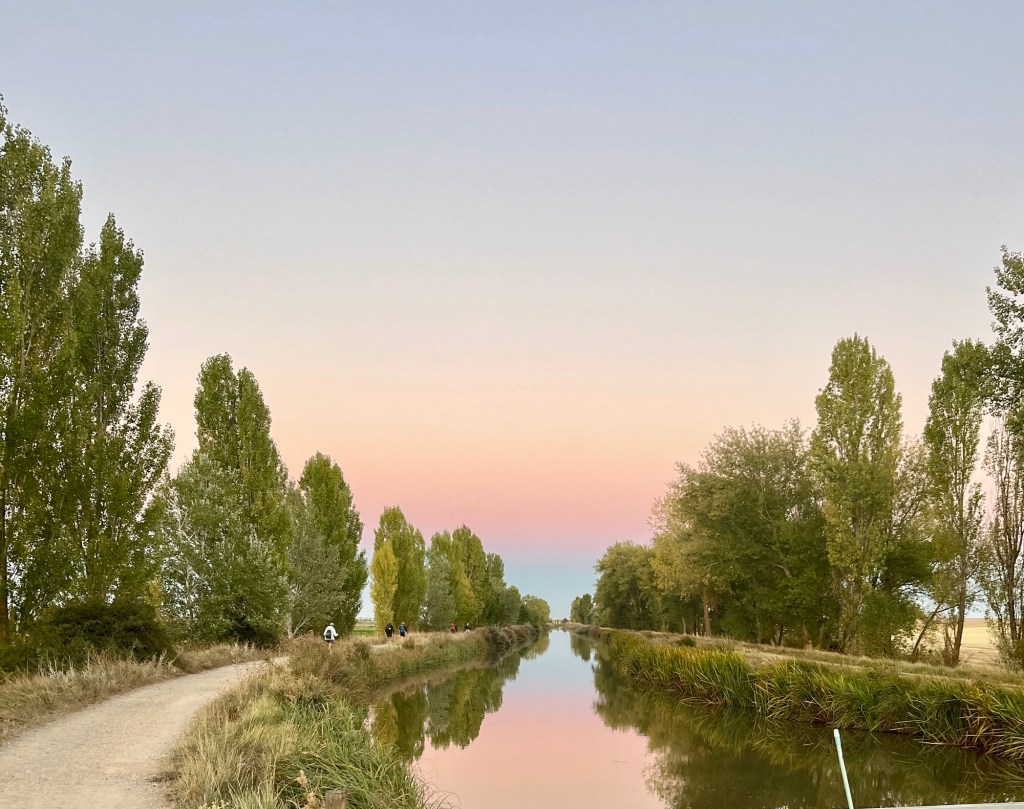
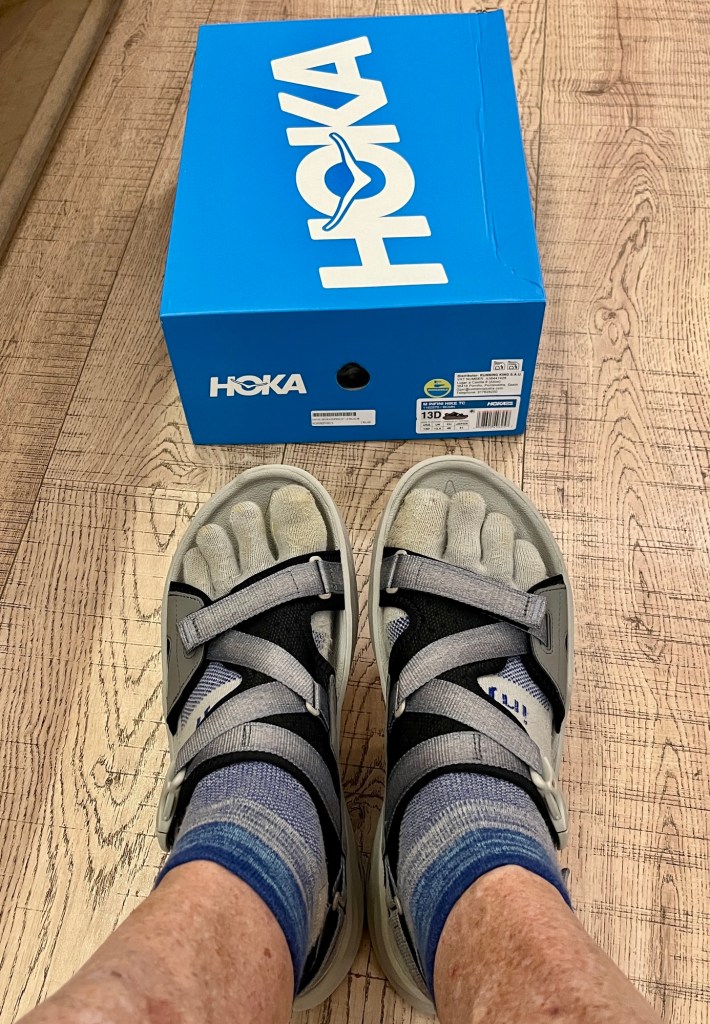
Shady lane leaving VillafrancaBurgos Cathedral The Meseta’s wide open spaces Walking into CastrojerizDawn canal enroute to FromistaShaded Camino in wheat & corn fields My Hoka hiking sandals Early morning view in Leon
I arrived in Leon yesterday and indulged in what has become a tradition here for me: buying new footwear. My lovely Hoka Mafate X trail runners are superb in all respects except that my right big toe doesn’t have enough room and is getting beaten up. As usual, I’ve tried all manner of tricky lacings, Compeed patches, etc., everthing but cutting up the front of the shoe. Instead, I’ve been quizzing other pilgrims who are wearing “hiking sandals”, who generally give them good reports. I also checked out the RunRepeat.com website, which provides terrific shoe and boot reviews. They recommended the Hoka Infini Hike TC sandal, so my first stop upon arriving here was the Ameria Castro hiking gear store. What were the chances they had, this late in the season, that particular sandal, in my size 13? They did (the Camino provides!) and so I’m breaking them in here and will debut them on the trail in a few days. Despite some misgivings about lack of ankle support and small stones getting in underfoot, I’m already enjoying the toe freedom. I’ll report on my experience with them next week.
I’ve met some interesting people lately, including a nice couple, two geologists from Florida (hello, Jim and Aleisha), and two friends-of-a-friend from Virginia, who are doing a short Camino group tour (hello, Bob and Karen) and whose schedule overlapped mine here. And plenty of Kiwis, Aussies, Poles, Irishmen, Frenchmen, and even the odd American.
So far, this walk has been dry. And, as we know, rain can change everything. Rain is, in fact, forecast for next week, but with low probability ( < 20% ) and that only in the early morning. Nonetheless, I’ll have my poncho at the ready.
I’m going to wrap this up and go get my absentee ballot for the U.S. midterm elections printed and shipped. Oh yes, I never let the Camino get in the way of my unbroken voting record and won’t, especially not now for such an important election. I send my ballot in via DHL, bypassing the local and U.S. postal services altogether. If you’re a U.S. citizen, I urge you to vote.
My next rest day comes up in a week, in Ponferrada. I’ll be in touch here then. In the meantime, thanks for coming along and for all your encouragement. Cheers!
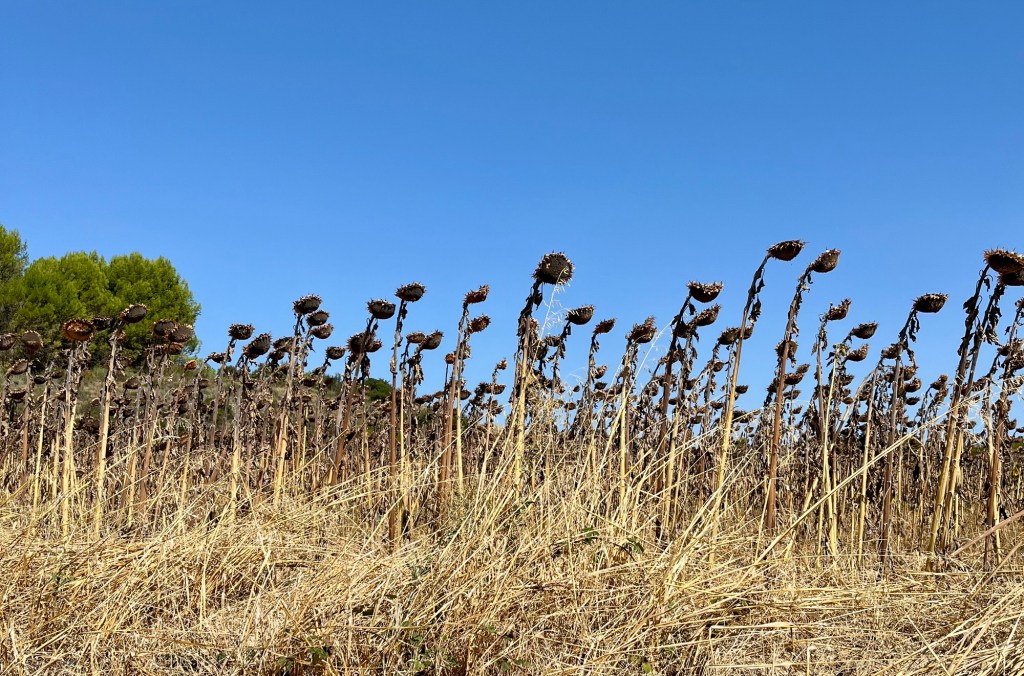
Buenos dias, everyone! I’m luxuriating at the San Anton Abad hotel and albergue in Villafranca de Montes de Oca after a short 12 kms walk through rolling farmland. I passed through acres and acres of sunflowers today, all waiting to be harvested. Sunflower seeds and oil are major products produced here.
I’ve left La Rioja and I’m now in Castilla y León, the largest autonomous region in Spain. In the coming weeks I’ll be spending a lot of time traveling through three of its nine provinces, including the flat plateau called the Meseta.
In fact, it’s harvest season for many crops here, especially grapes. The vines I’ve walked by recently are bursting with bunches of ripe, dark blue fruit, and the pickers are out there. However, for the first time I’ve seen a large machine doing the harvesting – they must have some interesting mechanics in them to be able to gently suck up the grapes without denuding the vines of their leaves or otherwise damaging them.
The contrast between typical cities and the countryside is, of course, one of the strong features of the Camino. After a few days walking through farmlands and staying in small villages, it can be something of a jolt to find yourself back in a major city. I’m often glad to be returning to the wide open farm fields and wooded glades.
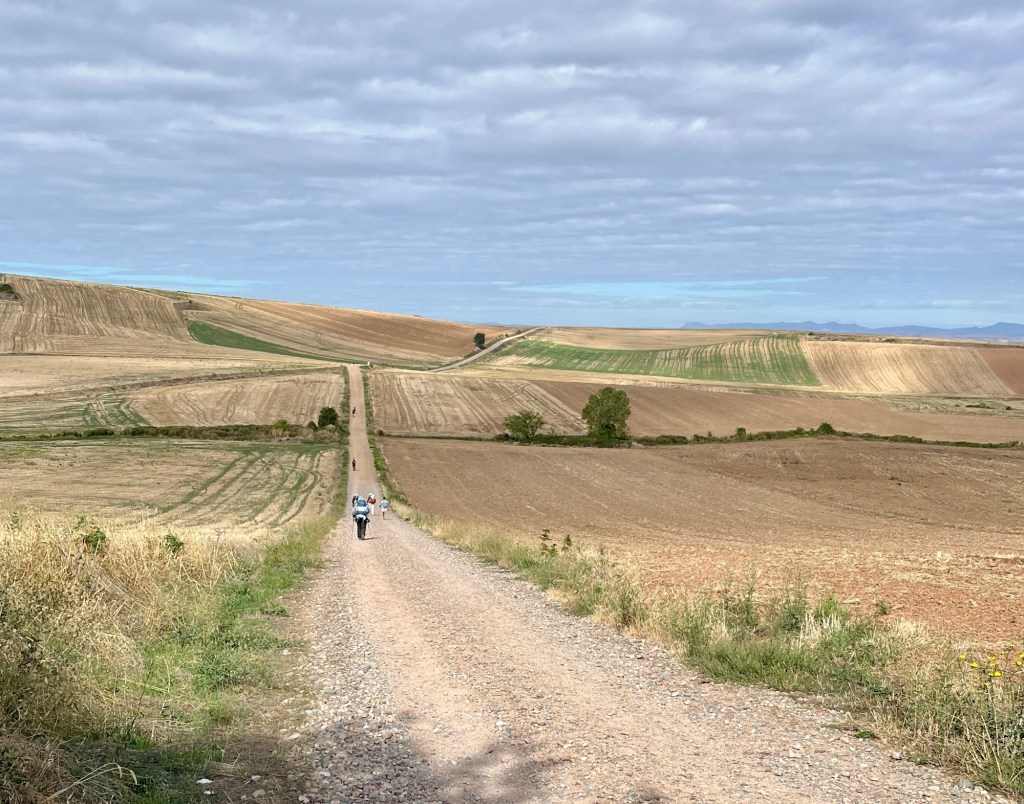
So, since my last post, I’ve stayed in Navarrete, Najera, Santo Domingo de la Calzada, and Belorado. Much of the path early on was over hard, rocky farm roads which are tough on the feet. Pilgrims very quickly become adept at seeking to walk on the flatest, least rocky, and shadiest part of the path. Some days have been longer and harder walks, others have been shorter and easier, all as I planned.
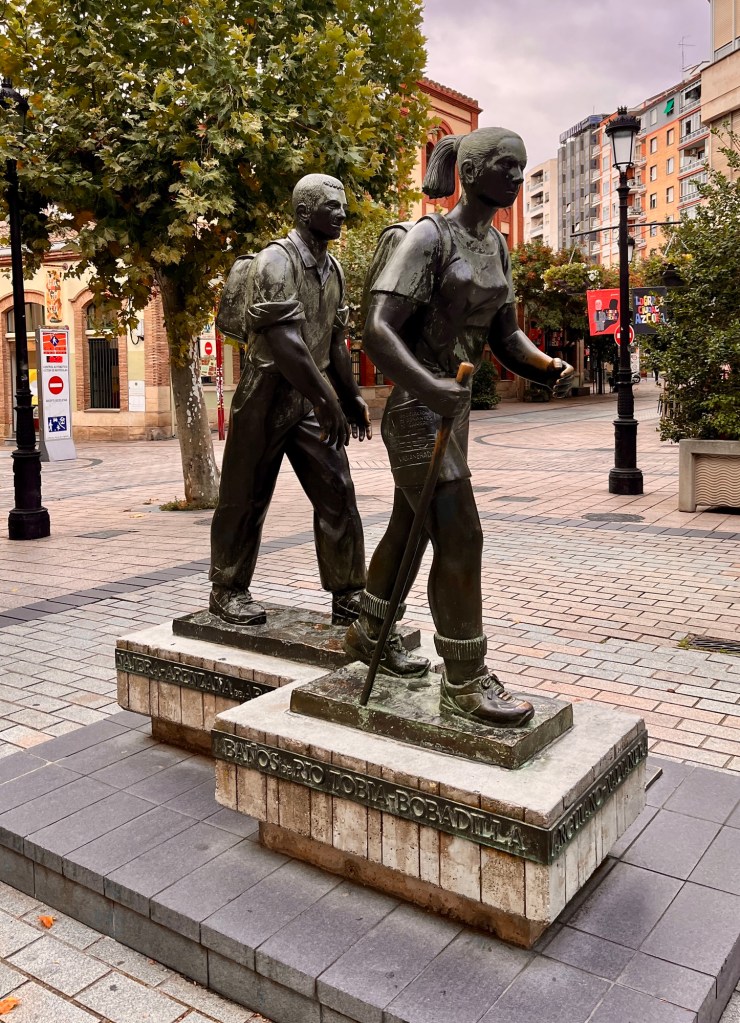
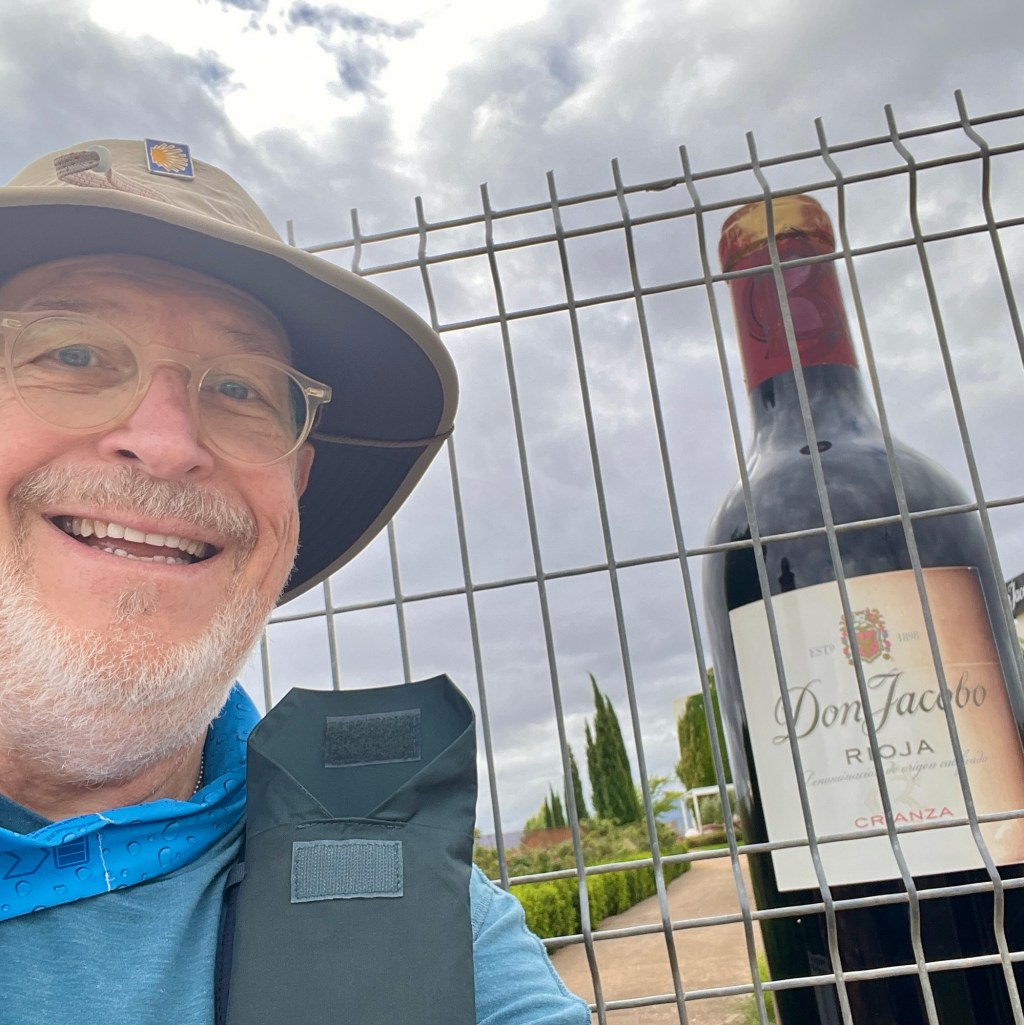
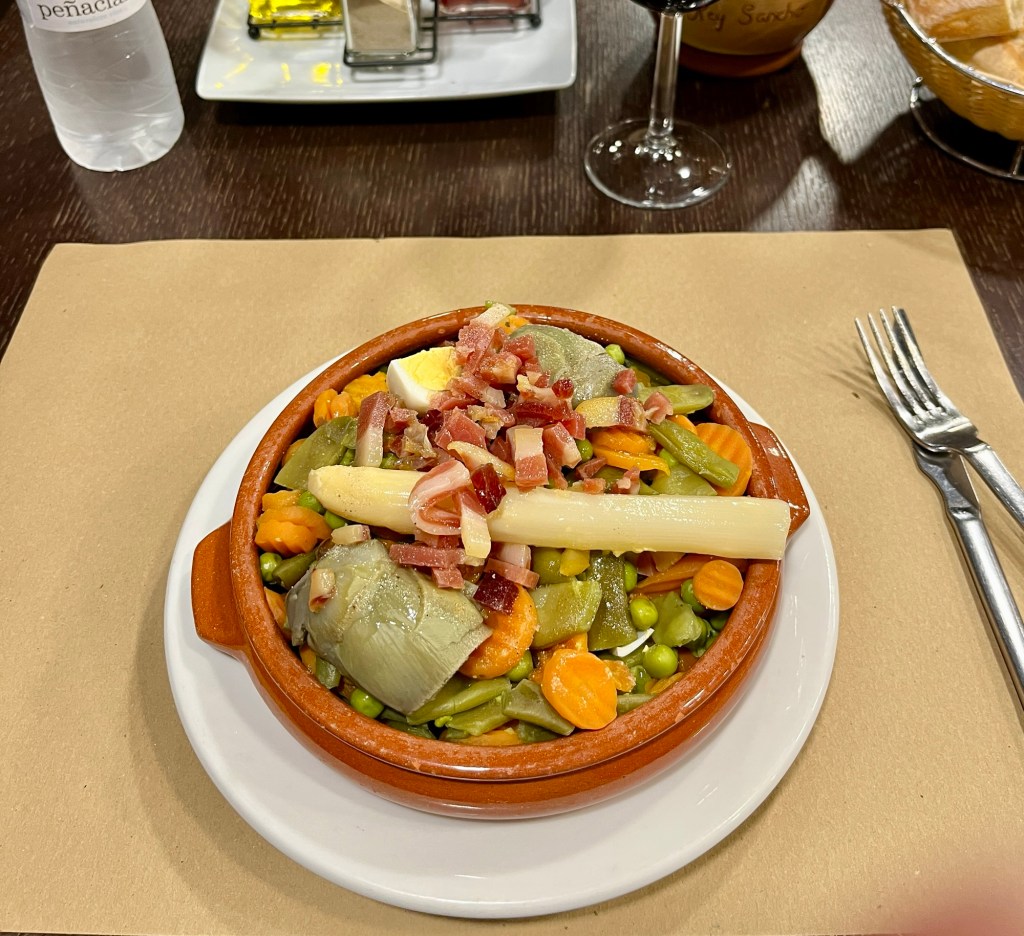
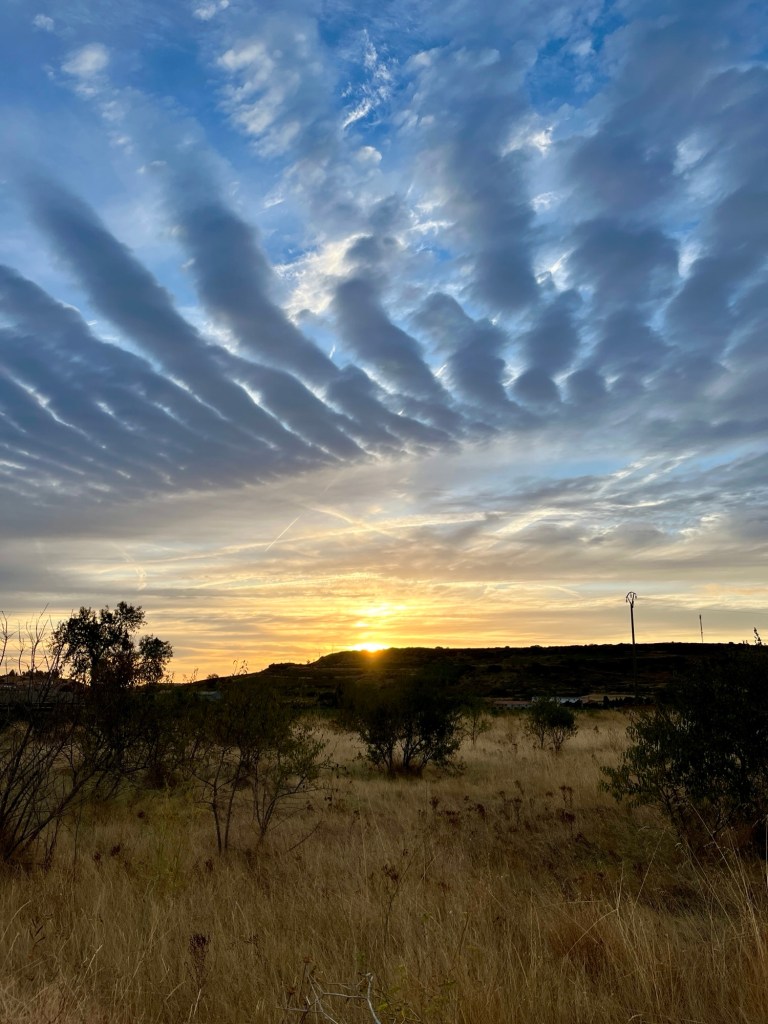
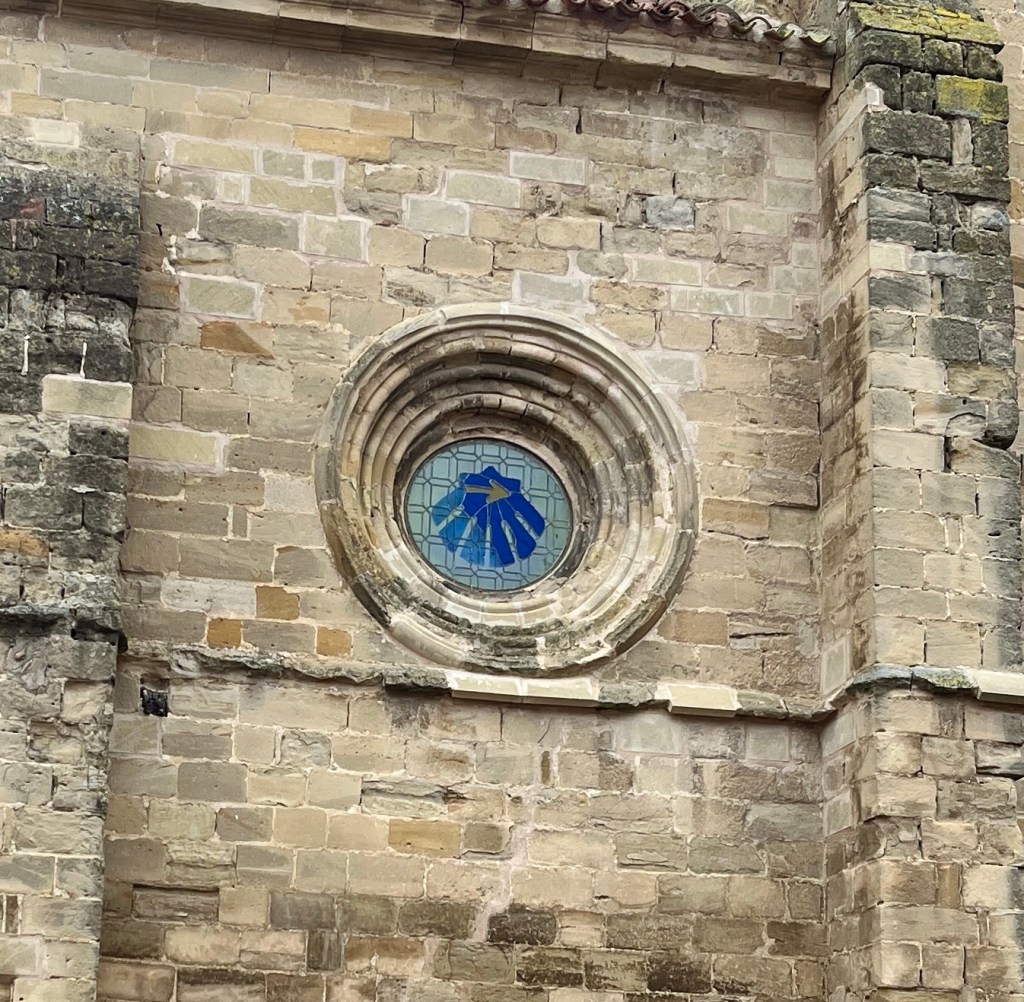
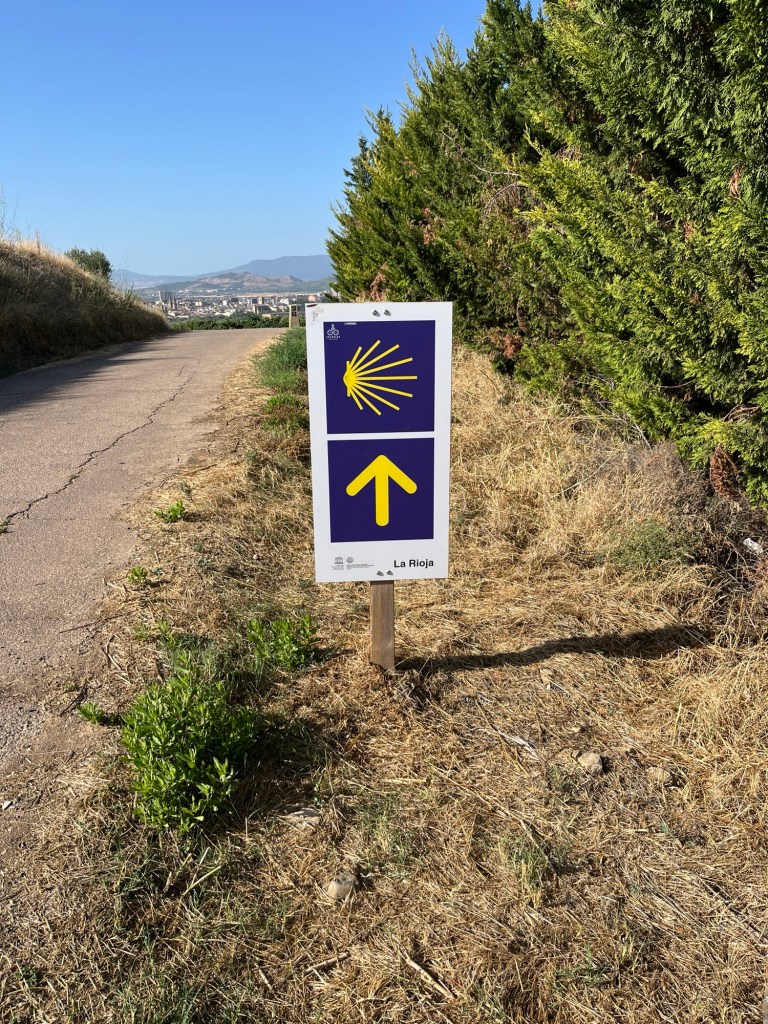
Pilgrim statue leaving LogroñoGiant wine bottle in RiojaVegetable melange starterSunrise leaving NavarreteWide open spacesCamino stained glass in Gañon
One thing I have noticed is that many restaurants here play very good music for my dining pleasure. By “very good” I mean pleasant blues, jazz, or soft rock, at a volume you can talk over. Very civilized.
Evenings can be boring, so I watch a little TV if my room is so equipped. The offerings are often the same frm place to place, so I can feel “at home” watching Midsommer Murder and Chicago Fire reruns (in English) as I progress along.
One of the lodging traditions here is that the host will carry your bag, or try to, up to your room. I often deline the offer, given the age or size of the host. It’s a nice gesture, nonetheless, and rarely seen elsewhere.
Tomorrow I’m off to Atapuerca, where prehistoric caves indicate human activity 1.4 million years ago! Sadly, the caves are a little bit far afield for me to have a look, but the village has an interesting little museum I’ll visit.
I have heard from some of the folks I met earlier in the Camino and they’ve all zoomed ahead of me. I don’t expect to see them again, but you never know when Camino Magic will happen.
Thanks for coming along on my trek and for all your encouraging comments. Cheers!
Today, I’m cooling my Hokas in Logroño, capital of the La Rioja wine-growing region. There are plenty of other pilgrims here, although those who stopped in Viana last night, as I did, often carry on further along The Way.
Since my last post, from Zubiri, I’ve passed along to Pamplona, then on to Puente La Reina, Estella, Los Arcos, and Viana. These are all hikes in the neighborhood of 22 kms, or 5-6 hours. I’d forgotten how much of my trail time would be spent going up tough climbs or picking my way down steep descents. These early weeks on the Camino never fail to put the lie to my supposedly successful summer conditioning efforts! But it’s knocking me into shape.
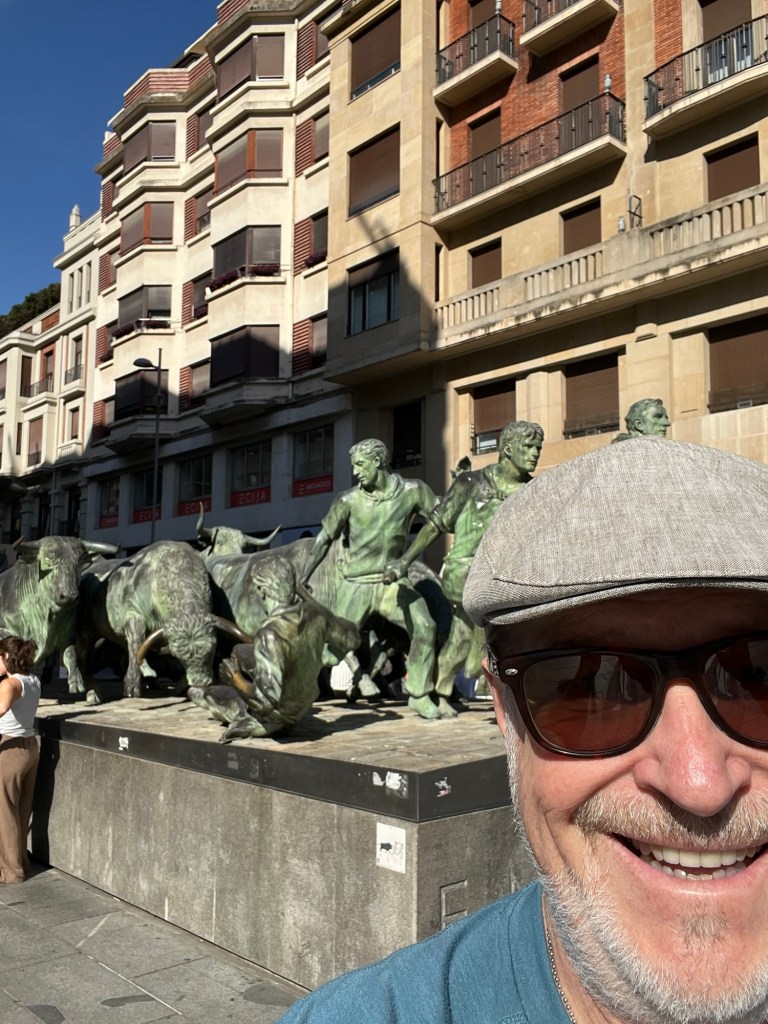
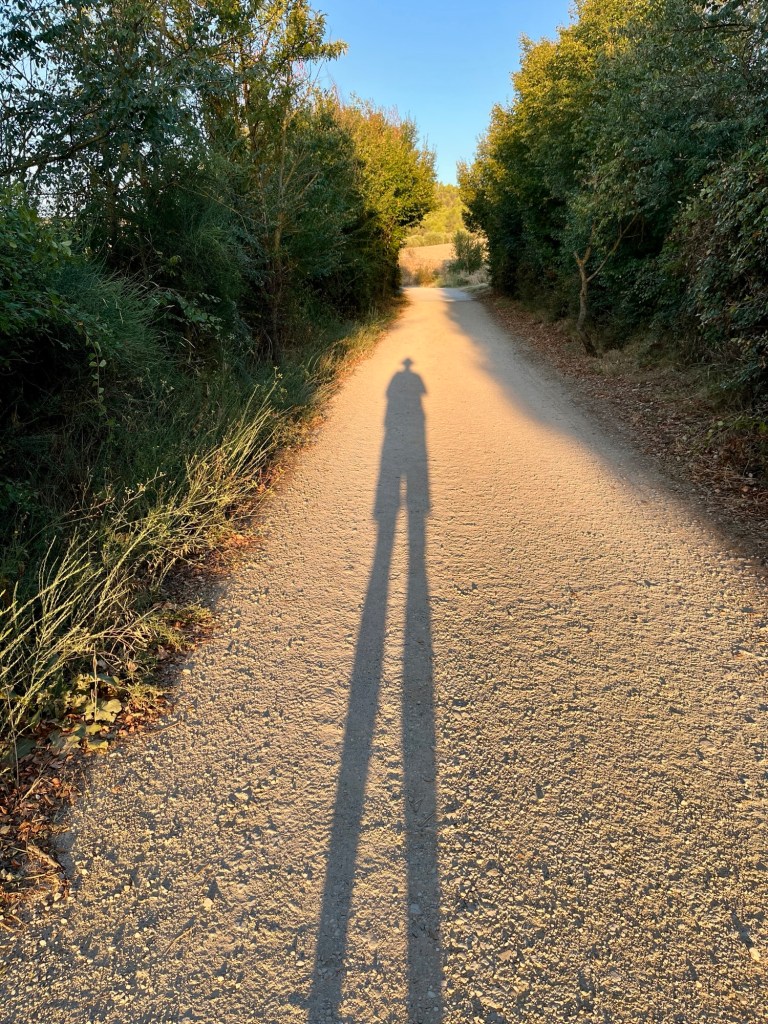
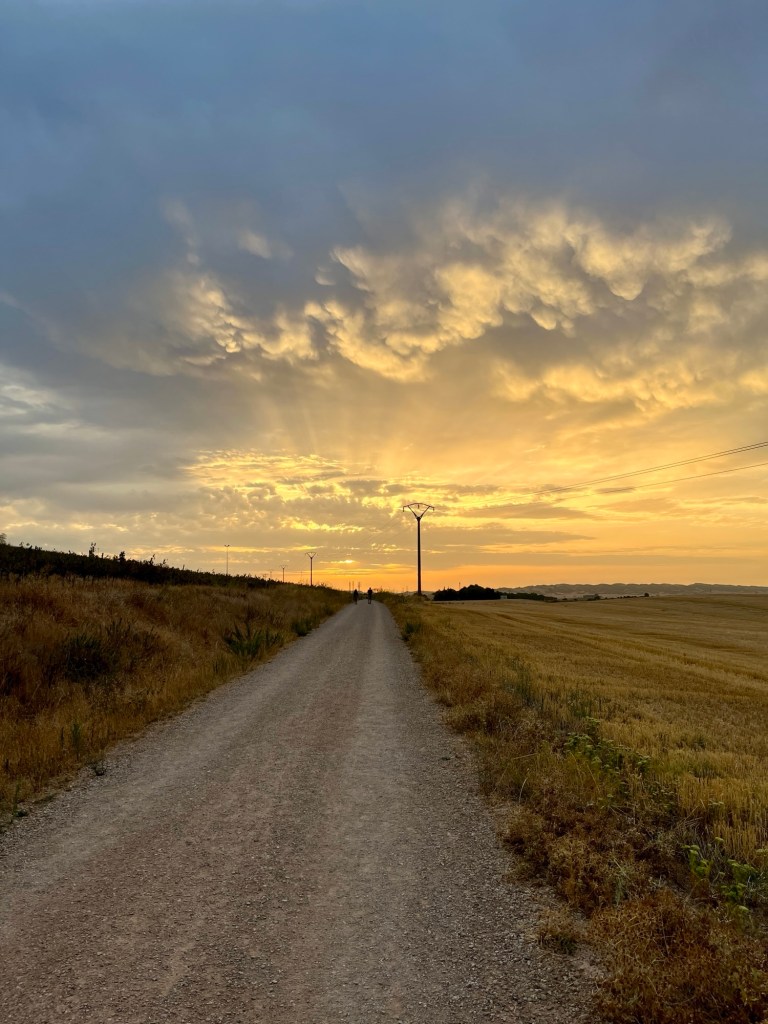
Pamplona’s famous bull statueCasting a long shadowSunrise outside Los ArcosOne way to do itFirst Rioja Camino markerLogroño’s cathedral
I’ve met some great people out here, par for the course on the Camino. Andreas, from Munster, Germany, who I met early on, has moved far ahead of me now but sends back the occasional encouraging text. Peter from Brighton is about a day ahead of me, as I presume are Kelly and Annette from Austin, TX. Lei and Allyson, charming retirees from Fort Worth, have been trail and lunch companions several times and are now ahead of me but I’m pretty sure we’ll meet again. True small-town Texas natives, they shared some good stories with me about Country & Western dancing (did you know I taught C&W dancing in D.C. during the 80s?). Buen Camino, cowgirls!
As usual, once I’ve settled into the Camino routine, I’ve begun to think about all the blessings I have in my life. Not the least of which is my lovely French wife, who is currently in Nice, basking poolside with friends. Every day, as I hike through the gorgeous Spanish countryside, I marvel at how wonderful this life is, and how lucky I am.
It has been hot, however, and the lodgings I’ve had that featured air conditioning were extremely welcome. How hot? 95-100 degrees F. Usually, the heat doesn’t come on until midday or later, so getting out early helps. I anticipated the heat and came equipped with a “Koolgator”, a neckerchief filled with beads that, after soaking, retain water and provide evaporative cooling for hours. I also brought an aluminized sun umbrella that clips to my backpack strap and provides hands-free personal shade in the wide open spaces.
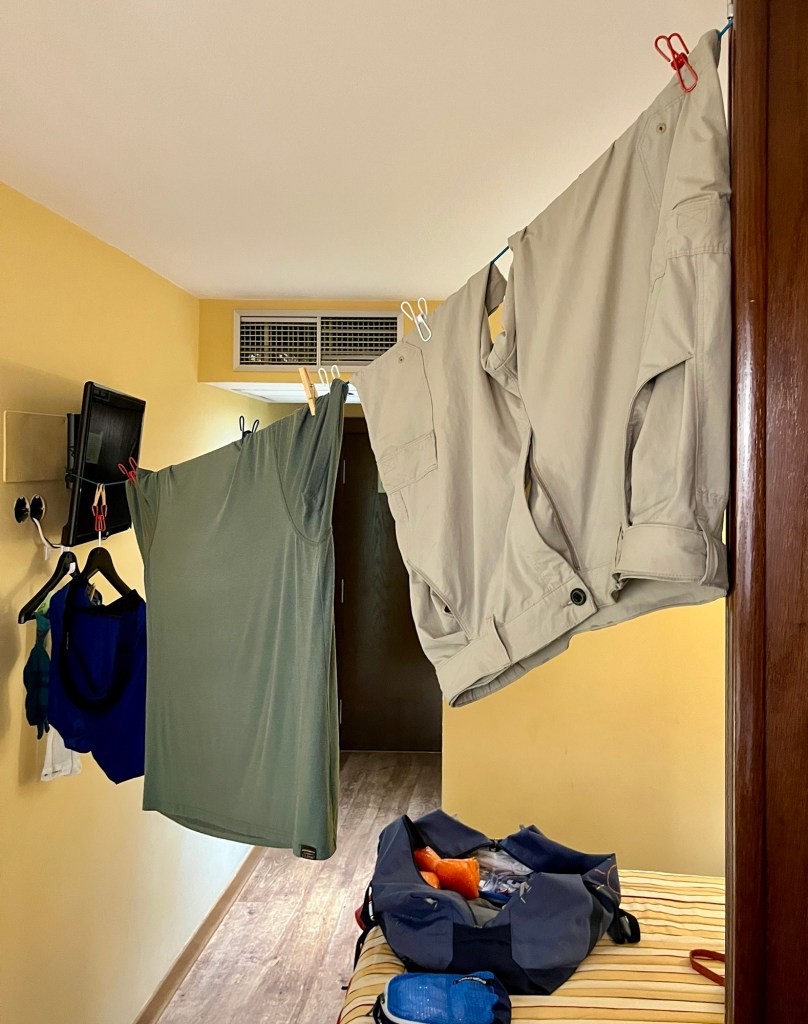
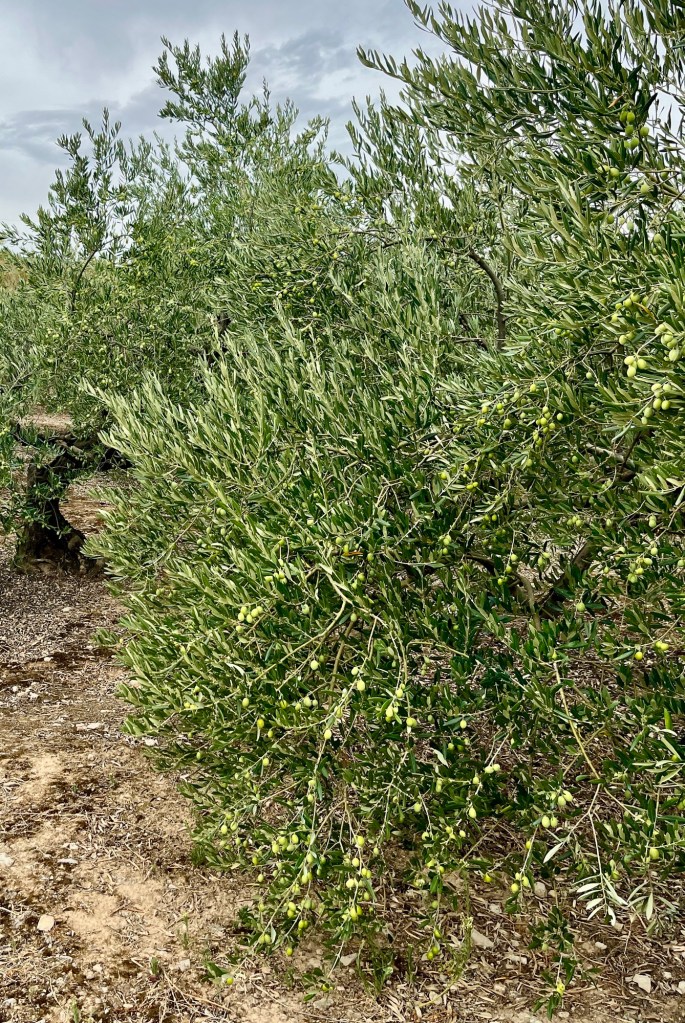
Pretty bowers on the trailCreative clothesline workSpanish olives galoreRoasted sun flowers, anyone?
Tomorrow I’ll be able to sleep in a bit in order to have a later start for my short 13 km hike to Navarrete. It’s supposed to rain overnight but end around 6:00 am. Which means I cooler temps (yay!), no rain on me directly (yay!), higher humidity (boo!), and a possibly muddy trail (boo!). Whatever, still I progress along the Camino.
And I thank you for coming along and for your kind comments. Cheers!
I’m writing from Zubiri, my fourth stop. All systems have been Go: the weather has been absolutely beauiful, my legs and feet are doing well, and I’ve met some interesting pilgrims to walk with.
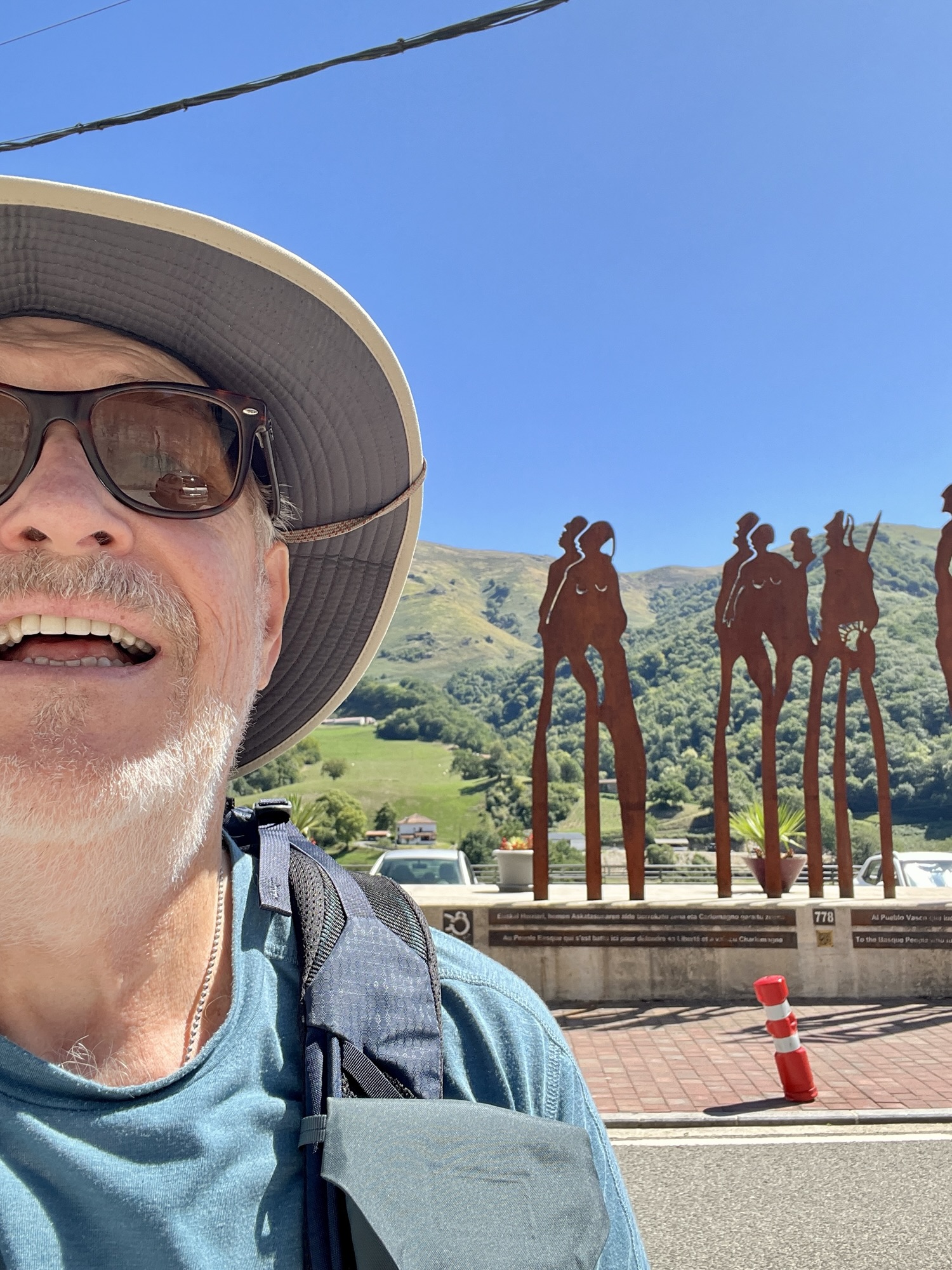
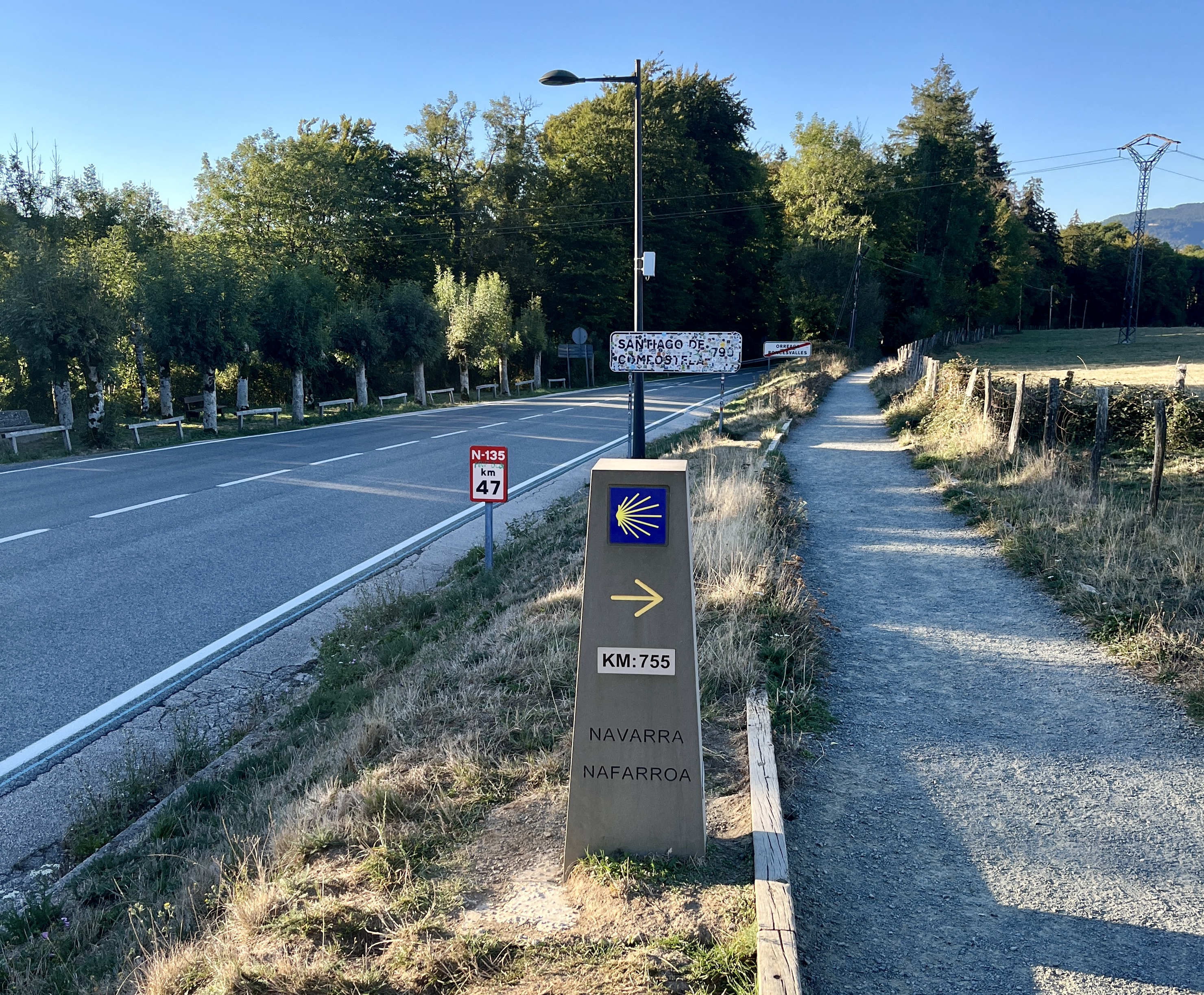
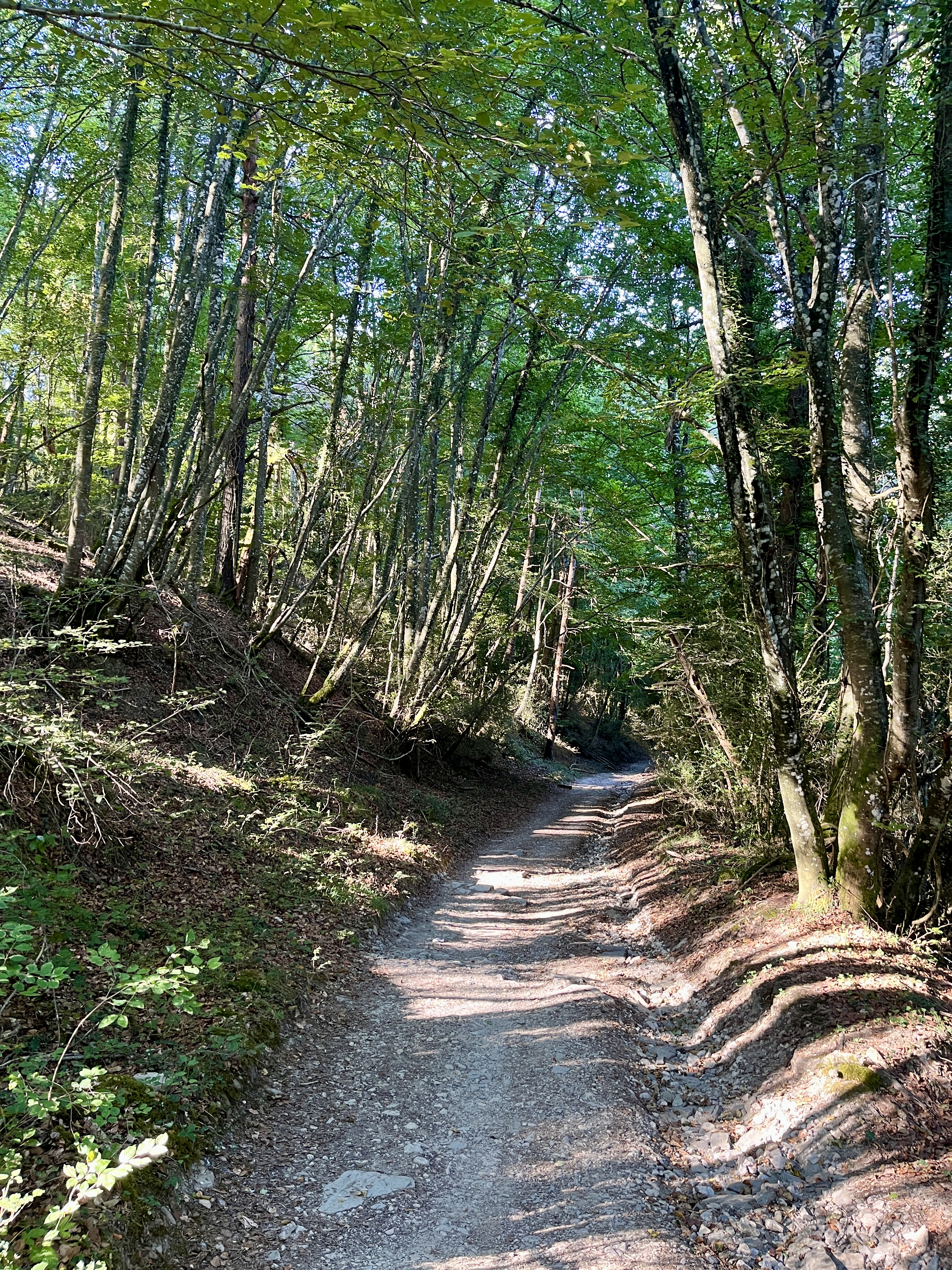
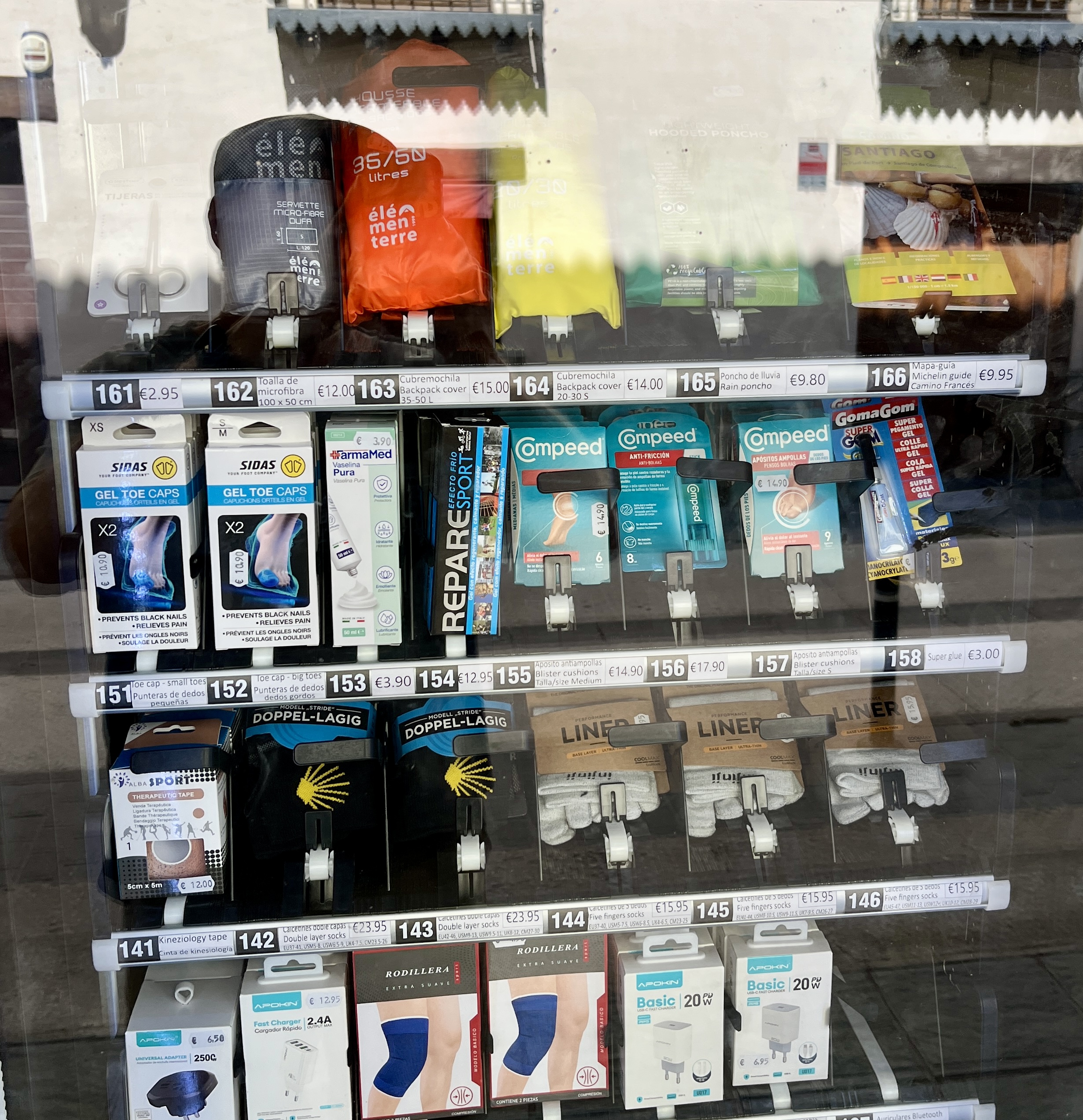
On my way to ValcarlosIn ValcarlosLeaving RoncesvallesWalking to ZubiriThings found only in Camino town vending machines
My first day on the Valcarlos route was fairly easy but there isn’t much to the village. From there to Roncesvalles on my second day nearly killed me! It was really quite hard going uphill but, luckily, other pilgrims walking with me were were supportive. Here’s a shout-out to you, Andreas (DE), Angelo (IT), and Peter (UK).
Roncesvalles provided a nice respite, with good cold beer and AC where I stayed. The next day I clocked a short 12 Kms to Bizcarret-Guerendiain and today I made the even shorter trek to Zubiri. The downhill last two Kms into town are really hard on the knees.
I have seen very few others on the trail, which is nice at times but also disconcerting for the health of the Camino. September is supposed to be busy, so maybe traffic will pick up on the coming weeks. At which time I’ll probably complain about it. Nonetheless, there are plenty of folks here in Zubiri.
Tomorrow I head off on my first long trek, 21 Kms to Pamplona, about 6.5 hours of walking. I’ll have a rest day there and will probably need it. I’ll keep you posted.
I’m writing from my hostel room in Saint Jean Pied-de-Port, on the eve of my trek. It’s nice to be back in this tourist town and to mingle with the other pilgrims from all over the world.
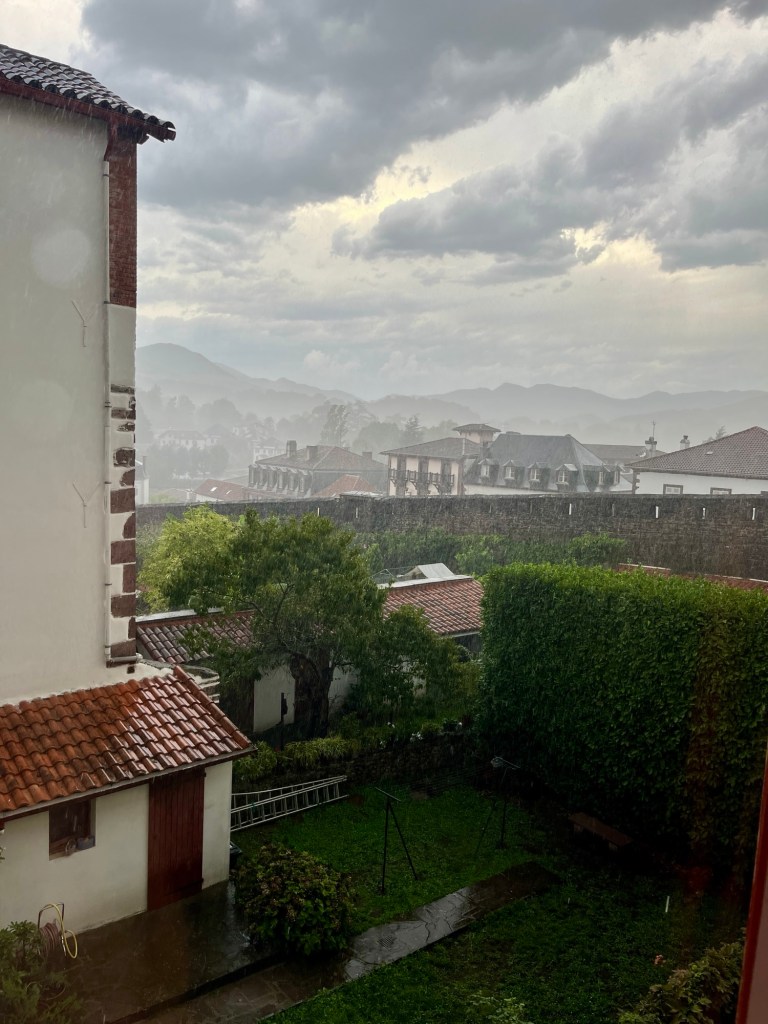
I’m glad I was just a spectator to this downpour this morning
After breakfast I stood, coffee cup in hand, outside my hostel and wished those pilgrims setting off a buen camino as they trooped by. Some of them were carrying everything but the kitchen sink, even one guy I swear had a portable typewriter lashed to his pack. There’s a rule about not carrying more than 20 percent of your body weight and I’m sure these folks were over that. Well, they’ll likely be finding the local post or DHL office soon, to ship stuff they haven’t abandoned home. That’s what I did back in 2019.
I do love good writing and, as much as I try to do that here, I often find others who have put the Camino experience into words so much more eloquently than I. With that in mind, I’d like to direct you to this, from the Wall Street Journal of all places:
So tomorrow I set off, and instead of the Napoleon route over the Pyrenees I’ll be taking the lower Valcarlos route though the surrounding valleys. This is the only route open in the Winter and is said to be “easier but not easy” compared to going over the top. Having done the top route three times, I chose the lower one this time for completeness sake; something new.
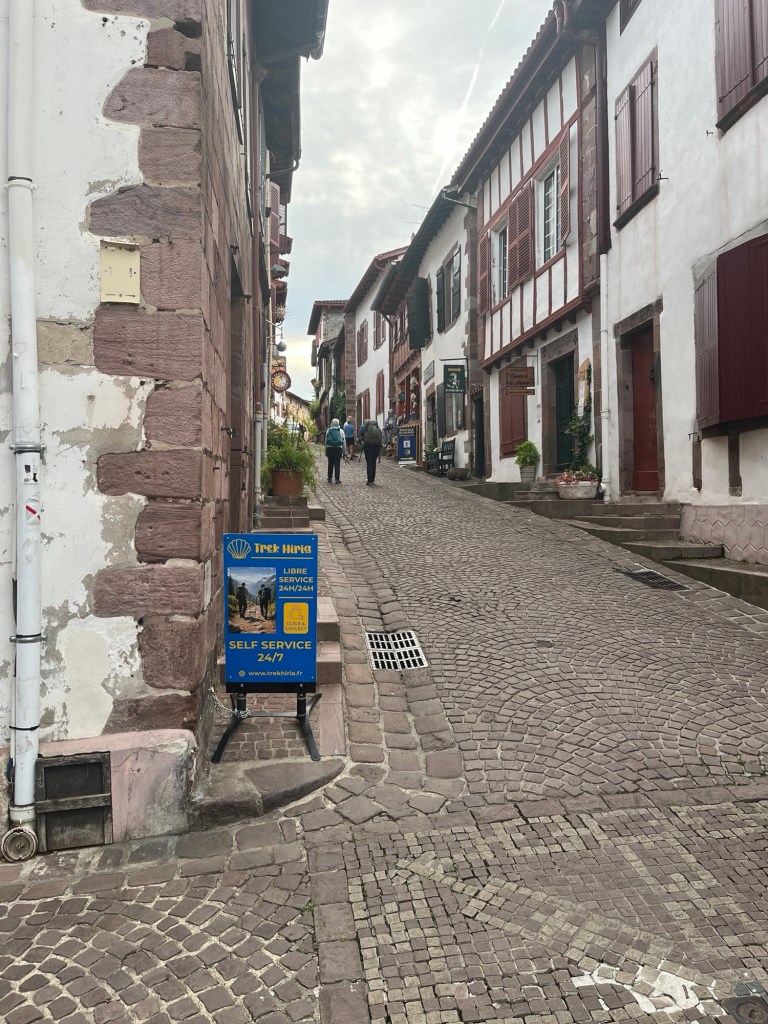
My morning station, where I wish departing pilgrims a good walk
Saint Jean PdP remains a touristy place and there are now three hiking outfitter stores on the main drag, where there had been only one – a reflection of the large increase in the number of pilgrims in recent years.
Espelette pepper beer! Happy days!
Tonight I will pack my backpack and review my plans and tomorrow I’ll head off after breakfast. Pray for dry weather, please, and good company. I already have that in you; thanks for coming along.
In an earlier post I inaccurately said that the Via Francigena pilgrimage starts in Canterbury. That was wrong; it actually starts in London. I was reminded of this one day when I was halfway to Chartham on a training walk, all decked out in my Camino gear, and I encountered a dozen people hiking to Canterbury, from London. They were a group of young Via Francigena Goodwill Ambassadors, mostly Italians, and they were delighted to meet a fellow pilgrim (even if I was heading in the opposite direction). We had a nice trailside chat and several of them had been on Caminos in Spain. Based on the videos two of them were taking, I’m pretty sure I now appear in someone’s Italian blog.
Here’s the brochure they gave me. You can see that this is a very long hike! In fact, it’s about 2,000 miles through four countries and takes three or four months. That’s a commitment. Someone else I talked to a few years ago who walked it said that it doesn’t really have the level of supportive infrastructure found on the Caminos in Spain and is quite difficult. Let’s not forget we’re talking about crossing The Alps, too. The ambassadors were very nice but I’m not inclined to do this one. How about you?
However, meeting them put my measly upcoming Camino into perspective. Now I’m raring to go.
I’m in Paris as I write this and I’ll be heading south in two days. I’m passing the time between coffee, croissants, and cafes by engaging in the time-honored, pre-hike practices: tweaking my gear and generally overthinking all my plans. Yes, everything fits in my pack. Yes, I have all the required documents. Yes, I’ll probably be able to carry it all even if I do include that Swiss Army knife. And, as I’ve reminded myself several times, they probably, almost certainly, sell whatever else I might need, in Spain. Sound familiar?
I’m lucky that the wildfires in southwestern France that temporary shut down the trains out of Paris have been tamed. And, at the risk of jinxing myself, the weather forecast for my first hiking day is very pleasant – sunny and dry. One can only hope. I look forward to my ride to Saint Jean Pied-de-Port because the train is full of pilgrims and there’s a festive and excited vibe. I confess I’m getting a little of that right now.
Since you asked, planning for my Camino started last year and is fairly complicated. Let’s look at what’s involved.
One begins by deciding which Camino you’re going to walk. I’ve always walked the Camino Frances, one of the longest and hardest routes, but there are over a dozen recognized routes to Santiago from all over Spain, France, and Portugal. Naturally, the time of year when you plan to walk and the amount of time you have to do so are also factors. Many routes include optional side trips to nearby historic or scenic sites (which can add multiple kilometers/days of walking). Luckily, as a retiree, I’ve always had as much time as I’ve needed and I prefer to walk in September and October.
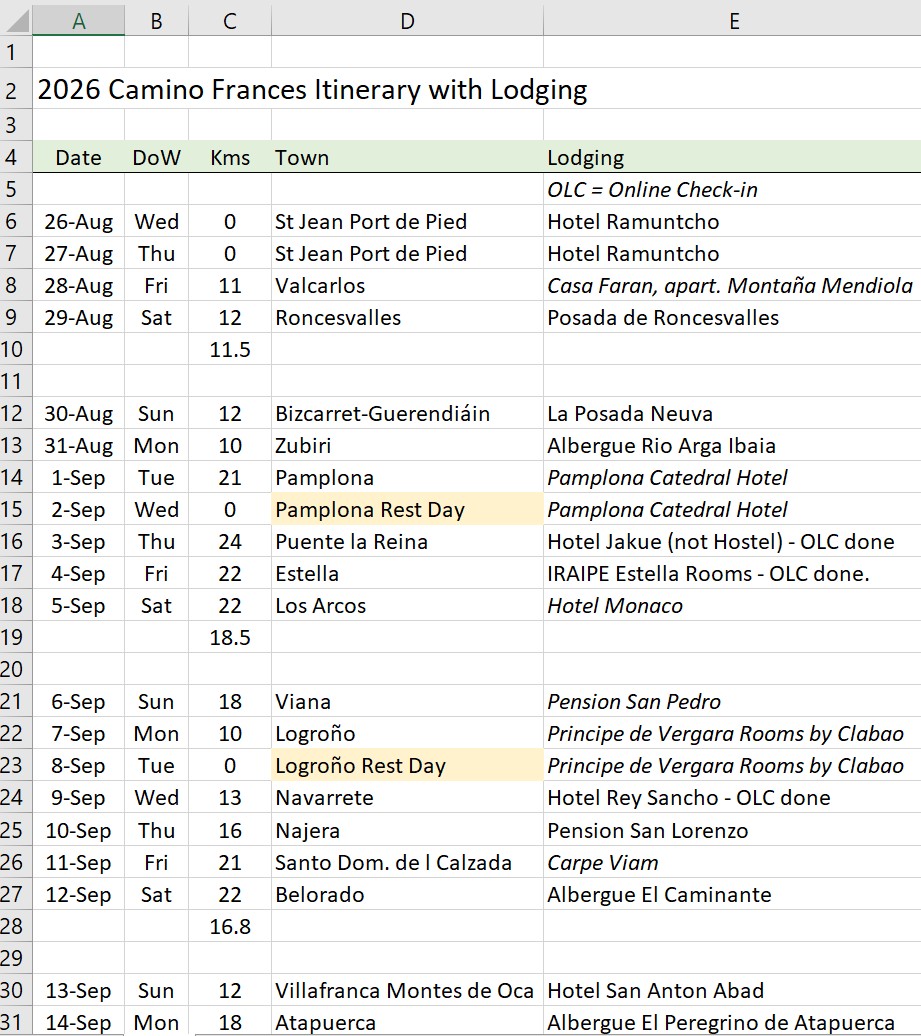
Once I know where I’m going and when, I create a plan that breaks the walk into manageable segments or stages, based on my personal preferences and fitness level. As you can see below, Excel spreadsheets are very useful for this.
Like many pilgrims on the Camino Frances route, I work with the Brierley Pilgrim’s Guide, the classic guidebook now in its 23rd edition. Its maps and other pages provide a wealth of information. I ask myself how far will I walk on any given day? Can I mix up short and long days? Can I take a day off periodically? This year’s walk averages around 18 kms (12 miles) per day, with a max of 24 kms. Before you pooh-pooh that mileage, consider that three mountain ranges are involved and there are many ascents and descents. For example, one day in 2024 I walked almost 40,000 steps.
I prefer to be very organized about all this; but many pilgrims are not; they take a far less structured approach, walking as far as they want/can on a daily basis and getting lodging wherever they can when they arrive at a stopping point. This gives them a lot of flexibility but no security – they may arrive in a town to find all the beds/bunks are taken and they must continue on to the next town to (hopefully) find a bed. The weather can also be a factor when winging it. Still, the capriciousness and freedom of it all are part of the lure of the Camino for many (and was for me, the first time).
Camino lodging choices range from hostels (bunk rooms) to B&Bs and hotels (private rooms). Some folks mix it up, getting the occasional private room to take a break from the bunk rooms. I’ve tried them all over the years and now stay in private rooms. Reserving private rooms is an organizing extravaganza involving online bookings, and emails and phone calls in Spanish (which I speak, luckily).
Once all that is in hand, I turn to the Brierley Guide and markup its stages to show my route, as shown in the example from 2024 above.
I keep notes year-to-year, so I know where there are good cafes and food trucks, where the necessary pit stops are, and which are the tough sections. I also break each long day into 3-4 parts, so that I can take rest breaks and possibly change socks. Once again, all this planning assumes lovely weather but can be (and often is) disrupted by storms, heat, torrential rain, wildfires, etc. (just the usual Camino events). One downside of my strict planning means I have to get to my destination each day to use my reservation.
And so it goes, in just two weeks from tomorrow we’ll see how well my planning serves me. Thanks for coming along!