I’m writing today from Portomarin, a Camino town that features a Romanesque, fortified church that dates back to the 12th/13th Century. In 1963, the entire town was moved to avoid flooding when the nearby river was dammed. The church was moved, stone by stone, to its current central location.
From superhighway flyover bridges to church relocation, you have to give the Spanish credit for being superb engineers.
I have just five days left on my walk, and I’ll arrive in Santiago on Thursday. It’s been an interesting hike, but far less rewarding than my previous caminos. Maybe it’s just lost its luster for me, maybe it’s that I’m older now and it’s taken more out of me this time, maybe my status as a multi-Camino pilgrim is not that unique anymore. But whatever, I’m quite certain that this is my last Camino. Yeah, I know, I ‘ve said that before.
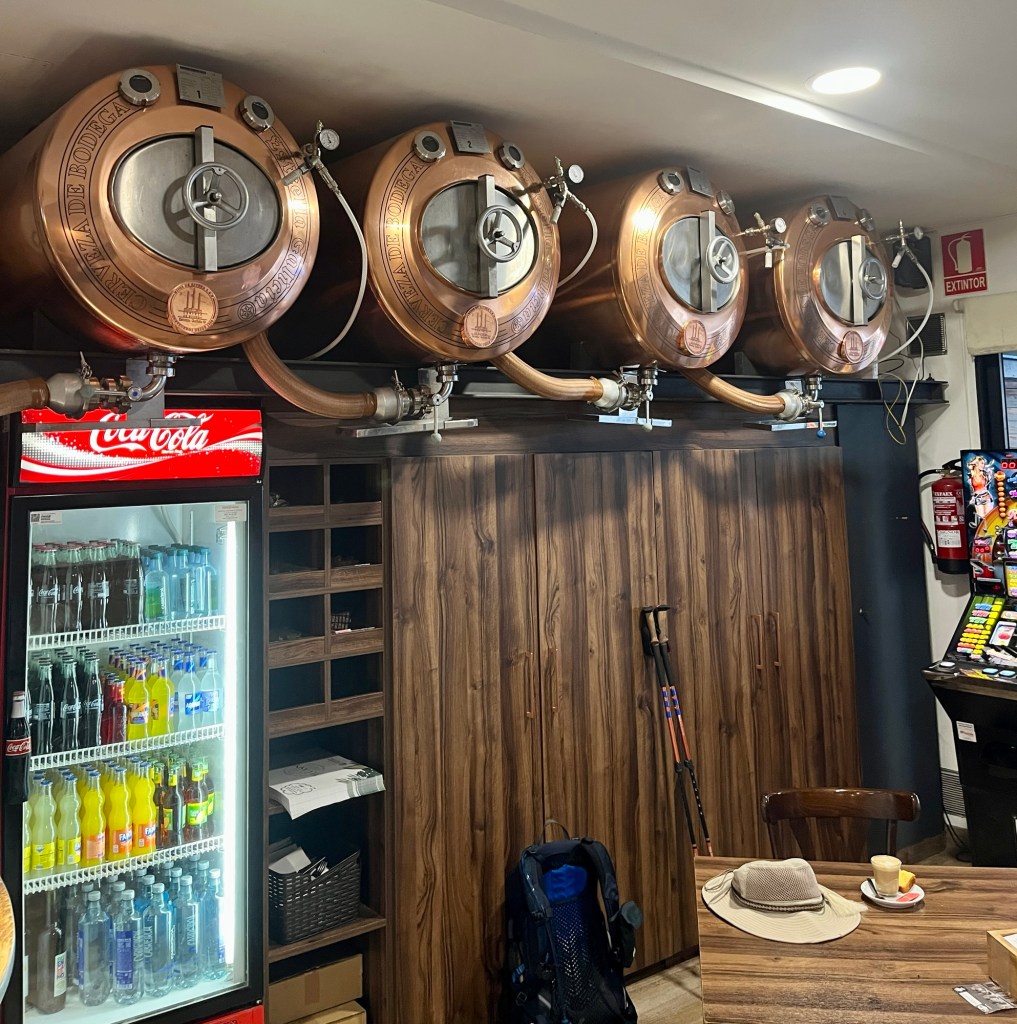
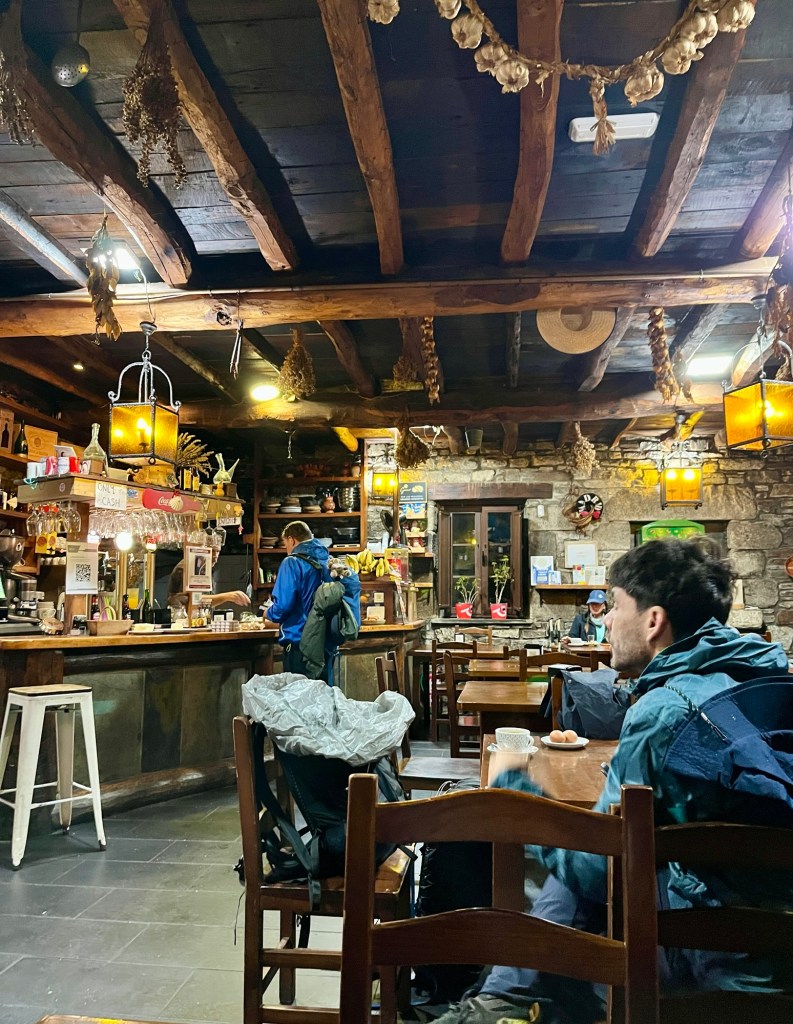
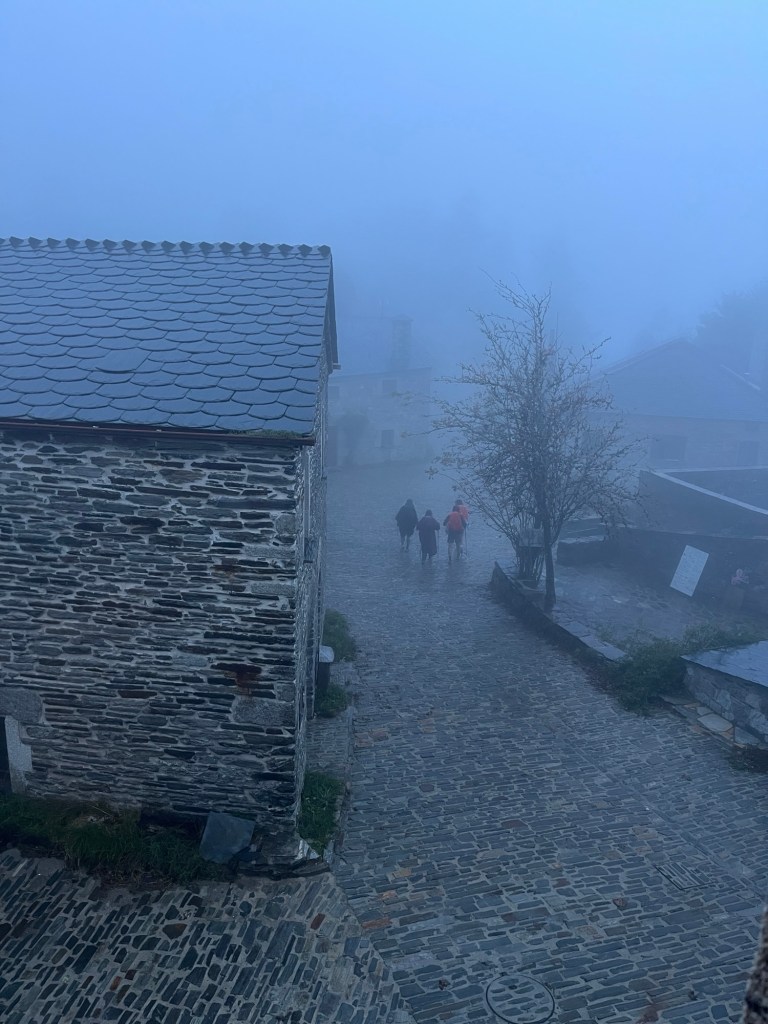
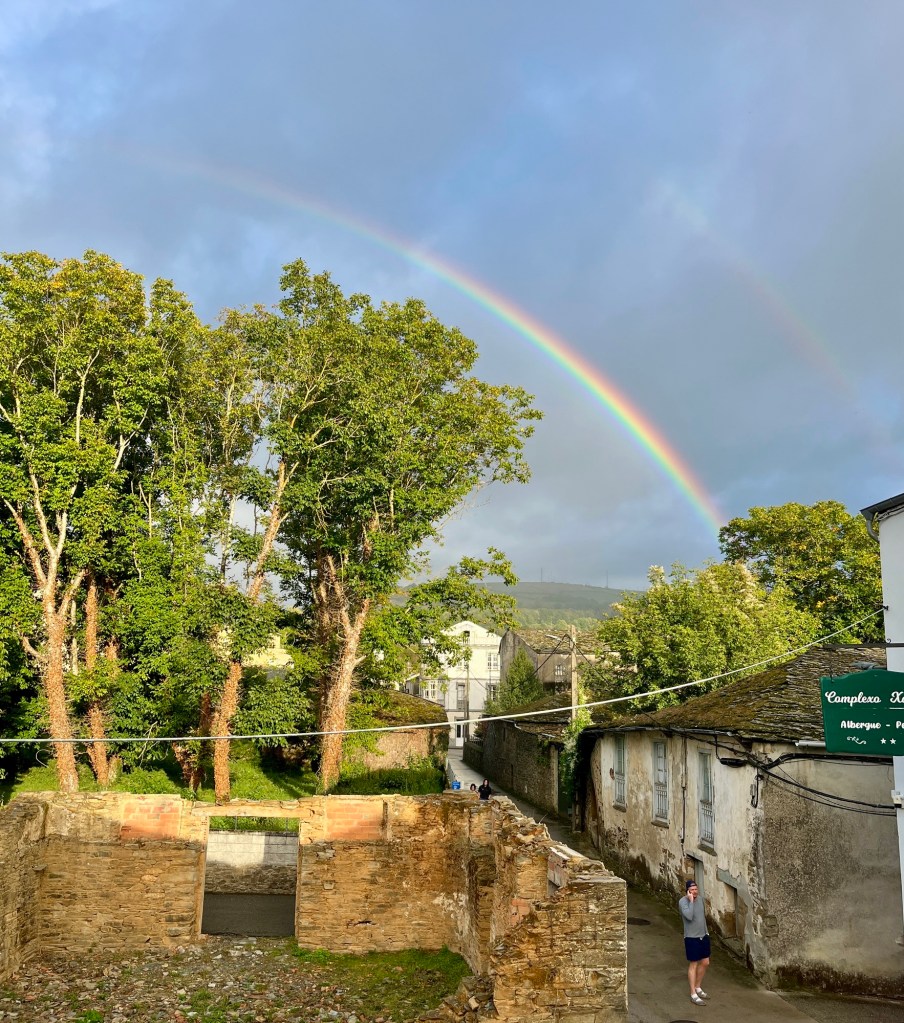
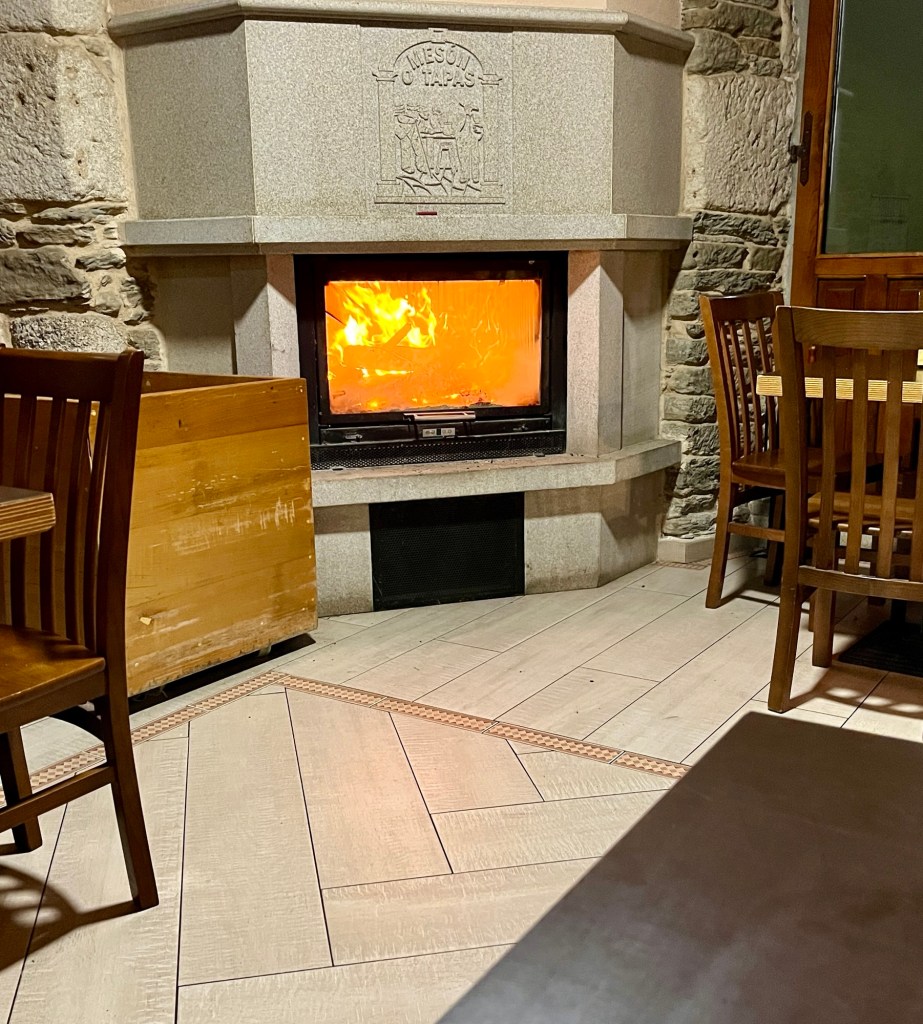
Love the beer kegsWarm inside…… but awful outside in O Cebriero Triacastela rainbows
Right about now, putting my feet up for a while before traveling again looks pretty damn good.
In the course of this walk, I’ve had hot (90s) and cold (low 40s) weather, I’ve been in downpours and fog, and I’ve probably lost 10-15 lbs. All my shoe research and preparations didn’t keep me from losing both big toe nails and getting some big blisters. So it goes.
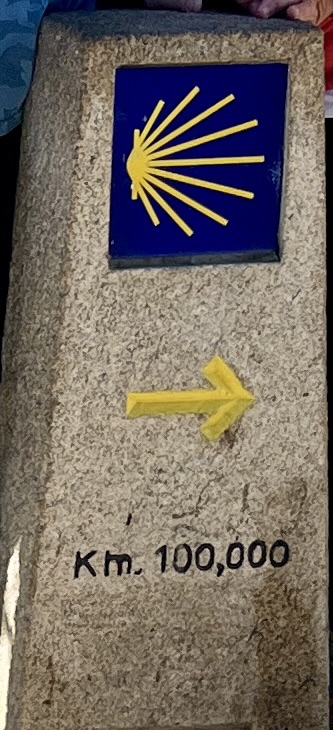
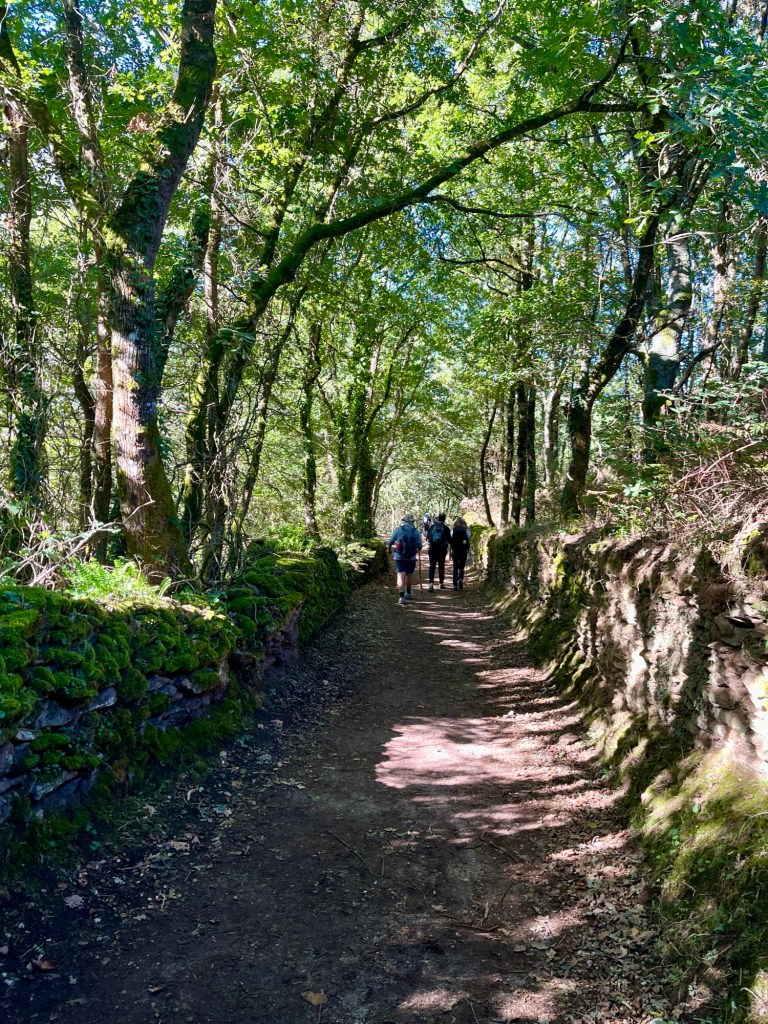
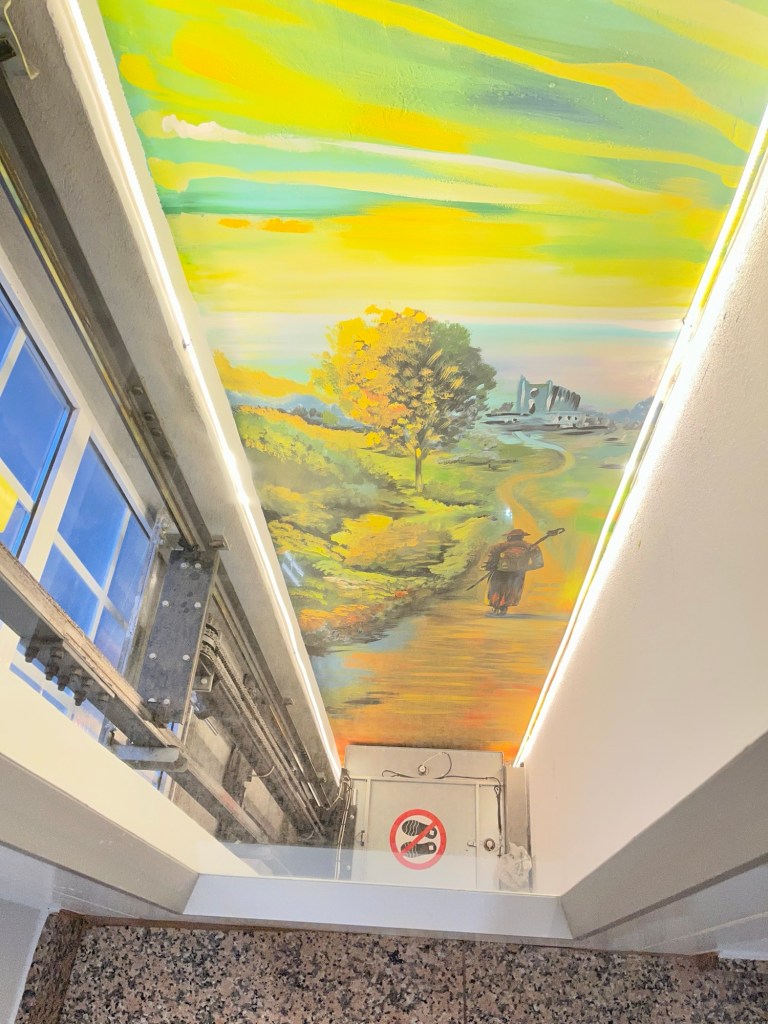
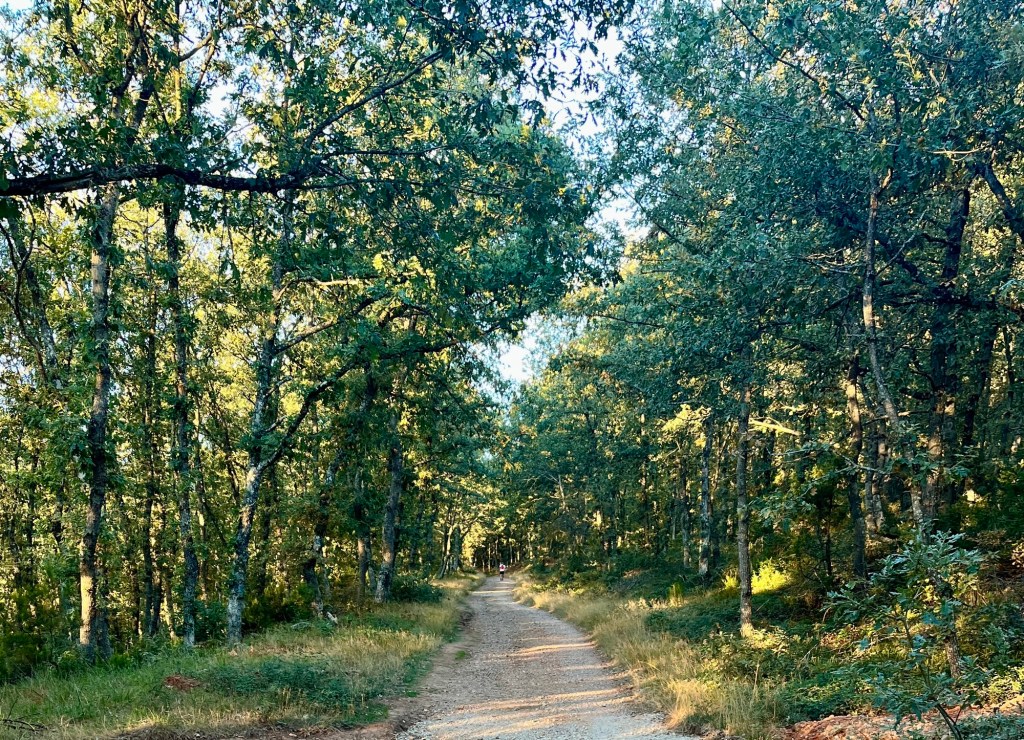
Cold enough for this100 kms leftBeautiful trail to Portomarin Artwork inside elevator shaft
But that’s the challenge isn’t it? Persevering when the going gets tough? I’m proud of myself for, whatever the situation, continuing to put one foot ahead of the other. And I look around me and see all the others, many in far worse physical shape, doing it, too. It lifts the spirits, my friends.
As does your encouragement and continued support. Thanks for coming along. Cheers!
I’m writing from Ponferada, a nice, large city with a famous castle, which is the scene of a rest day for me. And one that’s very needed!
Since my last post and my departure from Leon, I’ve been through Villadangos del Paramo, Hospital del Orbigo, Astorga, Rabanal del Camino, and El Acebo. The Cafe Los Angeles, in Hospital, which I had looked forward to for its great cafe and wonderful pilgrim’s menu lunch, was sadly permanently closed. The proprietor put in his 25 years and retired, and no one has bought the place to reopen it.
Coming out of there, I had a choice to go 10 unbroken kms along the highway (very boring) or take a slightly longer route through farm fields and two small towns. I chose the latter and it was a bad idea. I know I’ve taken it before but I’d forgotten it how bad it is, Not only were the rocky farm roads awful, but the Camino wound around hilltops, with lots of ascents and decents, and halfway through it started to rain. My arrival in Astorga was wet, soggy, and I managed to find just the right spot in my new sandals that produced a blister. That’s the Camino for you.
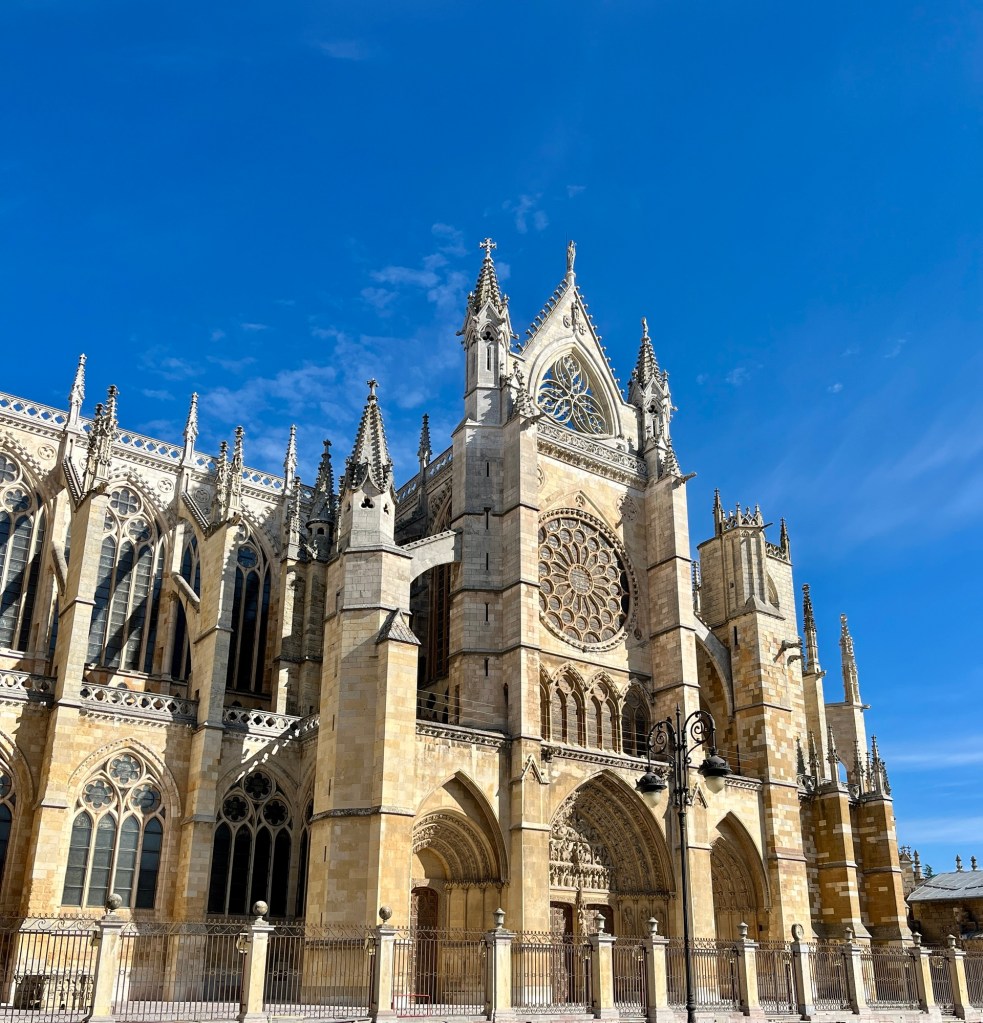
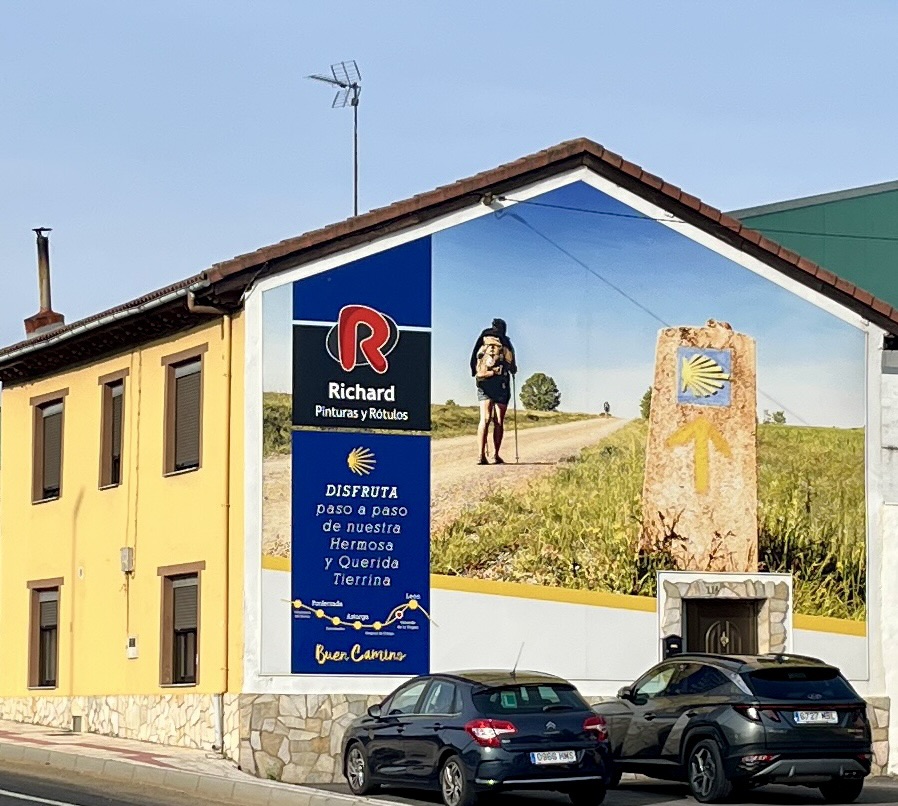
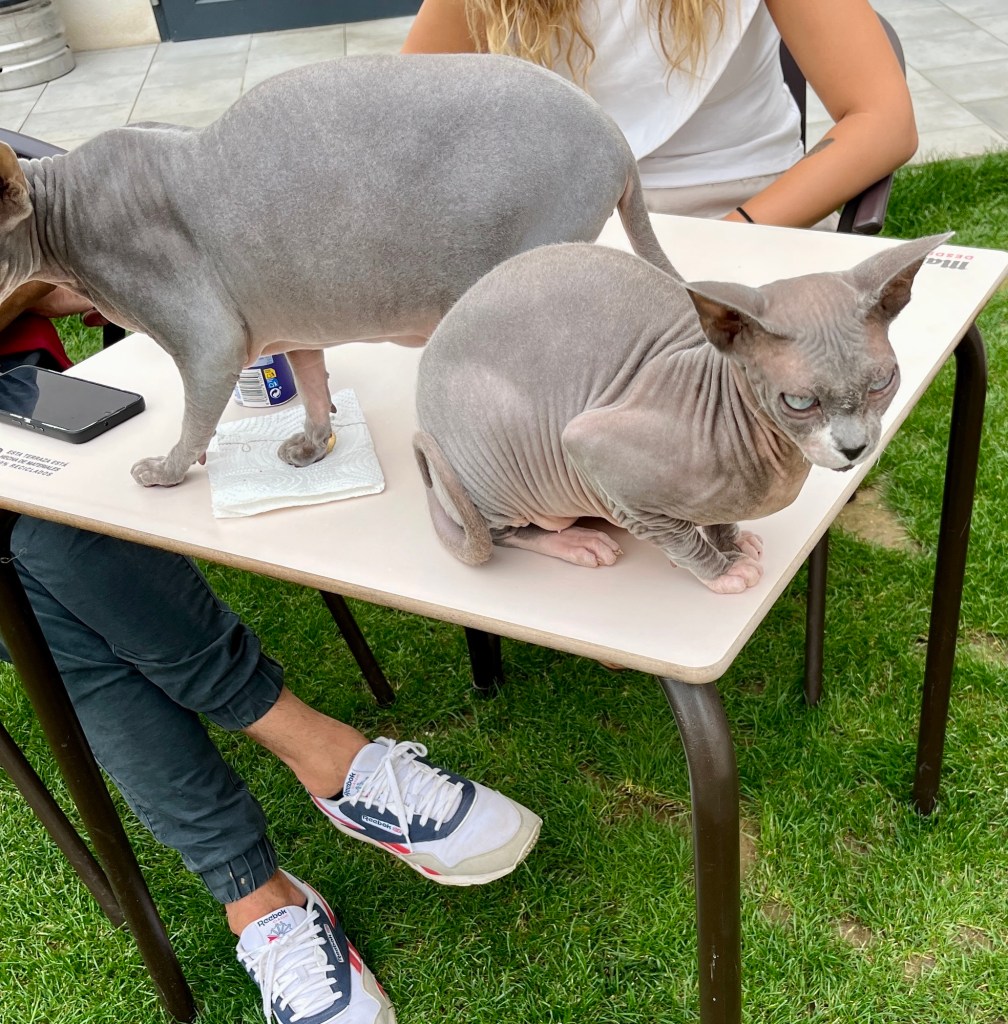
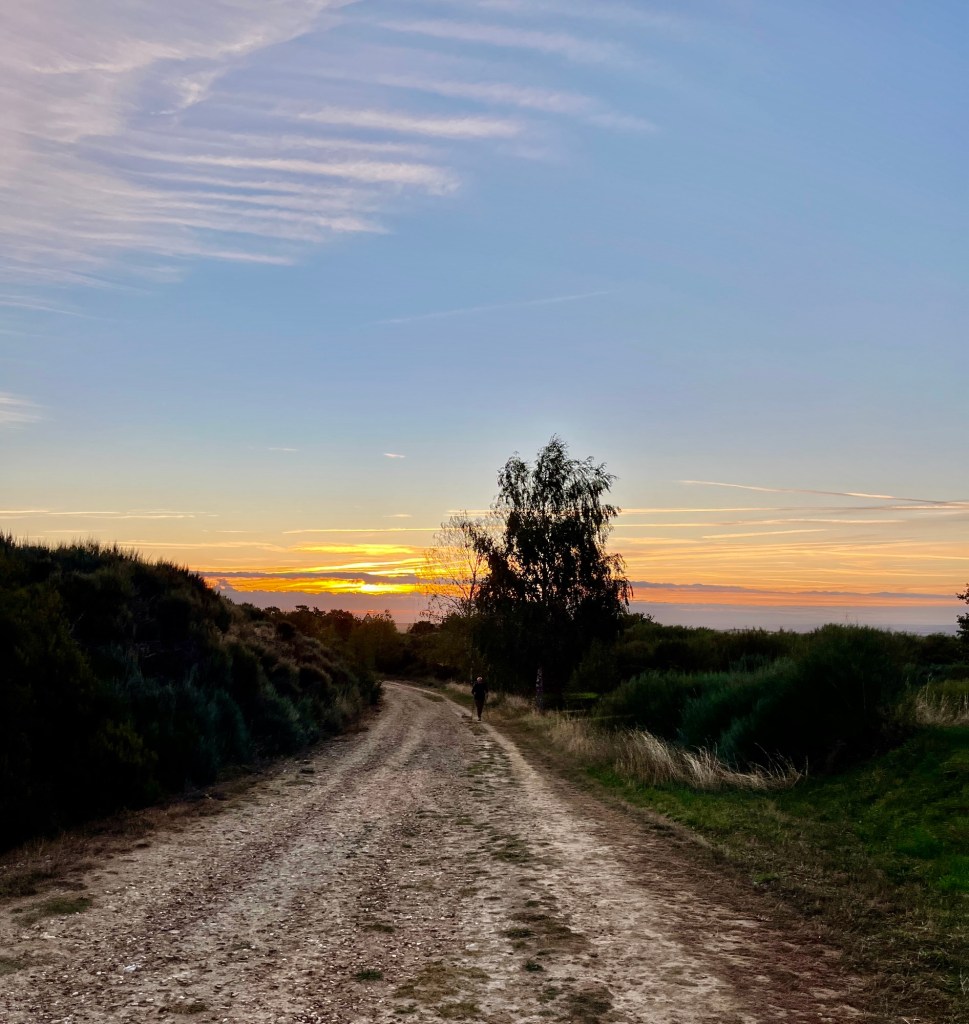
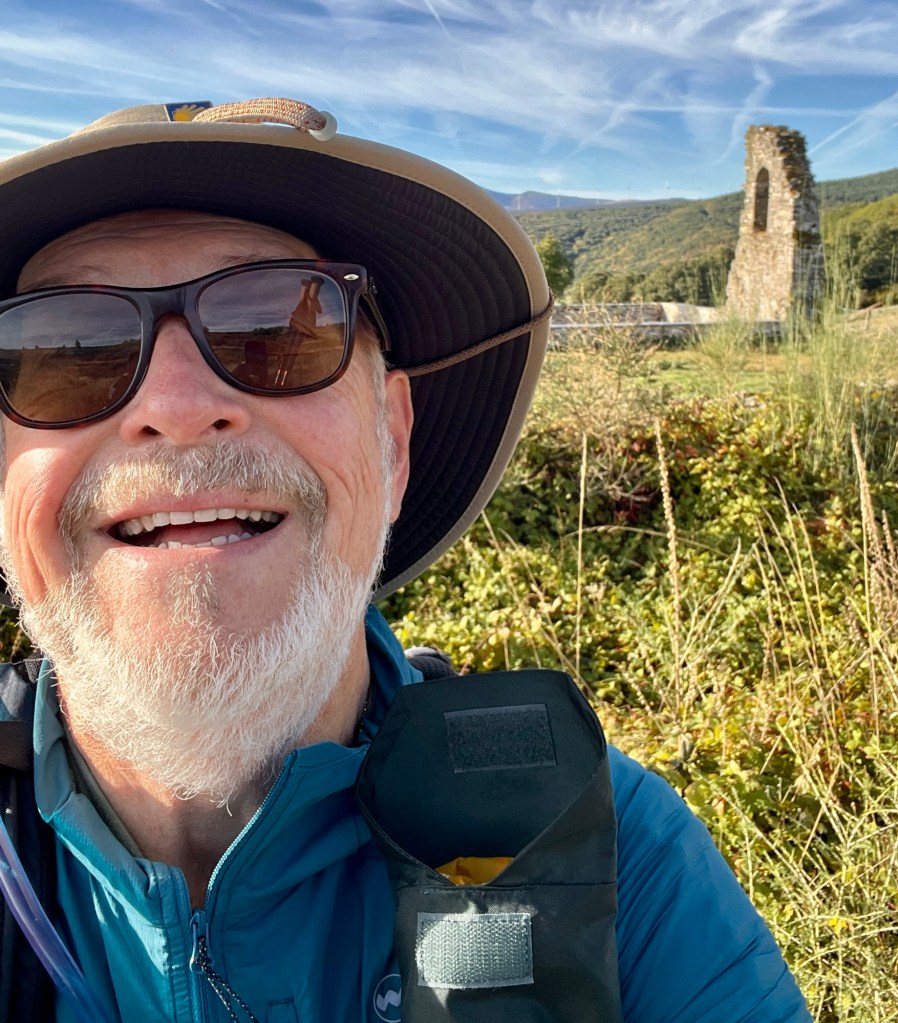
The cathedal in LeonMore path side artAlbergue host’s ugly hairless catsI had weird dreams that night, can you guess why?
I also forgot that the route out of El Acebo to Molinaseca features some god awful long descents down rock-strewn paths, including clambering over sheets of eroded slate and granite. Oy! The knees and legs took a beating, which I’m still feeling today. Yep, that’s the Camino.
I met two ladies at breakfast in El Acebo, Desiree from Madrid and Carolina from San Antonio (hello, ladies) and we walked together for part of the morning. Desiree is doing the Camino in multi-year stretches (as many working Spaniards do) and ended her walk for this year here in Ponferada. Carolina, a retiree, is going the whole way to Santiago, so we may meet again.
The weather has turned ugly and the forecast is for rain for the next week or so, usually at night with little chance of it in the prime morning walking hours. Nonetheless, wet and muddy paths are no treat.
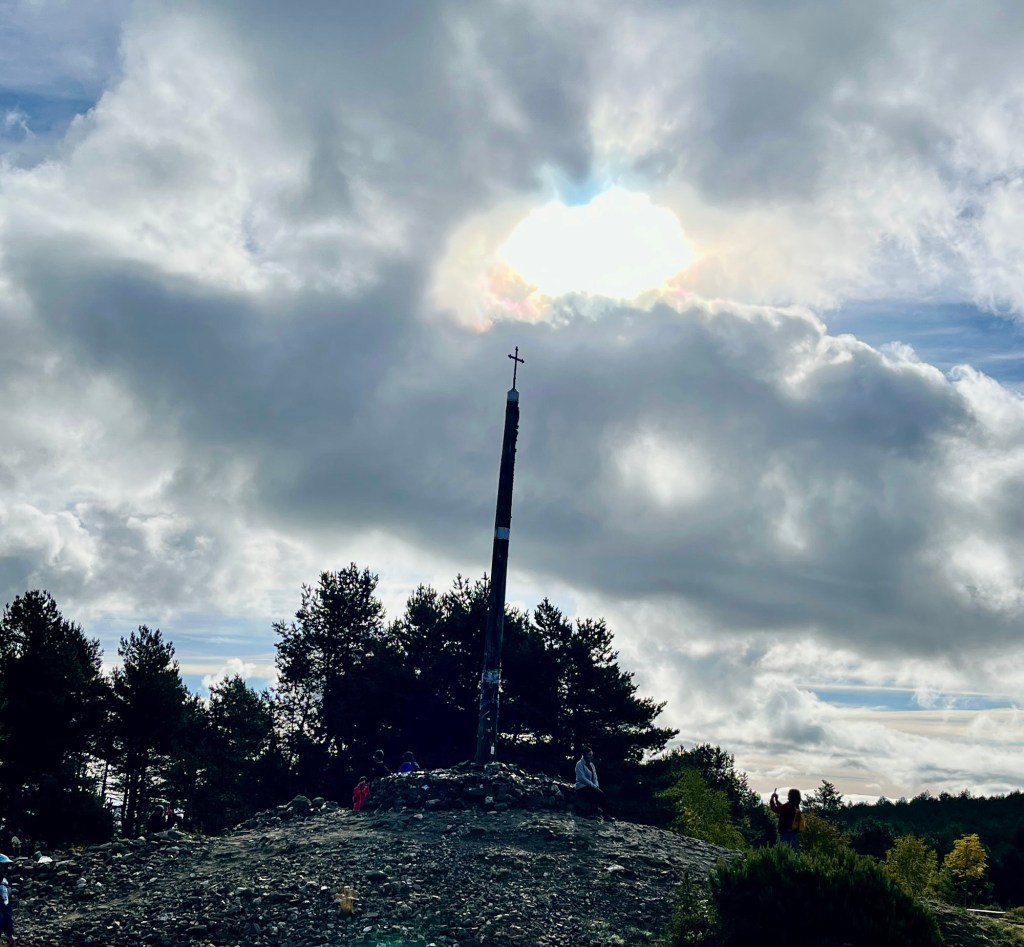
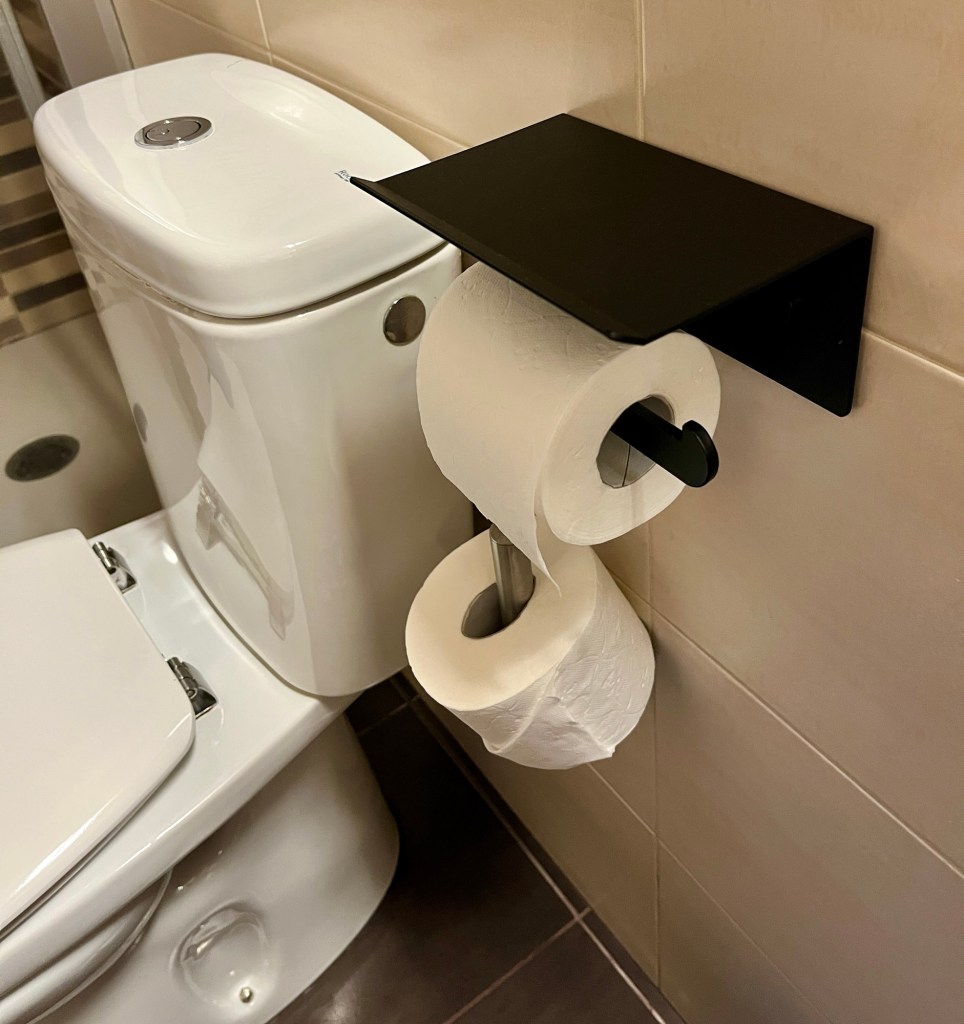
Dawn over El AceboTwo Camino relicsDivine appearace at Cruz de Ferro?The latest in bathroom fixtures: toilet roll holder with cell phone shelf
The end of the traditional Camino season is approaching and I’m seeing evidence of cafe- and hotel-owner fatigue. Burnt out lights, broken fixtures, etc. abound. Most of these places will be closed for 4-5 months during the winter and I guess repairs are being deferred to just before next season.
I have 13 days to Santiago, including a rest day in Portomarin. Time for the big personal revelations to appear, but so far I got nothing. So it goes. My lovely wife will be joining me in Santiago and seeing her is always a revelation.
I did ship my absentee ballot to the U.S. and DHL (aka “Day and a Half Late”) says it was delivered, so I’m very glad to have done my duty as a U.S. citizen. Are you getting ready to do yours?
I’m off to Cacabelos tomorrow morning and hoping for good lodging and no rain on the way. Thanks for coming along and for all your encouragement. Cheers!
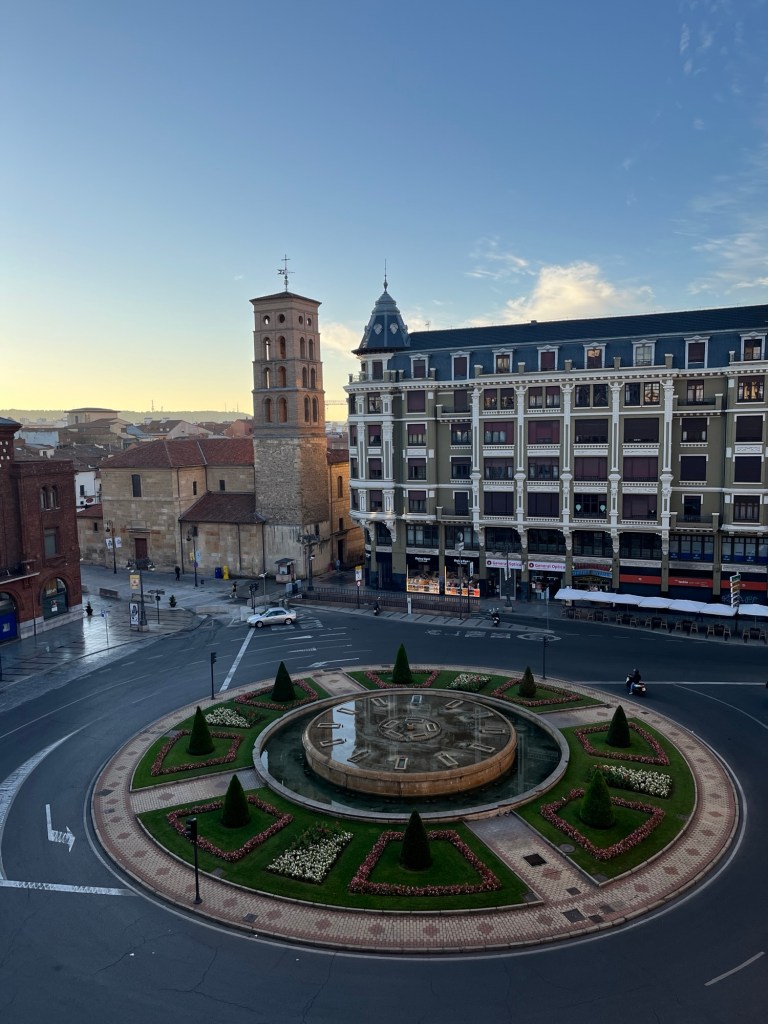
I’m writing today from Leon, having put the entirety of the Meseta behind me. It’s a beautiful day, as they have been for the last week: cool starts, sunny, warming up nicely, and only hitting the mid-70s by the time my daily walk is done.
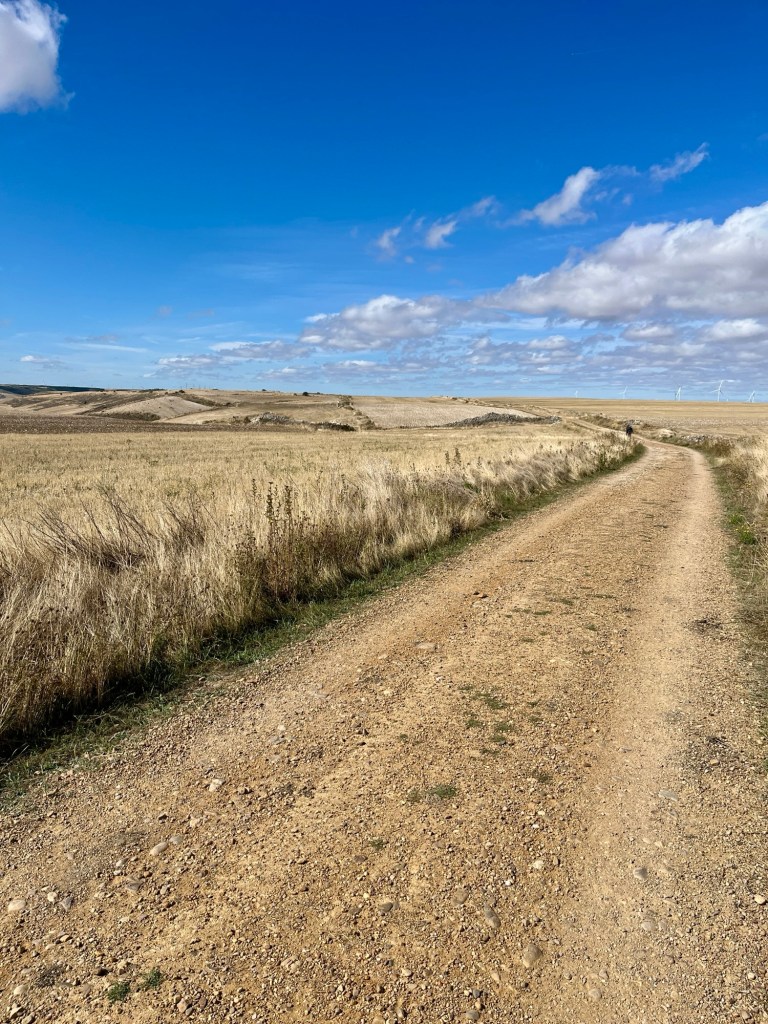
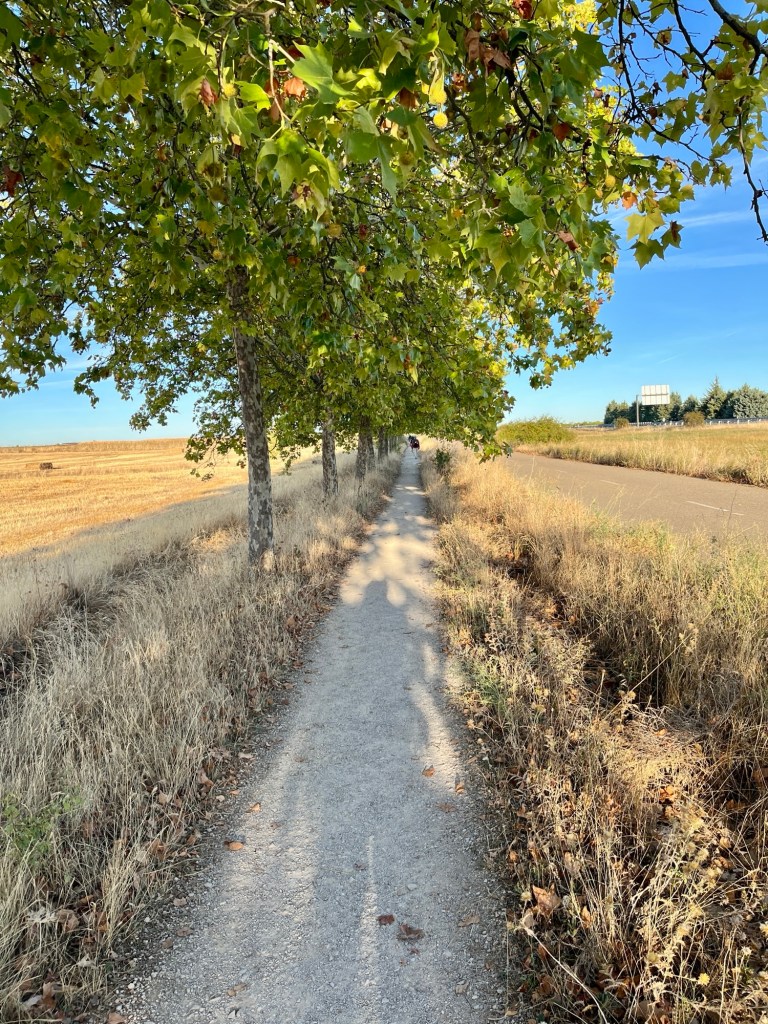
The Meseta is certainly devoid of much but farm fields and the Camino. In some areas, the Camino path is nicely shaded by hundreds of plane trees, one every 25 feet. From above it must look strange, this green ribbon cutting through vast corn and wheat fields.
The walking suface has changed over the last few weeks, from rough, rocky farm roads to a dedicated path, with a fine grit surface. In many places, this senda runs alongside serious highways, the better for me to see motorcyclists and camper vans buzzing by. I sometimes think it would be nice to be in one of them, but they would never be able to go where we pilgrims do.
Since my last post, I’ve passed through (actually, got lost going to) Atapuerca, then Burgos, Hornillos del Camino, Castrojeriz, Boadillo del Camino, Carrion de los Condes, Cazadilla del la Calzada, Sahagun, El Burgo Ranero, and Mansilla de la Mulas. What a mouthful these names are.
With regard to Atapuerca, I made two classic mistakes that resulted in my easy 18 Km walk turning into a tough 25 Km walk. First, I failed to check my route before leaving from a coffee stop; and second, I fixated on two pilgrims walking ahead of me and followed them, assuming they were headed to Atapuerca like I was. They were not. I missed a marker where the Camino branches and followed this pair for 3.5 kms before realizing they were bypassing Atapuerca and heading directly to Burgos. So, cursing a blue streak, I had to walk back 3.5 kms and cut across on a side road to get back to the Camino path I needed. Which proves, regardless of the number of Caminos one may walk, failure to be alert can still result in failure to succeed.
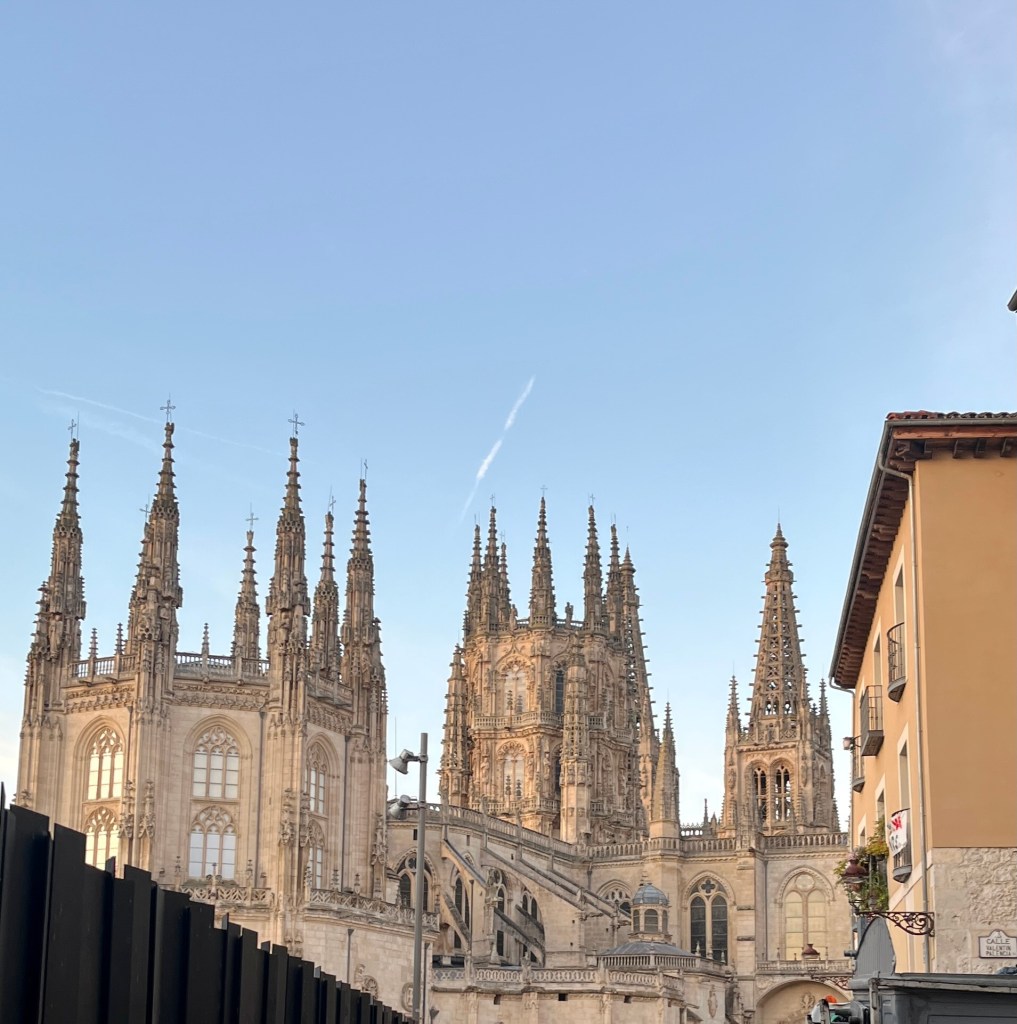
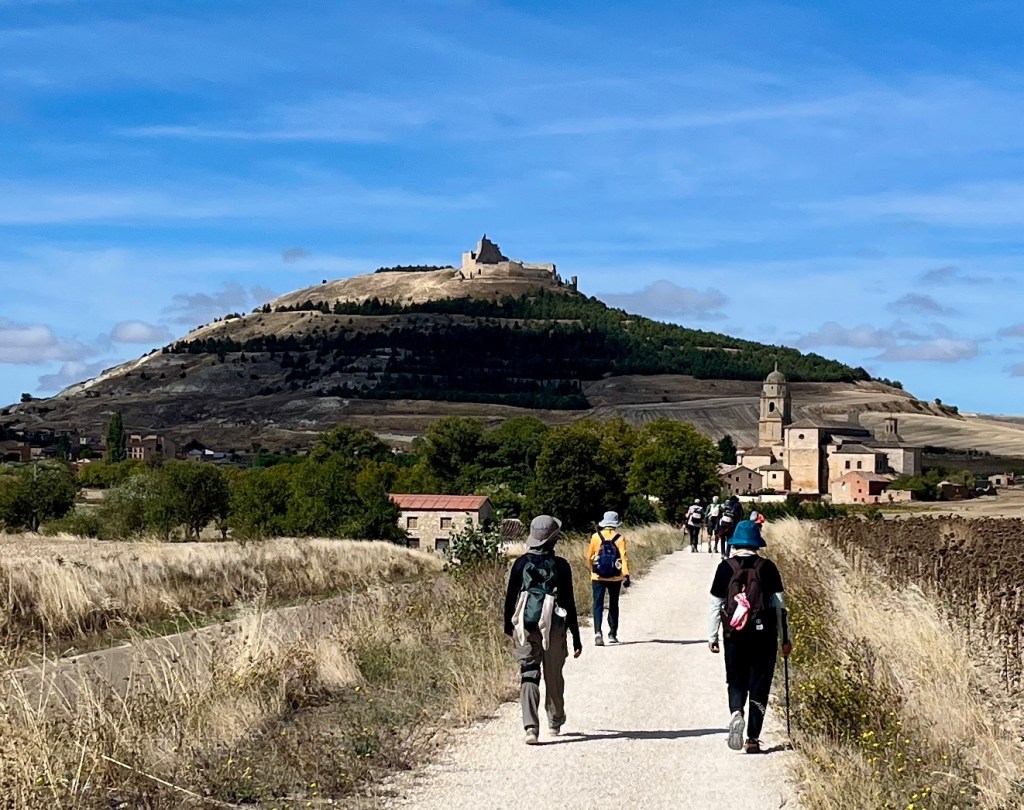
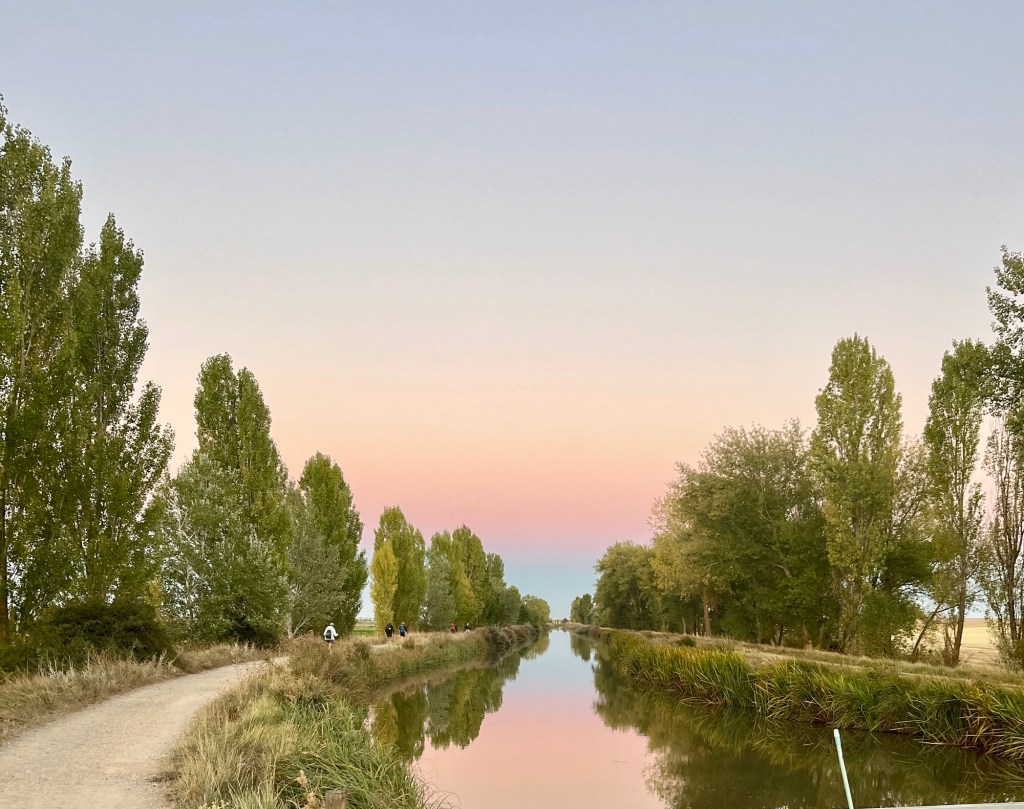
Shady lane leaving VillafrancaBurgos Cathedral The Meseta’s wide open spaces Walking into CastrojerizDawn canal enroute to FromistaShaded Camino in wheat & corn fields My Hoka hiking sandals Early morning view in Leon
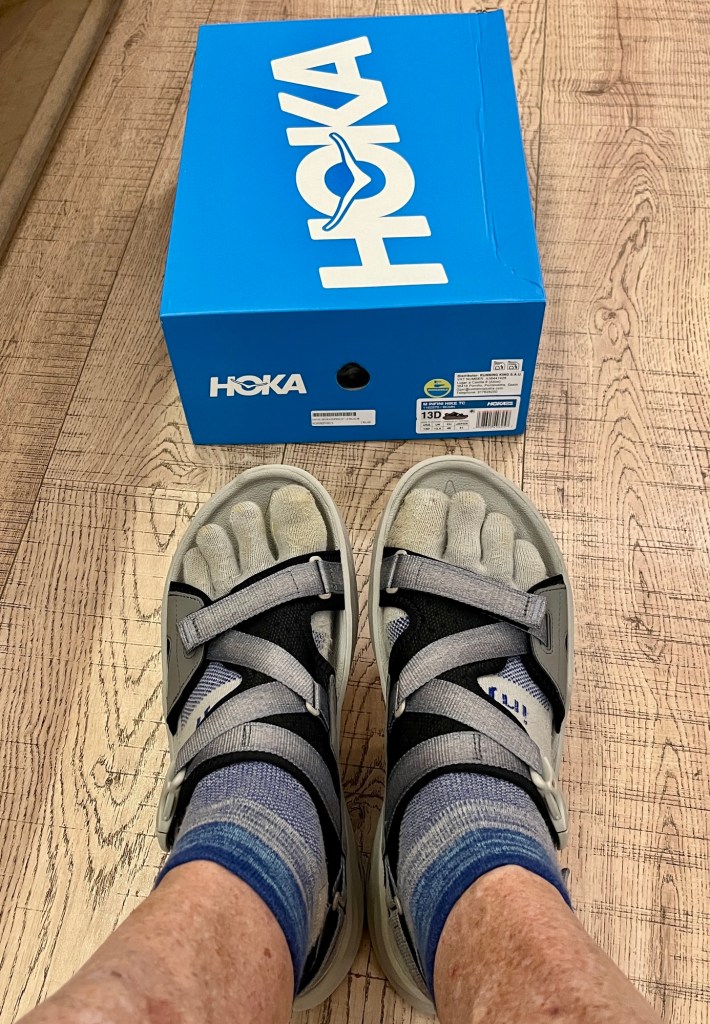
I arrived in Leon yesterday and indulged in what has become a tradition here for me: buying new footwear. My lovely Hoka Mafate X trail runners are superb in all respects except that my right big toe doesn’t have enough room and is getting beaten up. As usual, I’ve tried all manner of tricky lacings, Compeed patches, etc., everthing but cutting up the front of the shoe. Instead, I’ve been quizzing other pilgrims who are wearing “hiking sandals”, who generally give them good reports. I also checked out the RunRepeat.com website, which provides terrific shoe and boot reviews. They recommended the Hoka Infini Hike TC sandal, so my first stop upon arriving here was the Ameria Castro hiking gear store. What were the chances they had, this late in the season, that particular sandal, in my size 13? They did (the Camino provides!) and so I’m breaking them in here and will debut them on the trail in a few days. Despite some misgivings about lack of ankle support and small stones getting in underfoot, I’m already enjoying the toe freedom. I’ll report on my experience with them next week.
I’ve met some interesting people lately, including a nice couple, two geologists from Florida (hello, Jim and Aleisha), and two friends-of-a-friend from Virginia, who are doing a short Camino group tour (hello, Bob and Karen) and whose schedule overlapped mine here. And plenty of Kiwis, Aussies, Poles, Irishmen, Frenchmen, and even the odd American.
So far, this walk has been dry. And, as we know, rain can change everything. Rain is, in fact, forecast for next week, but with low probability ( < 20% ) and that only in the early morning. Nonetheless, I’ll have my poncho at the ready.
I’m going to wrap this up and go get my absentee ballot for the U.S. midterm elections printed and shipped. Oh yes, I never let the Camino get in the way of my unbroken voting record and won’t, especially not now for such an important election. I send my ballot in via DHL, bypassing the local and U.S. postal services altogether. If you’re a U.S. citizen, I urge you to vote.
My next rest day comes up in a week, in Ponferrada. I’ll be in touch here then. In the meantime, thanks for coming along and for all your encouragement. Cheers!
In an earlier post I inaccurately said that the Via Francigena pilgrimage starts in Canterbury. That was wrong; it actually starts in London. I was reminded of this one day when I was halfway to Chartham on a training walk, all decked out in my Camino gear, and I encountered a dozen people hiking to Canterbury, from London. They were a group of young Via Francigena Goodwill Ambassadors, mostly Italians, and they were delighted to meet a fellow pilgrim (even if I was heading in the opposite direction). We had a nice trailside chat and several of them had been on Caminos in Spain. Based on the videos two of them were taking, I’m pretty sure I now appear in someone’s Italian blog.
Here’s the brochure they gave me. You can see that this is a very long hike! In fact, it’s about 2,000 miles through four countries and takes three or four months. That’s a commitment. Someone else I talked to a few years ago who walked it said that it doesn’t really have the level of supportive infrastructure found on the Caminos in Spain and is quite difficult. Let’s not forget we’re talking about crossing The Alps, too. The ambassadors were very nice but I’m not inclined to do this one. How about you?
However, meeting them put my measly upcoming Camino into perspective. Now I’m raring to go.
I’m in Paris as I write this and I’ll be heading south in two days. I’m passing the time between coffee, croissants, and cafes by engaging in the time-honored, pre-hike practices: tweaking my gear and generally overthinking all my plans. Yes, everything fits in my pack. Yes, I have all the required documents. Yes, I’ll probably be able to carry it all even if I do include that Swiss Army knife. And, as I’ve reminded myself several times, they probably, almost certainly, sell whatever else I might need, in Spain. Sound familiar?
I’m lucky that the wildfires in southwestern France that temporary shut down the trains out of Paris have been tamed. And, at the risk of jinxing myself, the weather forecast for my first hiking day is very pleasant – sunny and dry. One can only hope. I look forward to my ride to Saint Jean Pied-de-Port because the train is full of pilgrims and there’s a festive and excited vibe. I confess I’m getting a little of that right now.
Since you asked, planning for my Camino started last year and is fairly complicated. Let’s look at what’s involved.
One begins by deciding which Camino you’re going to walk. I’ve always walked the Camino Frances, one of the longest and hardest routes, but there are over a dozen recognized routes to Santiago from all over Spain, France, and Portugal. Naturally, the time of year when you plan to walk and the amount of time you have to do so are also factors. Many routes include optional side trips to nearby historic or scenic sites (which can add multiple kilometers/days of walking). Luckily, as a retiree, I’ve always had as much time as I’ve needed and I prefer to walk in September and October.
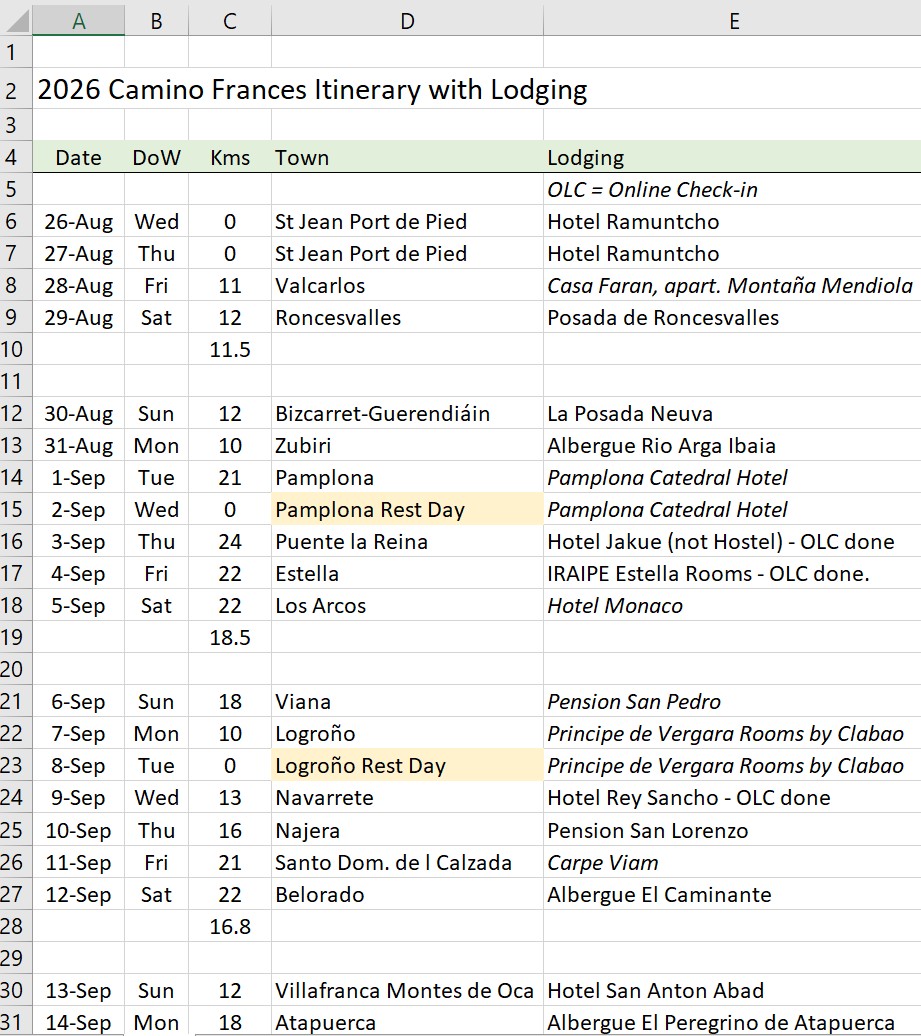
Once I know where I’m going and when, I create a plan that breaks the walk into manageable segments or stages, based on my personal preferences and fitness level. As you can see below, Excel spreadsheets are very useful for this.
Like many pilgrims on the Camino Frances route, I work with the Brierley Pilgrim’s Guide, the classic guidebook now in its 23rd edition. Its maps and other pages provide a wealth of information. I ask myself how far will I walk on any given day? Can I mix up short and long days? Can I take a day off periodically? This year’s walk averages around 18 kms (12 miles) per day, with a max of 24 kms. Before you pooh-pooh that mileage, consider that three mountain ranges are involved and there are many ascents and descents. For example, one day in 2024 I walked almost 40,000 steps.
I prefer to be very organized about all this; but many pilgrims are not; they take a far less structured approach, walking as far as they want/can on a daily basis and getting lodging wherever they can when they arrive at a stopping point. This gives them a lot of flexibility but no security – they may arrive in a town to find all the beds/bunks are taken and they must continue on to the next town to (hopefully) find a bed. The weather can also be a factor when winging it. Still, the capriciousness and freedom of it all are part of the lure of the Camino for many (and was for me, the first time).
Camino lodging choices range from hostels (bunk rooms) to B&Bs and hotels (private rooms). Some folks mix it up, getting the occasional private room to take a break from the bunk rooms. I’ve tried them all over the years and now stay in private rooms. Reserving private rooms is an organizing extravaganza involving online bookings, and emails and phone calls in Spanish (which I speak, luckily).
Once all that is in hand, I turn to the Brierley Guide and markup its stages to show my route, as shown in the example from 2024 above.
I keep notes year-to-year, so I know where there are good cafes and food trucks, where the necessary pit stops are, and which are the tough sections. I also break each long day into 3-4 parts, so that I can take rest breaks and possibly change socks. Once again, all this planning assumes lovely weather but can be (and often is) disrupted by storms, heat, torrential rain, wildfires, etc. (just the usual Camino events). One downside of my strict planning means I have to get to my destination each day to use my reservation.
And so it goes, in just two weeks from tomorrow we’ll see how well my planning serves me. Thanks for coming along!
I’m writing this final installment of my 2024 Camino posts from Paris, after getting over my parting gift from Santiago: a bout of food poisoning. Ooh la la.
The end of this Camino was much like its beginning: foggy, rainy, and cold, with low visibility, so the line of pilgrims along the way sported ponchos and other rain gear. However, when we reached Mount Gozo and the outskirts of Santiago were in sight, no one cared about the weather. We made it!
But, I’m getting a little ahead of myself. My last post left off in Ponferrada, where I stayed in a wonderful albergue with great services. Subsequent days took me to Cacabelos, Trabadelo, Las Herrerias, O Cebreriro (a dreadful climb and weather),
Triacastela, Sarria, Portomarin, Airexe, Melide, Arzua, and O Pedrouzo. My lodgings were generally good, but sometimes not that great.
After O Cebreriro, it’s not quite all downhill but it seems that way and once you reach Sarria, where all the tour groups jump in to get the minimum kilometers required for a compostela, momentum and excitement help propel you forward toward the finish.
Each time I met Americans on this hike, and there were many, I carefully brought up the upcoming U.S. elections. I don’t often get to talk to people I don’t already know, from across the U.S., these days so I wanted to do so here and to listen to their views. As it turned out, almost all of them had the same political feelings that I have. I guess going on the Camino may reflect a certain world-view, so sharing those feelings is not that surprising. It was nice, though, to find that Americans from states like Louisiana, Texas, Idaho, and Montana are nicer, more thoughtful, and more progressive than their media stereotypes often suggest.
Camino-inspired wine in CacabelosCustom group Camino patchesRainy morning is Las HerreriasCaldo Gallego – yum!Canine cafe welcome committeeCows on the Camino near AirexeCamino chic: hiking kiltA cleaning company; not a commentary on the European economyYours truly, at the Santiago Cathedral
It continued to rain throughout the weekend after my arrival in Santiago. My New French Wife, Marti, flew in and joined me a few hours after I arrived. We enjoyed our reunion and in the following days dashed around through the rain to various good restaurants for some excellent Galician meals. We went to the official Pilgrim office and I collected my Compostela certificate, a process that is all automated now, somewhat impersonal, and without the hand-lettering of your name and details. It looks like this:
The rain continued to come down throughout our stay in Santiago and it really was pretty miserable at times. What I would have given for some sunshine! Our flight back to Paris went smoothly and now I’m sorting through my gear and decompressing.
As reported earlier, my poor feet took a beating and I’ll probably lose a toenail, but they’re slowly recovering. I’m happy to have survived the physical and mental challenges once again, and I’m enjoying the post-Camino downtime. As before, it’s a bit of a shock shifting gears from speaking Spanish to speaking French.
Looking back over the last seven weeks, I’m a little sorry that the Camino seems a bit too touristy now. At times it seemed that there were just too many pilgrims, and many who saw it as a lark, in my opinion, so some of the specialness of it has gone. Maybe that’s a symptom of a post-pandemic, pent-up demand resulting in generally high tourism levels everywhere, or maybe it’s just the consequence of walking the Camino for a third time. At the moment, I don’t even want to think about doing it again, but I know that in six months or so the rose-color hindsight will take effect and I’ll start imagining my return. We’ll see.
Once again, thanks for coming along on my journey and for your encouragement. Cheers.