Learning to Speak Schengen

As a retired person, a U.S. citizen, and a senior nomad, I’m officially a tourist. So how does that work, with regard to visas and such, in and around Europe?

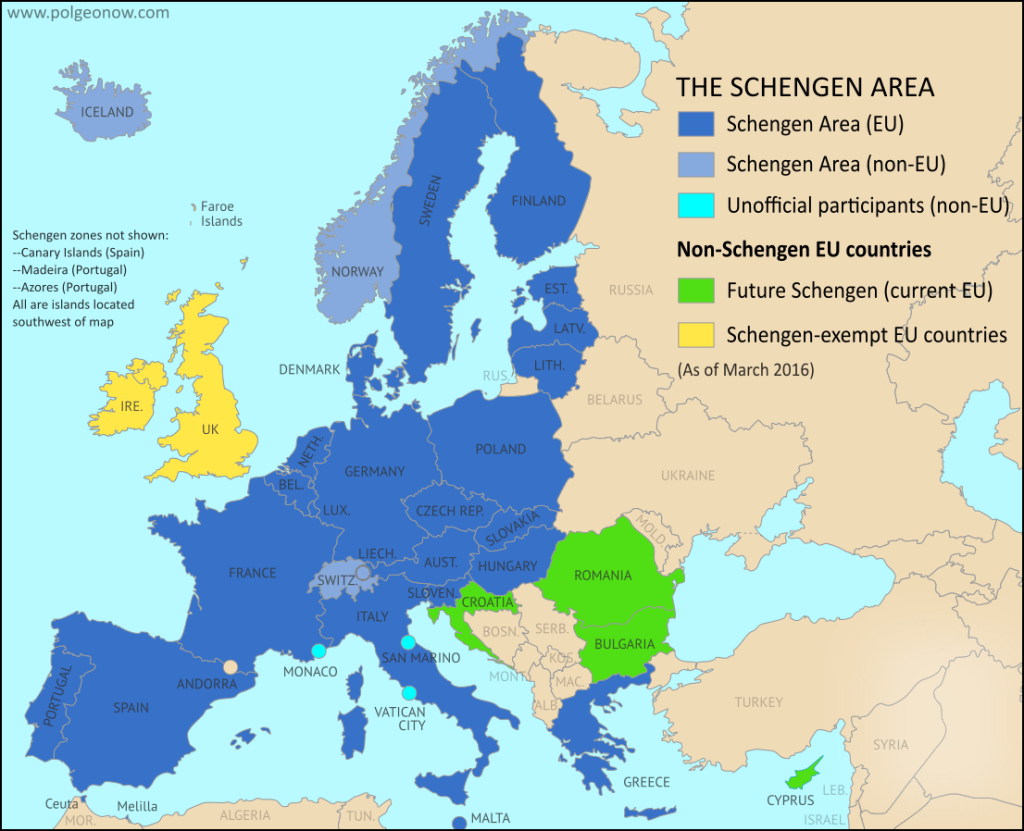
Countries around the world like to have some control over who comes to visit them. Europe is a relatively small area and having border controls everywhere, especially for really small countries like Luxembourg, was cumbersome and expensive. In 1985, a number of countries in the fledgling European Union signed onto the Schengen Agreement, allowing open borders and free passage between countries. This has grown today to include 26 countries, including some non-EU members.

Citizens of one Schengen treaty country enjoy free access and unlimited stays in other Schengen countries. However, visitors from other countries operate on a Schengen tourist short-term visa, with time limits (and fees, for some). U.S. citizens are allowed to spend 90 days in any 180 day period in the Schengen area (with no fee) before they have to leave.

This can be complicated if you go in and out of the Schengen area frequently but, fortunately for me, I tend to arrive, stay, and leave. For example, I arrived in Spain (in the Schengen area) on September 4, 2019 and I’ll leave exactly 90 days later, on December 2, for the U.S. Then I’m forbidden to re-enter the Schengen area until another 91 days goes by, so December 2 + 91 days = March 1, 2020. This Schengen Calculator is a handy tool for figuring this out.

For variety, I could have spent six weeks in Germany and six in France (for a total of 90 days) and then exited the Schengen area.

Notice on the map above that there are six nearby non-Schengen countries: Ireland, U.K., Croatia, Romania, Bulgaria, and Cyprus. These countries also have their own 90/180 day limits but aren’t in the Schengen scheme. So my travel planning, if I want to stay in the European area, consists of hopping from the Schengen countries to the six non-Schengen countries and back every 90 days. An annual return to the U.S. for a month or so helps to balance everything out.

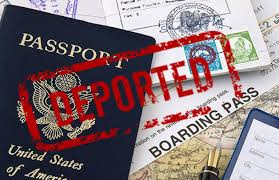
How much do these rules matter? Well, from what I read, it’s taken pretty seriously. You can be turned away at Customs and Border Control upon arrival if your entry-exit dates are off even by one day (as shown in your passport entry stamps and in their computers) and you can be deported. Having that “Deported” stamp in your passport is really undesirable, to say the least, and leaves a stink that doesn’t expire for three years. I recently made a mistake in calculating my Schengen dates, realized it, and had to cancel some reservations, which was expensive.

At one time, you could “reset” your Schengen days counter to zero by simply leaving the area for a day, but that was kiboshed by a change to the governing law in 2013.

The Internet is full of schemes for hacking the Schengen rules, most of which seem to depend on friendly or lazy customs officials and are too risky for my taste. There are also various other longer-term visas available (each country manages their own) for various lengths of time. Generally, these require student status, or family members who are foreign citizens, or owning foreign real estate, or depositing a lot of money in a foreign bank. Most of the rules are aimed at ensuring that you’re not going to a) work and take a job away from a native; and b) use the local healthcare system that you haven’t paid into. You could become a foreign or dual citizen, but I’m not going to get into that here. So for now, I must learn to be very careful with my date calculations.

In Which I Go To The Movies

I haven’t done this in years, but today I went off to a local movie theater to see a movie, in English but with Spanish subtitles.

Yes, I admit to being a die-hard Downton Abbey fan. In the summer of 2016, I even went to visit Highclere Castle, 90 miles west of London, where the series was filmed (you can read about that in my blog here). So I’ve been very interested in seeing the new movie, which was released while I was on my Camino walk in September.

I took a taxi to the Yelmo Cines Icaria, a 15-screen establishment in a mall, about half an hour away. Yes, Barcelona does have shopping malls. The ticket price at noon was €6 (about $6.60) and the box office and concession stands were just like those at any American multiplex. Food prices, however, were much more reasonable: a medium popcorn and small drink was just €7.

I was thrown for a moment when I was asked if I wanted “salty or sweet” popcorn. In addition to regular popcorn, it turns out they also sell caramel popcorn (aka Cracker Jack) – I went traditional. However, there was no butter (or even pseudo-butter) topping available. All the other usual items were there, the giant-sized candy bars and boxes, hot dogs, and such, but were not for me.

Theater #14 was my destination and I had it all to myself. Downton has been playing here for a while and is now down to just one showing per day. The smallish house had about 100 standard seats, all very comfortable and new-looking, with a center aisle and an excellent sound system. The show started with 10 minutes of ads and coming attractions, all in Spanish.

The reason I selected this theater is that they show movies with their original English soundtrack and Spanish subtitles. It was nice to hear the King’s English being spoken onscreen and I got a kick out of the occasional funny or inappropriate translation I saw in the subtitles.

I do, of course, have a crush on Michelle Dockery (Lady Mary) as I’m sure most men do. After the Downton series ended, seeing her in the TV series Godless was the topper for me. Her American accent was flawless and wow! – she put it all out there to be seen, in distinctly un-Lady-Mary-like fashion. British actors and actresses are just so good.

I really enjoyed the Downton movie today and was glad to be able to see the cast together again one last time. I can’t wait to see what Julian Fellowes, the series creator, comes up with next. My inaugural Barcelona movie-going experience was good, but expensive after adding in the taxi (€8 each way).

The Catalonian Independence Scene

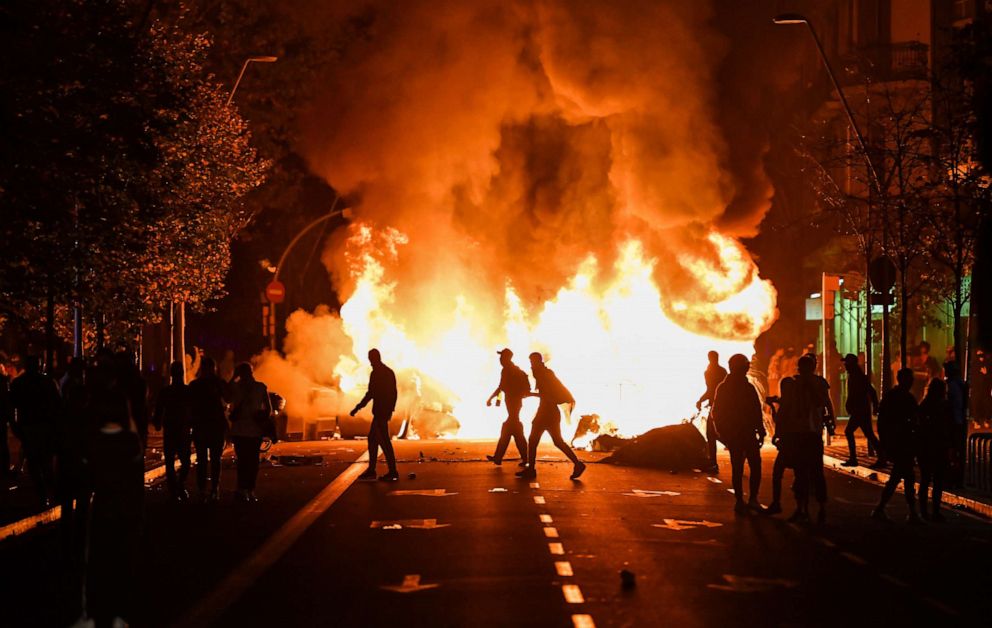
I arrived here in Barcelona in late October, just after a weekend of massive demonstrations, including three nights of violence and destruction.

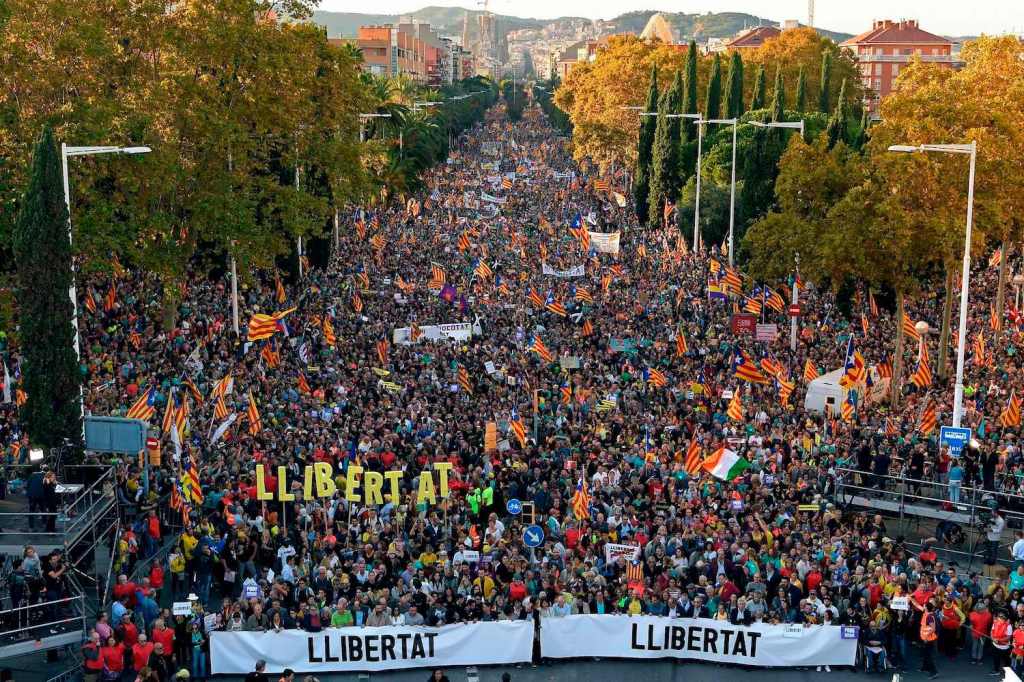
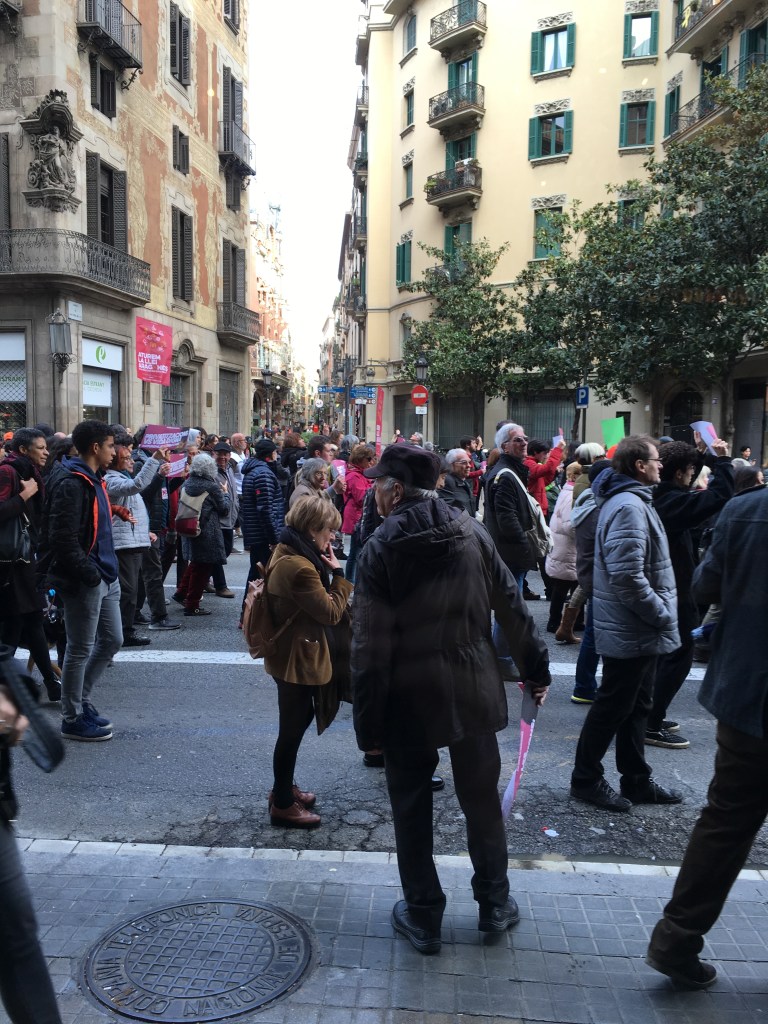
Really large peaceful protests (350,000 – 500,00) like the one above got a lot of attention, and not so peaceful, “anarchist-driven” riots at night had the city on edge.

What’s going on here? Spain is made up of semi-autonomous regions and Barcelona is the capital of the Catalan region. It has its own language, customs, culture, history, and economy, and frequently chafes against national control from Madrid. Sounds kind of like Texas.

In 2017, an “independence referendum” was held here, despite the national government declaring in advance that it was illegal. The result was 93% for independence but with only 43% of voters participating. The other result was that a bunch of local Catalan officials and independence leaders were arrested. They were tried for “sedition”, with the Supreme Court handing down final sentences of 12-15 years in October, touching off these massive protests.

Some of the worst protests were just a few blocks from my apartment here and you can still see the scorched pavement where fires were set. As I rode in from the airport in a taxi, I could see smashed and boarded-up store windows. The level of violence, injuries to police and civilians, and damage to local businesses gave everyone pause. The press reported “professional anarchists” were causing much of the violence (my view: probably funded by Putin 😊 ). An emphasis on peaceful demonstrations has since emerged. The national government has held firm, though, and the ardor of the protestors has abated somewhat. The pro-independence strategy now seems to be to hold daily, small protests that block a major road or occupy a major tourist site for 30 minutes.

The protest shown above just popped up during my morning stroll today. They’re in the middle of a traffic circle and the police were very cool about it, immediately directing traffic to go around them on the sides, and making no arrests that I saw. With regard to planned demonstrations, the American Embassy very kindly posts the schedule, so they can be avoided.

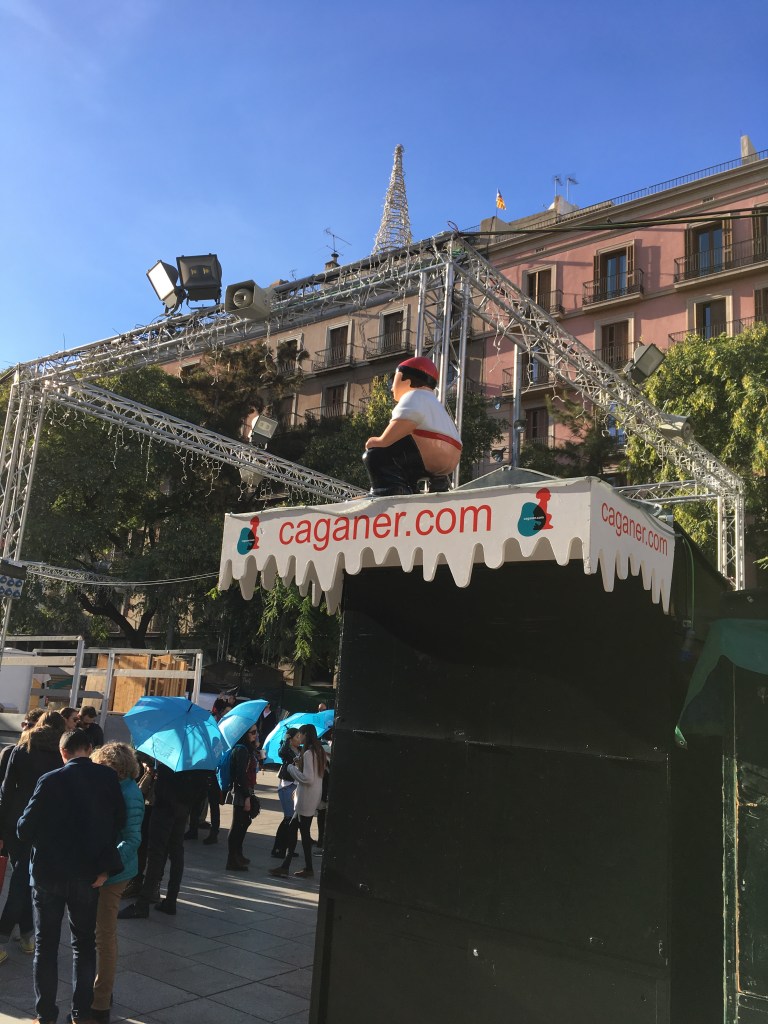
Polls indicate that the local population is evenly split on the question of independence. I’m glad to have missed the violence and hope some solutions can be found. I take heart from the existence of this store:

Solving the European Appliances Riddle

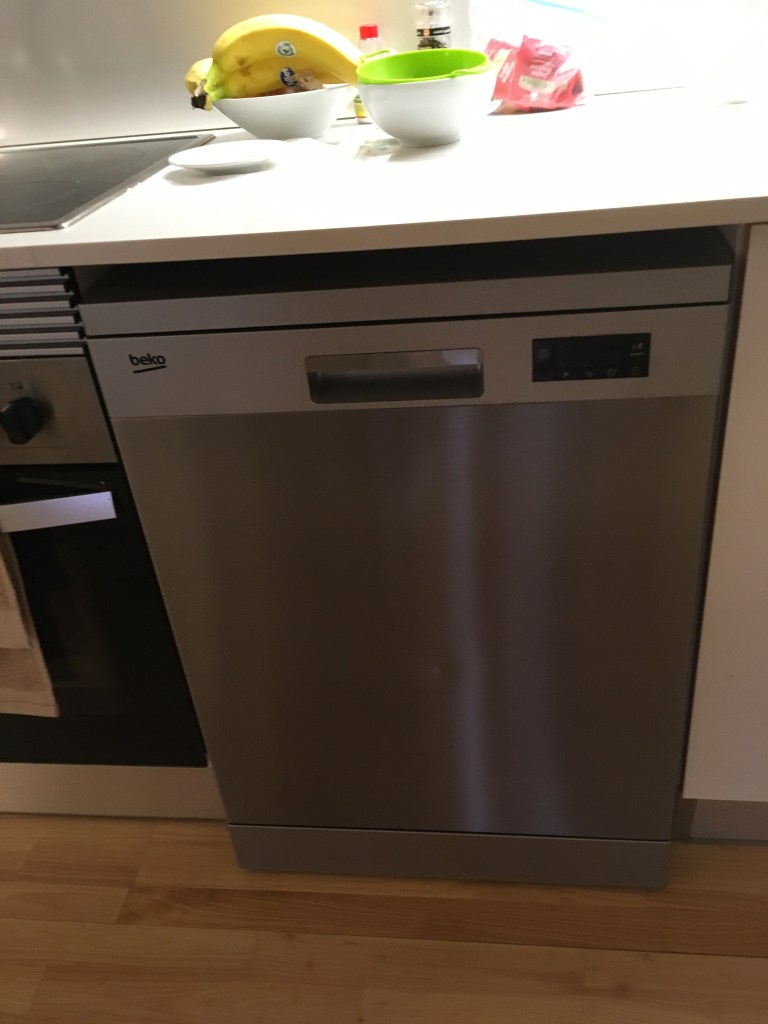
My apartment in Barcelona includes some nice, modern appliances. However, all their controls and instructions are, of course, in Spanish.

For the last 28 years or so, I lived with appliances in Virginia that were pretty primitive by today’s standards, but they worked well for me. However, that left me unprepared for all of the new features found on appliances today. “Water Saving Cycle”? Never heard of it. “Spin Speed Setting”? Same. And so on. In addition, the Europeans have been ahead of the U.S. when it comes to eco-friendly features (though it appears the U.S. is catching up now).

Isn’t that the Play/Pause button? Does this thing show videos, too?

Thank God for the Internet – I was able to dig up User Guides for them, in English.

One prominent difference is load size. The washer/dryer you see above is pretty small, with a maximum 8.8 lb. load. Compare this with a U.S. average washer load size that’s about 50% more. Put two pairs of jeans, a bath towel, some socks in my washer here and it’s full.

Another difference is efficiency ratings. The EU requires appliances to have “efficiency” ratings – for example, a washer’s water, detergent, and electricity usage per load must be disclosed for comparison purposes. Some of this translates into what we would think of as very long washing/drying cycles, 3-4 hours in some cases, per load.

One interesting thing is this washer/dryer has sensors that determine the state of the load and automatically adjust things, like drying time, to get the job done. Nice!

Okay, with the instructions in hand, I was ready to give my Camino duds a good washing. Oops – needed to buy some detergent. This resulted in my spending an inordinate amount of time at the store, reading and translating the Spanish on detergent packaging. That was entertaining!

Once I got the soap powder (I was strictly a liquid detergent guy in Virginia) home, I had few amusing episodes in which the soap was not being used. I’d wash a load, which segued into drying it, but the soap wasn’t used; it was still there in the little drawer! Turned out I set the controls incorrectly and it was pretty much just drying the load (it apparently adds a bit of cold water for wrinkle-prevention while drying, and that made the clothes feel like they’d been washed – one whiff revealed the truth, though).

I’ll pause here so that you can have a good laugh at my washer/dryer naivete. What a Laundry Rube!

In the end, I discovered that Less is More when in comes to setting the washer controls: Clothes in drum, Soap in drawer, Power Switch on (yes – has a separate power switch), push Wash button, then Dry button, then Start button. And voila! 3-1/2 hours later the machine plays a tune something like Yankee Doodle Dandy and my clean, dry, clothes are ready.

Based on my Camino experience, it sure beats hand-washing and then air drying my clothes overnight.

Dogs and Their Owners

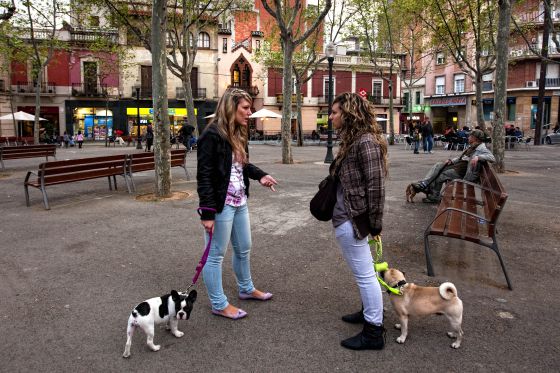
My Barcelona neighbors include a lot of dogs, large and small. They’re well-behaved for the most part and are almost always on a leash, as required by law, when I see them. And, although they pee a lot on trees, door jambs, downspouts, and other vertical things, their owners seem pretty good about picking up the dog poop.

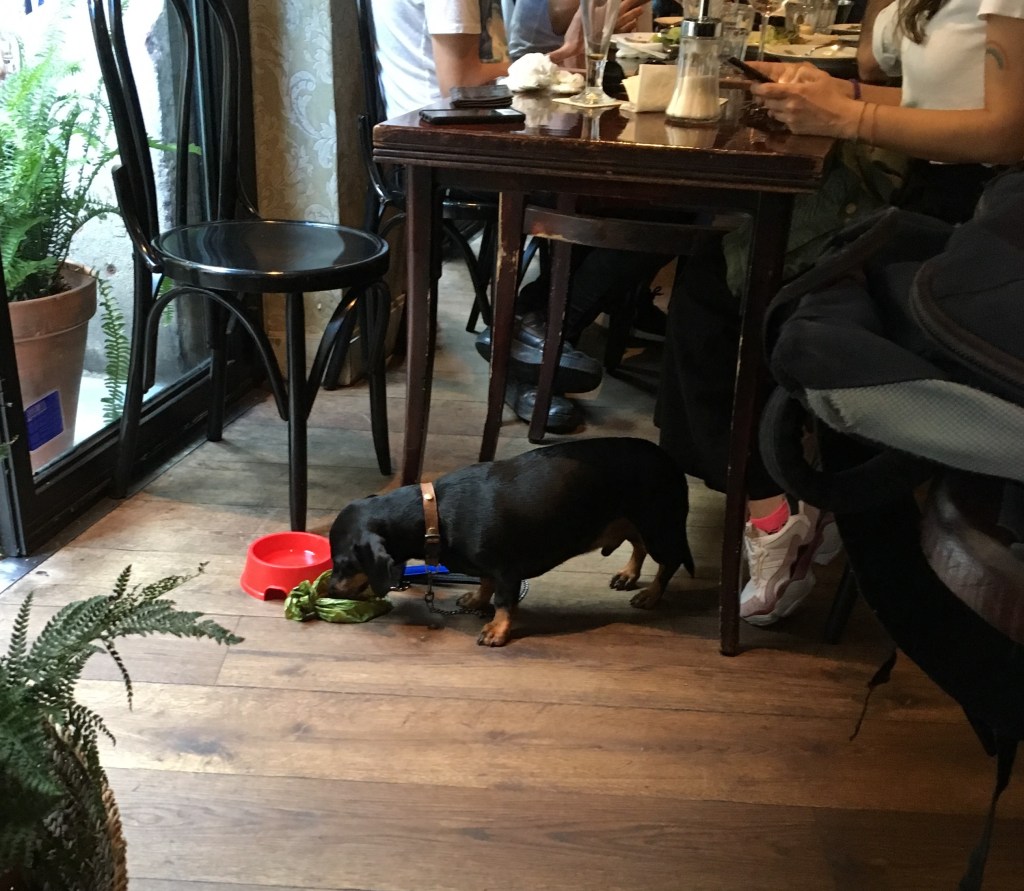
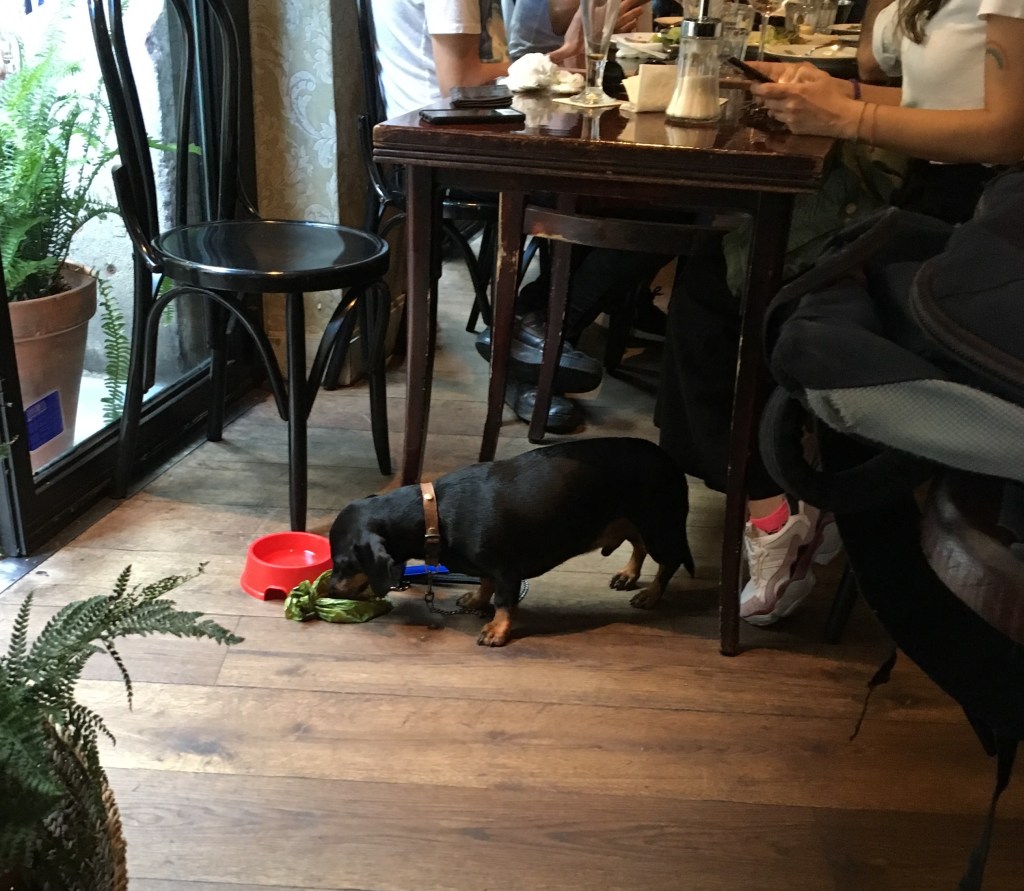
Businesses are pretty accommodating about dogs. The restaurant above, for example, allows them inside and even provides a water bowel, if desired. The city is generally pet-friendly.

I sat inside a cafe last week and watched the waitress serving the outside tables ooh! and ahh! over someone’s dog. She petted the animal repeatedly and he licked her hand, and everyone was happy. Then she came inside, collected some food, and served it, without washing her hands. I made a mental note not to eat there in future.

I almost never hear any barking, which is remarkable given the number of dogs in the area. I never see any cats. There is a store-front veterinarian clinic just down the block, which surprised me. It reminds me of the clinic I volunteered in when I was 12, in downtown D.C. Or rather, the one my mother volunteered me into one summer. My mother’s dream of her son becoming a doctor (for animals) died that summer when I came face to face with the reality that sick animals, no matter how cute, often did to.

Barcelona has its professional dog walkers. It’s amusing to see them pull up for a quick cafe cortado at a bar and have their legs quickly become mummified in dog leashes as their charges swirl around them. They seem to handle getting untangled well; maybe it’s the espresso.

It’s the law here that dogs that go out of the house must be identified either by tattoo or microchip. Dogs are allowed on the subway but must be on a leash and wear a muzzle.

I generally find it nice to have the four-legged wonders around; it brings a smile to my face and lifts me up.

Smokers Galore

There are a lot of smokers in Barcelona. None inside public places like bars and restaurants, thank God, but plenty outside. The many cigarette vending machines display strict-looking signs about having to be over 18 to use them. In one bar I was in, the bartender actually had to flip a switch behind the bar to enable the cigarette machine across the room when someone wanted to use it. Roll-your-own seems popular, too. A pack costs €4.5 – 5 (around $5).

Nonetheless, smoking is still pretty ubiquitous, and the resulting butts are all over the place outside, too. Yuck.

Tabacs, basically tobacco product shops, are fairly common. And, there are what look like marijuana shops. But, is pot legal in Spain? Yes and No. This excellent article spells out the details and there are two pot shops on my block.

Seeds, anyone?

In fact, every time I get in the elevator in my building, the smell of dope is strong, and I often get a whiff on the street. Not that I know anything about that…

Barcelona also has its own Hash, Marijuana, and Hemp Museum which, I understand, is quite a tourist draw (I haven’t visited it, yet).

My Place in Barcelona

The Gothic Neighborhood

My place in Barcelona is a lovely 2nd-floor Airbnb apartment tucked away behind the facade of a old building in the Gothic Neighborhood. The street’s narrow, with five-story buildings, consisting of ground floor retail and residential above. Every now and then the street widens out into a little “park” with trees and benches.

My place is well-situated, near a large central market and several large parks, and between two major boulevards. It’s five minutes walk to the ancient Roman walls of the city, which enclose the cathedral and constitute a major tourist area.

Looking down from my second floor balcony, I see a thriving neighborhood with plenty of old folks with their grocery trolleys, students, parents with their children, tatooed and pierced young people, and a few tourists. Bicycles, scooters (gas-, electric-, and foot-powered), and skateboards, too. Even the occasional car and truck, although it’s tight in places. It’s a nice area, close to all the tourism infrastructure but hidden away from the hordes of tourists. A case of very clever research on my part? Not really, I just got lucky.

People line up here every single day. What are they buying?

Everyone does their grocery shopping frequently, as we can’t load up the back of a mini-van with several weeks worth of stuff as we do in American suburbia. Bread is purchased daily from bakeries that are often cleaned out by 2pm.

Cooked Vegetables!

I don’t understand it, but the store in the photo above sells “cooked vegetables”. Things like garbanzo beans, white beans, and even noodles. Not mixed together, without any sauce or seasoning, just six kinds of basic foods, cooked. Why this is so popular is a mystery to me and I’m tempted to ask someone in line what the allure is.

Post-Mortem Thoughts

I’m taking some time here to discuss how my Camino preparations worked and failed, in the hope that others planning to walk the Camino can benefit.

Advice Bias – It’s great to be able to read the blogs of folks who have completed the Camino and to learn from them. However, you need to apply some critical thinking when doing so. For example,

– What time of year was it when that other person made the walk and when will you be doing it? Any difference will make a huge difference in how applicable the advice is.
– How big is that person? Believe me, a pair of size 14 sandals and XXL clothing takes up a huge amount of space in a backpack (I’m 6’2″ – 220 lbs) creating a totally different packing challenge for me than for someone considerably smaller.
– What’s their fitness level? If they regularly run 10Ks and marathons and you don’t, then perhaps following their scheme of 32 kilometers per day on the Camino is just a bit too ambitious for you.
– How old is that person? Young people have a huge advantage on the Camino. I’m 68 and my joints are as creaky and worn out as those of most people in my age group. Advice from someone much younger/older than you may be less relevant.
– Did they have their backpack transported? It’s easy and cheap to have your backpack driven from one albergue to the next, relieving you of the effort of carrying it, which is significant. Did they do that? Are you planning to do the same?

Training – For seven months prior to leaving for Spain, I was in the gym five days a week, where I spent an hour a day on the treadmill and did upper body weight work every other day. For four months, I hiked 2-3 hours in a national park, with a full pack, one day each weekend. It turned me from a couch potato into a reasonably fit person, but it was not enough. I was not conditioned enough aerobically for the challenge ahead and my feet were not toughened up enough. The first week of the Camino was an exhausting shock. My feet were destroyed, even though I was careful to break-in my hiking boots and used SuperFeet “Green” hiking insoles. If I had to do it again, I’d focus more on aerobics and walking longer training hikes (10-12 miles).

Boots – I wore a great pair of Keen Targhee II Mid-Height boots. They did a great job of for me, did not seem to weigh too much, and were waterproof yet didn’t suffocate my feet. I chose mid-height boots because I wanted good ankle support and, without a doubt, it was very necessary on some of the Camino trails. I replaced my SuperFeet insoles halfway through with generic “gel” insoles that provided much better bottom cushioning. You will reach a point where you can feel every single, tiny pebble on the path through your boot soles and you’ll change the way you walk just to find the smoothest way – that gel insole saved my feet. Do whatever you need to do to provide the most comfortable shoe/foot experience you can! I packed an extra set of boot laces, which I did not need. I also packed some “Boot Balls”, a pair of small plastic balls containing boric acid, used to eliminated boot odor overnight, which I recommend.

Backpack Security – I spent a fair amount of time planning how to prevent someone from stealing my backpack when I had to leave it outside a cafe. Total waste of time and money. I only had to leave my backpack outside twice in 36 days and both times I could easily see it through a window and there were scads of other pilgrims around it. No need at all to lash it to a railing or lock it to a table leg. Mind you, I removed my neck wallet (containing passport, money, and credit cards) from the pack’s top compartment and wore it into the cafe with me. That’s just basic security. Otherwise, don’t obsess over someone stealing your pack or trekking poles. I over-packed with some combination carabiner/locks and Velcro security straps, which I subsequently jettisoned along the way.

Rain Jacket & Pants vs Poncho – I started with the former and ended with the latter. Let’s face it, both of these rain gear approaches will produce the “internal steam bath” effect under exertion and you’re going to wind up wet one way or the other. In the end, I liked the poncho much more because:
– My poncho is hooded, has arms, and is cut to be large enough to go over a backpack. I could pull it out of its stuff sack and put it on in about 10 seconds, without having to take off my pack (or even stop walking).
– Your pack stays completely dry – with a rain jacket, the straps are out in the rain and can wick moisture into other areas of pack.
– I could unzip the poncho front to get more fresh airflow once rain stopped falling.
– I could also slip my arms out of the sleeves, tie the sleeves across my chest, and get even more fresh airflow without uncovering my pack. Returning to full coverage if rain started again was quick and easy.
– In its stuff sack, the poncho took up a lot less than half the pack space that the rain jacket and pants did and weighed less, too.

Yes, a poncho can be difficult in the wind, but mine came down below my knees and I never had a problem with wind catching it. Yes, the bottoms of my pant legs got wet and my socks wicked the moisture, eventually, into my boots. Wasn’t a big problem for me, but you could supplement the poncho with gaiters to prevent this.

Music and Ear Buds – I thought the idea of listening to music while walking the Camino was blasphemy: you’d miss the sounds of nature, you’d be distracted from the Camino experience. Well, not surprisingly, it was great to be able to listen to my music at times on the trail. Yes, the Camino can be boring and music helps. Also your music generally reflects YOU, and I found it useful in helping me concentrate my thoughts about different things as I walked. Note that, by wearing ear buds/phones you’re cutting yourself off from some sounds, like mountain bikes approaching from the rear, and that can affect your safety.

Cell Phone – Having a cell phone with something like the Wise Camino app (which can show you your real-time location using GPS) was essential. The Camino path is poorly marked in places, splits occasionally without much explanation, and may be hard to follow early in the morning before sunrise, even with a headlamp. Being able to figure out where the heck I was and where the path went was crucial for me several times. If you’re a solo pilgrim, it’s even more important. In addition, it was essential to be able to call ahead a few days in advance and reserve spaces in albergues and hostels, especially if I wanted a bottom bunk or a private room. Pilgrim traffic on the Camino is growing every year and I think the days of just showing up and getting a bed are ending.

I also spent some time thinking about packing some fancy and complicated arrangements for plugging in my iPhone charging cable, all of which was completely unnecessary. I had outlets available at all times at night and all I needed with a simple EU plug adapter. I also used a simple Otter box case for my phone, no need anything more bullet-proof.

Headlamp – If you plan to be up and out early in the morning, before sunrise, a headlamp is essential for finding your way. My Camino was in September and October and sunrise came later and later as the days went by, so my headlamp got more of a workout than I thought it would.

Socks – There are a lot of different sock strategies and mine was to wear a single pair of LL Bean boot socks. In addition, I used a scheme that cut my daily walk into logical quarters. After the first quarter, I’d stop walking wherever possible, remove my boots, and give myself a little foot massage. At the halfway point, I’d repeat the massage, put my feet up on a chair, etc. for a few minutes, and replace my socks with a clean, dry pair. I’d hang the “old” socks off the back of my pack to dry as I walked. At the 3/4 point, another stop for boots off and foot massage. Seemed to work well (although I did get some deep blisters early on). I also carried two giant 5″ long safety pins, purchased from Amazon, which I used to hang my socks off my pack.

Toiletries – Some albergues don’t provide anything in the bathroom other than TP. You have to bring your own towel, soap, shampoo, etc. There may not even be paper hand towels near the sinks. I packed both a big micro-fiber camp towel for after showering and a similar small towel just for drying my hands after brushing my teeth. But, don’t pack all the toiletries you would take on a vacation. Don’t pack deodorant, shaving cream (yes, I shaved but I used hand soap), after shave, perfume, cologne, hair gel, etc. I had a manual toothbrush, floss, toothpaste, Lush shampoo bar, razor and blades, folding comb/brush combo, and that was it.

Laundry Kit – I had the clothes I was wearing and one spare set, which meant I was doing laundry every day. Sometimes, the albergue or hostel had a washing machine and dryer, which they charged 3-4 Euros each to use and, which like many European appliances, took forever to run a cycle. I mostly did my laundry by hand in either a provided laundry sink, or in the bathroom sink. This meant I had to carry everything I needed to do the laundry, including a clothesline. Albergues often provided outdoor drying racks or clotheslines which I used when I could but I also got really good at stringing up my own clothesline in unlikely places. I carried laundry soap, two suction cup hooks, a 12-foot line, and eight clothespins. I over-packed with a second kind of clothesline and extra hooks, which I jettisoned along the way. Note that hand-washing stuff and then putting it into a clothes dryer usually doesn’t work well; without the spin cycle a washing machine provides, your clothes will be relatively wet going into the dryer and take forever to dry.

Trekking Poles – For me, an absolute necessity – they kept a stumble from turning into a fall on many occasions. The footing on a lot of the path, especially on the steep inclines and declines, is really tricky and having poles was vital. Not everyone uses them, or even a walking stick, but they really saved my bacon. Be sure to bring extra tips to cover the end points. My poles had cork handles and didn’t have a “shock absorber” mechanism.

Sleeping Bag – I carried a Sea to Summit Traveller TR 750 bag and used it frequently and always when in a bunk bed. It was plenty warm, packed down quite small, was lightweight, and long enough for me. I sprayed the bag with Permethrin before departing for Spain and, despite worrying about them, I saw zero bed bugs.

Extra Stuff – I carried a bag of extra stuff that it turned out I did not need at all. This included extra clothesline, carabiners, a charger-battery for my iPhone, extra ZipLoc bags, extra rubber bands, my own pillow case, trash bag for wet clothes, and a pack of ear plugs. Didn’t use any of it.

I Wish I Had Taken: A pair of warm, waterproof gloves. My hands got pretty cold during extended periods of rain, when my regular gloves soaked through.

The “You Can Buy It There” Myth – When discussing Camino packing lists, I often see this phrase touted as a reason for not packing some things. On the face of it, it’s true, Spain is a modern society with a fully-functional retail system. But, that’s not much comfort when you have a splitting headache at 2:00am and going out to buy something is not possible. Also, products vary widely from country to country and even something as simple as toothpaste can be very different in Spain. You comfortable using Advil? How about Paracetemol, the European near-equivalent? Not so much, maybe. In addition, rural towns along the Camino may be less likely to have what your looking for, or stores that are open when you need something. And, oh yes, stuff like Paracetemol can only be bought in pharmacies; it’s not available in grocery stores (or anywhere else). Bottom Line: if it’s medicinal, lightweight, small, and likely to be needed in a pinch, pack your own.

Thanks again for following along here with me on my Camino. It was an amazing experience. I’m currently living in Barcelona and you can read about that, and my future travels, here on this web site.

Epilogue: In Santiago

20 Oct 2019

Several days have passed since my arrival in Santiago and the end of my Camino. In that time, I presented my Pilgrim Passport at the Pilgrim Office here and received my Compostela, the official certificate of completion:

Not sure who “Josephum” is, but let’s not quibble

Even with my Compostela in hand, I keep thinking I need to get another stamp in my credential.

Not really much room for more stamps…

Spent my last Camino night, the one of my arrival, in The Last Stamp Albergue, to get the full experience one last time. It didn’t fail to deliver: bunk beds, snoring, late night lights, early and noisy departers, tight spaces, communal living, little sleep. I loved it. I know I’ll have dreams about walking the Camino for some time. I already miss the pilgrim community.

My last bunk bed, at The Last Stamp Albergue

I’ve spent several hours per day in the last few days at the plaza in front of the cathedral here. Pilgrims arriving in the plaza have typical behavior: they hug, some kneel, some pray, all are ecstatic. They take pictures of each other, or group shots, and take it all in. Some are very emotional. Some note and photograph the last Camino scallop marker, the “Kilometer Zero” marker on the ground in the middle of the plaza. There’s a lot of great energy in the plaza.
Large tour groups congregate around the plaza and occasionally some really inconsiderate guides put them right smack in the middle of things, for an extended period, where all the pilgrims would like to stand to have a picture – very rude.

I’ve noticed many pilgrims coming back to the plaza, like me, the second or third day they’ve been here, to relive the moment of arrival and watch the joy of new arrivals. When I’ve returned to the plaza, I’ve tried to help arriving pilgrims by taking their group photos and giving them directions to the Pilgrim Office.

“Where did you start?” is a common pilgrim question and those of us who can answer “St. Jean” get immediate respect. One pair of pilgrims even said to me in response, semi-jokingly, “We are not worthy”. The long walk from France is apparently the King of the Caminoes (there are other routes, all shorter).

Meanwhile, the cathedral itself is undergoing renovations ahead of the 2021 Holy Year celebration and access is limited. I went through but declined to get in the long line to “hug” the statue of Saint James. The gold leaf in the tiny part I was able to see was dazzling. As I’ve done in most churches I visited along the way, I lit a candle in memory of my late sister.

I’ve been thinking about the contributors to my, and other pilgrims’, success. The owners and staffs of small cafes across Spain deserve to be mentioned and given our thanks. They put up with our backpacks and wet ponchos, our trekking poles and muddy boots, with our poor or non-existent Spanish language skills, our inability to count well-marked Euro coins, with our practice of removing our boots (and even changing our socks) in their dining areas. Most did this politely and professionally, many with good cheer and encouraging smiles. They fed us, served us endless cups of cafe con leche, provided dry, warm shelter and restrooms, and cleaned up the messes we left behind. They held onto the hats, cell phones, wallets, poles, and other stuff we left behind, until we returned to claim them. They decorated their establishments as Cowboy Bars, Knights Templar forts, 1950s clubs, and other imaginative places. They were there when we most needed to sit down, needed to put our feet up, and desperately needed to take a break. They called a taxi when we were injured or couldn’t take another step. Yes, the Camino economy keeps them, and sometimes their towns, alive but we still owe them our deep gratitude.

So, what was it all about? The inner stuff, the accomplishment and achievement, the challenge met, sure. I think it was also about the pilgrims I met, and met again later, along the path. There was something spiritual going on there for me. The unlikely connections and can’t-be-random interactions with people from all over the world kept me in tune with the special moment of what I was doing on the Camino. This walk also came at a transitional time in my life, my retirement, and that colored my views and conversations, too.

That’s what I have for now, though I expect new things will bubble up in the next few months. This was often a difficult and uncomfortable undertaking for me and I’m glad that it’s over. And I so very glad that I did it.

I think I’ll have one more post in this series, a “Camino post mortem”, where I review what things I packed that I shouldn’t have, and the decisions I made that were wrong or meaningless. Hopefully it will provide some guidance to anyone contemplating their own camino.

Stage 36: Lavacolla to Santiago

17 Oct 2019

Well, this it folks, my final 10 Km Camino walk into Santiago. The albergue booted us out by 8:00am, a good 40 minutes before sunrise, so it was headlamp time as I set off.

I thought there were a bunch of pilgrims ready to go out the door with me, but I found myself alone on the path and didn’t see another pilgrim for 90 minutes. Which was great: I had the Camino all to myself for a while on my final day.

Showers were forecast and, after yesterday’s monsoon conditions, everyone was braced for more of the same. Somehow I was spared and, despite everything around me being freshly wet, I never got any precipitation. Camino magic!

Pilgrims sometimes weave stuff into fences

I motored along at a slow pace and was soon walking suburban and then city streets. Then this appeared:

Yes!

And then I and a gaggle of pilgrims ahead of and behind me entered the city’s historic district, and the sun came out. In the distance we could just see the cathedral spires:

There were quite a few normal tourists in town, too, so things got fairly crowded. And, of course, there were stairs. But wait, these went down to the cathedral plaza! Yes, there is a God after all!

The final scallop shell at the Zero Km mark in the plaza

I took the obligatory selfie in front of the cathedral today – I was a bit overwhelmed at the time. But I made it!

I’ll be in Santiago for three more days and will post more here once I have a little time to process it all. So stay tuned. But right now I want to thank all of you who followed the blog and encouraged me with your presence and comments – it has meant so much to me!