As introduced in my last post, today was Pancake Tuesday, which was a bust. I only found one place, in a far away south Dublin suburb, doing something special (free pancakes all day) and two places that actually serve crepes, not pancakes, offering specials. I inquired at a few but none of the other more central restaurants that sell pancakes every day for breakfast were making a big deal out of it. The grocery stores were offering sales of frozen toaster pancakes, but that was it. I wasn’t really that excited about mass carbo-loading pancakes with sugary maple syrup anyway.
I note that I will just miss the Dublin visit of English Royals William and Kate, who arrive the day after I depart next week for Lyon. Too bad, as a confirmed monarchist, I would have loved to stand in the crowd and get a brief glimpse of them. Maybe next time?
It seems that the Six Nations Rugby competition is now a possible Coronavirus victim! There’s talk of canceling the Ireland vs Italy match on March 7th here in Dublin. A good piece of Northern Italy is locked down right now and, as a result, the Irish are not sure if they’re keen on planeloads of Italian fans coming to town. For once, my timing might be good, getting out of town just before the storm. So far, there have been zero confirmed cases of Covid-19 in Ireland.
Even the Venice Carnival was cut short!
Despite the snow and ice warnings issued for parts of Ireland today, the plants in St. Stephens Square are insisting on an early Spring. There’s nothing quite as refreshing as a nice park in the middle of a city. I’m now getting in two laps a day, for more than 9,800 steps, and it’s been a pleasure watching the park wake up.
I’m enjoying my last week in Dublin and on my short list of last-minute things to do will be taking the Jameson DistilleryExperience on Thursday. Is this a trend? It seems no one offers a “tour” anymore, now it’s an “experience”. Hmm, I’d be keen to know if the ticket price for an Experience is 20% more than the price for an old Tour.
Wasn’t it Jimi Hendrix who recorded the immortal words: Are You Experienced? Let’s see if I can say that three times quickly after my distillery visit. Stay tuned!
This coming Tuesday, February 25th, is apparently Pancake Tuesday, the day the Irish all go flipping crazy for pancakes! Pancake Tuesday (or Shrove Tuesday, to give it its proper name) always falls before Ash Wednesday which marks the start of Lent. In the “old days” the basic idea was that, before the fasting and abstinence of Lent started, all the rich foods in the house had to be used up. The pancake was a good way to combine them all. In the U.S. this may or may not manifest itself as free pancakes at your local IHOP. Here, it’s a bit more symbolic now but, even so, ready-made pancakes are available in grocery stores next to the bread shelves. I’ve no idea how good a mass-produced, pre-packaged pancake could be and I’m not really interested in finding out. Local breakfast spots are apparently doing some pancake specials Tuesday and I will investigate.
As I mentioned earlier, we’re getting wild weather here. For example, this afternoon I left the apartment for my daily walk in bright sunshine and clear skies. Sure, there was a stiff wind and temps were in the low 40s but the sun really felt good. Within the course of my 70-minute walk, it clouded over completely, rained briefly once then stopped, snowed and hailed for about 10 minutes then stopped, rained briefly again, and on my return it was sunshine and clear skies again. Very entertaining but tough on those who don’t dress appropriately. The weather forecast “sunny and clear” was, as they say here, complete shite.
As your keen observer of homo sapiens’ behavior, I note some interesting fashion trends. For women, Doc Martens combat boots are back (or are still) in fashion, as are high-water pants with a single cuff roll but no socks (don’t they get cold ankles?). Ripped and torn pants are big and so are leggings (haven’t they heard of LANP? Leggings Are Not Pants!) – again, chilly, no?
Also, shiny, tight, stretchy pants that simulate leather are popular, if not always attractive. Young guys prefer hoodies, tight jeans, and full, brewer beards, while goatees are not seen on anyone under 50.
The “trainer” (or “running shoe” in U.S. parlance) is the shoe of choice for guys, who often do not deign to zip or button their coats, the better to show of their scant tee shirts and showcase their frost-bitten manliness. Flat caps, which tend to blow off, are not as popular as wool hats. Everyone wears down coats and scarves.
I’ve been doing some research for short term lodging in the second half of 2020. I marvel at the way some hosts choose to advertise their places, for example, when their listings include:
– No photos of the space at all – Photos that are all out of focus – Only six photos, three of which are of the patio, one of which is of the Town Hall – Photos taken at night with poor lighting, so you can’t see anything – Photos taken while someone messy was living there, showing their dripping toothpaste in the bathroom sink and their underwear on the floor – Photos taken without cleaning first – shower mold, anyone? – Photo of a bed that fills the entire room – you can only get on it from its foot – Photo of the bed, which consists of a mattress on top of a stack of dirty- and worn-looking shipping pallets – splinters, anyone? – Photos of apartments that are jammed with every kind of dust catcher and knick knack imaginable, with not an empty horizontal space anywhere.
Yes, it’s not all fun and games finding acceptable accommodations!
My final two weeks in Dublin begin tomorrow so I’m enjoying the city while I can. The weather has been a bit weird lately, what with two named storms (Ciara and Dennis) in a row hitting Ireland and the U.K. We’re under a Yellow warning today for downpours and high winds but the early part of the day was sunny and clear, and just a bit windy. As I finished up my daily walk through town, the clouds came in and the torrential rain started, then stopped again. On the other hand, England has been getting pasted with hurricane-force winds, 100-foot waves, and lots of flooding. Luckily, my local, The Celt, is just around the corner and I should have little trouble getting to my Sunday pint of Guinness in a few hours.
No sign of the “bomb cyclone” here in St. Stephen’s Square today.
As for the popular Coronavirus, only one person has a suspected case here in Dublin and a few dozen other travelers have tested negative. Nonetheless, as elsewhere, face masks have sold right out in Ireland, though I don’t see many people wearing them on the street. I bought a few masks myself weeks ago before the real shortage began. Sadly, the simple mask type that I (and most others) have is not really supposed to offer much protection against viruses. But, what the heck, I hate to be the last one to the party. Regardless of the mask type, my beard is not really conducive to a tight facial seal anyway, so having a mask at all is mostly wishful thinking.
Do you have yours?
There’s an interesting article in the Sunday Washington Post today about the flood of requests hitting mask manufacturers in the U.S. and their inability to keep up with demand.
In other news, after testing out the lattes around the city, the winner is Esquire Coffee, in the shop right below my flat. The losers include Starbucks, Costa, Insomnia, Frank & Honest, and a couple of independents. I’m not sure what it is, but Esquire’s latte is tastier, richer, and creamier than the others. Now, I’m a relatively new coffee drinker (just in the last four years) and not even a daily consumer, so my palate is admittedly pretty green. Nonetheless, as an official “hedonist with class” (thanks, Arthur Hanket) you can trust me on this!
The glorious Esquire Coffee latte
Parlez vous française? As mentioned in a previous post, I’ve been spending about an hour a day brushing up on my French, in preparation for relocating to Lyon, France in a few weeks. I’ve been using the free DuoLingo site, which is useful but not quite as good as an expensive course like Pimsleur. In years gone by, when planning to stop in France while on vacation, I would prepare by listening to Pimsleur CDs while commuting to and from work, and the courses were great. I’m sure drivers in adjacent cars were sure I was a nut job, talking to myself as I drove, but Pimsleur served me well. How expensive is it? Their online courses, levels 1-5, cost $575, which is not in my budget these days.
Last Saturday, I wound up watching the Ireland vs Wales Six Nations rugby match, in a pub full of Wales supporters! It seems that they all came to Dublin just to wear their red Wales jerseys, watch the match on TV in a pub, and make a lot of noise.
This is an interesting phenomenon: I know people who would drive from D.C. to Baltimore to watch the Redskins play in the Ravens stadium, but I don’t know anyone who would drive there just to watch the game on TV in a bar. Remember, these Wales supporters had to take a ferry or airplane across the Irish Sea to get here, so it was no small effort. No matter, every pub on my block was stuffed with red jerseys, including my local “The Celt” which was just too jammed, so I found myself at O Shea’s across the street.
Despite Wales being heavily favored, Ireland won convincingly, 24-14. The Welshmen took it well and didn’t rip up the place. Marvelous sport rugby: during the match the Head Coach, wearing a suit, is up in a booth rather than on the field, with a camera on him all the time, doing little but watching and reacting to plays.
Saturday was also National Election Day here in the Republic of Ireland. Polls were open from 7am to 10pm and it was hoped that the new weekend voting day would increase turn-out. Sadly, turn-out may have been stunted by lousy weather and was actually down a few percentage points (62%) from the 2016 election. Saturday voting still seems like a good idea to me.
Interestingly, vote counting did not start until 9am Sunday (giving poll workers a night of rest first) and Ireland uses a Ranked voting system, so voters mark their 1st, 2nd, 3rd, etc. choices. If no candidate is the 1st choice of more than half of the voters, then all votes cast for the candidate with the lowest number of 1st choices are redistributed to the remaining candidates based on who is ranked next on each ballot. Some U.S. states have used ranked voting for some of their primaries, notably the Democratic Party in Virginia.
While I’m in Dublin, I thought I’d check into whether or not I’m eligible for Irish citizenship. If I had an Irish (EU) passport, my concerns about certain visa limits would be nearly erased. My great-grandfather was born in Ireland in 1852 and emigrated to the U.S. so I might be eligible.
My timing is terrible, though, as about half of the U.K. population has gotten the same idea, what with the threat of Brexit in the last few years, so the Irish bureaucracy that handles applications is swamped. Being physically in Dublin was no help at all as I found out all of this is handled by phone and through snail mail. And forget looking up my relatives online in an official Irish citizens database – as it stands now, I can pay about $300 and wait 9-12 months to find out if I even qualify to apply! As part of that I have to furnish official copies of birth and death certificates, some from more than 100 years ago. Yeah, right.
Did you watch the Academy Awards on Sunday night? My friend Robert, with his impeccable taste in movies, urged me last month to see Parasite. It won both Best Picture and Best Foreign Picture on Sunday, and I discovered it was already playing at the Irish Film Institute here, so off I went to see the Tuesday matinee. Bless the Senior Discount – it only cost €7.50 – and I enjoyed a large, modern, well-equipped, and nearly empty theater for my viewing pleasure. No popcorn, but they did have a nice cafe and bar for a pre-show lunch. Parasite is a subtitled Korean movie, a dark comedy about families at opposite ends of the economic scale and the effects of greed. The ending was a little unsatisfying but I still recommend the movie to you if you haven’t seen it. It didn’t win Best Picture, etc. for nada.
And, speaking of foreign languages, I’ve been brushing up on my French and doing my city research in anticipation of moving to Lyon, France in early March. Ça va bien?
Belfast was where the ill-fated RMS Titanic luxury ocean liner was built. In the late 1800s and early 1900s, Belfast was a major shipbuilding port and the primary company, Harland and Wolff, employed 15,000 people. The dry docks, quays, and other facilties are now gone, but not forgotten; a major attraction in Belfast is the Titanic Experience Museum.
This cool building is the home of the museum and it sits right at the site of the now-gone dry dock where the Titanic’s keel was laid and its hull constructed. The outline of the ship is etched into the surrounding pavement, and the building has a hull-like shape and titanium cladding. While in Belfast, Marti and I spent a very enjoyable two hours here. Admission was £16.50, with a senior discount. We found the audio guide to be completely unnecessary.
The museum is very well laid out and exposes you first to the industrial and social foundations of the city in the early 1900s. In addition to being home to a shipbuilding empire, it was also had numerous linen mills, both of which employed a large, poorly-paid, uneducated, workforce. The exhibit materials and technology are first-rate and very professional in presentation, with multi-media displays worked nicely in among photos, artifacts, and printed text on the walls.
The rise of the shipbuilding industry and the motives behind the building of the Titanic are presented. Interestingly, the ship was built primarily to transport 3rd Class passengers (more than 1,100 of them at a time) who were part of the wave of Irish immigration to the West, and the revenue from a small number of 1st and 2nd Class passengers was considered icing on the cake.
The museum explains the process of building the ship: laying the keel, adding the ribs, attaching hull plates, and installing engines, propellers, and anchors. This is very well done, using models and videos. This includes a ride in an amusement park-type car through a suggested shipyard and the hull that injects a little Disney into things. It’s brief, informative, and not too silly; if anything I wish it had been longer.
1st Class stateroom
Once launched into the water in 1911 (an event attended by over 100,000 people – an astonishingly large crowd in those days), the Titanic spent a year being fitted out with its interior facilities. The museum provided neat full-scale examples of the 1st, 2nd, and 3rd Class accommodations.
The virtual tour rose upward, deck by deck
In addition, a wonderful immersive video tour of the ship’s interior, from top to bottom, provided a great sense of where things were and their scale. Exhibits of artifacts of everything from fabrics to ropes compete for your attention. Film of the actual launch, sea trials, and formal dedication ceremonies are presented, and engineering drawings and large scale models are on display. There are even “touchable” samples and thoughtful exhibits aimed at children.
The museum is easy to move through and allows you to skip things like the ride if desired. We encountered no bottlenecks, even with several buses of school kids on the premises with us.
Sadly, we all know what happened in the end and it’s treated respectfully and thoroughly in the museum, but without sensationalism. Less well-known, at least to me, was the outcome of the investigations that followed, resulting in numerous changes being made in maritime safety regulations for passenger ships. For example, that there be enough lifeboats to accommodate all passengers, and that radios be manned around the clock. A full-scale replica of one of the Titanic’s lifeboats, to contain 40 people, is on display and it was very small. I couldn’t imagine being in it with that many others in open ocean water.
A theater in the museum provides film coverage of the modern day discovery of the Titanic wreck on the ocean floor and an exhibit contains some of the artifacts retrieved. Another exhibit looks at the many books, films, and legends the Titanic has inspired, and a final one discusses modern ocean exploration.
Outside the building you can walk around on the outline of the Titanic in its former dry dock area, as mentioned earlier, and also see examples of full-scale engineering outlines of various ship components (hull plates and such) etched into the pavement.
The Titanic Experience Museum is excellent and Marti and I enjoyed it very much. I recommend it to anyone visiting Belfast. I note that there are two Titanic museums in the U.S. and their locations – in Branson, MO and Pigeon Forge, TN – may be a reflection of their quality.
The Wikipedia entry for the RMS Titanic is especially good and I also recommend it to you.
Marti’s friends Marie and Kevin invited us to visit their hometown, Belfast, so we took the 2-1/2 hour train trip north for a long weekend. Like trains everywhere in this part of the world, the ride was a comfortable and very pleasant experience. There was no indication whatsoever at the time of having crossed a border, from the Republic of Ireland into the Northern Ireland (the U.K.).
Brexit occurred while we were there and, as Marti remarked, we “went to sleep in the E.U. and woke up in the U.K”. The Irish border, both between the Irelands and between Northern Ireland and the rest of the U.K remains a significant issue for negotiation now that Brexit has occurred. There appeared to be no Brexit celebrations, of the kind seen in London, in Belfast.
The Tesla Model 3
Belfast is the capital of Northern Ireland and is a compact city of 311,000. Its 19th and 20th century shipbuilding and textile industries have given way to aerospace, defense, and high-tech firms.
Kevin picked us up at the rail station in his Tesla Model 3 and riding in it was a really fun and interesting experience, including an episode that left me laughing so hard I could hardly breathe. More about that later.
One practical matter we noticed right away was that we had to use pound sterling banknotes in Belfast. These are similar but, oddly, not quite the same banknotes as used in the rest of the U.K. They’re printed by four different banks and aren’t accepted by merchants in other U.K. areas. For example, in London you’d have to exchange them at the Bank of England. The sterling coinage, however, was the usual and is accepted everywhere in the U.K. VISA and MasterCard (but not American Express) cards were universally accepted.
Kevin and Marie have a beautiful home and made us very welcome. Though Belfast natives, Kevin’s job has seen them live in places as varied as Paris and Portland, Oregon, so their accents have moderated. Not so with others; we had a cabby one day that gave us his opinion of the IRA and “The Troubles” and I could barely understand a word.
Speaking of cabbies, we took a “gabby cabby” black cab tour one day. This was our own private tour, in a roomy black cab, through the sectarian areas of Belfast, and thankfully Sean, our driver, was easy to understand. We saw large murals of local heroes and movements painted on the ends of apartment buildings and the “peace walls”, and learned from the driver all about “The Troubles” associated with them.
The Peace Walls separate unionist (pro-U.K. / Protestant) and republican (pro-independence / Catholic) neighborhoods. They can be as tall as 45-feet (to prevent firebombs and other projectiles from being tossed over them) and have street gates in them that are closed at dusk. The gates weren’t even regularly opened in the daytime until just a few years ago! This is definitely not some last-century strife, now forgotten.
Bonfire structure ready to be burned
Belfast is also famous for its “bonfires”. These resemble nothing like the small bonfires of my youth. They’re incredibly large structures built of thousands of stacked shipping pallets and often loom over the surrounding buildings. They’re lit to celebrate the victory of Protestant King William of Orange over Catholic King James II at the Battle of the Boyne (1690). People often toss in anything they want to get rid off, like cast-off furniture and old tires. The danger to other buildings is real and, needless to say, the fires increase air pollution. Yet they persist.
We also learned, sadly, that schools remain segregated by religion and even the teacher colleges are similarly segregated, so future generations do not mix with each other. Overall, the cabby tour amplified and expanded on what we’d learned at the GPO museum in Dublin, took 90 minutes, and cost £25 each – well worth it.
We went to the Lyric Theater one night, for a very good performance of Trad. The small space put us right on top of the action and the Irish accents were very accessible. The play was a bit in the “Waiting for Godot” vein and, like a lot of good theater, it really made us think: we were all discussing details and “what it meant” for several days thereafter.
Trad at the Lyric Theater
We padded our days with trips to the Ulster Museum and saw nice exhibits of Celtic artifacts, art, artifacts from a sunken Spanish galleon (gold!), and “The Troubles” (tying in with the Dublin GPO exhibit and our gabby cabby tour).
Recovered Spanish silver and gold coins
We had some really excellent meals at local restaurants like the Ginger Bistro and, our hostess, Marie, is also a wonderful cook. I’m now, back in Dublin, on a bread-and-tea regime to try to recover my waistline!
Finally, back to the Tesla. It’s truly a technical marvel and I was very impressed with it. Among its many amazing features, Kevin revealed that it has a “Toy Box”: a collection of quirky apps. One of these is called Whoopee Cushion and, yes, it produces farting sounds from any of the seats. There’s a selection of varied fart “styles” (I’ll leave that to your imagination) to choose from and the sounds can be set off randomly or when the turn signals are used. I admit to succumbing to gasping, adolescent hilarity as Kevin put the app through its paces. The Whoopee Cushion – timeless humor, in a space-age car.
My friend Marti arrived from Paris and we went into fun Tourist mode. She has always wanted to do an Irish Whiskey Tasting, so we went to the Irish Whiskey Museum on Grafton Street (the main tourist drag, south of the river).
Our guide, Andrew, conducted us and a dozen others through the four floors of the townhouse and gave us a great education in whiskey making. Also, at the end, in whiskey tasting, with the four samples shown above. Marti and I both liked the “pot still” varieties best. It was surprising how much of a buzz you can get from a few small tastes. I think the tasting should have been organized from the top floor down rather than the reverse – it was interesting negotiating our way down four flights of steep stairs after the top-floor tasting, at the end of the event.
We managed to get out of the gift shop with a sack full of miniatures and gifts Marti wanted to take back to Paris. Overall, the tasting was a nice experience and, because it was not at a specific distillery, we got to hear about and taste a range of whiskies. Not bad for €13.50 each (we got a double discount for being seniors and for booking online). If you’re in Dublin, I recommend this.
During the week we met up with Marti’s friends Kevin and Marie, from Belfast, and enjoyed several meals and a tour of the excellent museum in the basement of the General Post Office (GPO). This visit provided the seeds of our understanding of recent Irish history and intersected again and again with exhibits and landmarks we were to see in the coming week. The museum exhibition covered the Easter Rising (1916), the War of Independence (1919), the Irish Civil War (1922), “The Troubles” violence (1969), and the Good Friday Agreement (power-sharing for Northern Ireland – 1998). To review again: the Republic of Ireland (the southern part) is a member of the E.U., while Northern Ireland is a part of the U.K. You may remember that Northern Ireland endured religious strife, IRA terrorist bombings, and British repression. I also recommend this excellent exhibit.
Why is the museum in the GPO, you may ask? During the Easter Rising, the post office was a strategic rebel target (in order to cut off communications with Britain) and the rebel HQ. The original bullet-riddle portico remains today but the rest of it was destroyed by British shelling, and was rebuilt.
After living in Dublin for a week, I’m getting into the Irish groove. I’m living north of the river, near The Spire, a 390′ tall chrome needle that sticks up in the middle of Connelly Street. West of Connelly are pedestrianized streets with all the big name department stores, mini-malls, chain restaurants, and buskers. To the east, where I am, are neighborhoods with a slightly lower socio-economic profile: lots of discount stores, tattoo parlors, pizza and kabob shops, pubs, and down-market grocery stores. There’s a fair Polish presence, too, with Polski Skleps (Polish stores) seen and eastern European accents overheard. It’s a grand way to spend six weeks. The weather has been mostly in the 40s and overcast.
The view from the rear of The Celt
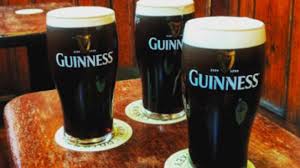
As you may know, I like a good pint. The pubs in my neighborhood are very traditional and my local, The Celt, is no exception. Guinness is universally available but there are also offerings on tap from local breweries (draft lagers, not hand-pumped ales) and lots of colorful decorations referencing Ireland’s history, rugby, and music. Booze bottles are suspended upside down behind the bar, with one-shot dispenser nozzles. Smoking is not allowed, American Express is not accepted, and “anti-social behavior” is not tolerated. The staff is generally warm and welcoming, and stools at the end of the bar (where I like to sit) are often already taken by the pub’s hardcore regulars. I noticed that IPA here often means “Irish Pale Ale”.
The U.S. is well-liked here, as evidenced by the American flags on pub walls and music on the speakers (including Frank Sinatra and Tony Bennett). John F. Kennedy is still revered, and his death memorialized. The image below shows a JFK Memorial album and a clock stopped at the exact time the fatal bullets were fired in Dallas in 1963.
There is no sales tax here and self-service cash registers (the “till”) may round your bill up or down if they have no pennies to issue as change. For example, I paid €1.50 for a €1.49 item and got nothing back. If I want to go to the management office, I can get my penny, but I presume most folks don’t bother. Probably adds up nicely over time for the company.
Food is not cheap here in Dublin. A Guinness may be only €6.50 but fish and chips at lunch will set you back another €16.50. On TV, I saw a Domino’s Pizza deal for two medium pizza’s: in the U.S. that deal is $8-10, here it’s €24 or about $26! The Starbucks-style Esquires Coffee shop in my building serves up a large Coffee Latte for €3.65, which is tolerable occasionally. I have to be careful about eating too many meals out!
I managed to get over to the famous Temple Bar area yesterday afternoon, named after the ancient Temple family and the sandbank reclaimed from the river on which it stands. Adding to the confusion, the “Temple Bar” is also the name of a famous pub in the area. Plenty of opportunities for misdirection after multiple pints, mate. The Temple Bar pub is a sprawling place of many rooms and floors, with live music even at 1:00pm on a Monday. The area is notorious for raucous partying at night but that’s not really my scene.
At the Temple Bar
My friend Marti arrives from Paris on Friday and she and I will be playing tourists with some Irish friends of hers during the weekend, which will be fun. More on that later. Cheers.
Dublin is a relatively compact city and it’s easy to walk about (cold and wet weather, or too many pints, notwithstanding).
Like most cities, Dublin is well-equipped with taxis and there are a lot of conveniently-located cab stands. Uber here operates solely as a taxi and car service hailing system (private cars may not pick up riders for money). Fares in town seem to be inexpensive and using Uber still eliminates the exchange of cash for payment. Another difference: the Uber app offers no mechanism for tipping when a ride is completed here.
Dublin’s LUAS Tram
There’s no subway system but there are street-level trams, called LUAS, a transportation mode that I like. They’re quiet, offer nice views of the city, and are powered by overhead electrical lines. The refillable Leap card is used to pay for rides.
Tram system builders have some infrastructure choices, though: trams in cities like Amsterdam put all of the ticketing mechanisms in the tram cars, which means a certain level of expense in the rolling stock.
Top-up machine, left, and tap-on, tap-off sensor, right
Here in Dublin, the fare card top-up machines and tap-on, tap-off senors are on the sidewalk at the stops, not in the cars. This shifts the expense to every tram stop. I think here that translated into fewer stops being build, which is too bad. I’ve often found walking to nearest tram stop to be more than half the distance to where I’m going, so I might as well just walk.
There are also traditional buses here, but they have some strange routes and stop locations, so once again I’ve found walking in many cases is the better choice.
The Airlink Express bus coming in from the airport was something of a surprise: instead of a Greyhound-style tour bus, with cargo bays below and seats above, it was more like a double-decker sightseeing bus. Half of the seats on the lower level were replaced with luggage racks, leaving too few seats and too narrow aisles. That made it difficult for riders with multiple and/or large suitcases (like me) to maneuver. However, the price was right (€7), the ride only took 20 minutes, and I was set down two blocks from my flat.
Private bicycles seem to be popular and there are lots of special racks and lock-down railings provide for them. There are public bicycle rental schemes but they don’t appear to be very widespread, at least I haven’t seen many docking stations for them. One very noticeable bicycle-riding practice: bicyclists here stop and wait at red lights!
I’ve also seen fewer motorcycles, Vespa-type scooters, and e-scooters (Lime, Bird) here than I expected but that could be down to the Winter weather. E-scooters are relatively unregulated here and their numbers are said to be growing.
My verdict: walking, when you can, is the best way to get anywhere. But you already knew that.
I’ve just wrapped up five weeks back in the U.S. visiting friends, celebrating the holidays, and taking care of annual health check-ups. The plunge back into driving a borrowed car and navigating suburban Northern Virginia was fun at first, but now I’m more than ready to pack my bags and take off tomorrow. First stop: The Republic of Ireland’s capital, Dublin. I have some Irish ancestry and have always enjoyed my visits to the Emerald Isle.
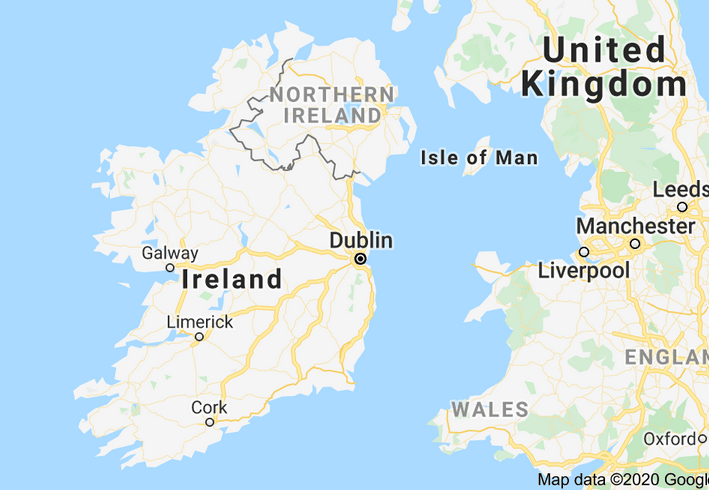
Let’s review: The Republic of Ireland (Dublin, Galway, Limerick) is the southern, larger country on the Irish island and is a member of the European Union. It’s not to be confused with Northern Ireland (Belfast, Derry), a separate country that’s part of the United Kingdom. And, no, we’re not going to discuss what happens to all that due to Brexit now.
I’ve been to Ireland twice before, once for a long weekend in Dublin and once, with my daughters when they were youngsters, for a week’s driving adventure along the western coast, that featured the Cliffs of Moher, traditional music in pubs in Doolin, the vast Wasteland, and the Galway Arts Festival. An adventure it was, too, what with driving on the left hand side of narrow, shoulder-less roads and dodging road-hogging tour buses and lorries.
I’ve booked a nice flat for the next six weeks in the center of town, north of the River Liffey, near Connelly Street but just outside the really touristy zone. I’ll be posting my usual observations about food, drink, and people, and I hope you’ll continue to enjoy my scribblings here.
And, naturally, I’ll be investigating the old adage that “Guinness always tastes better in Dublin”. Inquiring Minds want to know! Sláinte!