Day 1 – To Auberge Borda

Saint Jean Pied-de-Port to Auberge Borda – 8Kms, 17,763 steps

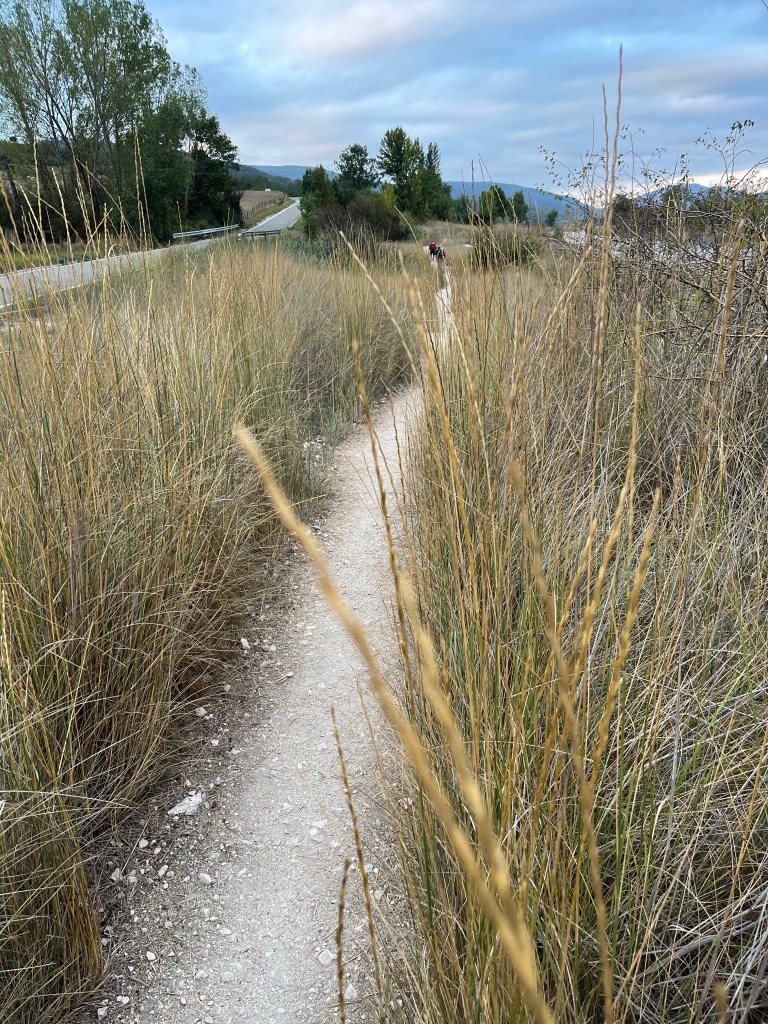
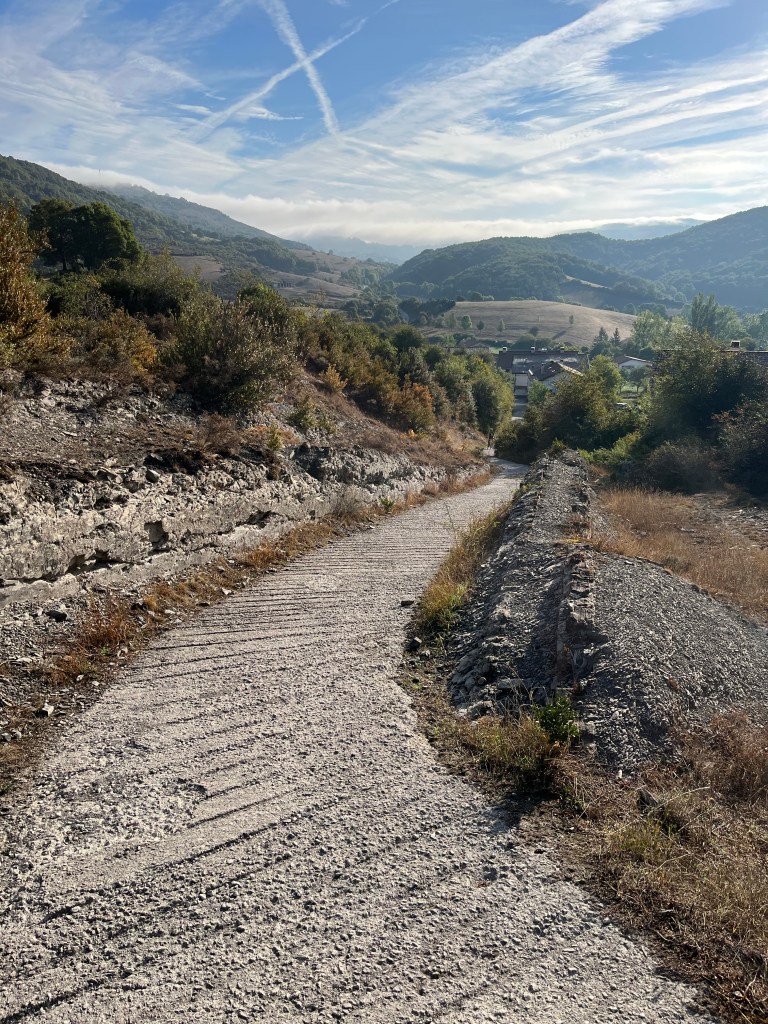
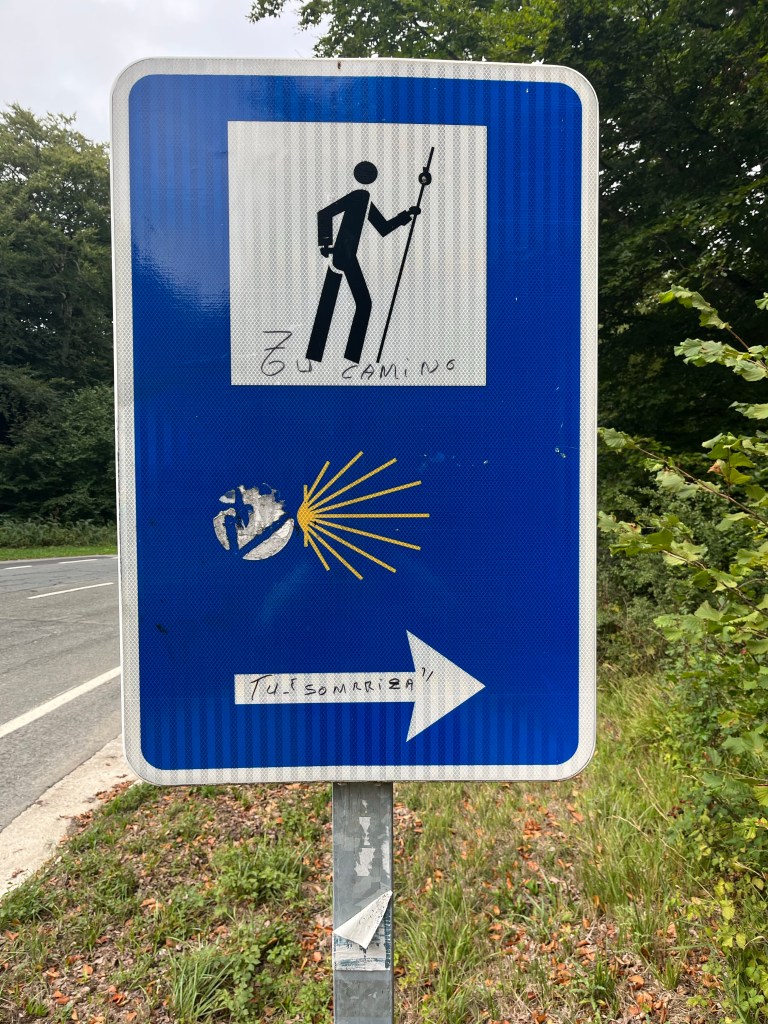
At last, with great excitement and an improving weather forecast, I set off from SJPP at 8:00 AM, looking forward to this first, hard stage of my journey. It’s a pretty uphill slog getting out of town but eventually my path gave way to rolling hills and dales.

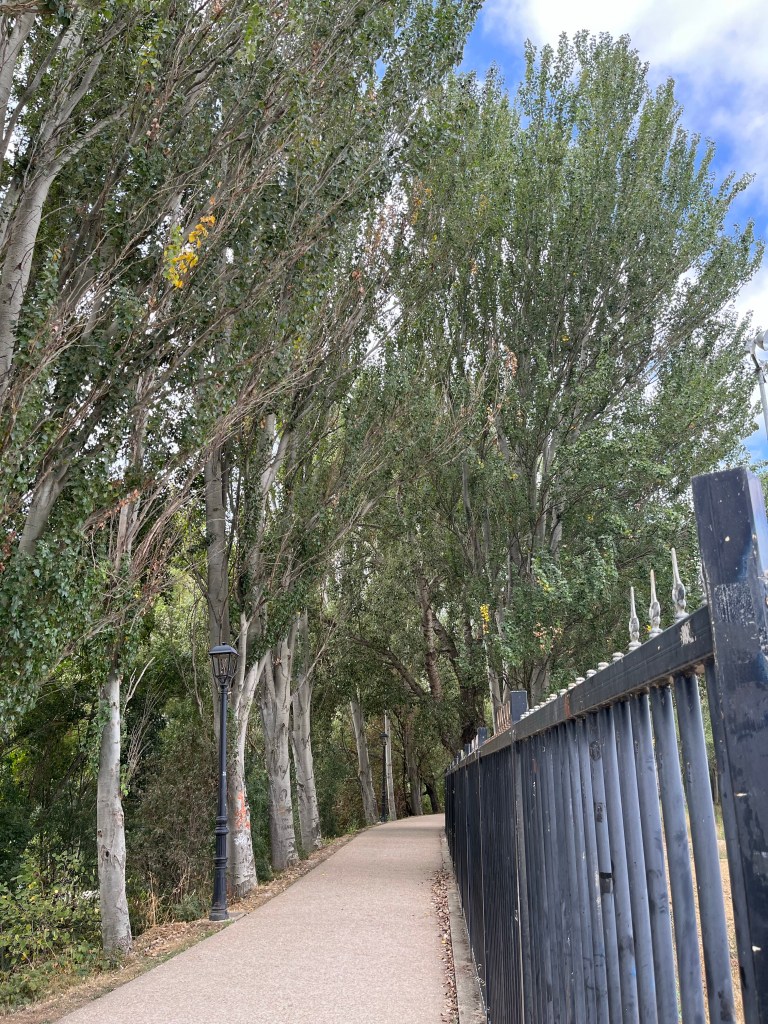
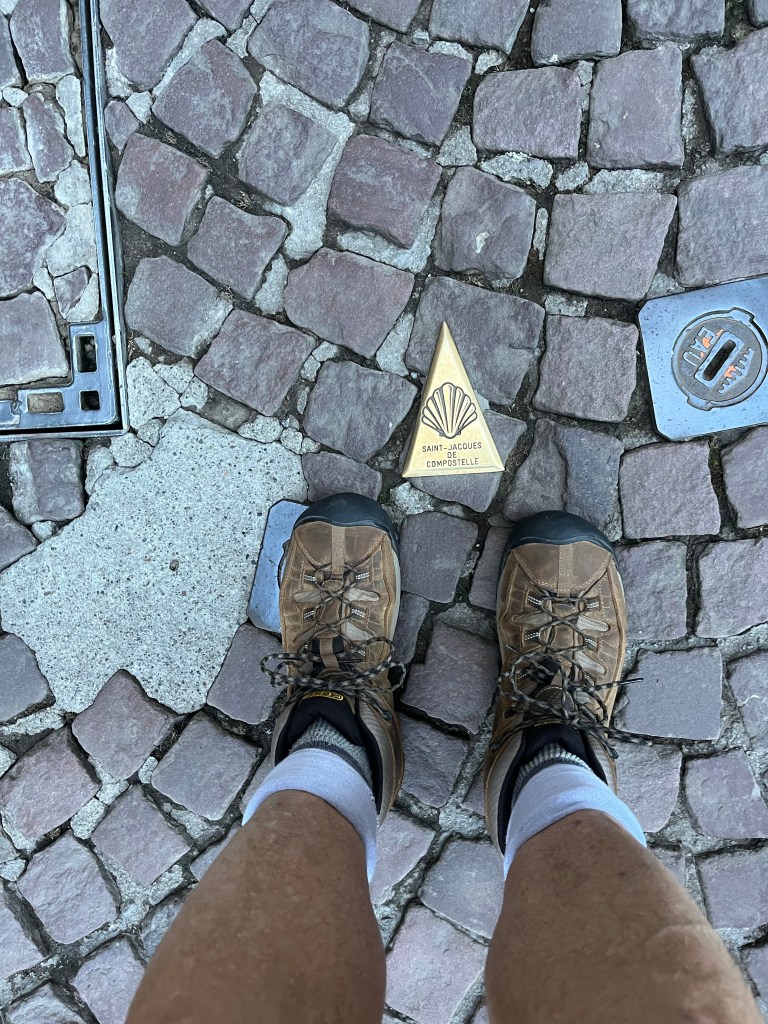
The streets were empty and quiet as I made my way down the hill to the old city gate, across the bridge, and out of town.

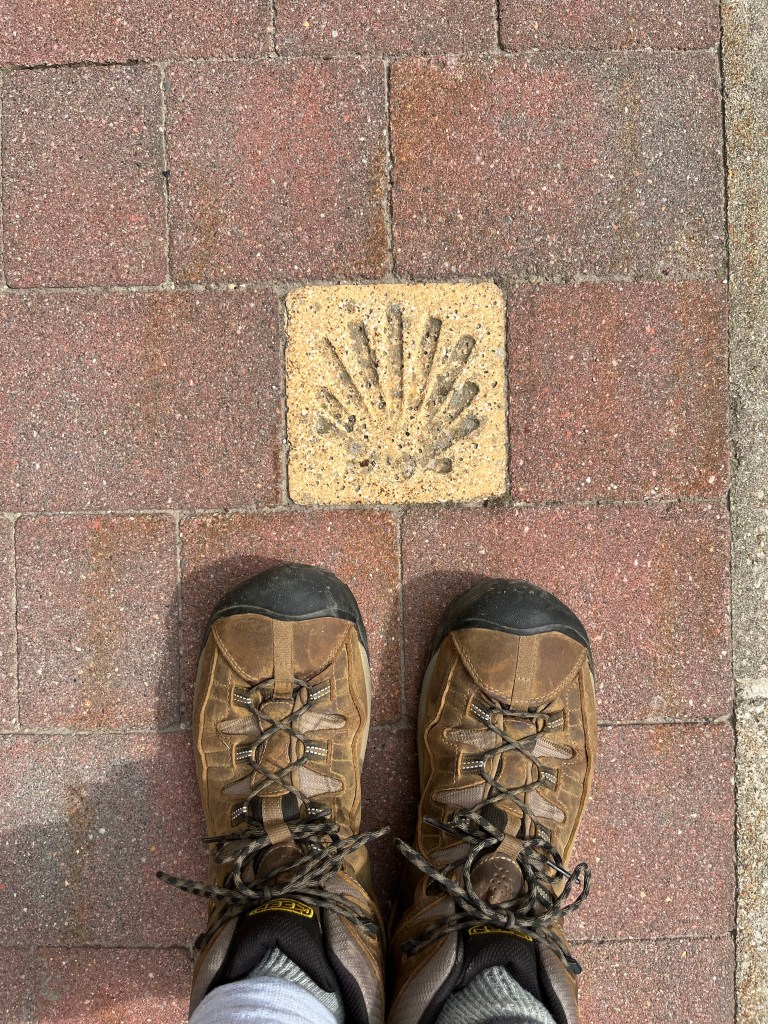
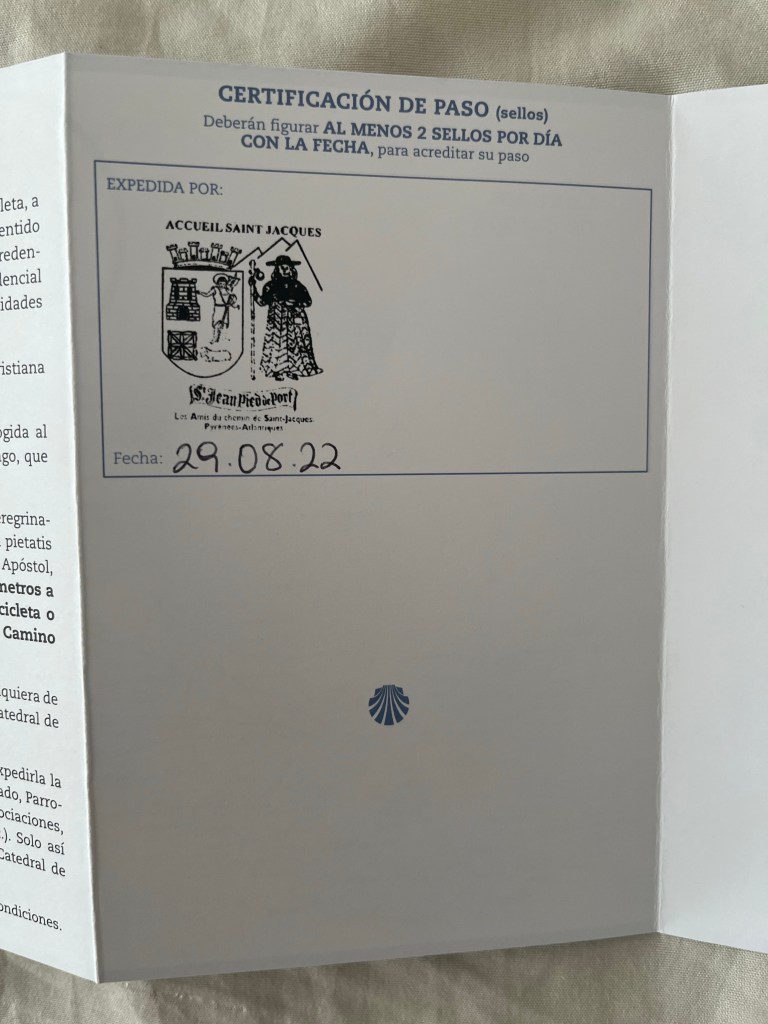
My first stamp, from the Pilgrim Office in SJPP, in my Pilgrim Passport. Many more to follow!

The day before, I made the obligatory stop at the Pilgrim Office in SJPP to get the latest intel on the local route, weather, and tips.

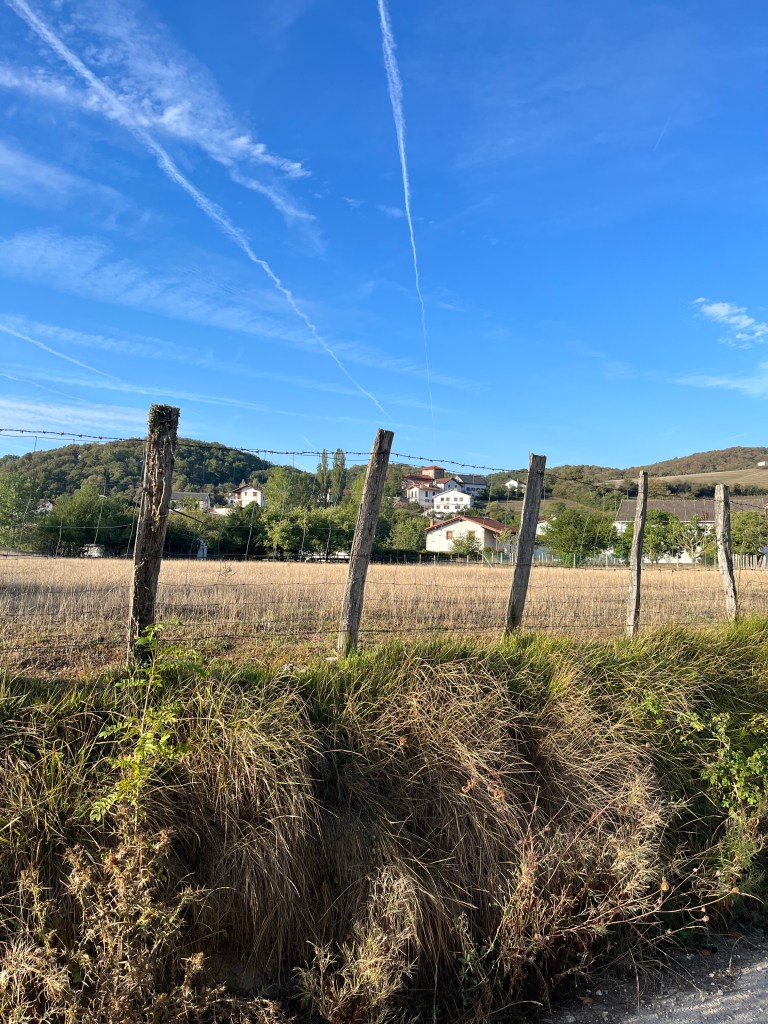
Dawn peeking into farms and villages as I passed along

The weather was really perfect: clear, cool, and with low humidity. I encountered many other pilgrims; they passed me or I passed them. However, the “easy” part of the morning ended after a few hours and the really steep ascent up paved roads started. My aerobic training this summer helped a lot, but it was still quite difficult and I had to stop to get my breath now and then. I had plenty of company doing that.

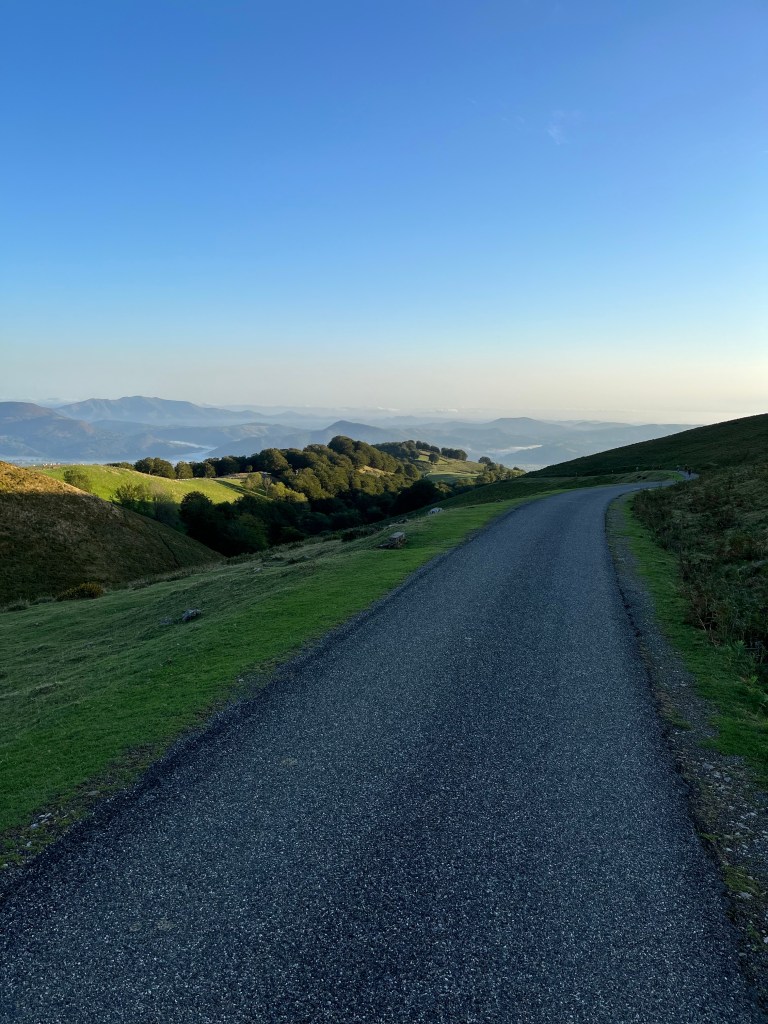
A view from later in the morning

I was not wiped out, however, by this ascent as I was on my last Camino. I decided to not take a very steep, popular shortcut and stayed on the road, which was more gradual. I saw no other walkers but I met a solitary bicyclist with an amazing story:

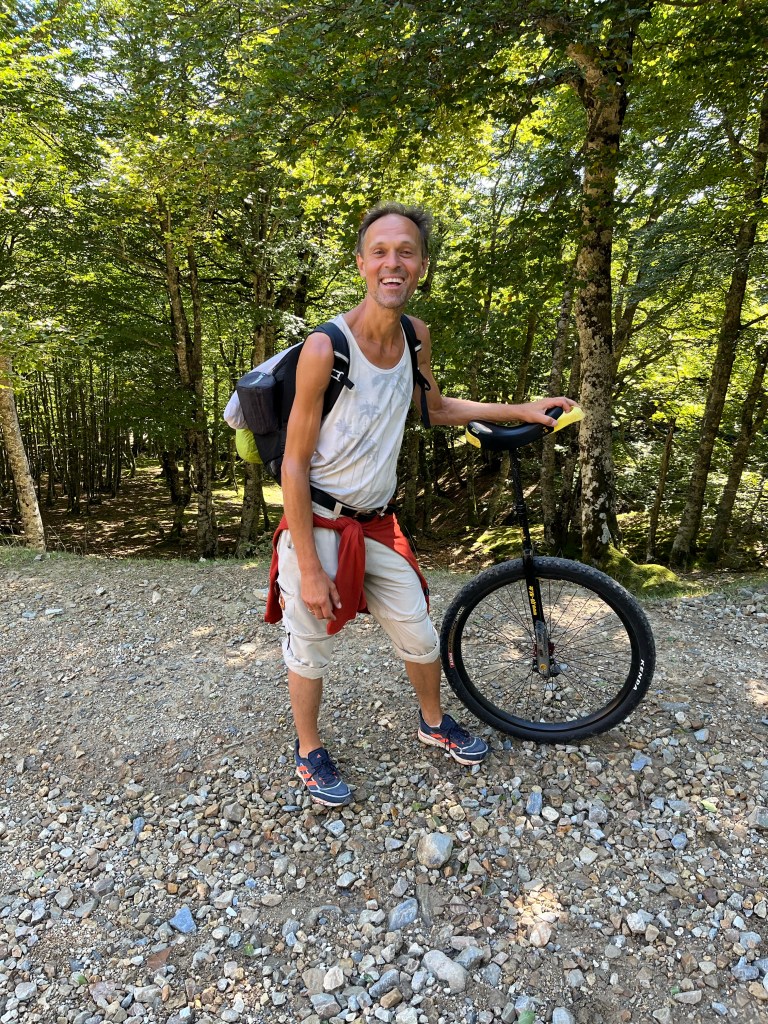
Russel, an Englishman from London and an ardent cyclist, caught severe COVID two years ago and was hospitalized for four months. He suffered all sorts of awful physical problems and now has “long COVID”. One of the effects is that he has no short term memory. Yes, just like in those movies, he cannot remember tomorrow what has happened today. He has to leave himself notes and recordings so that he’ll know what happened! Due to this, he lost his Art Gallery business and is now living on disability. His Camino is an attempt to reset his life. Wow! How incredibly brave just to tackle the Camino with such a disability.

Yours Truly at the Orisson Refuge

I finally made it to the Orisson Refuge. I took only three hours and felt much better than my last Camino (last time, the climb wiped me out). I chatted with Robert, who was continuing on over the mountains, and also talked with a couple I met through the Camino forum,

After killing an hour, I made may way one more kilometer up the road to Auberge Borda, a new, small establishment. I stayed at Orisson last time, so I wanted to give the new guy a try. Wow! Borda is a very nice place; modern, clean, and well thought-out. Laurent, the proprietor and only staff, is a former food service manager. He’s done several Caminos on foot and by bike, so he knows what being a pilgrim is all about. He’s funny, clever, and a great cook – staying there included a nice communal dinner, during which we all introduced ourselves.

We slept in dorm-style accomodations at Borda but with separate cubicles, not bunk beds, and it was very comfortable. Everyone was excited about what was to come the next day, our ascent over the Pyrenees to Roncesvalles.

Arrival in St. Jean Pied-de-Port

I left Paris aboard the SNCF high-speed train Friday morning and whisked south through Bordeaux, at nearly 200 mph at times, to Bayonne. What a pleasure train travel can be compared to flying!

At Bayonne, I expected to connect to another train to St. Jean Pied-de-Port (SJPP) but found a “special bus for pilgrims” laid on by the railway instead. It sounded interesting, so I boarded the very nice tour bus and we wound our way through the foohills and quaint towns to SJPP, arriving at the train station at the same time the train woud have. Perfect.

There was a Spanish family sitting in front of me on the bus, with a tiny dog in a dog carrier/backpack. I wondered if they were really going to go on the Camino with the dog!

My hotel is on the rue de Citadelle, the main drag through the old town and the route of the Camino itself. The Pilgrim Office, an important source of information and resources, is just up the street. It’s now Saturday and there is an energy and tension in the people passing by, a sense of anticipation. I was out on the front steps this morning at 8:00 AM and wishing “Buen Camino” to those folks heading down the street to begin their walk (or bike ride, in some cases).

The town is the former capital of the region and is a tourist spot. French schools go back into session next week, so this is the last summer holiday weekend and SJPP is jammed. The weather is really nice today, sunny with temps in the 80s. The forecast for the next few days, and my Camino start on Monday, is not so good. It’s a case of hoping the weatherman has gotten it wrong; almost no one gets through the Camino without getting rained on but starting off in the rain kind of dampens the spirit.

The Camino goes down this street to the mountains in the distance

I’m spending today loafing and packing. I’m using a two-bag strategy: I’m wearing my excellent Gregory Zulu 40-litre backpack and having a small duffel bag transported each day. This lets me keep the backpack weight down to a managable 14 pounds (including 4 lbs of water in the hydration bladder) and still access supplies and gear I deem essential. As you may remember, I’m 6’2” and 230 lbs so my clothes, shoes, etc. are larger/heavier than some, and this strategy, based on my last Camino experience, works for me. I’m just lucky that the bag transport services along the Camino are good and reliable.

Disney comes to Saint Jean Pied-de-Port

Continuing Sunday…
The good news this morning is that the weather forecast for the next few days is improving. When I went over the mountains in 2019, it was through a hellish storm and I missed all the fantastic views. There now seems to be a chance I’ll see them this year.

I’ve arranged a meet-up this afternoon with some fellow pilgrims who are also starting off tomorrow. I’ve already had some nice conversations over breakfast with pilgrims from Canada, France, and Germany. The comradery of a shared challenge is easily established.

The shame of the French nation!

The next few days will be strenuous and I may not be able to post daily but I’ll catch up ASAP. Hang in there with me and wish me luck!

Yes, Here I Go Again

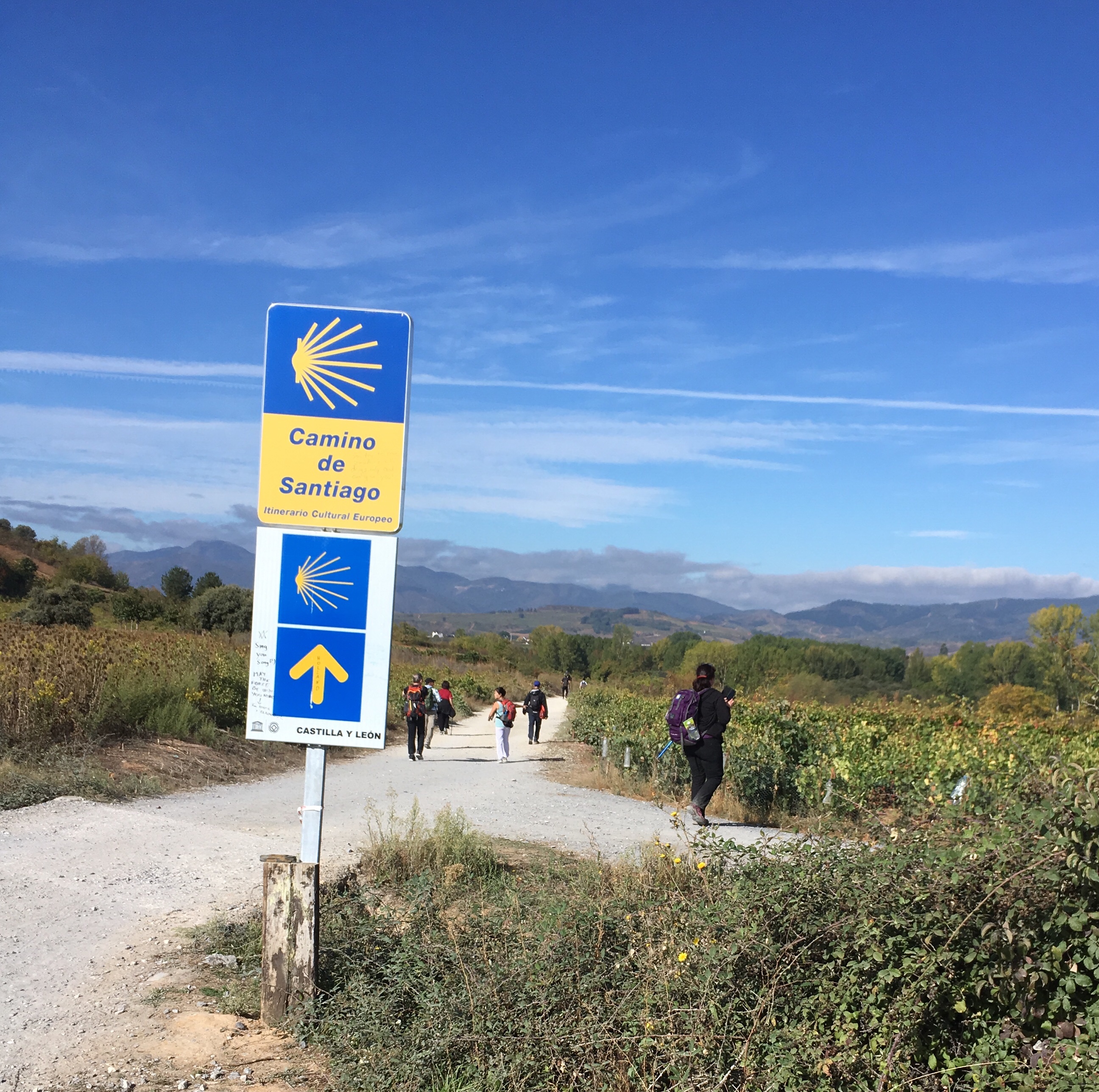
It’s 2022, the pandemic is sort-of under control, and I’m not getting any younger, folks. These are some of the reasons that I’m embarking in four days on another Camino de Santiago hike, 800+ kilometers across Northern Spain, from France to Santiago de Compostela.

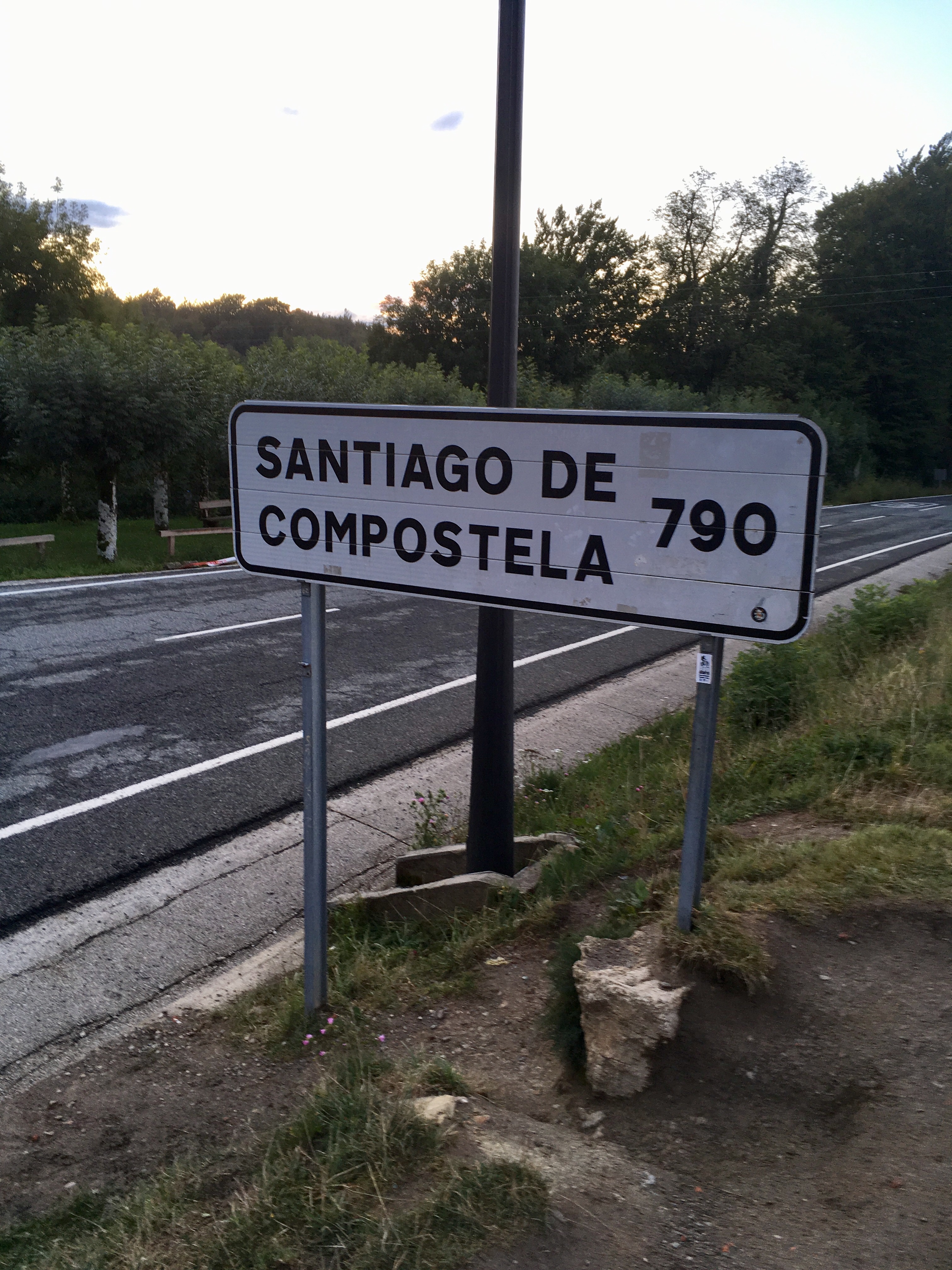
After crossing the Pyrenees, “only” 790 Kms to go!

In 2019, after completing my first Camino, I wrote:

So, what was it all about? The inner stuff, the accomplishment and achievement, the challenge met, sure. I think it was also about the pilgrims I met, and met again later, along the path. There was something spiritual going on there for me. The unlikely connections and can’t-be-random interactions with people from all over the world kept me in tune with the special moment of what I was doing on the Camino. This walk also came at a transitional time in my life, my retirement, and that colored my views and conversations, too.

It was a special achievement for me and I’m going to do it again. This time, I’m taking longer to do it and, hopefully, can spend more time appreciating the experience. Here are some links you may find useful this year:

If you’ve not heard of the Camino de Santiago before, see my earlier primer: Camino History and Fun Facts

If you want to know what I’m taking with me, the basics are the same as in 2019: What To Pack

Beautiful days on trails around Canterbury, UK

To prepare, I spent three mild, summer months in Canterbury, UK, walking the many footpaths and trails in the area. I broke in my new boots and reacquainted myself with all my gear, in really idyllic circumstances. I also spent 60-90 minutes most mornings in a local gym, lifting weights and building endurance. Paraphrasing Tricky Dick (the late president Richard Nixon), “I’m rested, tanned, and ready”.

Subject to the rigors of the trail and the limitations of sometimes-spotty hostel Wi-Fi, I’ll attempt once again to document my journey here daily. I thank you in advance for joining me. Cheers.

The 2022 Great British Beer Festival

When I realized that I’d be in Canterbury in early August, I knew I had to attend the UK’s biggest beer event: The Great British Beer Festival. The GBBF, a week-long event, showcases almost 1,000 cask ales, craft beers, real ciders, perries, and wines. I attended back in 2008, when I lived in Reading, UK, and I had a ball. I wasn’t going to miss this opportunity.

First, you must understand the event’s organizer: CAMRA (the Campaign for Real Ale). CAMRA is dedicated to the British beer industry (though it’s a private organization and is not owned by any huge brewers) and the preservation of the English pub. That last bit is important, because one UK pub goes out of business every single day. Some of that is down to the pandemic, but it was happening before COVID, too, as a result of government regulation and predatory industry practices. CAMRA helps pubs survive and lobbies the government extensively to prevent beer taxation. Putting it into an American context, I like to think of it as the “NRA of Beer”. Yes, I have been a member since 2008, when I first attended CAMRA’s famous Reading Beer Festival.
This year’s GBBF is being held in the Olympia Exposition Center, near Hammersmith, in west London. I took an hour-long train ride from Canterbury to London St. Pancras station and then a 25-minute taxi ride to get there. London Black Cab drivers are never boring to talk to and mine did not disappoint. One gave me the low-down on the woes of getting driver’s insurance when you’re 70+ years old, and the other was driving while waiting for his television show script deal to come through!

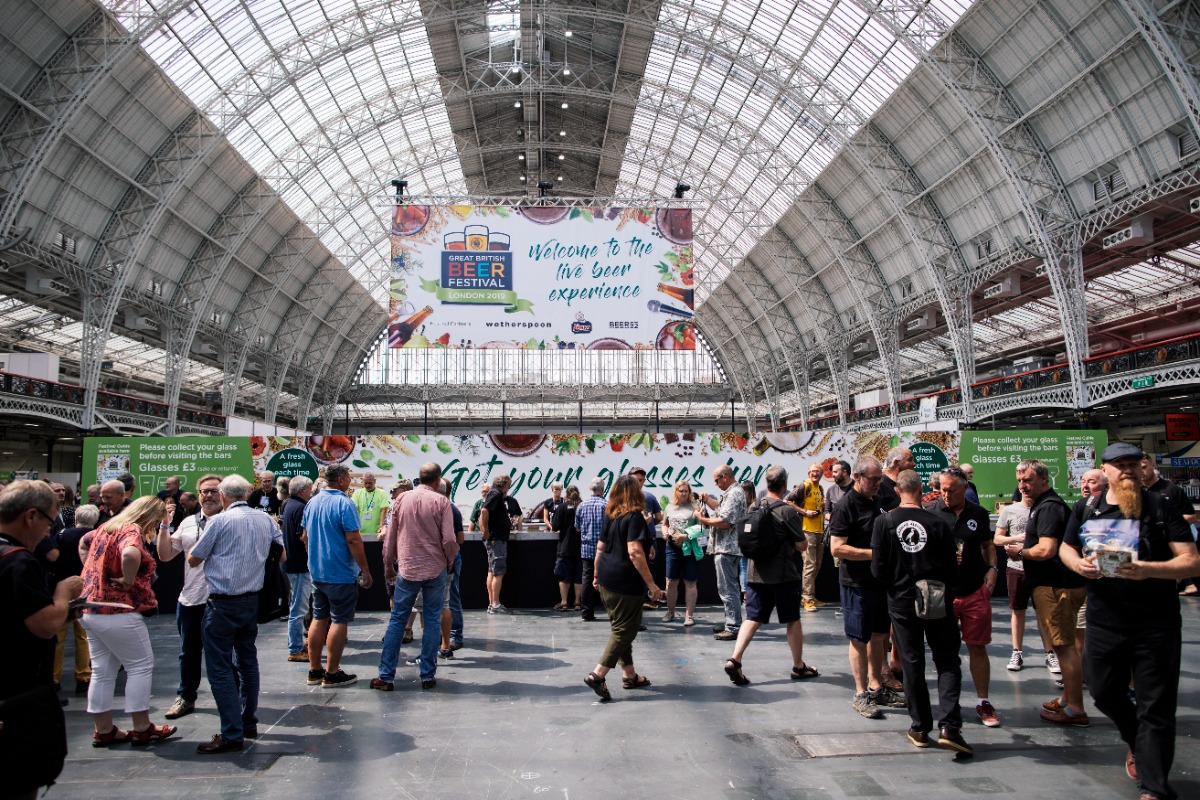
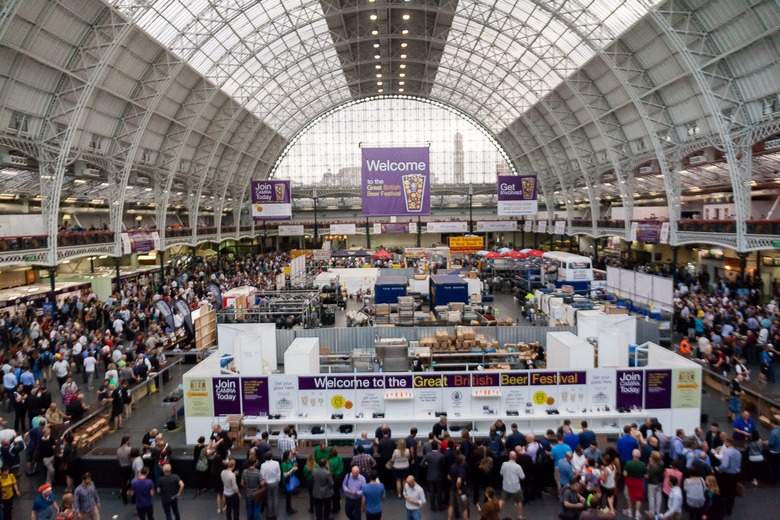
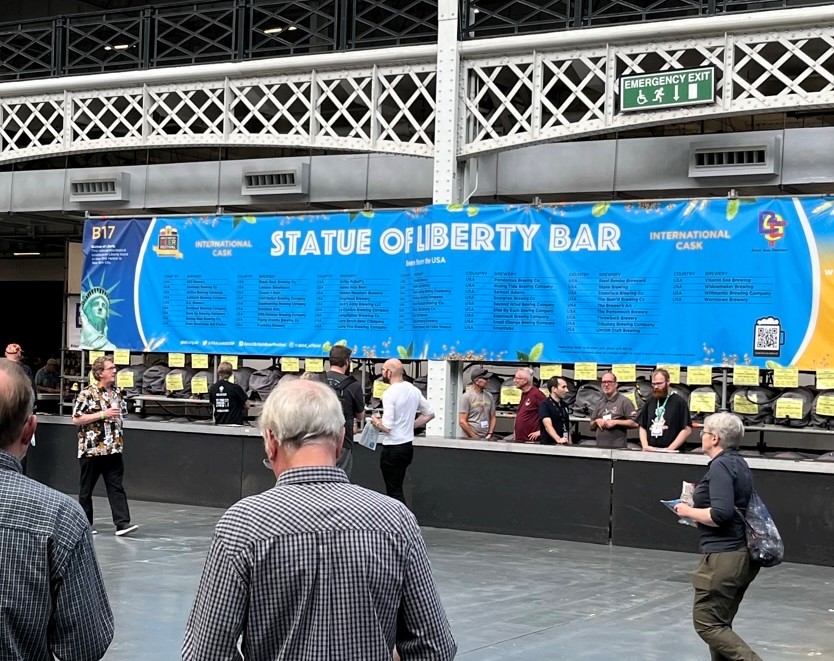
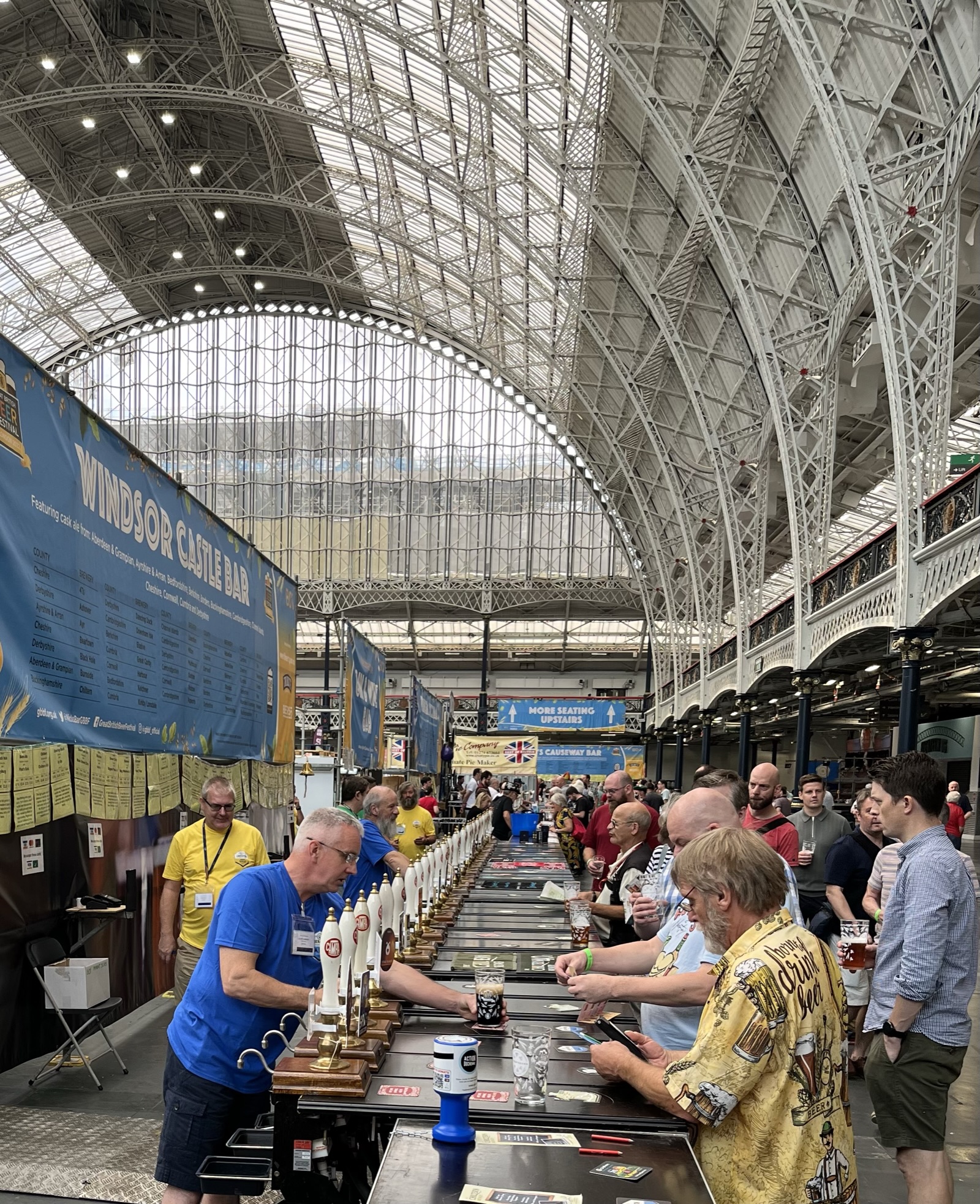
Olympia is a vast space with two big halls and, in it, the GBBF featured 18 bars offering beverages grouped by categories, food stalls, and merchandise vendors. For example, all the beers, some 65 of them, from the US were served at the “Statue of Liberty” bar. Hmm – so many beers, so little time. I consulted the online beer list the previous evening and made a plan. Well, one had to, or risk being lost.

One of the two Olympia halls
Where all the U.S. beers were served, including Heavy Seas, Sam Adams, and Stone

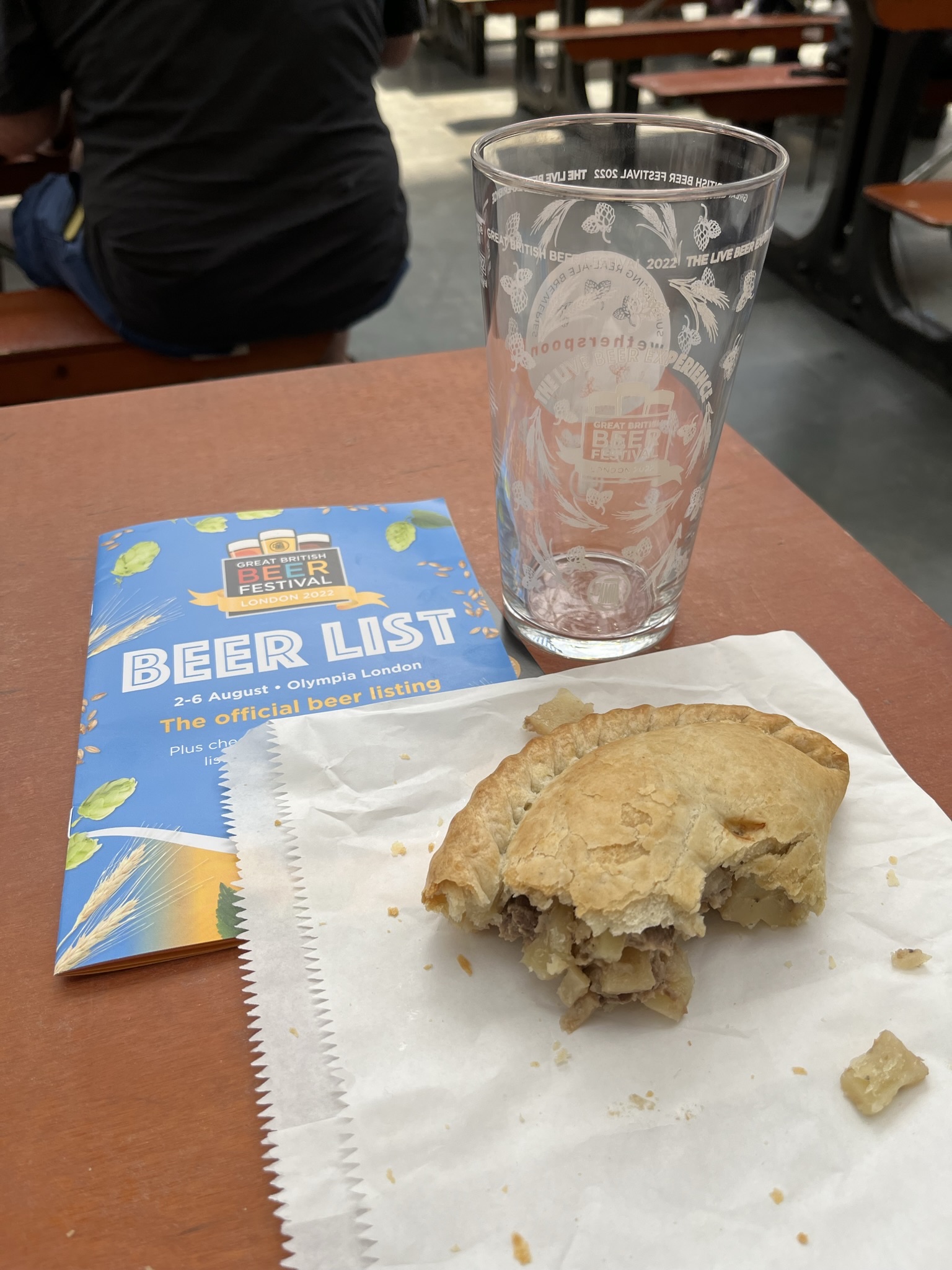
It’s important to lay in a good foundation before starting to drink at these affairs, so I went to the Handmade Cornwall Pasties booth and bought a “Moo and Blue” (that’s steak and Stilton cheese) pasty:

The huge “Moo and Blue” didn’t disappoint

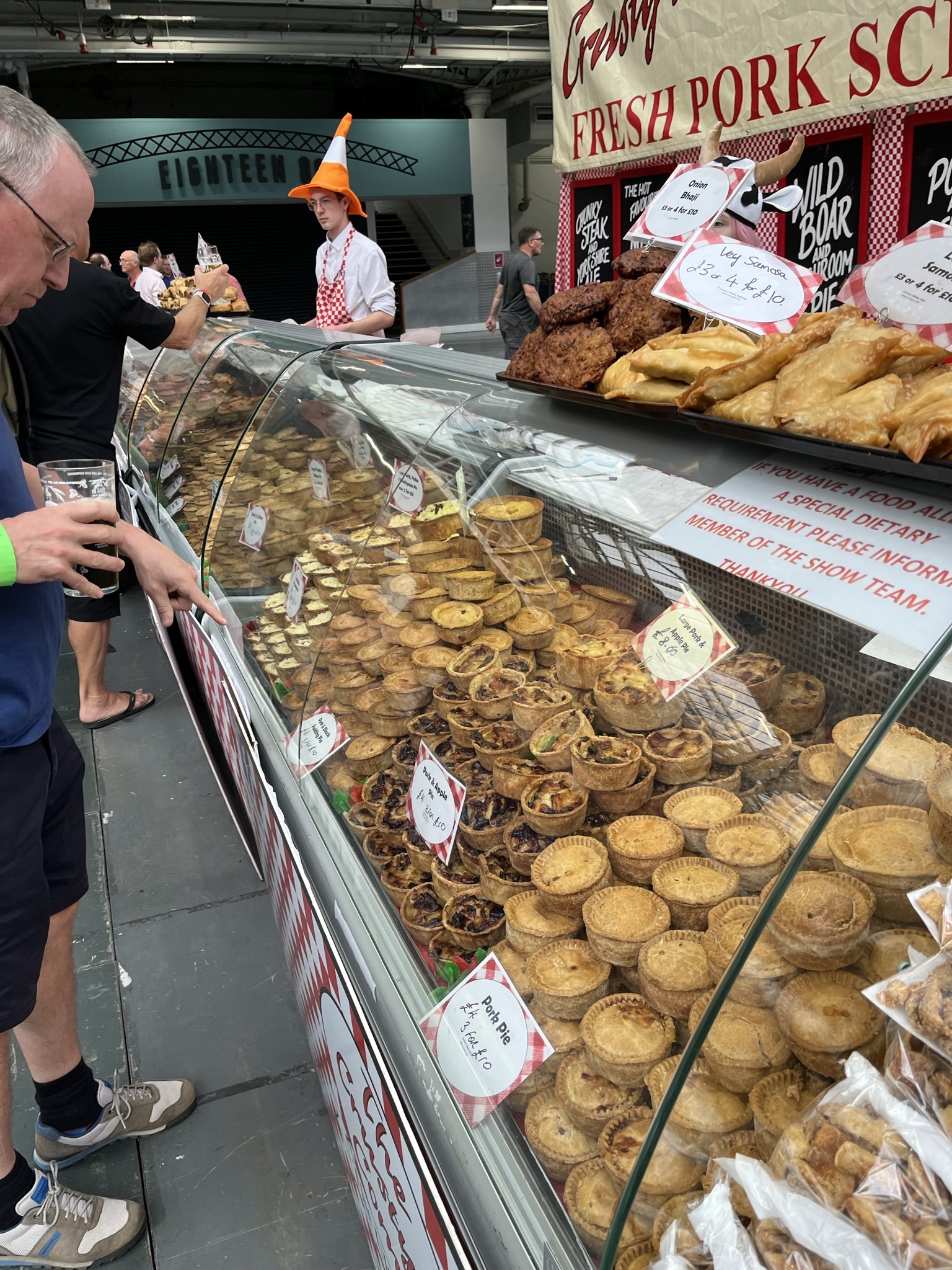
There were also plenty of other food offerings, including traditional English “pies”, shawarmas, cheeses, sausages, “Bombay Street Food”, and more.

What an enormous variety of pies!
In case you’re confused about what meal I was having

And then, it was off to the bars! I may be a rare breed, but I’m surely not alone: the sight of hundreds of beer handles just gives me goose bumps and makes my mouth water.

That’s a view down just 3 of 18 bars!
Started off with St. Austell Brewery’s Tribute

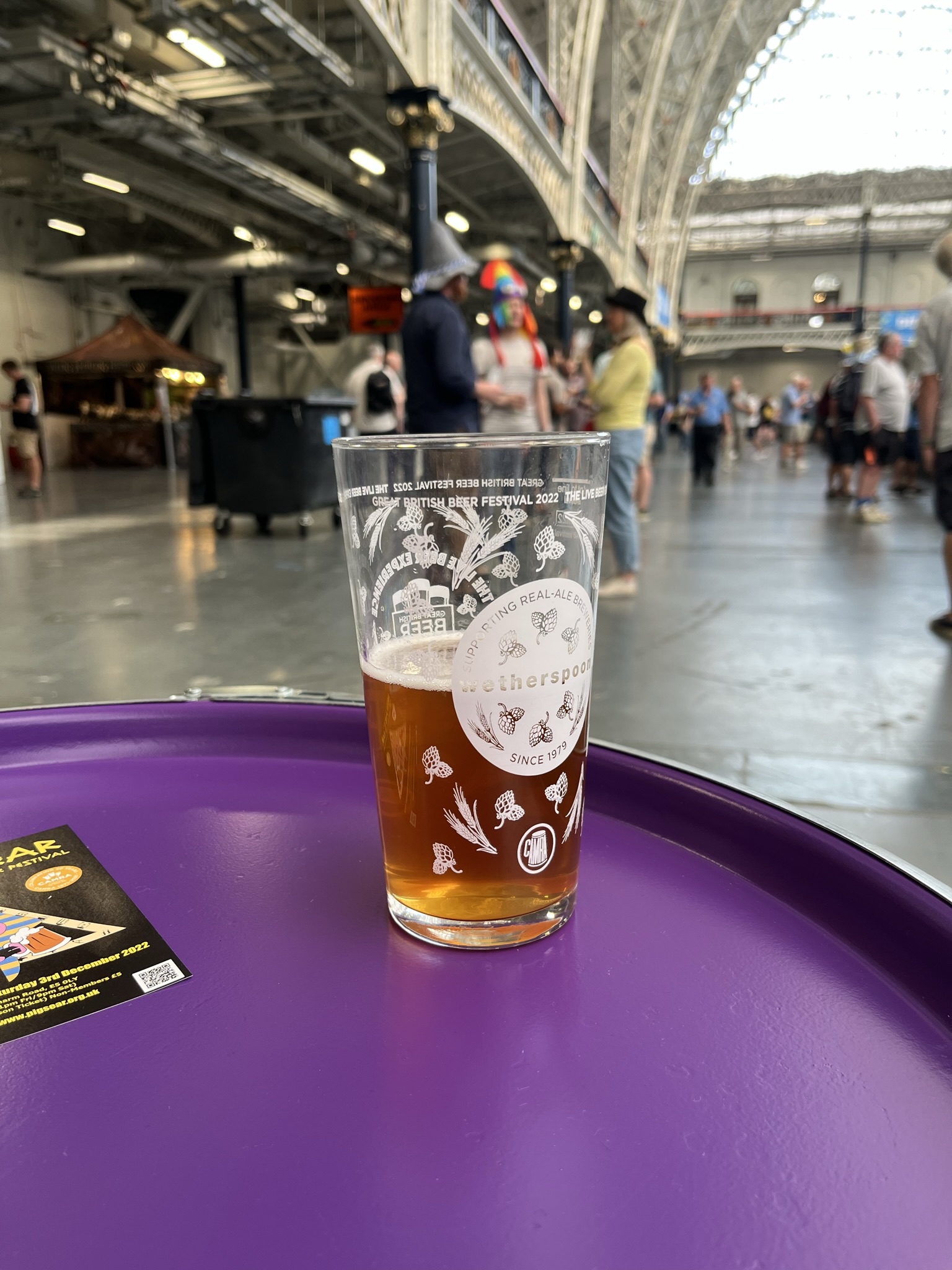
My entrance ticket included a real souvenir Imperial pint glass. Beers were sold in full-, one half-, and one third-pint servings, which was great for sampling. My entrance ticket also included £15 of beer tokens.

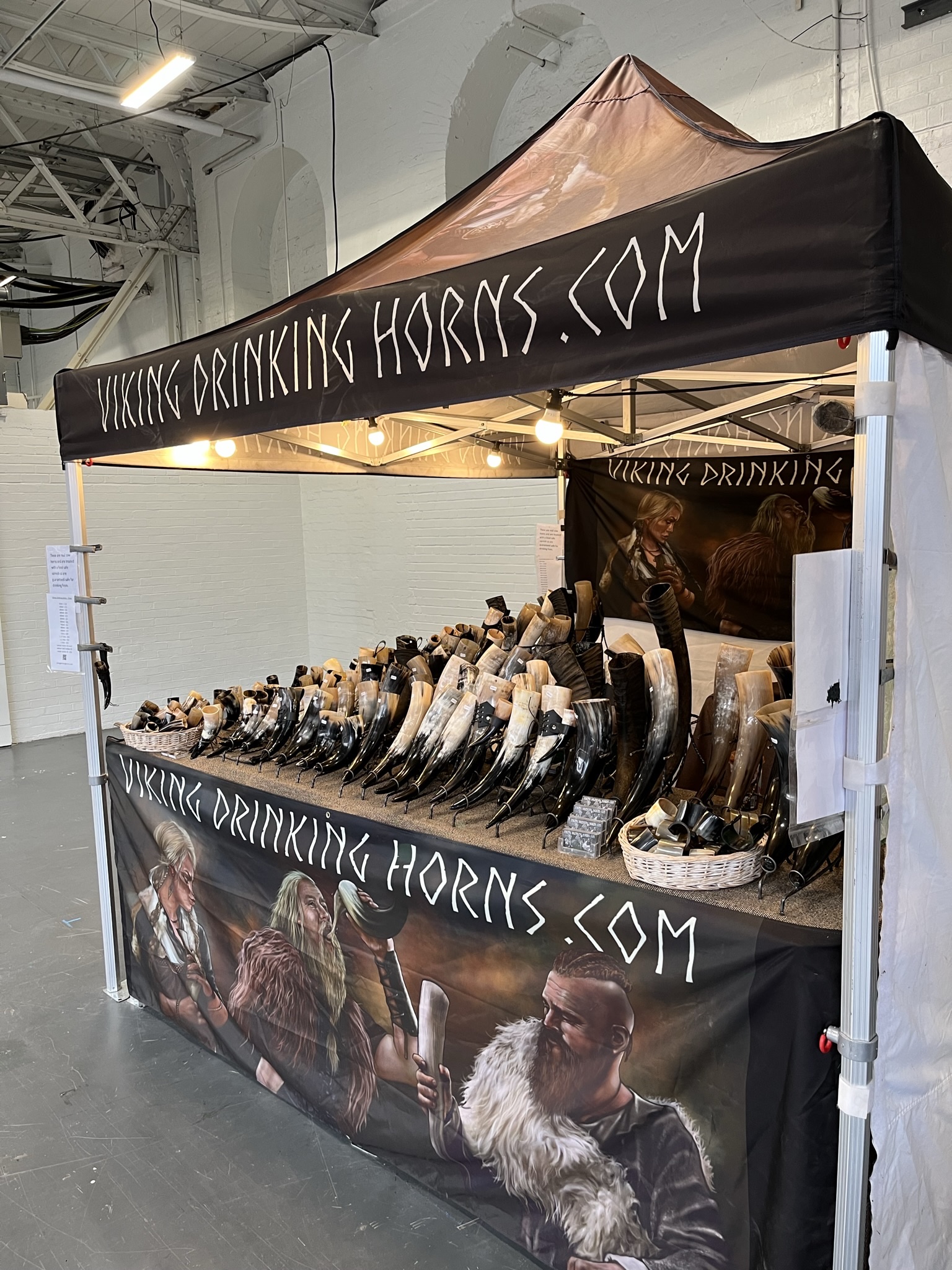
In case the pint glass was not to your liking, you could go native with the purchase of a Viking Drinking Horn:

Probably not marked for 1/3 and 1/2 pint servings

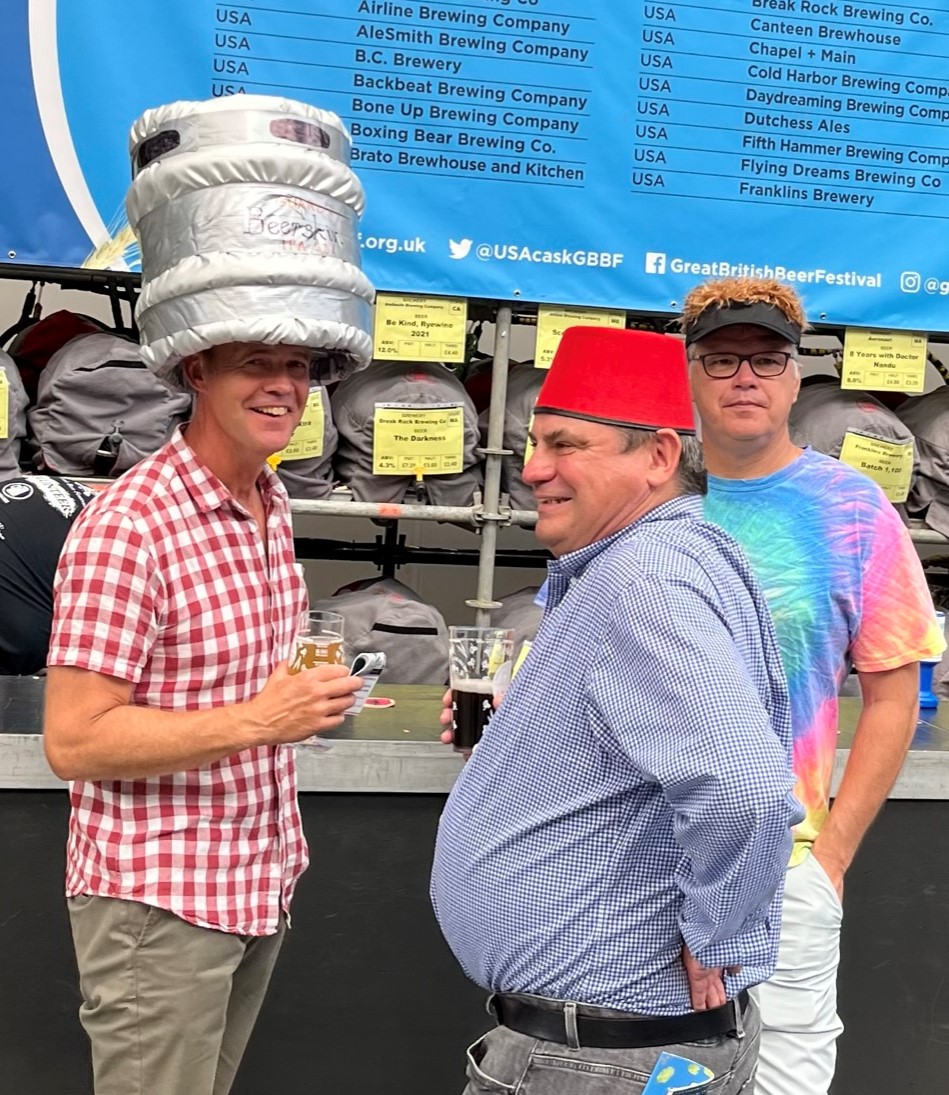
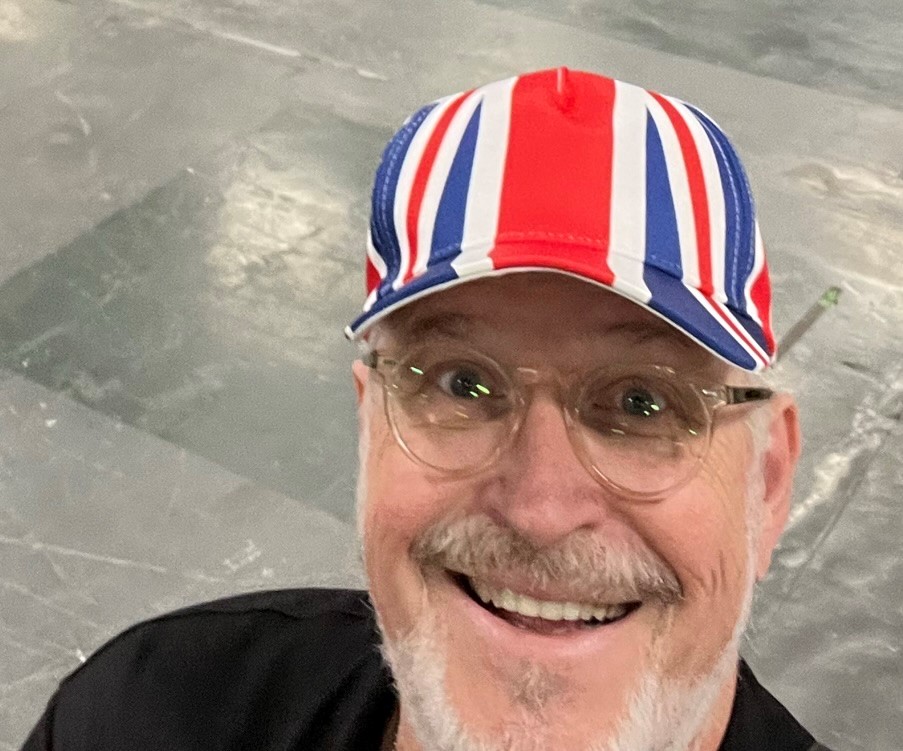
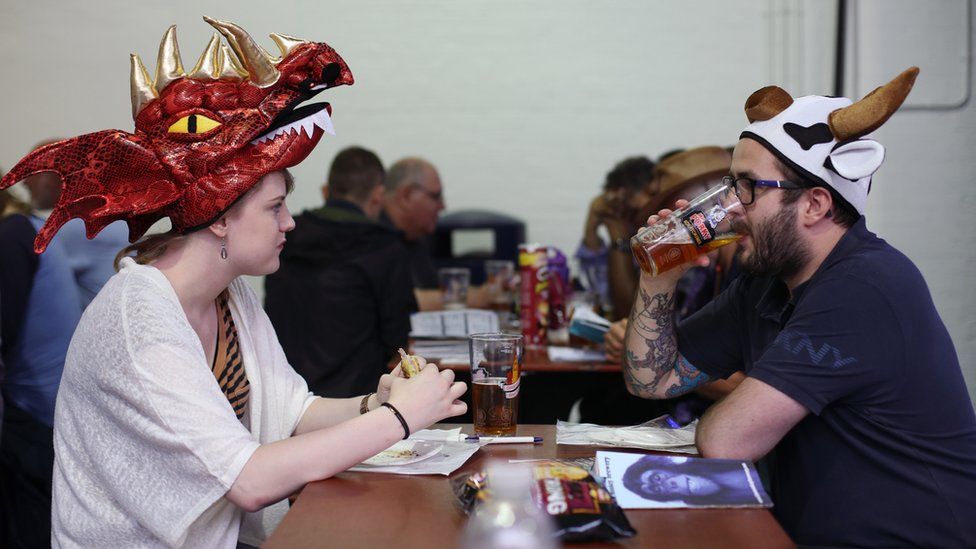
Each day of the GBBF has a theme and the day I attended, Thursday, was “Wacky Hat Day”. In 2008, I saw large groups of people wearing amazing hats and there was some kind of team competition. This year, there were fewer hats (although perhaps they appeared later in the day) but there were some amusing specimens:

About the beer: I had some old favorites and a few new ones, some of which were not that great. My beer list follows:

Timothy Taylor: Landlord 4.3% (always a winner)

St. Austell: Tribute 4.2% (ditto)

Harveys: Sussex Best Bitter and Armada Ale (both meh)

Downton: Honey Blonde 4.3% (very nice)

Five Points: Best Bitter 4.1% (okay)

Surrey Hills: Shere Drop 4.2% (last year’s Champion Beer, very nice)

The volunteers manning the pumps were pretty casual about the servings – several times I received a half- when I asked for (and was charged for) a third-pint. Sounds good but maybe not if you’re trying to avoid seeing double by the afternoon’s end.

For those keeping count, I only had one half- or one third-pints and, as a result, I didn’t fall on my ass getting into the taxi going back to St. Pancras station. Which happened about three happy hours after I arrived.

What a nice event. Special thanks to all of the CAMRA volunteers who manned the pumps, served as stewards, and generally made it all happen. I had several long conversations with fine, beer-loving folks, and enjoyed some great traditional English ale and food. If you’re ever in or near London in early August, you should put the GBBF on your schedule in future.

Canterbury’s Roman Origins

The Canterbury Roman Museum was closed due to COVID the last time I stayed here. It’s reopened now, so a visit was in order. The museum is small and below-ground, and geared toward engaging children, but there were some exhibits of interest to me. It’s built on the site of an ancient Roman townhouse.

The Cathedral looms in the background outside the Roman Museum

According to the museum, the town was home to the Cantiaci tribe. The Romans showed up around 43 AD and, over the centuries, developed the town. They renamed it “Durovernum Cantiacorum”. It was located at an important crossroad and was a strategic location, so the Romans applied all of their usual improvements.

What it looked like around 350 AD

A large religious and administrative complex was soon established, including a forum, a basilica, a temple enclosure, and a theater. The theater, originally built around 80 AD, was totally rebuilt in the early 3rd century. It was probably associated with religious festivals as much as the dramatic arts. The public baths were just to the northeast. The town was enclosed by defensive walls in the late 3rd century and was given single-arched gateways.

Oysters, anyone?

Industries included brick, tile and pottery production, as well as bronze working. There were many commercial shops, notably a baker’s shop with donkey-driven millstone. Cemeteries outside the town appear to have continued in Christian use and St Martin’s Church appears to be built around an old Roman mausoleum which stood in one of these.

Durovernum seems to have survived in good order until the Roman administration left, around 410 AD. After that, its decline was rapid. Mercenaries were hired to defend the town but they revolted. By the time of the Battle of Aylesford in the mid-5th century, the Jutes had taken over the area. The town became known in Old Welsh as Cair Ceint (“Fortress of Kent”) and in Old English as Cantwareburh (“Kentish Stronghold”), which developed into the modern “Canterbury”.

As was common practice, eventually the predecessor of the modern Canterbury Cathedral was built atop the site of the Roman temple.

The museum has on display several floor mosaics discovered when the building was being excavated (Canterbury was badly bombed during WWII). Some of these were left in situ and are accompanied by an excellent explanation of how they were created. Wall paintings and the foundations of an under-floor heating system were also discovered. All of these can be seen through glass windows today.

Given the size of the Roman town, the modern museum has a surprisingly small number of artifacts on display. However, its explanations of the various aspects of Roman life are clear and well-presented.

Like many museums committed to stimulating children, there is a large “Please Touch” room, with replica helmets and clothing. There is no separate Gift Shop, just a small display of items for sale near the ticket booth. The museum web site is here: https://canterburymuseums.co.uk/canterbury-roman-museum/

A Day at a British Beach

I’ve taken the fast, modern train from London to Canterbury several times in my travels. After my latest trip, it occurred to me that the train continues on and terminates a half an hour later at the beach town of Margate. A trip to Margate, at $8 roundtrip, to see the Brits at the beach was definitely in order.

Wikipedia reports that “Margate is a seaside town on the north coast of Kent in south-east England. The small town is 16 miles north-east of Canterbury, has been a significant maritime port since the Middle Ages, and was associated with Dover in the 15th century. It became a popular place for holidaymakers in the 18th century, owing to easy access via the Thames, and later with the arrival of the railways. Popular landmarks include the sandy beaches and the Dreamland amusement park. During the late 20th century, the town went into decline along with other British seaside resorts, but attempts are being made to revitalize the economy.”


When I was doing a little pre-trip research, two things struck me about Margate. First, it has one of the best beaches in the UK, because it’s a sand beach. Yes, beach sand is not usual here; UK beaches are generally made up of small stones. So, getting some “sand between your toes” is apparently a novel experience. And, the main Margate beach includes something I’d never seen before: a tidal swimming pool.

This is a very large concrete-sided swimming pool plunked right down on the beach and, owing to the big tides, it’s overrun and filled with sea water twice a day. It looks like quite the swimming experience, only six-feet deep at most, and quite calm.

Other than that, Margate is a typical beach town. It has all the amusements, casinos, fast food, and souvenir shops you might expect and a main drag along which folks can “cruise”, showing off their hot cars, convertibles, and motorcycles.

This magnificent tower was built in 1887 to celebrate Queen Victoria’s Golden Jubilee

The beach itself has many rental and food vendors. You can rent beach chairs, umbrellas, and even “wind protection”, aka the cloth fencing shown below that many people use to fence off their section of beach.

It was a very popular day for going to the beach, what with a national heat emergency declared for later in the week. Brits flocked to the shore to enjoy the sun and the light breeze.

Beach towns are full of graffiti and strange art, and Margate was no different. As I made my way back to the train station, I passed some interesting art displayed in the window of a house. It was emphatic, as it appeared in the windows on both floors. Your guess is as good as mine:

Enjoying the Lovely English Summer

And so, to Canterbury. It seems fitting that I should be spending the summer of 2022 here, in what was once a major pilgrimage destination, while training for another go at the Camino de Santiago pilgrimage route in Spain. There’s good, ancient pilgrim karma here.

I’m staying at the same beautiful Airbnb that I stayed in back in 2020. Canterbury is a nice little town and the manageable summer tourist-season crowds are a welcome sign of post-pandemic economic recovery. I have a relaxing view of the river and a wildlife area from my balcony, yet I’m within easy walking distance of all the local amenities and sights.

Canterbury is also a nexus of national biking and hiking trails, making it ideal for my training purposes. The (so far) mild English summer was also one of the reasons I selected this town.

The question has come up: isn’t one Camino enough, why are you doing it again? Well, the perfectionist in me wants to do it again while applying all the lessons learned from my first trek in 2019. And I suppose I think that I’ll be better able to appreciate the experience, absent so many of the unknowns of the first time. Finally, it was a fantastic, life-altering experience; who wouldn’t want to do it again?

Briefly, my training includes weight work in the gym most mornings and hikes most afternoons. I’m slowly building my hiking distances and have the luxury of being able to experiment with a range of gear and strategies. The Camino is not a marathon – my average daily walk in Spain will be but 12 miles – but it does require mental and physical toughness to do it day after day for more than seven weeks, through sun and rain, heat and cold. I’m building that here and I’m all in. My next Camino begins August 29th.

Although England is behaving as if COVID is over, case counts are really climbing here. Same for Europe, with the French openly referring to a “7th Wave” now. I’m aware that my two vaccinations and two boosters may not protect me, so I’m taking a very conservative approach: I still wear a mask indoors in public (yes, including at the gym), I still only eat at restaurants with outdoor seating, and I still practice social distancing. It will be a challenge in the communal settings of the Camino hostels.

Over the next month or so, I’ll be back-filling my posts here. If you want to see what we’ve been up to for the last nine months prior to coming to England, check them out. Marti and I were in Barcelona, Cyprus, Greece, Paris, and the U.S. during our travels. Cheers.

Greetings from Larnaca

The view from my balcony at sunset

This is a catch-up post about my travels earlier this year

After almost 20 hours door-to-door, I arrived yesterday in Larnaca, Cyprus, to 52-degree weather. My departure just before yesterday’s ice and snow extravaganza in Virginia was very timely.

My flight experiences were a mixed bag. The administrative part (test results, health declarations, etc.) went smoothly, but my actual flights didn’t. My United flight from Dulles to Frankfurt left late, had just nine cabin crew members for almost 300 passengers, and included two bouts of prolonged air turbulence that were the worst I’ve ever experienced. The United lounge at Dulles was excellent but the onboard Business Class food, drink, and space was not as good as that of many competitor airlines. Yeah, I know, First-World problems.

Connecting at Frankfurt Airport could have been a disaster had I not hired a “guide”. Yes, that’s a thing now. You pay a hefty fee and someone who knows the place and all the tricks meets you when you arrive and walks you to your next flight – and I thought it worth every penny. My big piece of luggage was checked through, so that I didn’t have to deal with it. My guide met me as I entered the terminal and took me through back stairs, nooks, and crannies I suspect are usually reserved for airport employees, onto a bus to another terminal, and thence past my departure gate so I’d recognize it and on to the nearest lounge. Frankfurt is a labyrinth of an airport, I kid you not. We apparently avoided two security checkpoints and a customs area. No questions, no hassles, wham-bam, thank you ma’am.

My Lufthansa flight on to Cyprus was quite good and, though in a much smaller plane, was in many ways a nicer experience than my fancy United transatlantic flight. For one thing, on the UA flight there were two stewardesses for 44 Business class passengers, on the LH flight the ratio was two to 12 passengers. For another, the Lufthansa food was better.

Here’s one interesting fact: the only time I went through an extendable “air bridge” from the gate to the plane was at Dulles. Every other time we parked away from the terminal and used a portable stairway to board or deplane, then took a bus to/from the terminal?! Said buses did not necessarily meet my standard of social distancing but the rides were brief.

Prior to my flights I had to apply for the “Cyprus Flight Pass” online, so there was no need to flash my test results and other docs (except passport, of course) when we landed on the island.

They do have a requirement was for all passengers to get a PCR test on arrival, no matter what, and the Cypriots really had this down to an art form. Starting with the fact that the plane-to-terminal bus only carried 12 passengers at a time, controlling the testing area crowd. Then they had a dozen folks at desks waiting for us, where we each paid 15 Euros (compare that to the $200 or so charged in the U.S. by some for same-day PCR results), and moved on to another dozen gowned folks who took our nose swabs. I never had to wait in line, just kept moving along, and was out to Customs and Border Control in no time at all. My bag was already doing donuts on the baggage belt when I arrived. Very impressive. I got my negative results by email two hours later.

It’s very tight here as far as COVID restrictions go – masks in all indoor spaces and you have to have your EU health pass (my Cyprus Flight Pass) scanned when you enter. However, it’s not perfect – only about 55% of the country is fully-vaxxed and the infection rate for this wave is just starting to descend. Still, it feels pretty safe.

And, of course, here and in transit I saw a wide variety of barely-wearing-it mask practices. I wore an N-95 all the way, changed it every four hours, and wore some protective eye wear over my glasses.

What’s Cyprus like? Well, Larnaca is a tourist beach town. Think of Ocean City, MD. So, it’s loaded with tourist places (my apartment building is flanked by a McDonald’s, a KFC, a Burger King, and a dozen coffee shops, including Starbucks and Nero). It’s not crowded now but must be pretty bad in summer. I did a big grocery shopping run today and that cost me 53 Euros (about $60) so it was a little less expensive than a similar run at Safeway in Falls Church.

My lovely Airbnb apartment

My Airbnb apartment is nice, in a slightly run-down, beachy sort of way. As you can see in the photo above, I have a 4th floor balcony, and I enjoy watching the passing scene and the freighters anchored off shore. Hot water comes from solar, so I have to remember to turn on the “Booster” heater ten minutes before a shower on cloudy days, but the water pressure is good. The thing I like least about it is the prohibition against putting anything that didn’t come out of me down the toilet, including toilet paper. Yes, the used TP goes into a trash can with a lid. Ugh. Seems unhygienic to me, but not unusual on islands, I’m told.

I’m enjoying the beach and the ocean, and I’m looking forward to exploring the neighborhood tomorrow.

Barcelona Redux in the Fall

We’ve barely unpacked from our tour of southwestern France and we’re off again, this time on the fast Renfe-SNCF train out of Gare de Lyon. We decided to go to Barcelona in mid-October 2021: our friend Sergio’s band was performing and we’re always eager to see more Art Nouveau  architecture and consume more tapas! In addition, the Barcelona weather in October is delightful.

COVID is still on our minds so we’re wearing our masks on the train, though few others are. The seats are spacious and comfy, and the views out the windows of our upper-level train car seats are a treat. We’re whisked to Barcelona, non-stop, in six and a half hours. We brought our own lunch, including a nice Rioja and wine glasses. Very civilized.

We were lucky to be staying at the four-star HCC St. Moritz hotel, near Placa de Catalunya. We have a friend, Paco, in hotel management there and so we got the “friends-and-family” rate.

The HCC St. Moritz Hotel

Our room was large and well-appointed. After we checked-in and got settled, a bellhop delivered a chilled bottle of champagne to our room, courtesy of Paco. I was so flabbergasted I forgot to tip the guy. What a nice surprise!

El Nacional Brasserie

Our room window looked down on the ceiling skylights of a huge brasserie called El Nacional. It’s so large that it has different “neighborhoods” for different food and dining styles. As you can see, the place is opulently decorated. We ate there one night and we weren’t disappointed.

A Visit to Parc Güell

One beautiful day, we decided to visit Parc Güell, an enormous garden in Barcelona, with stunning and distinct architectural elements designed by the renowned Catalan architect, Antoni Gaudí. The park is named after Count Eusebi Güell, a rich entrepreneur who was Gaudí’s promoter and patron.

Park Güell is a reflection of Gaudí’s artistic style, from his naturalist phase (the first decade of the 20th century). During this period, the architect perfected his personal style through inspiration from organic shapes. He put into practice a series of new structural solutions rooted in the analysis of geometry. To that, the Catalan artist added creative liberty and an imaginative, ornamental creation.

The park was jammed with people and some of the crowd traffic-control mechanisms seem to have backfired. So, we didn’t get to visit some of the iconic features and we left sooner than we might have on less-popular day.

The Schizophrenic Spacers in Concert

Marti’s, and now my, Spanish friends, the Martos clan, welcomed us to town. Sergio fronts the Schizophrenic Spacers, a great local rock band, and it’s no exaggeration to say that the group puts 110% into every performance. We scheduled our visit specifically to attend one of their performances, at a local club called Sala Upload.

Sergio is not only a gifted musician and performer, but he’s also a well-respected music industry journalist and critic. And that’s on top of having a real job. He comes from a musically-gifted family and is a warm, generous, funny guy. We always have a great time when we come to Barcelona and get together with him.

Alice Cooper ranks as one of his favorite acts and my ancient history working with Frank Zappa and others let us quickly bond. Marti’s late husband was also a music journalist; he and Sergio spoke the same professional language.

There is a vibrant local music scene in Spain, supported by numerous venues. Even COVID couldn’t shut it down and so there are lots of opportunities to see homegrown and pan-European talent.

The Spacers’ Dates in Fall 2021 and Spring 2022

Armed with what Marti dubbed “Barcelona-grade earplugs”, we attended the Spacers’ top-of-the-bill October 23rd performance. When I was in Barcelona in 2019, I mentioned to several very pierced-and-tatooed young waitresses at a bar I frequented that I was going to see a show at Sala Upload. I could see my “street cred” with them go up several notches just at the mention of the place. It’s definitely not for the James Taylor/Carol King crowd!

With eight fully-produced albums, the band draws from a range of material in their shows. Sergio really knows how to work a crowd and the band is musically very tight. The songs are often punctuated with dramatic, beautifully-coordinated stops and starts. It’s something to experience. And, of course, it’s loud.

One of the band’s hallmarks has been their incredibly good graphic designs, on everything from album covers to merchandise. It’s very creative, professional work and well above the amateur efforts one so often sees. To see more examples, go to their bandcamp website.


Alberto, Sergio, and the boys nail it!

Sadly, the band recently announced that, after 25 years together, they’ve decided to bring down the final curtain. They’re planning a farewell tour and that will be the end of the Spacers. I’m pretty sure we’ll be back in town to see them one more time before they’re done. The decision is an interesting example of how a really good group can produce great music for years yet, in the final analysis, it’s not enough to “break through” to the Big Leagues and, sadly, time takes its toll. They will be missed.

Monastery of Pedralbes

OK, so we’re not really as into late nights at ferociously loud clubs as we used to be. We decided a visit to the Monastery of Pedralbes, a Gothic monastery, the next morning would be therapeutic. No, we weren’t there to repent and join the order. The monastery is certainly one of the most beautiful gothic buildings in Barcelona and very soothing. It’s now a museum, housing permanent exhibitions of its own art and legacy holdings, as well as third-party special exhibitions from time to time. It was cool and quiet and we met some friends for a nice visit and, afterwards, coffee.

Our friends Bill and Toni, who moved to Alicante, Spain, last year decided to drive up to Barcelona to meet us while we were there and we enjoyed seeing them. We met at Cuitat Comtal, truly “Tapas Heaven” in Barcelona, and then we joined them as they did some shopping. They regaled us with tales of the challenges they faced in their international move, including setting up house and living without their household goods, which were stuck on a freighter, for seven months.

Our week-long visit to Barcelona over, we took the train back to Paris. It’s always nice to experience Spanish culture and foods, and we look forward to returning again in the future.

Wrapping Up in Lyon

Our traveling companions took the car and headed out from Nîmes for an archeological site they wanted to see, and we took the TGV train to Lyon. As I’ve mentioned before, France has a very good rail system and a two-hour, high-speed ride brought us to the city known as the “gastronomic heart of France”.

Lyon is built on the confluence of the Rhône and Saône rivers, and was the capitol of the Gauls during the Roman Empire, so it’s got some history. In fact, it has some more recent history with me: in March 2020, when the world shut down in response to the first COVID surge, I was living here. My Airbnb flat was in the Old Town area, just across the Saône from our current hotel, so I’m pretty familiar with the city. Our friends John and Alyce arrived at the end of the day from their archeological jaunt and joined us for a nice meal overlooking the river.

We saw a silk brocade, with real gold threads, being woven on a 200-yr old loom

Lyon was once the center of silk-weaving in Europe, with some 40,000 weavers cranking out the cherished cloth for royalty and clergy. Today there are just 12 weavers left and we visited one fellow’s shop to see how it’s done. The weaver demonstrated his fascinating art, up close, for us. His 200-year old loom uses “Jacquard cards”, a chain of rectangular cards drilled with holes that control the weaving pattern (truly the precursors to the IBM punch cards of the 1960s).

Marti receiving some ancient wisdom at the Roman museum

We crossed the river on foot and took the funicular up to the top of the hills overlooking Lyon and had a spectacular view from the Notre Dame de Fourviere basilica. Then we walked down to the Roman Antiquities Museum and the adjacent ancient amphitheaters. The museum is very well done and very pleasant to visit.

Finally, we returned to the Old Town by funicular and had lunch at Bouchon Les Lyonnais, a traditional bouchon restaurant. This type of establishment harks back to the 16th century and is famous for its hearty, regional dishes based on fresh ingredients, and for its charming, friendly atmosphere. The fare is rich – rich – rich; leave your calorie counter at home! We had a range of meat and fish dishes, and complemented them by filling our glasses with great regional wines from Beaujolais, Coteaux du Lyonnais, and Côte du Rhône.

Lyon is the third-largest city in France but its vibe is completely different from Paris; much more laid back. It’s a pretty city, too, and quite welcoming.

And so our 10-day swing through southern France came to an end. We bade our friends goodbye and boarded another TGV train for the ride back to Paris. They continued their travels through Europe, and will meet us in Paris for a rendezvous in December before flying back to the U.S.

Man, we ate some good food and drank some nice wine! We were lucky that we had very pleasant Fall weather throughout our journey, and it was nice to see some French culture outside of Paris. The Roman ruins we visited were amazing and we also saw some wonderful art. Now we’ll unpack and settle back into Paris for a few weeks and then we’re off to Barcelona!