The Airline Refund Game

We’ve all heard about how badly airlines are being hit by the Current Situation and how some of them are requesting and getting government bailouts. Part of me sympathizes with all of the airline and airport workers affected, and part of me doesn’t want to use public funds to bail out companies whose recent past behavior has been rapacious and mercenary, to say the least, and who often treat their customers poorly (I refer you to dwindling seat sizes, sardine tin densities, and grotesque baggage fees).
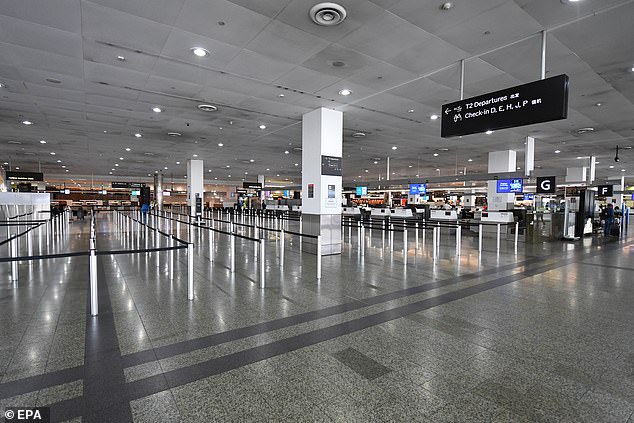
Many countries have now banned in-bound flights and any travel not deemed essential. Argentina just announced a total ban on all flights until September 1st, which has shocked airlines that usually fly there. Are more of those restrictions coming and what does it mean for those of us riding out the storm in a foreign land?

Due to my nomadic lifestyle, I made a number of flight reservations for this spring and summer that have been affected by travel disruptions. I’ve also made attempts to reserve flights back to the U.S. at the end of May, in case my Schengen visa is not extended then by the French authorities. I’ve gained some insight into how airlines are reacting to the crisis and how some are using their customers as a source of “free loans”.
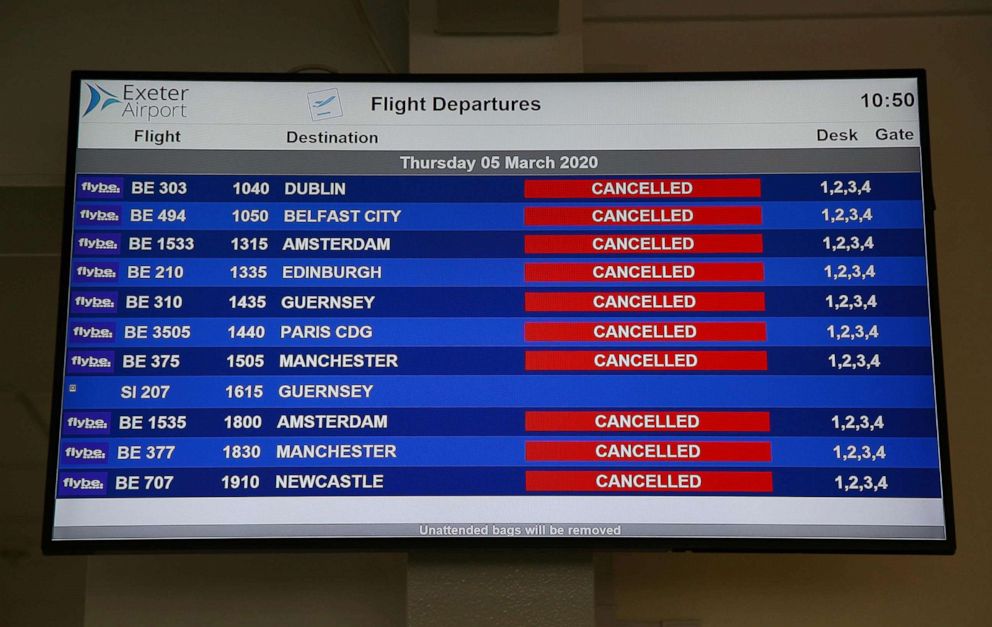
Many airlines are now switching from offering refunds when they cancel flights to offering passengers vouchers for future flights. In Europe, refunds for flights “cancelled for any reason” are legally required, but airlines are counting on passengers not knowing that. They’ve changed the Refund buttons on their web sites to links to Voucher Request pages. Good luck finding out how to get a refund from the information on these web sites. I’ve been mostly successful in contacting airlines reps via Facebook Messenger and holding firm in politely requesting a full refund. Mentioning European Commission Article 5, which mandates refunds, seems to help.

But it irks me that the airlines are essentially being deceptive about it, using passenger money to fund their current operations against a promise of future delivery of service (not necessarily guaranteed either, if an airline goes bust, as some may).

What airlines am I talking about, exactly? British Airways, United Airlines, Virgin Atlantic, Air France, and Aer Lingus, to name just those I’ve had personal experience with. It particularly steams me that some of them continue to sell tickets for flights they probably have no intention of providing – I bought a United ticket and then the very next day returned to its web site and discovered that the flight was now cancelled (they did not contact me). Really? That sounds a lot like “farming” passengers for revenue, knowing they won’t issue refunds to many of their “punters”, and close to fraud.
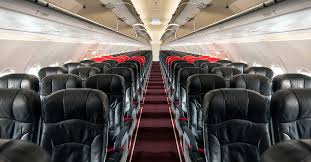
Sure, I understand these are strange times and the restrictions are constantly changing. But, in reality, it’s not that fluid and the restrictions are being changed or extended by governments on announced schedules, so don’t try to fob me off with those excuses.

The bottom line (pardon the pun) is that most airlines these days are large, capable, highly-profitable companies (2018 post-tax industry profits: US $15b, EU $8b), many of whom in the U.S. enjoy near geographic monopolies. Yet, they don’t seem to see the value in treating their customers well during these difficult times.

I’m not the only one to sound the alarm about this. Read this article in Forbes magazine for more insights:

Beware The Airlines Selling Tickets For Flights That Will Never Take Off
https://www.forbes.com/sites/tamarathiessen/2020/04/28/beware-the-airlines-selling-tickets-for-flights-that-will-never-take-off/

Well, listen up airline CEOs: the travel industry landscape has radically changed now and won’t recover quickly, and we passengers, with little else to focus on, will remember when making our future plans how your airline treated us during these difficult times.

What Happened, America?

I recently sent an email to my doctor, who’s slightly older than me but who I fervently wish will never retire, and to my dentist, whose advice not to allow any European dentists to touch my teeth I have followed religiously, and I wished them both well. I thought they’d probably enjoy receiving a communication these days that wasn’t about a health problem.

What with the parks, museums, and palaces closed, lockdown here in Paris is pretty much like lockdowns everywhere else really, except for its great bakeries, cheese shops, and wine shops. But in a country that has raised protesting to a fine art and a mass sport, the French are nonetheless puzzled by the recent anti-lockdown protests in the U.S.

As a result, they want to know why Americans are so selfish and care so little for their fellow countrymen, why they would rather believe unqualified conservative talk show hosts and politicians than expert scientists. They certainly want to know what this strange fashion love affair with ugly camouflage clothing is all about, and what’s up with all the fetishizing of guns?

They’d like to know what happened to American world leadership, to that “shining beacon of light” so many once looked to for hope.

These and other questions made me reflect on communal sacrifice and American history. Do the current living generations (including mine) remember what Americans endured during World War II? For example, during the war years, everything from meat, sugar, fat, butter, vegetables and fruit to gas, tires, clothing, and fuel oil was rationed – you were issued a book of special coupons required to buy these items and you could only buy so much per week. Communities conducted scrap metal drives for the war effort. To help build the armaments necessary, women learned to be electricians, welders, and riveters in defense plants. That was doing the right thing for your country.

Anne Frank and her family spent two years in an attic, hiding from the Nazis, but now here we are, after just one month of comparatively benign lockdown restrictions, and some Americans are going ballistic because their freedoms have been encroached upon. When did we become so spoiled? Has our sense of duty to our community and country gone out the window, along with our attention spans?

As in the U.S., stores and businesses are shuttered here in Paris. Fifty-percent of French private sector employees have been laid off, compared to 20% in the U.S. But, unlike the U.S., the French national government early on quickly passed measures to provide payroll continuation plans and the socialized medicine service already existed.

I can see the French people bending lockdown restrictions but protests here have been limited to mini-riots in poor neighborhoods in reaction to heavy-handed police tactics. There are no large protests or parades defaming democratically-elected officials doing their jobs, no demands for the “right” to be infected and to infect others.

I’m not lobbying for more or longer restrictions; I’m also suffering from “cabin fever”, and I’m sympathetic to those who are unemployed, unsupported, and afraid. But the U.S. is quickly becoming the world’s poster child for delusional selfishness, and it’s not entirely due to its President. U.S. mass culture, business practices, and education systems, and its other leaders are all part of the problem. They celebrate and reward the worst behaviors, glamorize greed and selfishness, care not for the awful impact of their actions, and never, ever seem to learn from previous mistakes.

France coalesced into a single kingdom from a collection of kingdoms in 987, over a thousand years ago. It has survived kings, religious wars, plagues, the Renaissance, revolutions, and two world wars and yet remains a strong country today. Sadly, I’ve started to wonder whether the infant U.S. (244 years) will last as long.

On Paris Shutters

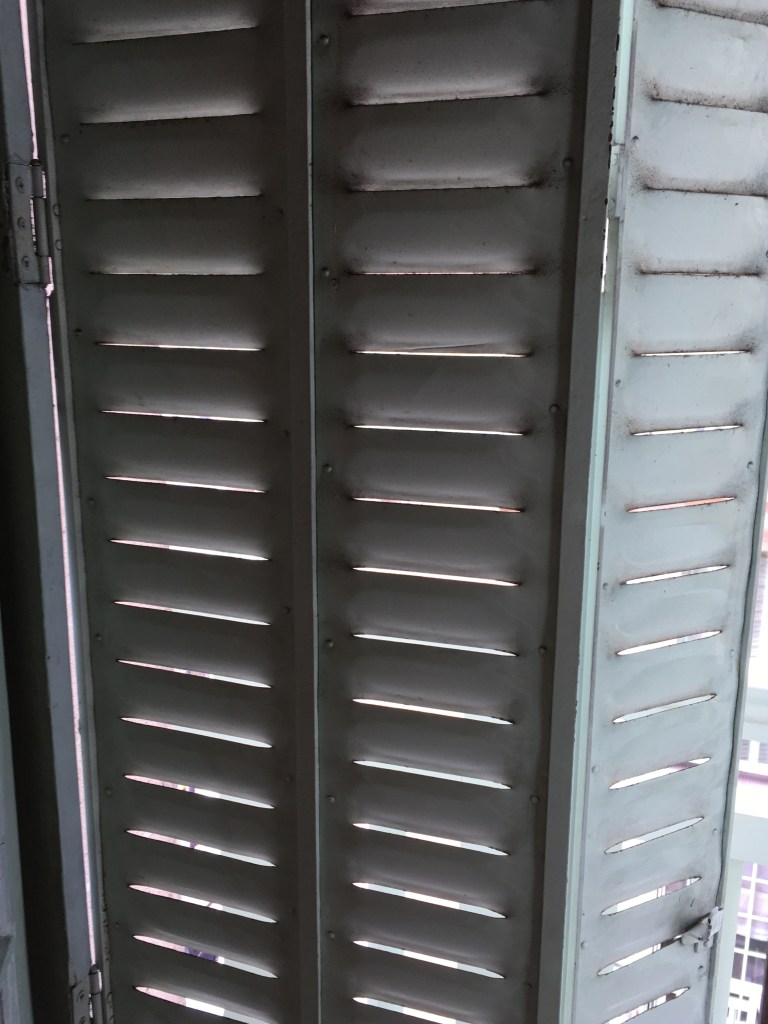
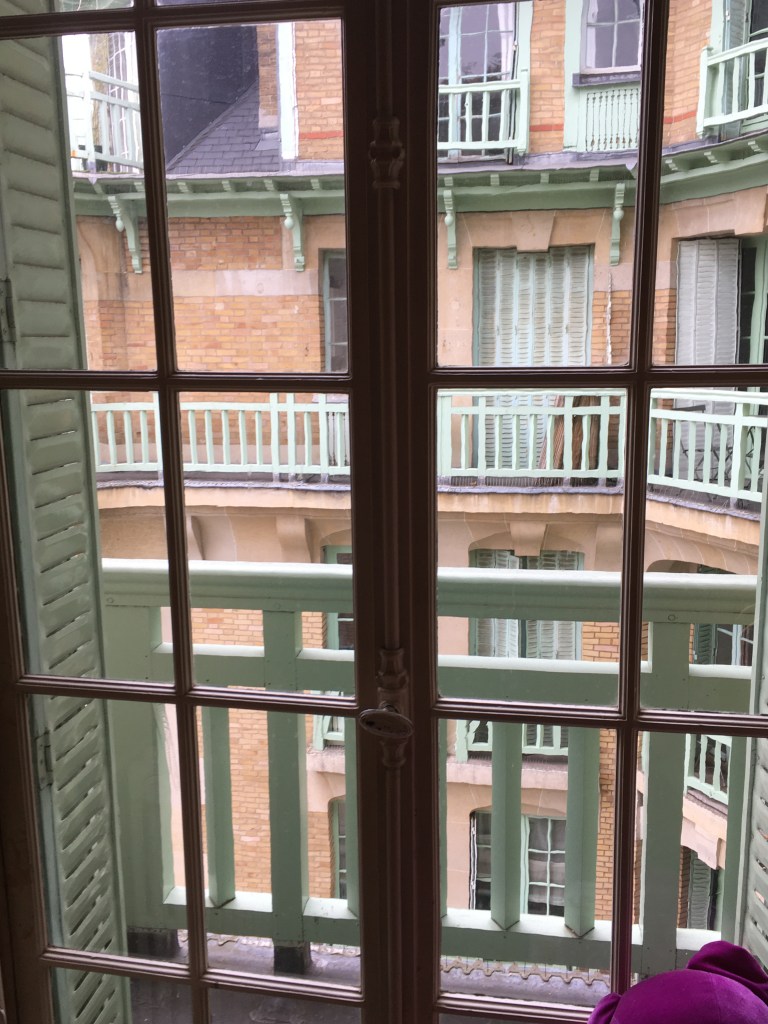
Paris is a city of many wonderful architectural styles and one of the typical exterior window treatments used here is folding shutters. Shutters come in many styles and we have Parisienne shutters on our apartment building. They hark back to Haussmann-era buildings from the mid-late 1800s (no, the Baron and I are not related).

Note how the shutters fit around the keystone block at the top of the window

Most of our apartment’s “windows” are floor-to-ceiling, multi-glass pane doors. These doors do not lend themselves to window screens, which are rare here. Interior window treatments, i.e curtains or Venetian blinds, are also rare. So external shutters are used to provide privacy.

Shutters as a window covering are an ancient idea, and I find myself kind of marveling at how well these “primitive”, simple mechanisms work even today.

On our building, the exterior shutters consist of two three-fold panels, hinged in such a way that they can fold flat onto each other. They’re just wide enough that, when opened and folded, they can tuck into the sides of the window casement.

When closed, the shutters use a simple but effective mechanism to lock the panels into the window casement at the top and bottom. Slots in the shutter panels allow air circulation while maintaining privacy when closed.

The downside of these shutters is that they’re steel and you can pinch your finger when you’re closing them if you’re not careful. They also look like they’re quite a maintenance chore when it comes to periodically cleaning and repainting them.

But they do work and they lend a distinct appearance to Paris buildings of a certain age. It’s all part of the charm.

Au revior!

Lockdown Lunch Catch-up

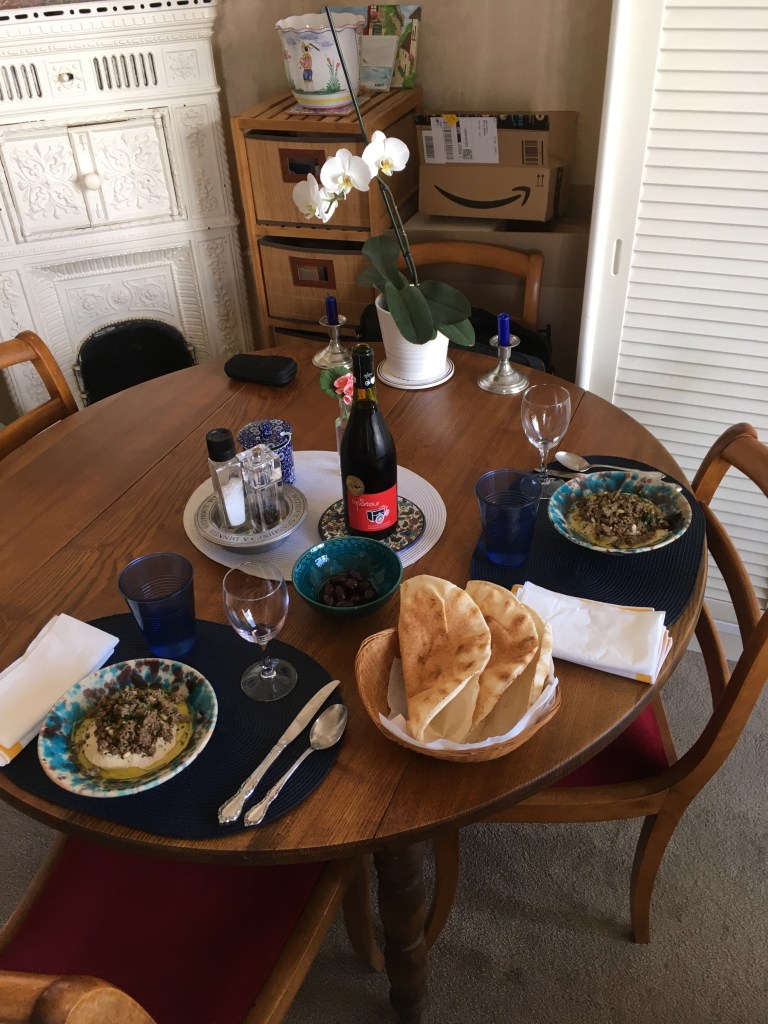
Inquiring Minds have let me know that I’ve been delinquent in my Lockdown Lunch series. My excuse is that I succumb to Post-Ingestive Narcolepsy and wind up taking a nap after stuffing myself on such good fare. But, I hear you, so I’m catching up here with some highlights:

One of my favorites, Chicken Piccata with lemon and capers, served with toast and a nice red Chardonnay. Ridiculously easy to make, heaven to consume.

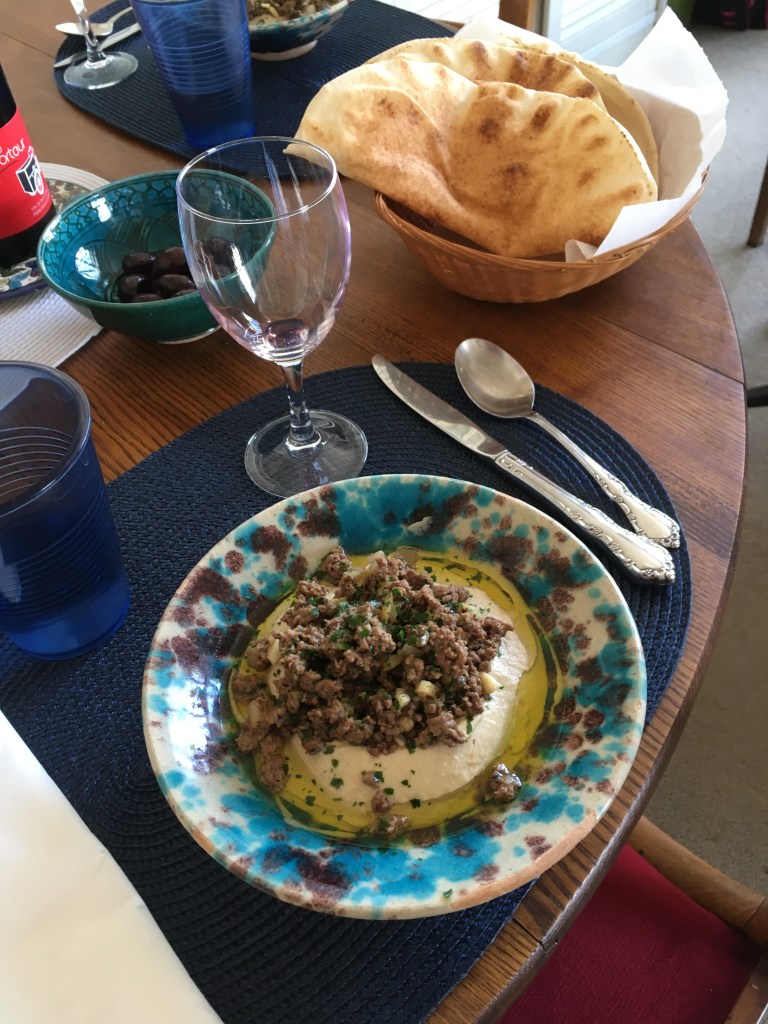
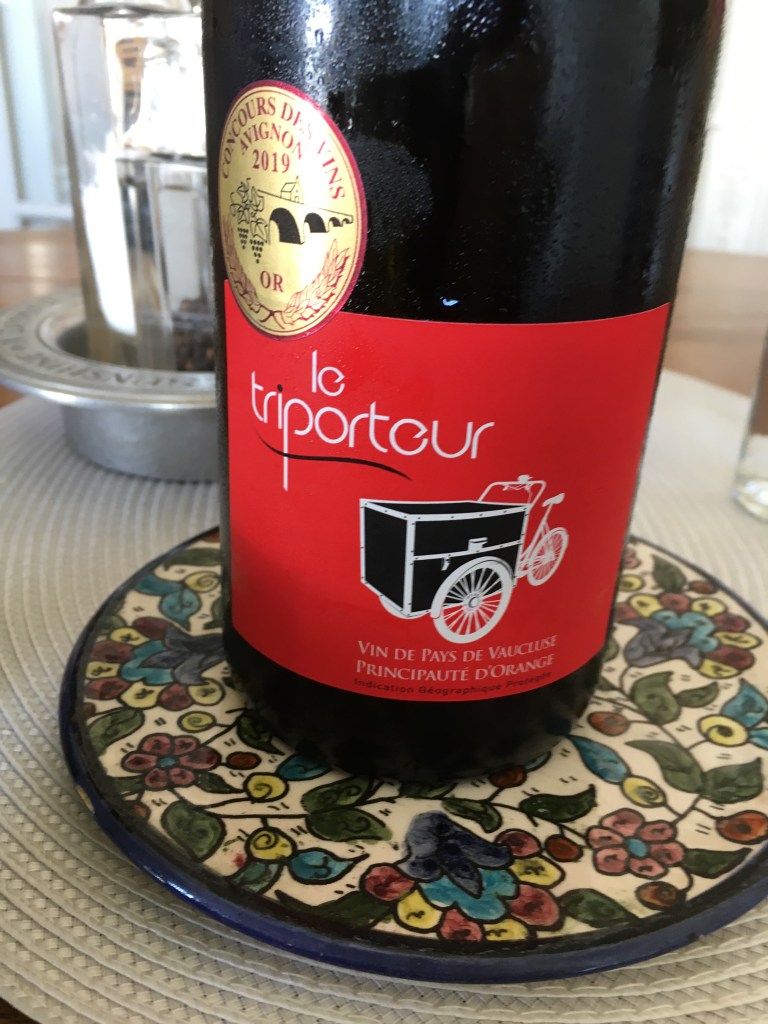
Inspired by The Lebanese Taverna in Arlington, Virginia, we made Hummus Special with pita. This is fresh hummus topped with grilled hamburger/lamb, spices, pine nuts, and olive oil. We accompanied it with a bottle of Le Triporteur, a tasty red blend.

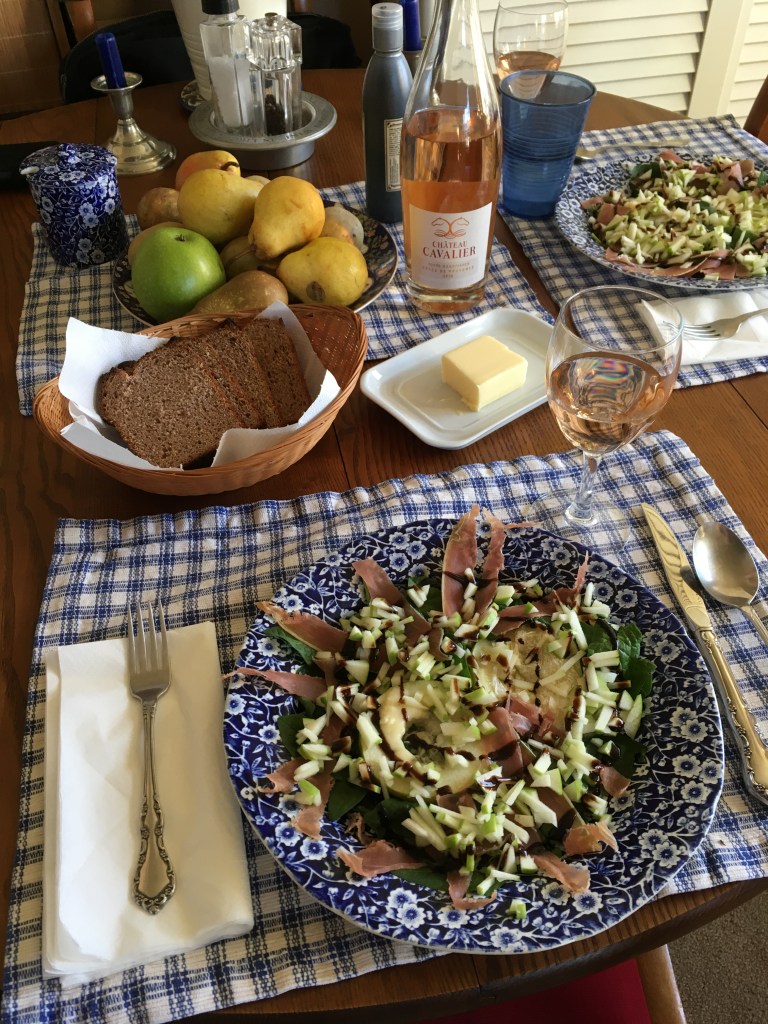
To celebrate the beginning of Spring, we created a salad of apples, bleu cheese, and Parma ham, served with fresh bread and a nice Chateau Cavalier Rosé.

Finally, we used a Greek recipe to make baked, stuffed zucchini, with a salad of lettuce, feta cheese, garbanzos, and pine nuts. A chilled glass of Le Triporteur rounded out the meal.

Since you asked, Le Triporteur is an inexpensive Southern Rhone red blend we enjoy, made up of Grenache (70%), Syrah, Caladoc, and Carignan (30%). This is a typical French “bistro” wine, everyday wine that goes with all types of Mediterranean cooking.

I hope your lunches are terrific, too.

Au revoir!

National Theater At Home: Treasure Island

In response to the closing of theaters in the U.K., the Royal National Theater in London is showing seven of their plays online.

We’ve been watching them and the first two shows, One Man, Two Guvnors and Jane Eyre were kind of duds, we thought.

However, last night we watched Treasure Island, Robert Louis Stevenson’s story of pirates, mutiny, and treasure and it was entertaining. But we were blown away by the set. This is a challenging show for a set designer, to say the least. She had to provide sets that included a wharf, a tavern, a boarding house, a sailing ship, an island, subterranean tunnels, and more.

This was beautifully accomplished using a giant “turntable” platform. This is usually a rotating platform set into the stage floor, but in this show it was more than that. I read that the National Theater staff calls it a “drum revolve” and it really is more of a cylinder than just a platform.

Early in the show, set elements magically rise out of it and later sink back into it, including a substantial mast and multiple ship decks.

Then, later in the play, the entire turntable itself rises out of the stage floor to provide the subterranean tunnels setting. Wonderful physical effect!

There are also some great lighting effects, including a display of the constellations in the night sky above the set.

Treasure Island will air on YouTube until April 23rd, so see it now if you’re interested. Information can be found here: https://www.nationaltheatre.org.uk/

Easter 2020 in Paris

I’m pretty sure we’re all experiencing Easter a little differently this year. I found a gold-wrapped Lindt chocolate bunny waiting for me at breakfast this morning, so I’m happy. I hope your Easter is happy, too.

The French, not surprisingly, have some unique Easter traditions. This one caught my eye: for the French, it’s not the Easter Bunny who brings chocolate treats on Easter, it’s the bells.

Church bells, that is. If you’re in a French city during the three days leading up to Easter, the church bells that usually ring for the hours, half hours, and church services are strangely silent. This is because, according to French tradition, the church bells leave their belfries to fly to Rome on the Thursday before Easter Sunday. Yes, you read that right: they “fly to Rome” – what a sight that must be.

The bells apparently come back early Sunday, bringing chocolate eggs and other treats to children, before returning to their homes in soaring stone steeples, and ringing in the joy of Easter morning.

Now we know where the money in the collection plate really goes: to pay for round-trip tickets to Rome. Man, the Pope must have some special pull with the airlines, what with so many flights canceled these days.

It’s a charming story and I’m sure the European Chocolate Manufacturers Association insists it’s true, so who am I to question it? In the meantime, regardless of how it got here, I’ll enjoy my chocolate bunny.

By the way, some French bakeries are offering chocolate bunnies that are in step with current government health recommendations. Note that the bunnies also come with their own supply of pink toilet paper.

Joyeuses Pâques! (Happy Easter)

What Do Flour and Toilet Paper Have In Common?

What do these two unrelated products have in common? No, they’re not interchangeable. They are, in the Current Situation, often hard to find in stores. When looking for them, we’re often greeted with empty shelves.

The common wisdom is that this is caused by horrible, selfish hoarders stocking up for Eternity. However, my research has discovered a different reason for these shortages.

It has to do with increased demand and mismatched manufacturing processes.

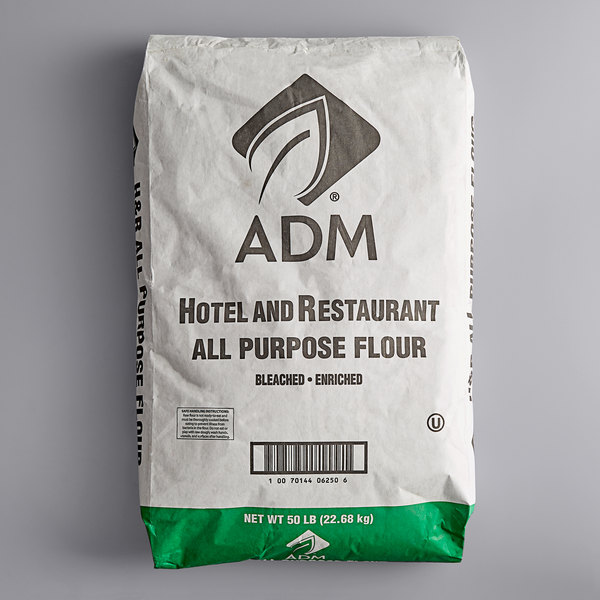
In the case of flour, mills provide for two types of customers: commercial kitchens and bakers and home consumers. For commercial customers, mills sell flour in 50-lb (or larger) bags. For home users, it’s sold in much smaller bags: 1-, 2-, or 5-lb bags. Usually, commercial sales account for over 95% of sales but, with the lockdown restrictions in place, home baking and consumer demand for flour have soared.

The result: mills aren’t geared up to fill that many small bags, so we have shortages in grocery stores. In the U.K., for example, flour mills have recently switched to round-the-clock operations to meet the increased need for small packaging.

The answer to the Missing TP Mystery is similar: paper mills are geared up to produce vastly more paper products for commercial use than for consumer use. They use a different kind of paper pulp and different machines to make commercial TP. This variety of TP, for use in restrooms in airports, restaurants, sports venues, etc., has been the majority of their output, while TP for home use was a much smaller percentage of their output.

But now, due to coronavirus lockdowns, average household daily use of TP has jumped (as much as 800% in some countries) resulting in a mismatch between current market needs and typical paper mill output. Once again, producers are adjusting as quickly as they can to the new demands.

So now, when I see empty store shelves, I’m going to try harder to think better of my fellow shoppers and not reflexively blame hoarding as the cause, and I encourage you to do the same.

Au revior!

Today’s Lockdown Grocery Shopping Experience

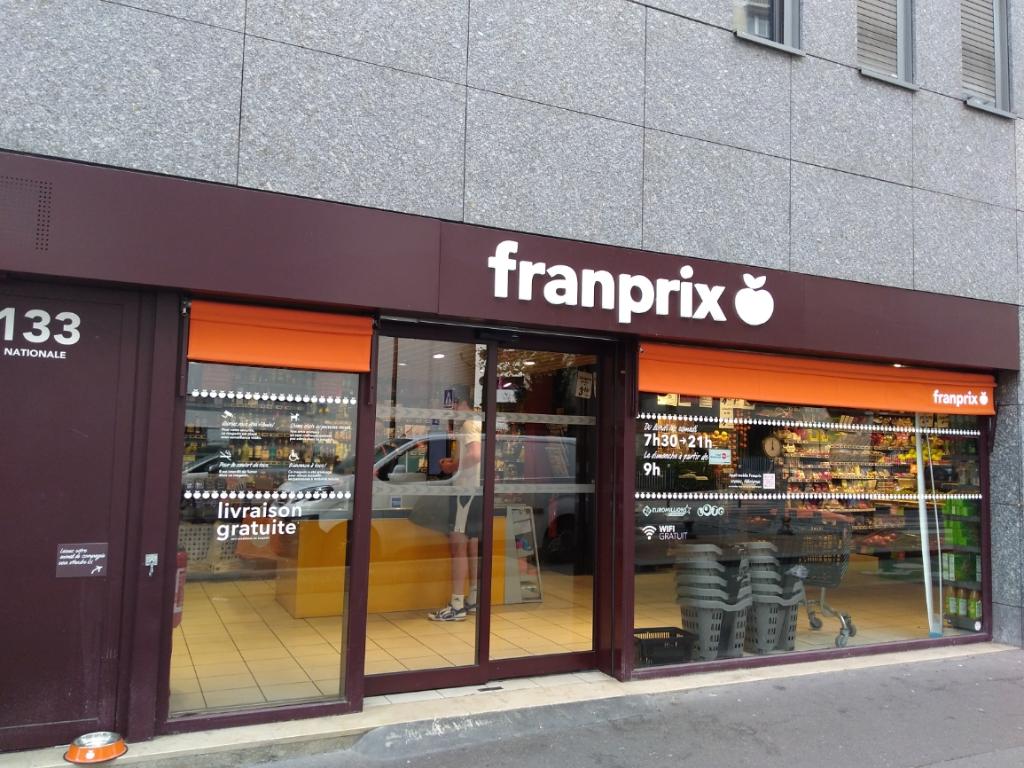
Today was a beautiful, 75-degree day here in Paris and we decided to walk a bit further than usual, to a different grocery store. Our choice was Franprix (yes, pronounced just like “Grand Prix” but with an “F”) and we found the steps taken there during the Current Situation to ensure everyone’s safety were great.

Like many stores here, during the crisis Franprix has reduced the hours that they’re open. They haven’t gone to having a special early morning shopping hour just for seniors, as some stores have.

Also, like most stores, there’s a doorman/woman who keeps a strict limit of 10 people in the store at a time. So we spent 15 minutes in line out on the sidewalk, practicing good social distancing and trying to keep our face coverings from falling down without touching our faces.

Someone inside has a sense of humor. I enjoyed the sign on the front window that said “Votre chat, chien, ou poisson rouge n’est pas autorisé dans ce magasin.” which means “Your cat, dog, or gold fish is not allowed in this store.”

When we were allowed into the store, we were immediately directed to a giant dispenser of hand sanitizer, which we happily used. Nice touch.

Forget getting a basket or cart with a gross, germ-laden handle. You fill the trolley or bag(s) you brought with you as you shop, empty them at the checkout, and then reload them after paying.

Franprix is a nice, large, modern chain grocery store with a great food selection, wide aisles, and good lighting. However, either there’s an embargo against it or someone has cornered the market on my favorite breakfast cereal, Weetabix, because there was none to be had. I’m not hoarding it, per se, but I do like to have a good stock at home, just in case.

You really feel like the store is all yours when there are so few people in it, which is very pleasant. Franpix was pretty well-stocked, even at 3:30 in the afternoon, despite the absent Weetabix.

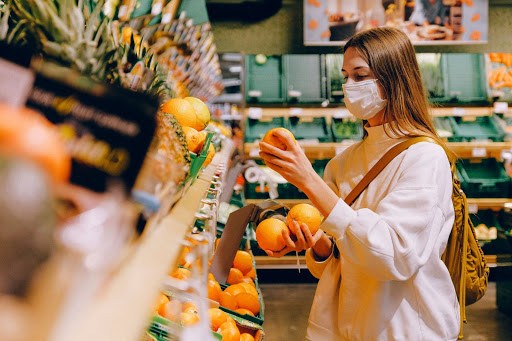
Signs in the vegetable and fruit areas notified us that “If you touch it, you buy it”. So, there’ll be no groping the pears and then putting them back in the bin. Good policy, too bad if you can’t spot ripeness just by looking.

The now-familiar taped lines on the floor, 6-feet apart, were present for queuing at the checkout lines. After we paid, the cashier ran a sanitizing wipe over the card machine face and keypad. Very nice!

Eager faces in the line along the sidewalk greeted us when we left, knowing our departure meant two of those waiting could go in.

We had a successful shopping event and I suspect we may be returning to Franprix more often now. How does this compare with your grocery shopping experience these days?

Au revoir!

What’s Your Daily Lockdown Routine?

Have you fallen into a daily routine based on the Current Situation? Here’s a typical day for us here in Paris:

7:30am – Wake up, say “Let’s get the show on the road”, get going, eat breakfast, clean up kitchen.

8:30am – Watch Lester Holt and the NBC Nightly News broadcast from the previous evening online.

8:50am – Process shock and dismay at situation in the U.S. based on the NBC news.

9:00am – Peruse email and social media, read latest French and European lockdown news and directives, daydream about traveling again or just sitting at a sidewalk cafe.

10:30am – Shower, get dressed, review (and possibly ignore) daily To-Do list.

11:30am – Do chores and cleaning, respond to emails, write blogs posts, do personal accounting. Marti works on her freelance projects, while I read the Washington Post online.

12:30pm – Think about making lunch, select a wine.

1:00pm – Make lunch, eat it, and clean up the kitchen.

2:30pm – Prep to go outside: put on outdoor clothes and face covering, take passport, take shopping bags, print and sign required “explanation of presence outdoors” form, spray anti-viral air cleanser in the apartment.

2:45pm – Get out of the apartment for a walk, possibly around the perimeters of two nearby closed parks, maybe stop at the grocery/bakery/butcher/wine shop on the way home.

3:45pm – Return to apartment, liberally apply hand sanitizer, wash face coverings, wash hands, put groceries away, air out the apartment.

4:00pm – See what we missed on social media, read books, write emails, etc. FaceTime/Skype with friends/family in the U.S. who are 6-9 hours behind us.

5:30pm – Apero (cocktail) hour, sans friends.

6:30pm – Think about making dinner, select a wine.

7:30pm – Make dinner, eat it, and clean up kitchen.

8:30pm – Fire up PBS Anywhere, Netflix, etc. on the boob tube and watch something good.

10:00pm – Hit the sack.

Then, as my friend Robert would say, “Rinse, Wash, Repeat”.

Once a week we clean the apartment and twice a week do laundry. Every night we thank our stars for surviving another day in “Lockdown Hell” and appreciate just how good we have it, and say a prayer for those who don’t.

What’s your daily schedule like?

Au revoir!

France To Distribute Free Wine to Every Household

No, sadly, France is not really passing out free wine nor have I succumbed to Lockdown Lunacy. It’s APRIL FOOLS DAY! Happy AFD!

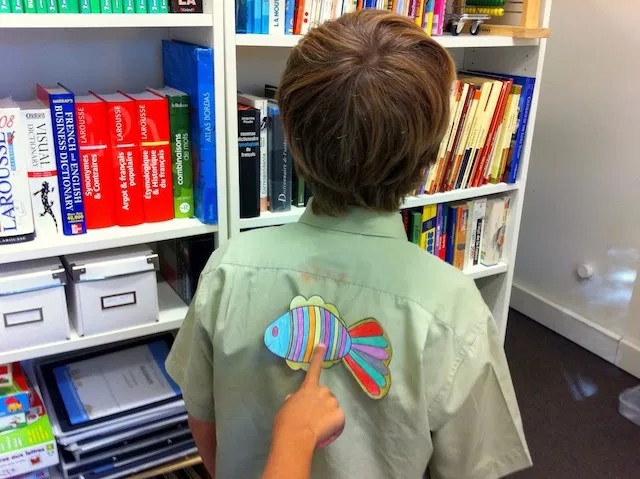
The French have a slightly different take on the day than the U.S. does. On April 1st, people here use paper fish to play an April Fools trick. This involves sticking a paper fish onto the back of as many adults as possible, and then running away yelling Poisson d’Avril (April Fish!). Sounds like something from Monty Python, doesn’t it?

This is a tradition that dates back to 1564, when the French King switched the country from the Julian to the Gregorian calendar, moving the New Year from April 1st to January 1st. No, that’s not more AFD tomfoolery from me. But, if I was you, I’d check my back…

As long as we’re discussing strange phrases, today’s local expression of the day is Couilles dans le vin rouge. Its literal translation is “testicles in the red wine” but it really means that “things are going pretty well”. It’s not the only testicle-related French phrase available, of course, but most of them signify something bad.

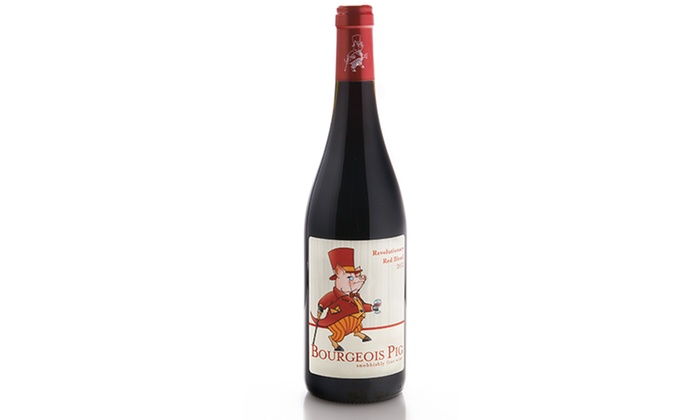
Bourgeois Pig Wine

Although it sounds uncomfortable and is certainly a waste of fine red wine, it’s used to signify that everything’s good, the equivalent of “rolling in clover” or “being as happy as a hog in shit”. Like most good French phrases, this one can be traced back to Napoleon.*

Last Sunday, we had pancakes on the breakfast menu, but neither one of us wanted to actually mix the batter and cook pancakes. Instead, we took the easy, Monoprix way out with a few packages of ready-made, toaster pancakes. Unlike the ones you see in the U.S., these were fresh, not frozen, and they were very tasty.

Marti had a nice jug of real Massachusetts Maple Syrup on hand that she brought back from the U.S. and it was just the thing for our breakfast. Are “pancake breakfasts” still a fund-raising thing? I remember when fire houses, high schools, and churches used to have them all the time for that purpose. Apparently the Kiwanis Club is still holding them.

We didn’t eat that many

The U.S. Embassy in Paris notified me today that I can apply through the local police for an extension to my 90-day Schengen visa, and directed me to the police prefecture website, which has a page of information about doing so. It said to apply I have to provide various documents, including proof that the situation back in the U.S. is “too awful to return to”. I thought perhaps a photo of Donald Trump might suffice for that document.

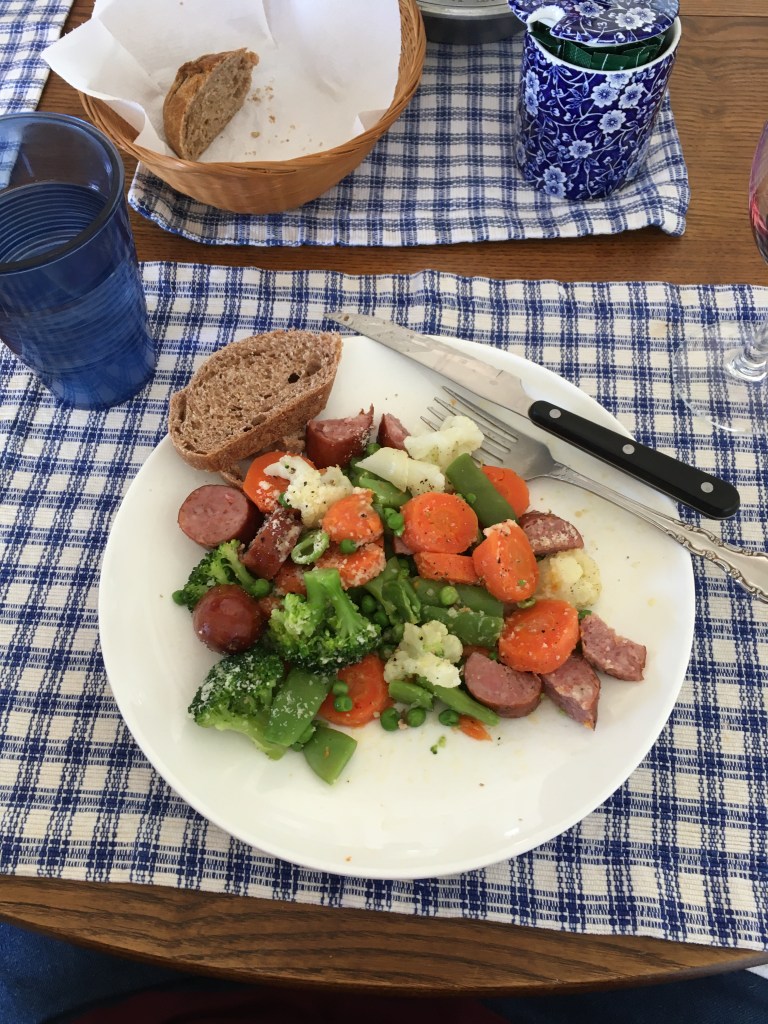
I was already digging in when I remembered to take a photo

The Paris Lockdown Lunch for the last few days has included one of my favorites, steamed Artichokes with garlic mayo and butter, and a Spanish Tempranillo wine and, today, steamed veges with sausage, butter, and parmesan, brown bread, and a lovely Cotes du Bourg Bordeaux.

Stay safe, practice strong social distancing, and keep your body parts out of the wine,

Au revoir!

* Yes, Couilles dans le vin rouge is just another April Fools joke.