We’re in Bordeaux, on the second day of our drive-and-dine roadtrip through southern France.
Our hotel has a lovely buffet breakfast laid out and I’m finding myself very entertained by my fellow guests as they do what’s necessary to get themselves their morning coffee. The ”coffee machine” looks like this:
Espresso, coffee, latte, cafe creme, americano, and hot chocolate
The machine is pretty simple to use: put a cup in place and tap the desired picture. This snazzy, single-serve machine will then grind the necessary beans, brew the coffee, and dispense the right amount. So easy!
And yet… Some of guests have noticed that the large, generous cups are not filled all the way, so they figure they can run a second choice into the same cup to top it off.
I can understand thinking you can double up on the caffeine by running an espresso in on top of a regular coffee, for example, but what I don’t get is how badly people seem to estimate how much room is left in the nearly-full cup. Some hilarity ensues.
As the cup fills and overflows, one guy panics and punches multiple buttons to make it stop, without success. Another keeps discreetly tipping some liquid out of his cup into the drain tray until the second cycle ends. And my favorite was a lady who just pretended nothing untoward was happening and walked off with her full-to-the brim cup, leaving a trails of spills through the dining room and the machine dispensing the remaining coffee directly into the drain.
What did they think was going to happen, I wonder?
I recovered from mild jet lag quickly and enjoyed being reunited with the New French Girl Friend (NFGF), both of which which involved good French croissants and champagne.
The French are taking COVID restrictions in stride, despite some weekend protests in major cities. The basic deal is that you must have a passe sanitaire, a national vaccination record represented by a QR code, and must have it scanned in order to enter restaurants, bars, the Metro, large event venues, and more.
French folk get their QR code via their national health system when they’re vaccinated. Vaccinated foreigners like me can apply for one online, and the US CDC vaccination is accepted in many places as a substitute. I received QR code a few days after arriving in Paris.
Publically, the French thought the passe sanitaire was an infringement on their freedom (hence the protests) but it turns out that privately they thought it was great to be assured that everyone in the bar, restaurant, etc. with them was vaccinated. So vaccination demand soared when this was put into place and, as of now, 85% of the eligible population here has had one dose, and 78% are fully vaccinated.
Social distancing and the wearing of masks in public spaces indoors is pretty widely practised.
All of which is very reassuring and lays the groundwork for our Southern France Road Trip.
The 2021 Edition is a 10-day driving tour, featuring great wines and wonderful food, starting and finishing in Paris, with stops in Bordeaux, Toulouse, Carcassonne, Nimes, and Lyon. We’re traveling with some American friends from San Diego.
I left Dulles airport, near Washington D.C., and flew Air France direct to Paris – Charles de Gaulle. I was asked to present my passport and U.S. CDC vaccination card before being given a boarding pass but otherwise the flight was uneventful. Everyone wore their mask, no one brawled with the stewards, no police were called to the gate. What a commentary on the times were in today!
The view from my seat in the Air France lounge at Dulles
Upon landing at CDG, my two docs were examined again. Not examined: the Passenger Locator form distributed on the plane, nor the French health attestation form I was told to download and complete before the flight. I also took a PCR test 24-hours before departure (negative, of course) but no one wanted to hear about that – it was mostly for my own peace of mind and a hedge against any last-minute flight restriction changes.
Wending my way through Charle de Gaulle airport
Very impressive baggage return system they have at CDG, with lots of status information provided as you stand around and wait. My bag appeared out of the maw of the belt machinery pretty quickly, so I had no need to test my first-time use of an Apple Airtag for luggage tracking.
Had a looonng taxi ride into town, with many jams and lots of rain, so I was glad I opted for the flat fare taxi (€58) instead of an Uber, which with ”surge pricing”, might have been double that.
Great to be back in Paris! Need some coffee and a croissant, and then a shower.
I can hardly believe that it’s been three months since I arrived here in Paris from the U.K. on the Eurostar train at the end of October, in a rush to get here before the sudden 2nd French lockdown began. There was a huge, hours-long traffic jam that night, as many Parisians fled for the countryside before the midnight deadline.
The Tower in January
I’ve had a lovely time, staying with my New French Girlfriend, in the pleasant 15thArrondissment. We rejoiced over the U.S. election results, enjoyed the holidays, and rode out the latest pandemic restrictions together. We masked up, obeyed the curfew, and got better at Zoom and Facetime. We cooked fabulous meals and enjoyed some great wines. We drank champagne and shed tears of joy on U.S. Inauguration Day, when French friends and folks we didn’t even know congratulated us.
Chimney pots over Paris
However, pandemic or not, the Schengen Treaty still applies and I can only stay in the E.U. for 90 days at a time, so I must leave soon. I’m flying out in a few days, just ahead of implementation of the CDC’s new requirement that all U.S.-bound passengers present a negative COVID test prior to boarding. I have a direct flight and I’m rigorous about safety protocols, so I anticipate a safe arrival.
Our Thanksgiving Holiday table
The second and third waves of COVID cases have caused almost all countries to impose strict requirements for entry, and some have even banned tourists altogether. I’m not keen on returning to the U.S., the “COVID capital of the world”, but at least I can and I hope to get the COVID vaccine in the next few months.
Traveling internationally as a lifestyle requires that you learn about a lot of things, which is good and stimulates the brain. But the pandemic has added a thick layer of other, rapidly-changing, travel-related information that now also needs to be understood, and of course it has increased the risk. Frankly, it’s exhausting and, because “planning ahead” is no longer possible, frustrating. But you play, as they say, “the cards you’re dealt” and make the best of it.
Ready when there’s somewhere to go
For me, that means a few months in Northern Virginia for sure, and possibly a longer stay through the summer. I look forward to traveling again when things become more normal. I’ll continue my musings here, but the locales may be less exotic.
If you’re in my age group, you may remember growing up consuming lousy frozen TV dinners and tasteless frozen vegetables. Fresh vegetables were not a “thing” back then. For example, because I was raised on mushrooms from a jar, I had no idea how delightful fresh ones could be until I was in college. Later, of course, the healthy-eating tidal wave conditioned us to embrace fresh vegetables as the only sane choice.
So, it was with some surprise that I discovered the passion here for frozen foods. Yes, in France, with its fresh markets and reputation for fine cuisine, frozen foods are extremely popular. However, these are not my mother’s tasteless, freezer-burnt, Birds Eye offerings; rather, they’re flash-frozen, high-quality products processed in such a way that they retain all of their nutrients and, in some cases, have more of them than “fresh” produce does.
In France, large grocery stores do offer baked goods and fresh meats, but the neighborhood boulangeries (bakeries) and boucheries (butcher shops) have the best products, and they’re where most Parisians buy them. But I was surprised to find stand-alone stores that offer nothing but frozen products.
Welcome to Picard (no, no relation to Jean-Luc of the Enterprise), which started off in the early 1900s as a supplier of ice. Now, with over 1,000 stores, it can be called one of France’s favorite grocery stores, and it’s also established in several other European countries. Picard’s 1,200 flash-frozen products include veges and fruits (regular and organic), spices, meats, soups, pastries, desserts, and much more. Picard chefs make all sorts of prepared meals that are very popular.
Their freezer-filled stores are clean and modern, with good signage. You can order online for pickup or delivery, and they also sell insulated bags for your use taking food home.
In researching this post, I found quite a few articles extolling Picard. Here’s a good one by Ann Mah that does a great job of introducing Picard.
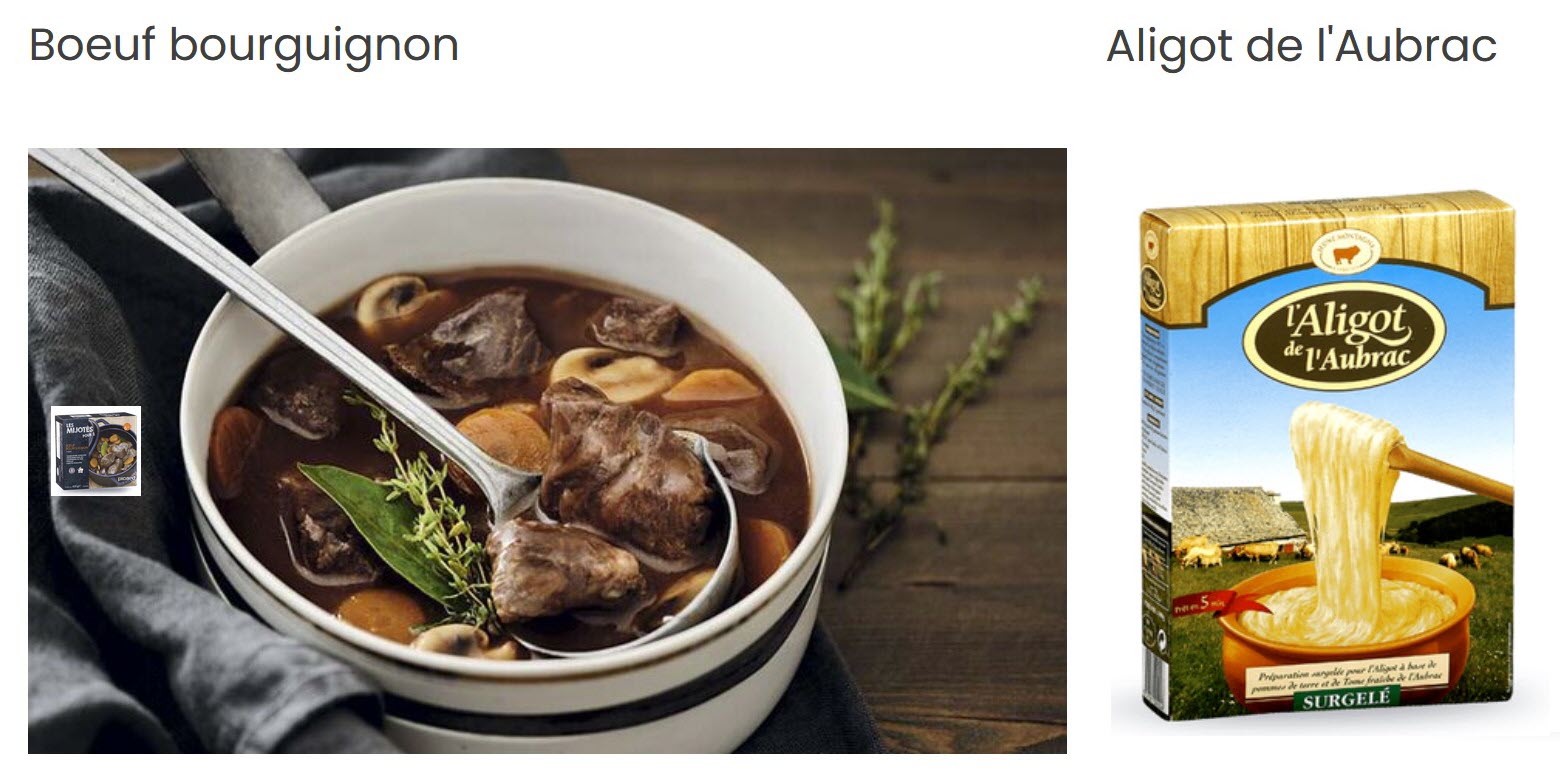
I’ve eaten quite a few Picard products in the last three months and they’ve all been really good. Boeuf Bourguignon (Beef Burgundy) over Aligotde l’Aubrac (cheesey mashed potatoes) is one favorite and their Yellow Lentil Curry soup is another.
You can visit the Picard website to see their many tempting offerings: https://www.picard.fr/
When I was staying in Dublin last year, I found a similar chain called, of all things, Iceland. I didn’t try their products so I don’t know if their quality is as good as Picard’s but they seemed quite popular.
Sadly, Picard is not in the U.S. and is not likely to be, for the reasons set forth by Ann Mah. Too bad!
In my last post, we talked about Christmas trees in Paris and in this one I’ll share with you some of the common Christmas traditions here that are quite different from those in the U.S.
Wrapping Supplies
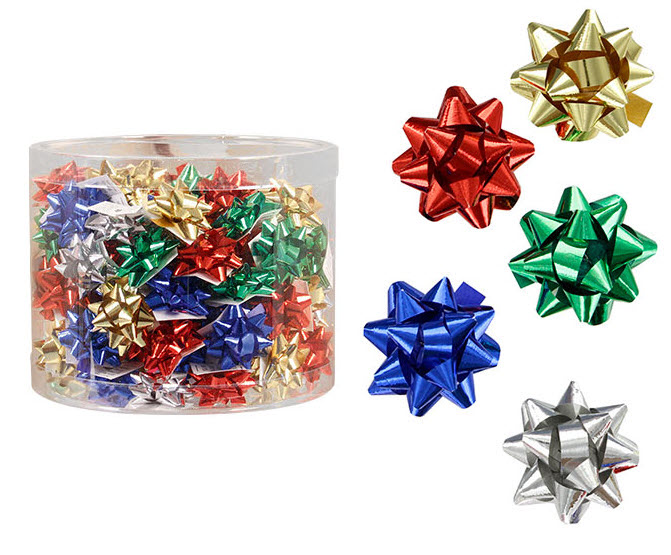
There are no wide ribbons or big, ready-made bows here. Narrow “curling” ribbon and small “confetti” bows are the preferred wrapping options.
Mistletoe
You’d think the romantic French would be all over this, but mistletoe is hung here as a decoration that brings good luck. Not as a license for kissing.
Marché de Noel
Christmas markets are huge in France, although perhaps not exclusively a French Christmas tradition. There are a quite few towns and villages in France where artisan-produced gifts and local culinary delicacies, such as foie gras and confit de canard, are sold in the run-up to Christmas.
No Christmas Cards
Typically, the French do not send Christmas cards to friends and family. Instead, cards are sent to celebrate the New Year.
Santa Letters
Letters from French children to PereNoël (Father Christmas) don’t just disappear into recycling bins in France. Since 1962, France has had a law that stipulates that any letter to Santa must be responded to, in the form of a postcard. The law has no doubt helped boost the myth of Father Christmas among French kids, although it’s doubtful that postal workers appreciate all the extra work.
Le Réveillon de Noël
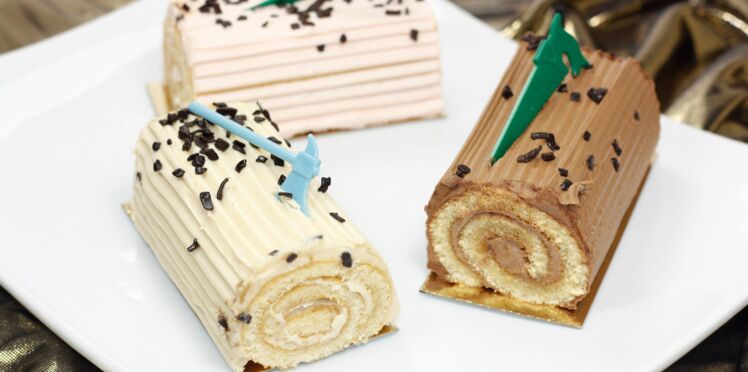
The French hold a traditional Christmas Eve dinner, the Réveillon de Noël. At around midnight, French families eat a special meal to celebrate the very beginning of Christmas Day. Dishes might include roast turkey with chestnuts or roast goose, oysters, foie gras, lobster, venison, and cheeses. For dessert, a sponge cake log called a bûche de Noël (yule log) is normally eaten. In some parts of France, the meal is ended with 13 different desserts!
Shoes, Not Stockings
The stockings are not “hung by the chimney with care” here in France. In fact, “Christmas stockings” are not a thing at all. Instead, St. Nicholas beats Father Christmas to the punch by dropping in on the night of December 6th and leaves gifts and treats in the shoes that French children leave by the fireplace or window. Father Christmas does his thing in the wee hours of the 25th, as in the U.S., probably when everyone’s in a food coma from the Réveillon meal.
No Early Happy New Year
For Christmas, French people wish each other Joyeux Noël or Bonnes Fêtes. However, it’s important never to wish anyone a Bonne Année (Happy New Year) before midnight on New Year’s Eve, as this brings bad luck.
Fête des Rois
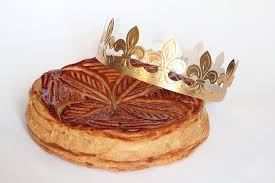
The official end of the Christmas season is the Fête des Rois (Three Kings’ Day or Epiphany to U.S. folks), and is celebrated here with the Galette des Rois, or king cake. It’s a flaky pastry, generally filled with almond cream, and hidden inside is a fève (a tiny baby figurine). Whoever gets the cake slice with the fève gets to be the King or Queen for the day. Most bakeries even sell the cakes with a paper crown! This is similar to the Mardi Gras cake tradition in the U.S.
However you celebrate Christmas, have a very merry one!
Our Advent candle says there are 12 days until Christmas, so I thought I’d tell you something about Christmas trees, sapinde noël or arbre de noël, here in Paris.
France has a rich Christmas tree history, going back to the early 1500s in the Alsace region, casting it as a symbol of hope and eternal life. During the France-Prussian war of 1870-71, refugees fleeing the conflict brought the tradition from Alsace to Paris and the rest of France. By the 1930s, most French households were putting up a Christmas tree.
Local governments put up large, well-decorated trees in public spaces:
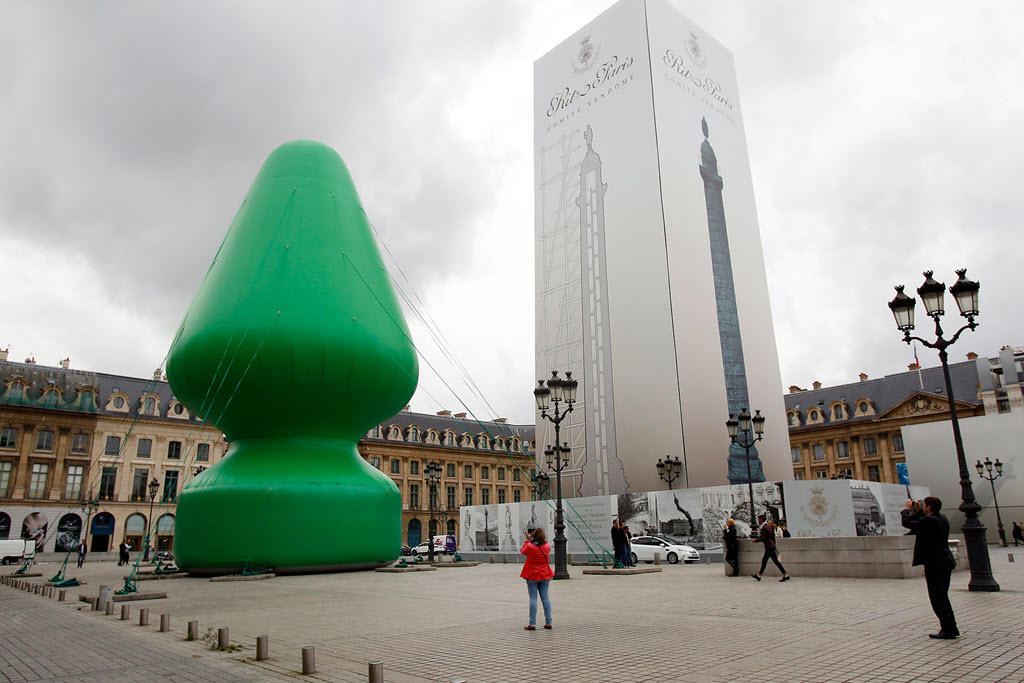
Cities also tend to hang decorations across major streets and on buildings. The local artists get into it, too, including one who erected this inflatable, abstract Christmas tree here some years ago, only to have it recognized by the public as a sex toy:
Ahem. Three real tree species are generally available here: Spruce, Nordmann, and Noble Fir, along with that weird modern favorite, Flocked. They’re sold at grocery and hardware stores, city squares, and other outlets, beginning in late November. Faux trees are, of course, also available. One interesting thing to note is that real trees are often sold with a “base” – the half-log, shown below. A hole is drilled into the log and the tree trunk is jammed into it.
Which means the French do notwater their trees! I wonder what is left of them by the end of December? We bought an American-style base with a water reservoir online but then had some difficulty getting our local vendor to remove the log base from the tree we wanted to buy. Eventually everything worked out, though, and I was soon carrying our tree, cocooned in netting for the trip, back to our place.
Christmas tree decorations in France were originally natural and editable items, such as fruit, candies, cakes, nuts, and paper flowers. Now they’re similar to the decorations found in the U.S.: LED lights, glass ornaments, cloth and wooden figures, garlands, and an angel or star at the top. Tinsel, though, has not caught on here.
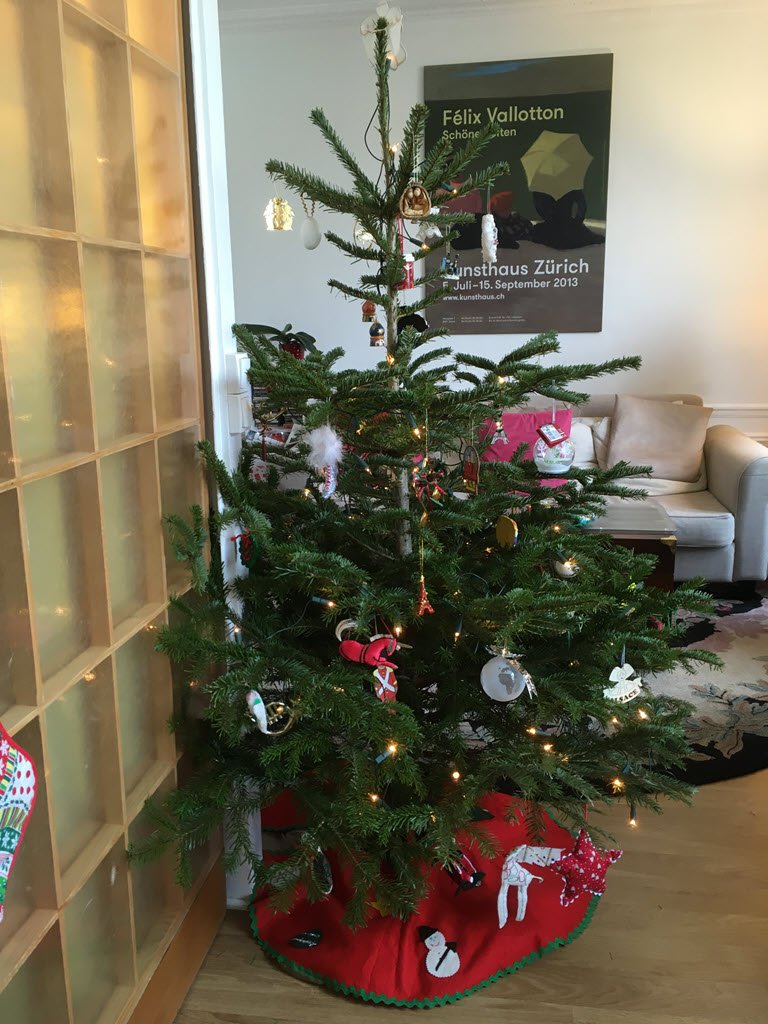
We have a small apartment, so we scaled our tree accordingly and Marti has a great collection of decorations. Here’s our tree, ready for presents to be placed beneath it:
This is the first tree either of us has put up in quite a few years, so it’s been a lot of fun reminiscing and getting into the Christmas spirit. It’s amazing how indelible our childhood Yuletide memories are.
If you’re putting up a tree, have fun and enjoy the process! We found a soundtrack of classic Christmas tunes and a “cup of cheer” smoothed the process.
It was 51 years ago that the Beatles strolled nonchalantly across the street outside Abbey Road Studios in St John’s Wood, London, and yet people are still imitating the oddly iconic album cover.
You can even watch a web cam feed of the crossing. Go ahead – you’ll probably not have to watch too long before you see someone making the crossing while a friend records or photographs them. Watch the web feed here.
Keep in mind that there’s a time difference – five hours with the U.S. East coast – but you can use the hourly buttons on the web cam page to check recently archived footage. The web cam view is from the reverse angle, so the studio building in on the right foreground, not the left background, as in the album cover.
In England, a “Zebra” crossing like this requires traffic to stop for pedestrians (which is not the case for many other types of crossings) and so the antics of visitors recreating the album cover are constantly annoying to local drivers.
And visitors do some weird things, memorialized in the studio’s Hall of Fame gallery, including a guy walking across wearing a large “Yellow Submarine” costume.
The last Beatles album recorded here was “Let It Be” in 1969 but Abbey Road Studios has been in continuous use since then. Originally a nine-bedroom house built in 1829, it looks unassumingly residential from the outside.
While initially a venue for classical recordings, the studios’ repertoire soon grew to embrace jazz and big bands, too, as well as the first British rock & roll records of the 1950s. Abbey Road is of course synonymous with the legendary work of The Beatles who, working with EMI producer Sir George Martin, recorded 190 of their 210 songs at the studios. But Abbey Road’s unparalleled history runs the gamut from the wild experiments of Pink Floyd to iconic recordings from Shirley Bassey, Aretha Franklin, and The Hollies.
More recently, artists including Kate Bush, Radiohead, Oasis, Kanye West, Amy Winehouse, Sam Smith, Florence + The Machine, Ed Sheeran, Frank Ocean, Lady Gaga, and Adele have made Abbey Road their creative home, producing countless landmark recordings.
Even my daughter Sarah couldn’t resist when she visited me some years ago. So be sure to put Abbey Road on your itinerary when you visit London.
France, like many countries, has its fair share of weird laws. As you’d expect from the French, a few involve kissing, snails, and, of course, Napoléon. Of France’s 15,500 or so laws, there are quite a few that raise an eyebrow.
Let’s go over the eight weirdest French laws, so that you don’t get caught out when you visit us in Paris.
Snails Must Have Their Own Ticket on French Trains
Snails on a train! This is a reminder that animals weighing less than five kilos must travel with their own ticket. That includes the French’s favorite breakfast treat, as an unlucky Frenchman found out in 2008 while transporting his snail harvest on the TGV. Is this a common problem? Well, consider that, in France, people eat approximately 500 million snails per year.
You Can’t Name Your Pig “Napoléon”
A weird 19th century law, still in effect today here, makes it illegal to make fun of Napoléon, including specifically by naming your pig after him. You can call your pig whatever you like, but certainly not Napoléon. Ironically, did you know Napoléon was the ruler who established today’s French civil law code?
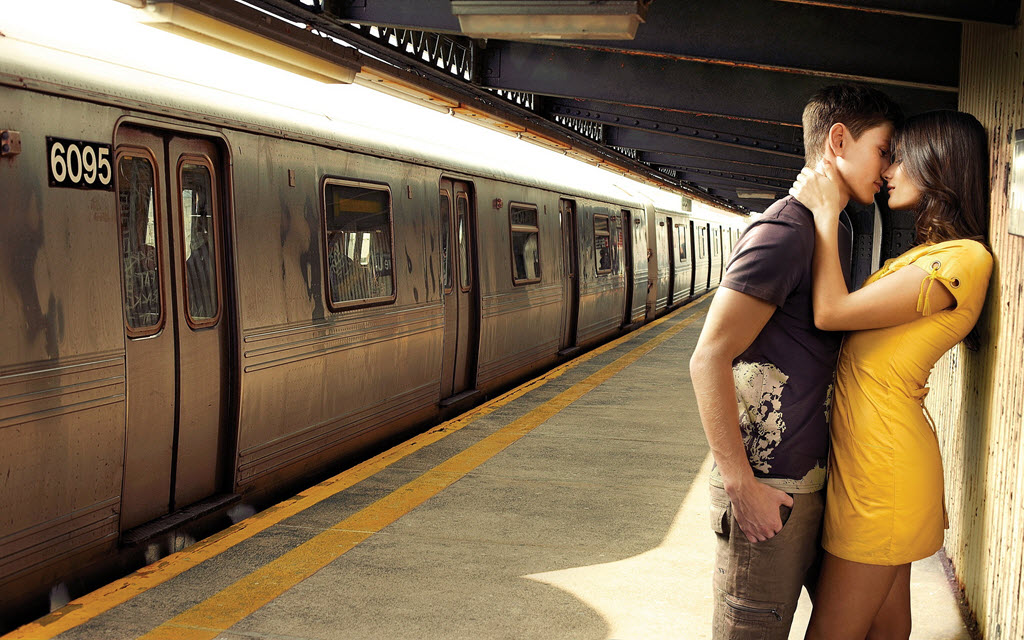
You Can’t Kiss in a French Train Station
The SNCF (French railway system) got tired of the delays caused by couples kissing their farewells on platforms. This gave birth to a weird French law that prohibits making out once the train has pulled up to the station. No worries, you probably won’t get arrested – or even scolded – for sharing a lip-lock in Gare du Nord. However, you may be so distracted that you miss your train.
Women Who Want to Dress Like a Man Must First Ask the Police
Misogyny is alive and well in some of outdated French laws, and this one has never been taken off the books. Officially, if you’re female and want to wear a pantsuit in public, you must get authorization from the nearest police precinct, as well as a medical certificate. The “Power Pantsuit” seems to be back in fashion in 2020, so this we’ll have to keep an eye on this one.
You Must Listen to French Music
In an attempt to defend against America’s “cultural imperialism”, France passed a law in 1994 that insists that 40% of music played on French radio stations must be by French artists.
Adopted with the goal of promoting and preserving the French culture and language, the law proved very unpopular. Eventually, in 2016 the French music quota was decreased to 35%. Radio stations that specialize in foreign music were also granted an exception, requiring only 15%..
Don’t Let the Kids Have Ketchup
Since 2011, French law forbids school cafeterias from serving ketchup. The French, as you may know, prefer to enjoy their frites (French fries) with mayonnaise. This law was probably another attempt to fend off American cultural influence.
That said, no self-respecting French person would accept ketchup anywhere near their Boeuf Bourguignon.
You Can Divorce Your Husband if He Watches Too Much Football
It’s not as strange a law as it might appear at first glance. In addition to being able to divorce your partner on grounds of infidelity, there’s also another acceptable reason known as “intellectual infidelity”: if your spouse spends way too many hours watching sports on the tube and hurling insults at it, you can call it quits.
Another unexpected legal ground for divorce is “physical” infidelity. Not in the sexual sense, but rather meaning your physical well-being. For example, if your wife smokes like a chimney and puts your health at risk, you are allowed to pack your bags in search of fresh air.
You Can’t Get Drunk at Work, Unless It’s on Wine
This funny law is just… so French. Obviously, you can’t drink at work! Well, yes, you can. As long as you’re drinking wine, beer, cider, or mead, you’re legal. Of course, you can’t get totally plastered but, if you’re celebrating someone’s retirement, for example, you can do so by drinking responsibly. Just don’t do Patrón shots off their desk.
All right, wine enthusiasts! Let’s talk about Beaujolais, a light, red wine made from Gamay grapes, produced in the Beaujolais region of France, north of Lyon.
Popular producing areas include Brouilly, Fleurie, and Moulin-à-Vent and you may have seen these wines for sale in your local store.
Generally speaking, it’s better to buy wine that has aged for a few years, at least. Most Beaujolais, for example, is intended to be consumed within three years, although some heartier variants can go to 10 years.
And then… there’s Beaujolais “Nouveau”.
As far back as the 1800s, Beaujolais growers and winemakers would gather to celebrate the end of the harvest by toasting the vintage with some of the young wine produced that year. This is part of the French tradition of vin de primeur, or “early wines”, released in the same year they’re harvested.
How young are we talking? Beaujolais pressed in September is unveiled on the third Thursday of November, as Beaujolais Nouveau.
In a 1980s marketing master stroke, this quaint regional tradition was blown up into a world-wide phenomenon by the late vintner Georges Duboeuf. Beaujolais Nouveau Day is now a big deal here in France and elsewhere, with wine vendors hosting special events, midnight fireworks, parties, etc.
A crucial ingredient in this promotion was a dollop of suspense. No Beaujolais Nouveau can be released until the Big Day. As the clock struck 12:01 AM, Mr. Duboeuf made sure that cases and cases of the wine were loaded onto trucks, ships, and eventually jets, for shipment around the world, all duly recorded by cameras. (The fact that much of the wine had been shipped in advance was irrelevant to the fun.)
So how good is it? Many drinkers find this wine to be just too young, too “green” to drink, and the phrase “making a silk purse from a sow’s ear” has been used to describe Duboeuf’s efforts.
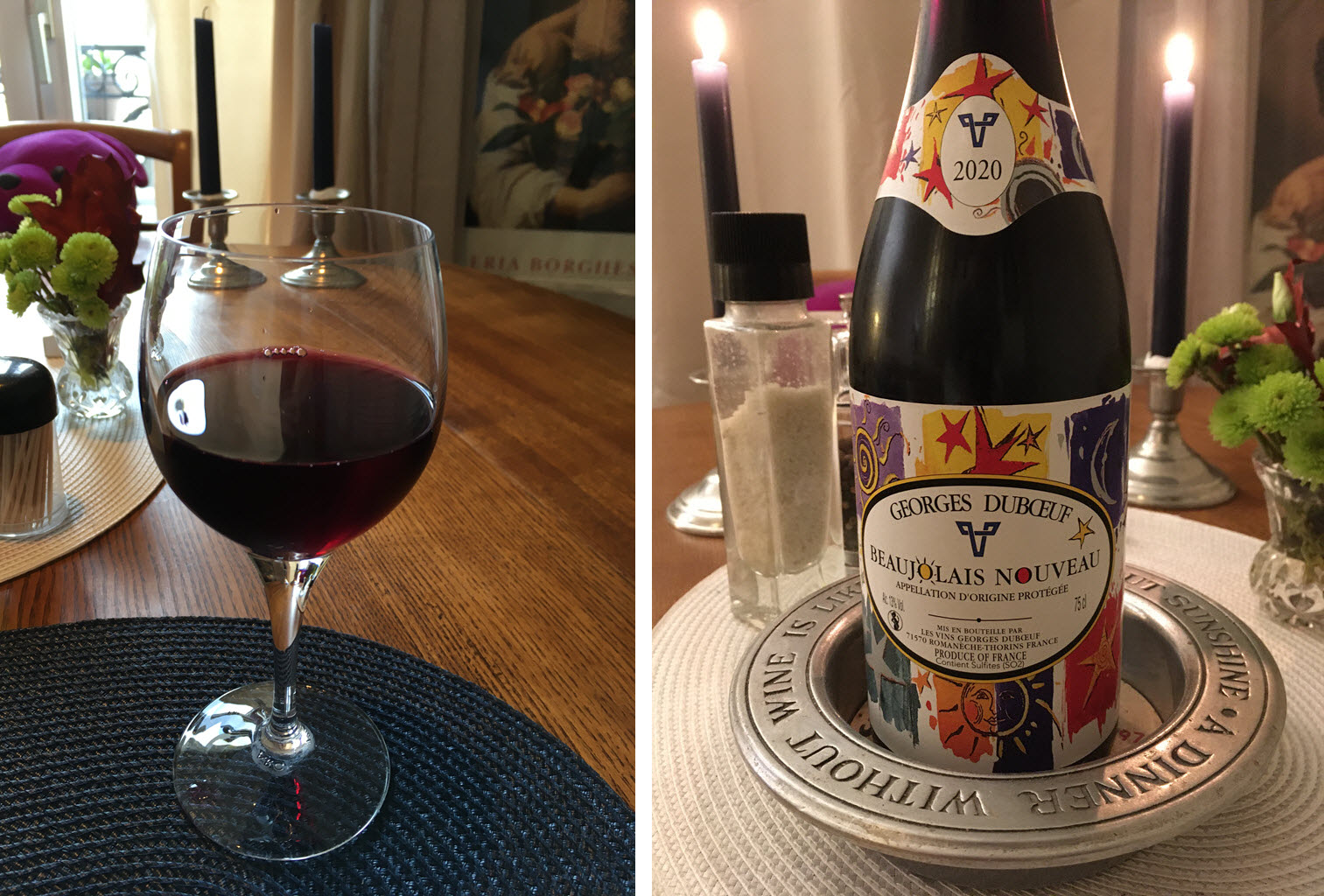
To my palate, the drinkability of Beaujolais Nouveau varies from year to year and from brand to brand. The bottle we bought yesterday, shown above, is just “OK” as wine goes. Better than paint thinner, at least. We finished it, but we won’t buy any more until next year.
It’s kind of weird pouring from a bottle with the current year on the label, never mind one that’s just two months old!
I’m reminded that last year at this time we were in a Paris café and asked excitedly about the Beaujolais Nouveau. Our waiter first made a pained face, then he did something quite extraordinary: he offered to bring us a free, small taste of the wine. And to his credit, the wine was awful and so we ordered something else. That was a first.
Beaujolais Nouveau is now available around the world, possibly in your neighborhood store, for a limited time. So check it out.

















 The Occasionally-Examined Life