
In my last post, we talked about Christmas trees in Paris and in this one I’ll share with you some of the common Christmas traditions here that are quite different from those in the U.S.
Wrapping Supplies
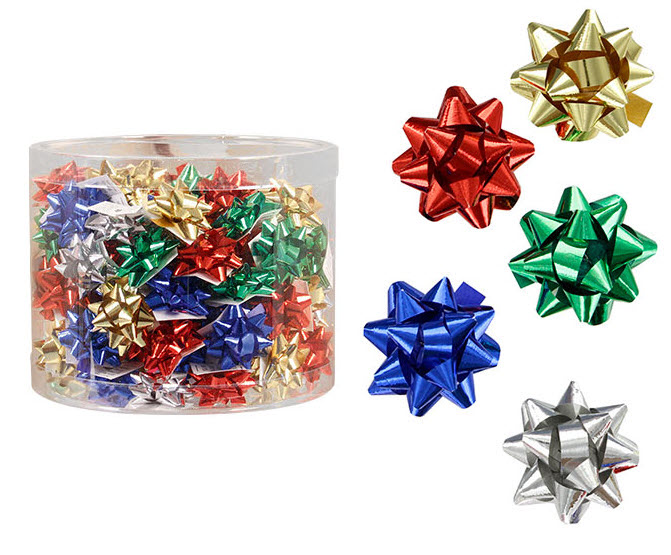
There are no wide ribbons or big, ready-made bows here. Narrow “curling” ribbon and small “confetti” bows are the preferred wrapping options.
Mistletoe
You’d think the romantic French would be all over this, but mistletoe is hung here as a decoration that brings good luck. Not as a license for kissing.
Marché de Noel
Christmas markets are huge in France, although perhaps not exclusively a French Christmas tradition. There are a quite few towns and villages in France where artisan-produced gifts and local culinary delicacies, such as foie gras and confit de canard, are sold in the run-up to Christmas.
No Christmas Cards
Typically, the French do not send Christmas cards to friends and family. Instead, cards are sent to celebrate the New Year.
Santa Letters
Letters from French children to Pere Noël (Father Christmas) don’t just disappear into recycling bins in France. Since 1962, France has had a law that stipulates that any letter to Santa must be responded to, in the form of a postcard. The law has no doubt helped boost the myth of Father Christmas among French kids, although it’s doubtful that postal workers appreciate all the extra work.
Le Réveillon de Noël
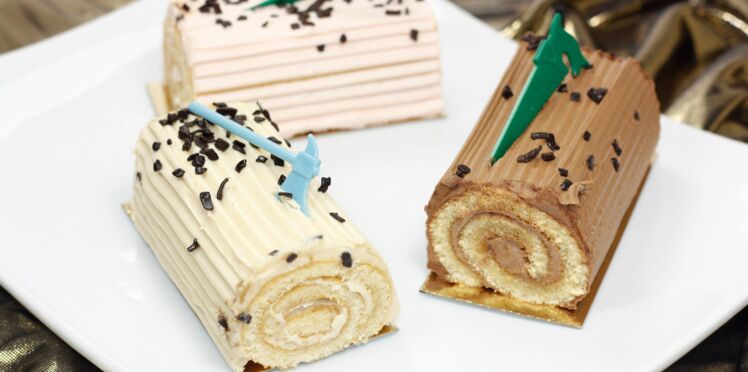
The French hold a traditional Christmas Eve dinner, the Réveillon de Noël. At around midnight, French families eat a special meal to celebrate the very beginning of Christmas Day. Dishes might include roast turkey with chestnuts or roast goose, oysters, foie gras, lobster, venison, and cheeses. For dessert, a sponge cake log called a bûche de Noël (yule log) is normally eaten. In some parts of France, the meal is ended with 13 different desserts!
Shoes, Not Stockings
The stockings are not “hung by the chimney with care” here in France. In fact, “Christmas stockings” are not a thing at all. Instead, St. Nicholas beats Father Christmas to the punch by dropping in on the night of December 6th and leaves gifts and treats in the shoes that French children leave by the fireplace or window. Father Christmas does his thing in the wee hours of the 25th, as in the U.S., probably when everyone’s in a food coma from the Réveillon meal.
No Early Happy New Year
For Christmas, French people wish each other Joyeux Noël or Bonnes Fêtes. However, it’s important never to wish anyone a Bonne Année (Happy New Year) before midnight on New Year’s Eve, as this brings bad luck.
Fête des Rois
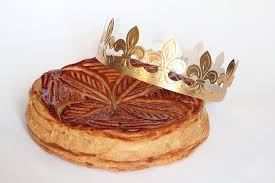
The official end of the Christmas season is the Fête des Rois (Three Kings’ Day or Epiphany to U.S. folks), and is celebrated here with the Galette des Rois, or king cake. It’s a flaky pastry, generally filled with almond cream, and hidden inside is a fève (a tiny baby figurine). Whoever gets the cake slice with the fève gets to be the King or Queen for the day. Most bakeries even sell the cakes with a paper crown! This is similar to the Mardi Gras cake tradition in the U.S.
However you celebrate Christmas, have a very merry one!


 The Occasionally-Examined Life